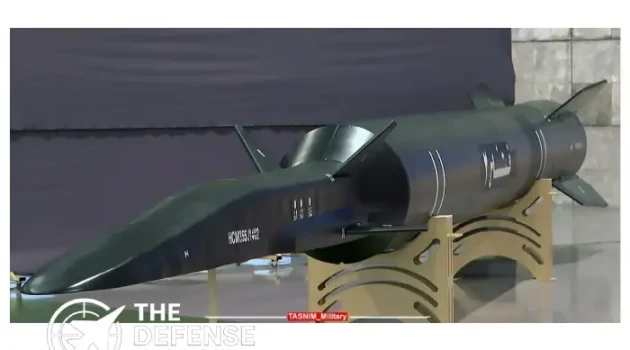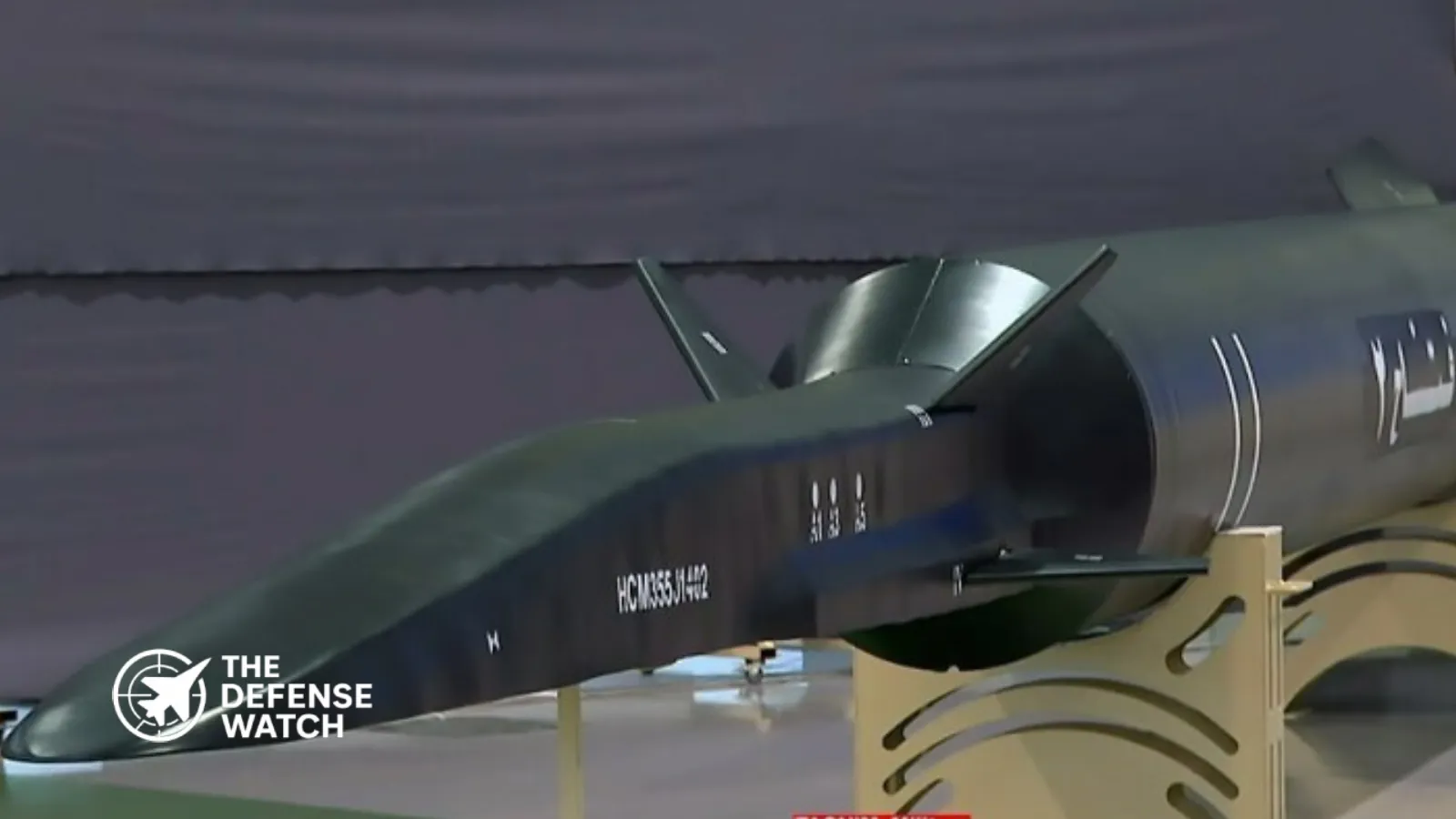
- › Iran’s Fattah-2 is a maneuvering hypersonic ballistic missile reportedly capable of gliding and altering trajectory during terminal phase flight.
- › Tehran claims the Fattah-2 can penetrate advanced layered missile defense systems, including Israel’s Arrow-3 and U.S.-supplied THAAD.
- › The missile features a maneuvering reentry vehicle (MaRV) with an estimated range exceeding 1,400 kilometers.
- › Iranian military statements suggest the Fattah-2 is specifically designed to hold hardened, underground command-and-control facilities at risk.
- › Western and Israeli analysts view the Fattah-2 as a significant escalation in Iran’s precision long-range strike posture.
Iran’s Fattah-2 hypersonic missile represents one of the most consequential shifts in Tehran’s long-range strike doctrine in decades — and according to growing analysis from defense researchers and regional security experts, it may have been engineered with a very specific target set in mind: Israel’s hardened military command infrastructure.
As tensions between Iran and Israel remain volatile following the military exchanges of 2024 and 2025, the Iran Fattah-2 hypersonic missile has emerged as a centerpiece of Iranian deterrence signaling — a weapon Tehran claims can defeat the most advanced ballistic missile defenses deployed in the Middle East today.
What Is the Fattah-2? Iran’s Next-Generation Hypersonic Strike Weapon
Iran’s Islamic Revolutionary Guard Corps (IRGC) unveiled the Fattah-2 — meaning “Conqueror” in Farsi — as an evolution of its predecessor, the original Fattah-1, which was introduced in June 2023. While the Fattah-1 was itself positioned as Iran’s first domestically developed hypersonic missile, the Fattah-2 represents a significant leap in terminal-phase maneuverability.
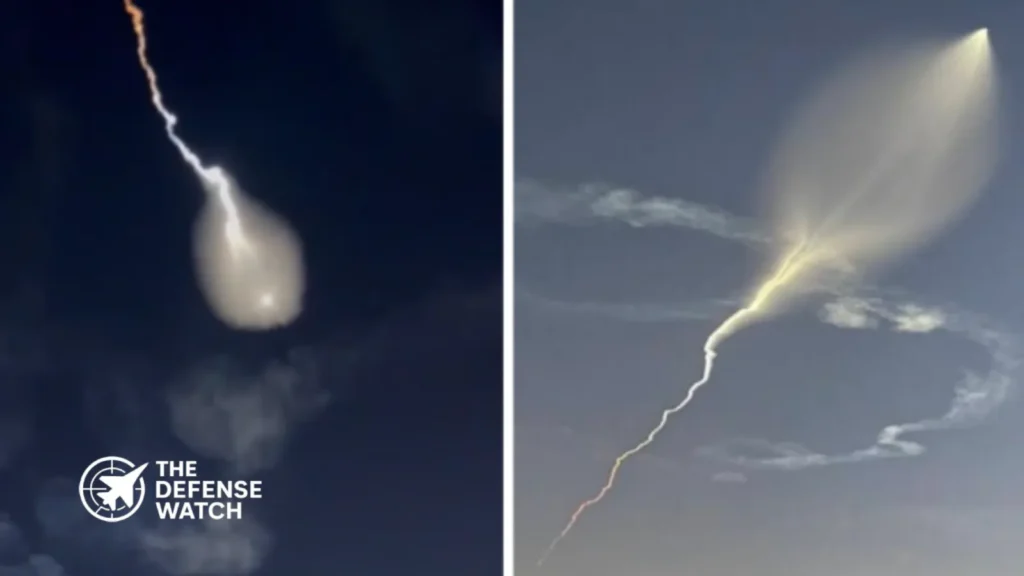
The key differentiator is the missile’s maneuvering reentry vehicle (MaRV), which allows the warhead to alter its trajectory during the final descent phase at hypersonic speeds — generally defined as Mach 5 or faster. This capability is specifically designed to defeat interceptor missiles that rely on predictive engagement geometry. Traditional ballistic missiles follow a calculable arc; the Fattah-2’s terminal maneuvering breaks that predictability.
Iranian officials and state media have explicitly framed the Fattah-2’s development in the context of defeating Israeli and Western multi-layered air defense networks, with particular emphasis on striking fortified command-and-control nodes.
The Israeli Command Bunker Problem: Why Hardened Targets Matter
To understand the strategic logic behind the Iran Fattah-2 hypersonic missile, it is essential to understand what Iran is actually trying to hold at risk.
Israel’s most sensitive military command infrastructure — including the Kirya military headquarters in Tel Aviv, strategic air force command centers in the Negev, and reportedly deep underground bunkers used for national leadership continuity — are constructed to survive conventional ballistic strikes. Many of these sites incorporate reinforced concrete and bedrock protection specifically engineered against ballistic missile warheads with standard terminal velocities.
A hypersonic MaRV-equipped weapon like the Fattah-2 changes this calculation in two ways. First, the increased terminal velocity at impact — potentially Mach 8 to Mach 12 at reentry depending on trajectory — generates greater kinetic penetration energy. Second, the in-flight maneuvering substantially complicates interception by Israel’s Arrow-2 and Arrow-3 systems, which are optimized for exo-atmospheric and endo-atmospheric intercepts of more conventional ballistic trajectories.
Israel also hosts a U.S.-deployed Terminal High Altitude Area Defense (THAAD) battery, delivered in October 2024. While THAAD is highly capable against medium-range ballistic missiles, its effectiveness against a maneuvering hypersonic glide or MaRV terminal phase remains a subject of active debate among defense analysts.
Iran’s Deterrence Signaling: A Doctrine Built on Credible Threat
Iranian military doctrine has long relied on what strategists call “strategic deterrence through cost imposition” — the idea that even if Iran cannot win a symmetric conflict with Israel or the United States, it can make the cost of conflict prohibitively high. The Fattah-2 fits squarely within this framework.
Senior IRGC commanders have been explicit in their public statements. Following the Fattah-2’s reveal, Iranian Aerospace Force commander Brigadier General Amir Ali Hajizadeh stated that the missile was capable of “penetrating all missile shield systems,” a claim Western analysts view as aspirational but not entirely dismissible given demonstrated terminal maneuvering capability.
What makes the Fattah-2 particularly significant is not necessarily its immediate operational deployment scale — Iran’s hypersonic missile inventory is still believed to be limited — but rather the signal it sends about Iran’s long-term investment trajectory. Tehran has clearly decided that precision, penetrating strike capability against high-value hardened targets is a national security priority, regardless of international sanctions or diplomatic pressure.
How Does the Fattah-2 Compare to Other Regional and Global Hypersonic Programs?
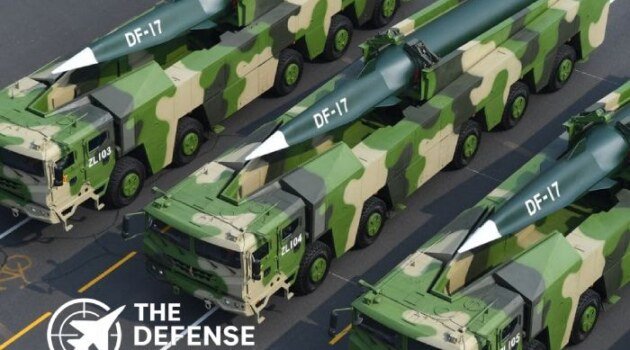
Context is important here. The global hypersonic arms competition has intensified significantly since Russia’s combat use of the Kinzhal hypersonic missile in Ukraine and China’s demonstrated DF-17 hypersonic glide vehicle capability. Iran’s Fattah program should be viewed within this broader proliferation context.
The Russian Kinzhal, launched from MiG-31K aircraft, operates at speeds reportedly exceeding Mach 10 and has been used in strikes against hardened Ukrainian infrastructure. The Chinese DF-17 uses a hypersonic glide vehicle (HGV) and is designed for regional anti-access/area-denial operations. Iran’s Fattah-2, by comparison, uses a more traditional ballistic missile bus with a maneuvering terminal stage — a different technical approach but one that achieves a similar operational effect: defeating predictive interceptor engagement.
What distinguishes Iran’s program is the cost asymmetry. Developing a domestically produced MaRV-equipped missile, even with modest performance compared to Russian or Chinese counterparts, allows Tehran to threaten Israeli infrastructure at a fraction of the cost of maintaining equivalent air power.
The Israeli and U.S. Response: Defense Gaps and Accelerated Programs
Israel’s missile defense architecture was stress-tested during the April and October 2024 Iranian missile barrages, which marked the first-ever direct Iranian ballistic missile strikes on Israeli territory. While Iron Dome, David’s Sling, and the Arrow systems collectively intercepted a large proportion of incoming projectiles, a number of ballistic missiles did impact Israeli territory — demonstrating that even a sophisticated, layered defense has saturation limits.
The emergence of the Fattah-2 has accelerated Israeli and U.S. discussions around next-generation intercept capability. The U.S. Missile Defense Agency (MDA) has ongoing programs to address hypersonic threats, including the Glide Phase Interceptor (GPI) program, but these systems remain years away from full operational deployment.
Israel’s own Arrow-4 program, being developed jointly with the United States, is specifically designed to address more capable ballistic and hypersonic threats. However, Arrow-4 is not yet operational, leaving a near-term window in which Iran’s Fattah-2 capability may outpace available Israeli intercept options — at least against the most challenging engagement geometries.
Analysis: The Fattah-2 as a Strategic Statement, Not Just a Weapon
From a pure defense analysis perspective, the Fattah-2 should be understood on two levels simultaneously.
On the technical level, it represents a genuine advancement in Iranian missile engineering — a domestically produced hypersonic-class MaRV system that complicates defensive planning and potentially holds previously “safe” hardened targets at greater risk. Whether Iran has fully mastered the guidance precision needed to reliably strike a specific bunker entrance or command node remains an open question. Hypersonic maneuvering at high speed introduces significant thermal and structural engineering challenges, and Iranian programs have historically faced reliability constraints.
On the strategic signaling level, however, the Fattah-2 is arguably more important for what it communicates than what it can currently deliver. Iran is telling Israel, the United States, and regional adversaries that its missile forces are not static — they are evolving deliberately toward harder targets, deeper penetration, and greater defense suppression capability. This has direct implications for Israeli force planning, U.S. regional posture, and the broader calculus of escalation management in any future Iran-Israel confrontation.
The Fattah-2 is, in essence, Tehran’s answer to the question of what comes after Iron Dome and Arrow — and it demands a serious, sustained response from Western and Israeli defense planners.
FAQs
What makes the Fattah-2 different from Iran’s earlier ballistic missiles?The Fattah-2 incorporates a maneuvering reentry vehicle (MaRV) that allows it to alter its flight path at hypersonic speeds during the terminal phase, making it significantly harder to intercept than conventional ballistic missiles that follow predictable arcs.
Can Israel’s Arrow missile defense system stop the Fattah-2?Israel’s Arrow-2 and Arrow-3 systems are capable against conventional ballistic missiles, but their effectiveness against a maneuvering hypersonic terminal phase is less certain. Arrow-4, designed for more advanced threats, is still under development.
What targets is the Fattah-2 believed to be designed for?Iranian military statements and strategic context suggest the Fattah-2 is intended to threaten hardened command-and-control infrastructure, including deeply buried military bunkers that conventional ballistic missiles have difficulty defeating reliably.
Has Iran actually tested the Fattah-2 against real targets?Iran has conducted publicly announced test launches and unveiled the Fattah-2 through state media, but independent verification of its full performance characteristics — including terminal guidance precision — remains limited.
How does the Fattah-2 fit into Iran’s broader military strategy?The Fattah-2 is part of Iran’s doctrine of strategic deterrence through cost imposition — developing asymmetric capabilities that raise the cost of military action against Iran even without matching adversaries symmetrically in air power or naval forces.
Get real time update about this post category directly on your device, subscribe now.

Privacy & Cookies PolicyThis website uses cookies to improve your experience. We'll assume you're ok with this, but you can opt-out if you wish. Accept Read More