
British Made Main Battle Tank Fires Live for First Time in Decades
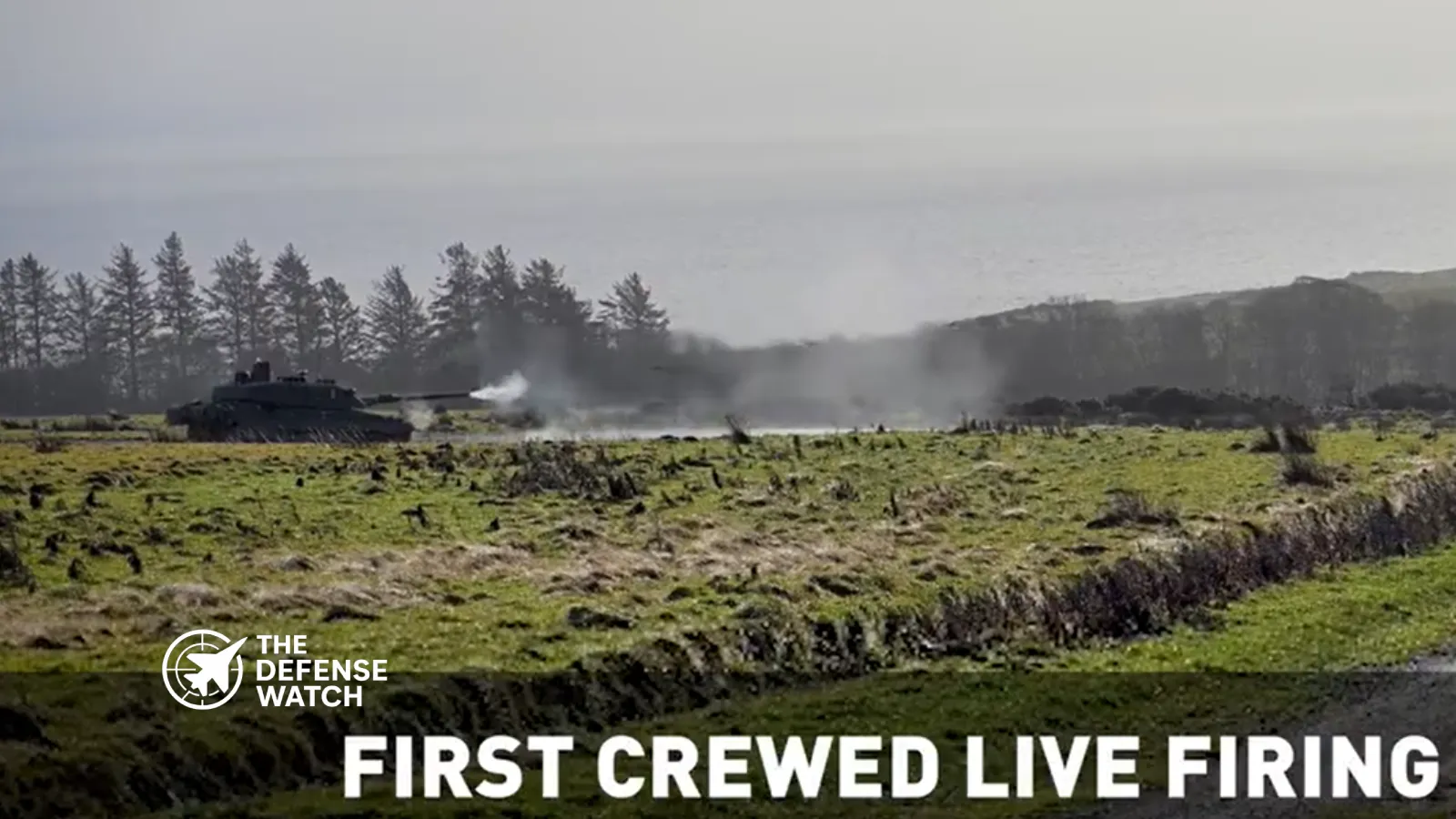
A British made main battle tank has completed its first crewed live firing trial, marking the first time in more than 30 years that a newly developed MBT has fired live ammunition on British soil. The milestone was achieved by the Challenger 3, the British Army’s next generation main battle tank, as part of its ongoing development and qualification program.
The trial represents a significant step in the United Kingdom’s armored vehicle modernization effort and underscores renewed domestic capability in heavy armored systems. According to statements from the UK Ministry of Defence and industry partners, the firing trial validated core elements of the Challenger 3’s upgraded turret, main armament, and crew integration.
Challenger 3 and the Return of Domestic MBT Development
The Challenger 3 program replaces the legacy Challenger 2 fleet, which entered service in the late 1990s. While Challenger 2 has undergone several incremental upgrades, the Challenger 3 represents the first fundamentally new British Army main battle tank configuration to reach live firing trials since the Cold War era.
Developed under the Rheinmetall BAE Systems Land partnership, the Challenger 3 program focuses on restoring overmatch against peer adversaries while extending the service life of the British Army’s heavy armor force into the 2040s.
The recent live firing event marks the first time a British made main battle tank has fired as a newly developed platform in the UK since the Challenger 2 trials of the early 1990s. Defense analysts view this as a symbolic and practical turning point for the UK armored industrial base.
Live Fire Trial Details and Objectives
The crewed live firing trial was conducted at a UK test range under controlled conditions. A fully crewed Challenger 3 fired its primary armament, the NATO standard 120 mm smoothbore gun, validating both mechanical performance and crew procedures.
According to the UK Ministry of Defence, the objectives of the trial included:
Verification of turret integration and recoil management
Assessment of fire control system performance
Crew safety and ergonomics under live fire conditions
Initial validation of ammunition handling systems
The successful trial confirms that the Challenger 3 design has progressed beyond laboratory and simulator testing into full system level evaluation.
Key Upgrades Over Challenger 2
The Challenger 3 introduces several major changes compared to its predecessor. These upgrades are intended to address obsolescence and improve interoperability with allied forces.
Notable improvements include:
A new welded turret designed by Rheinmetall
NATO compatible 120 mm smoothbore main gun
Updated digital fire control and targeting systems
Enhanced armor protection and survivability measures
Modernized automotive and electronic subsystems
The move to a smoothbore gun aligns the British Army with other NATO main battle tanks such as the M1A2 Abrams and Leopard 2, simplifying ammunition logistics and coalition operations.
Strategic Significance for the British Army
The successful live firing of a British made main battle tank carries strategic weight beyond technical validation. It signals renewed investment in heavy land forces at a time when European militaries are reassessing armored warfare in light of recent conflicts.
UK defense officials have emphasized that Challenger 3 will form the core of the British Army’s armored brigades, contributing to NATO deterrence and high intensity warfighting capabilities.
From a U.S. perspective, the Challenger 3 program reflects a broader trend among allies to modernize armored fleets, increase standardization, and rebuild industrial capacity for ground combat systems.
Industrial and Program Context
The Challenger 3 upgrade program covers 148 vehicles and is expected to achieve initial operating capability later this decade. Final acceptance trials and additional live fire testing are planned before the tank enters frontline service.
Rheinmetall BAE Systems Land has highlighted the program as a cornerstone of the UK’s land systems industrial strategy, supporting skilled jobs and sovereign design expertise.
Defense industry observers note that the ability to conduct live firing trials domestically reduces reliance on overseas test facilities and strengthens national control over sensitive armored technologies.
What Comes Next
Following the initial crewed live fire event, the Challenger 3 will undergo further testing, including:
Extended accuracy and reliability trials
Environmental and mobility evaluations
Integration testing with British Army units
Operational assessment prior to service entry
Each phase will be required before the British Army formally declares the tank combat ready.
Get real time update about this post category directly on your device, subscribe now.
