

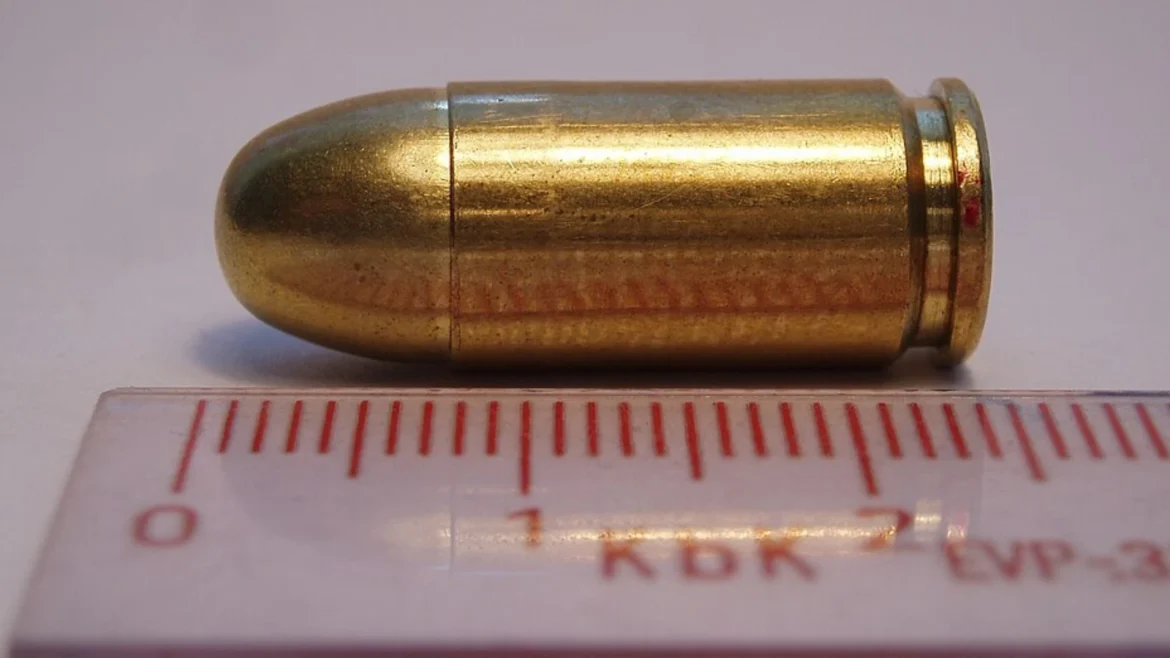
The 9×19mm cartridge, commonly called 9mm, has a long and well-established history as a military and law-enforcement handgun caliber. Its widespread adoption across different countries has made it one of the most recognizable pistol cartridges in the world. Even as modern armed forces introduce newer sidearm designs, 9mm continues to have an important place in military handgun inventories.
Why Militaries Chose 9mm
Military organizations generally look for sidearm cartridges that can be supported by established manufacturing and supply systems while working reliably in service pistols. The 9×19mm cartridge became particularly successful because it was adopted by numerous countries and manufacturers over many decades.
Its military history is closely connected with European service pistols and later with NATO-standard ammunition practices. The cartridge eventually became common across a wide range of military handguns, creating an extensive international ecosystem of compatible firearms and ammunition.
9mm and NATO Service
One of the major developments in the history of 9mm was its adoption as a standard NATO pistol and submachine-gun cartridge. Standardization helped participating countries simplify ammunition compatibility and logistics.
This did not mean every NATO military used exactly the same pistol. Different nations selected different service handguns, but many of those firearms were chambered for the same basic 9×19mm cartridge.
General Factors Behind Its Adoption
- Availability: 9mm has been manufactured extensively around the world, giving military organizations access to established production and supply networks.
- Standardization: Its widespread military adoption has made the cartridge familiar across different armed forces.
- Firearm compatibility: Many military and service pistols have been designed around the 9×19mm cartridge.
- Long service history: Decades of military use have created substantial experience with the caliber.
A Longstanding Military Caliber
The history of 9mm ammunition extends well beyond one particular pistol. Numerous military handguns have been chambered for the cartridge, including service designs from manufacturers such as Beretta, SIG Sauer, Heckler & Koch, and Glock.
The United States provides a useful example. The Beretta M9 became the U.S. military’s standard service pistol during the 1980s and used 9×19mm ammunition. The later M17 and M18 pistols selected under the Modular Handgun System program also use 9mm.
Other armed forces have adopted their own 9mm service pistols, reflecting the cartridge’s international reach.
How Military 9mm Ammunition Differs
Military ammunition is produced according to specifications established by the relevant armed force or standardization organization. Those specifications can cover factors such as projectile construction, dimensions, pressure, reliability, and manufacturing quality.
Historically, full-metal-jacket ammunition has been strongly associated with military 9mm use. This type of projectile has a metal jacket surrounding its core and has commonly been used for military training and service applications.
The exact ammunition used by a particular military can change over time as contracts, firearms, standards, and procurement requirements change.
The Growth of 9mm Adoption
The following conceptual graph illustrates the broad expansion of 9mm’s military presence over time. It is intended as a historical visualization rather than a numerical count of countries or ammunition purchases.
Conceptual trend in military adoption of 9mm
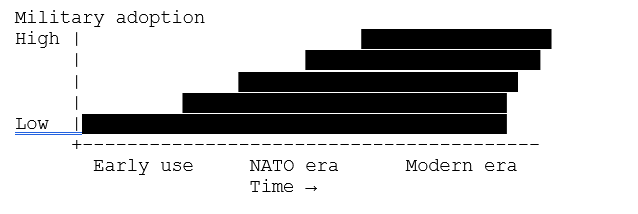
The overall trend reflects how the cartridge moved from individual military applications toward broader international adoption, particularly during the second half of the twentieth century.
Why 9mm Remains Relevant
The continued popularity of 9mm is not based on one characteristic alone. Its history, international availability, established manufacturing infrastructure, and compatibility with numerous handgun designs all contribute to its longevity.
For readers researching the cartridge itself, 9mm ammunition represents a broad category that includes different types of 9×19mm cartridges intended for various lawful shooting applications.
Modern Service Pistols and 9mm
Military sidearms have evolved considerably since the earliest 9mm service pistols appeared. Modern designs often incorporate improved ergonomics, modular components, updated safety systems, and contemporary materials.
Despite these changes, many modern service pistols continue to use the same basic 9×19mm cartridge. This continuity allows newer firearm designs to benefit from an ammunition standard with a long-established manufacturing base.
That consistency is particularly valuable for organizations that already have substantial experience with 9mm firearms and ammunition. Moving to a completely different caliber can require changes to training, supply chains, storage systems, and equipment.
The Future of 9mm in Military Use
Military handgun requirements will continue to evolve, and individual countries may choose different cartridges or firearm systems in the future. Nevertheless, 9×19mm has several advantages that make it difficult to overlook.
Its extensive history means that manufacturers have considerable experience producing both firearms and ammunition for the caliber. At the same time, its widespread use means that 9mm remains familiar to military personnel, law-enforcement agencies, competitive shooters, and other lawful users.
For these reasons, 9mm ammunition remains an important part of the history and present-day landscape of military sidearms. While technologies and service pistols may change, the 9×19mm cartridge has demonstrated remarkable staying power.
FAQs
Because 9×19mm has a long service history, broad international production base, extensive firearm compatibility, and established NATO standardization.
9×19mm describes the cartridge’s approximate bullet diameter and case length. It is commonly called 9mm or 9mm Luger.
9mm NATO refers to ammunition manufactured to NATO specifications. While it uses the 9×19mm cartridge, specific military ammunition can differ in construction and specifications.
Examples include the Beretta M9 and the U.S. M17 and M18 pistols, along with numerous service pistols used by other armed forces.
Bottom line: I would keep the article, but strengthen the sourcing and SEO before publishing. The strongest primary keyword for this piece is 9mm ammunition, while 9×19mm ammunition and 9mm military sidearms work well as secondary targets.