
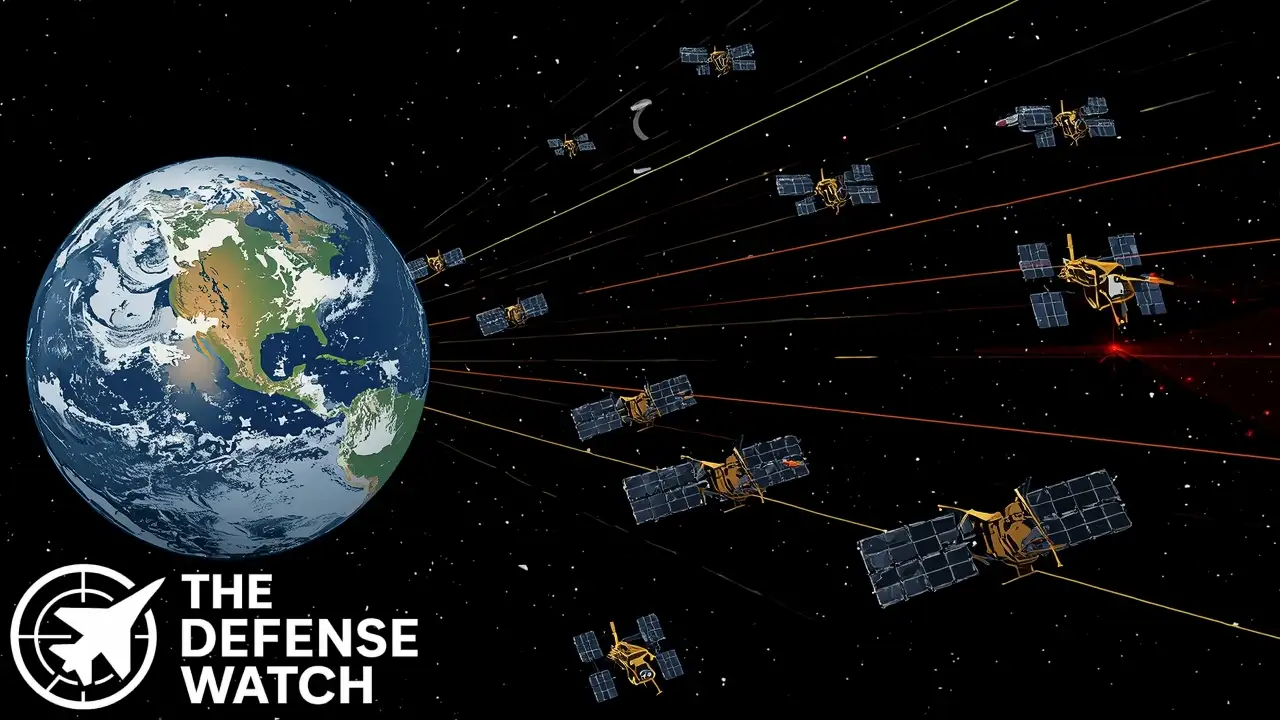
The debate over the militarization and weaponization of space is no longer theoretical. As major powers expand their space programs, satellites and orbital systems increasingly serve not just scientific but also military purposes. While the terms are often used interchangeably, the difference between militarization and weaponization of space is crucial for understanding the future of global security.
What is Space Militarization?
Militarization of space refers to the use of space-based assets to support military operations on Earth without deploying destructive weapons in orbit. This includes:
- Surveillance and reconnaissance satellites that monitor adversary movements.
- Communications satellites that link forces across continents.
- GPS and navigation systems that guide troops, ships, and precision weapons.
The U.S. Global Positioning System (GPS), Russia’s GLONASS, Europe’s Galileo, and China’s BeiDou are prime examples of space militarization. These systems are not designed to attack but instead provide strategic and tactical advantages to armed forces.
What is Space Weaponization?
In contrast, weaponization of space involves placing destructive weapons in orbit or developing systems that can disable, destroy, or interfere with enemy space assets. Key examples include:
- Anti-satellite (ASAT) weapons capable of shooting down satellites from Earth or space.
- Directed-energy weapons such as space-based lasers for disabling satellites.
- Orbital strike platforms, which remain more science fiction than reality, but are often debated in policy circles.
Notably, the 2007 Chinese ASAT test, which destroyed one of its own weather satellites and created thousands of pieces of orbital debris, marked a turning point in global concerns about space weaponization.
Key Differences at a Glance
| Aspect | Militarization of Space | Weaponization of Space |
|---|---|---|
| Definition | Use of space assets for military support | Deployment of weapons in or from space |
| Examples | GPS, surveillance satellites, secure comms | ASAT missiles, space-based lasers |
| Purpose | Enhance Earth-based military capability | Destroy or disable enemy space assets |
| Risk | Strategic dependency, jamming, cyber threats | Escalation, orbital debris, arms race |
Why the Distinction Matters
The distinction between militarization and weaponization is critical for international law and space policy. Treaties like the Outer Space Treaty of 1967 prohibit the placement of nuclear weapons in orbit but do not prevent the use of space for military purposes. This legal ambiguity has allowed militarization to thrive while leaving weaponization in a gray area.
If weaponization accelerates, it could trigger an arms race in orbit, with devastating consequences for satellites that underpin modern life—from banking transactions to weather forecasts.
Global Players and Emerging Concerns
- United States: Established the U.S. Space Force in 2019 to protect American assets and counter threats.
- China: Developing ASAT capabilities and integrating space into its joint warfighting doctrine.
- Russia: Testing co-orbital systems suspected of having dual-use potential.
- India: Demonstrated ASAT capability in 2019’s “Mission Shakti.”
These developments highlight that while militarization of space is already entrenched, weaponization is emerging as the next frontier.
Analysis: The Path Forward
The growing reliance on space assets makes them lucrative targets in conflict. Experts warn that without international agreements to clearly define limits, the world risks moving from space militarization to weaponization—a shift with irreversible consequences.
Countries face a dilemma: rely on fragile international treaties, or prepare for a future where space becomes a contested battlefield. The balance struck in the next decade will define whether outer space remains a domain of peaceful utility or escalates into a militarized and weaponized arena.
FAQs
Militarization uses space for support roles like surveillance and communication, while weaponization involves placing destructive weapons in orbit or targeting satellites.
Yes. Satellites for navigation, communications, and reconnaissance are key examples of militarization.
Partially. Earth-based ASAT tests by the U.S., Russia, China, and India demonstrate weaponization, but fully deployed space-based weapons are not yet operational.
The Outer Space Treaty (1967) prohibits weapons of mass destruction in orbit but does not explicitly ban other forms of weaponization.
Get real time update about this post category directly on your device, subscribe now.

1 comment
[…] development of hypersonic glide vehicles (HGVs) has further fueled concerns about the militarization of space. The DF-ZF HGV, tested multiple times since 2014, can maneuver at speeds above Mach 5, potentially […]