The United States government has approved potential foreign military sales worth more than US$1 billion to three allied nations — Denmark, Italy and Republic of Korea (South Korea) — authorizing a range of air-launched munitions and support equipment.
The approvals, announced 5 December 2025 by the Defense Security Cooperation Agency (DSCA), open the door for acquisition and integration of advanced missiles and bombs into the air arsenals of all three countries.
Details of the Sale
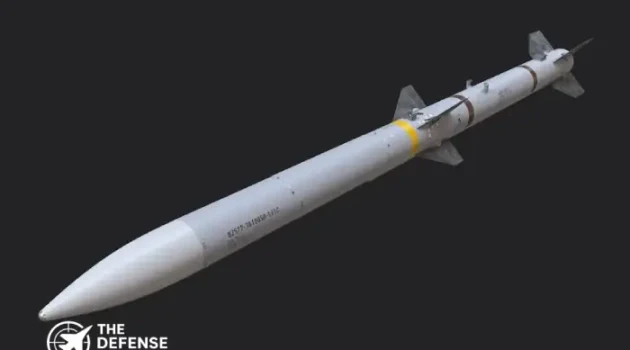
Denmark: AIM-120C-8 Missiles
Denmark has been cleared to purchase up to 200 AIM-120C-8 AMRAAM (Advanced Medium Range Air-to-Air Missiles) for an estimated total of US$730 million. The sale includes associated support equipment and services.
According to DSCA the sale will enhance Denmark’s air-to-air capability and improve its interoperability with U.S. and NATO air forces.
This clearance comes shortly after Copenhagen was approved to purchase 340 AIM-9X Sidewinder Block II missiles.
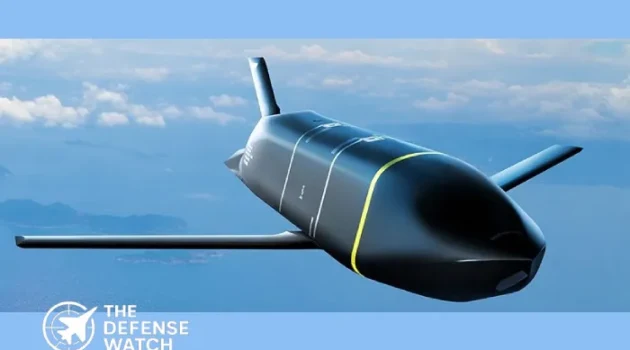
Italy: JASSM-ER Cruise Missiles
Italy is authorized to buy 100 units of the long-range AGM-158B/B-2 JASSM-ER (Joint Air-to-Surface Standoff Missiles – Extended Range), along with related hardware, logistics and support. The estimated value of the package is US$301 million.
The DSCA notes the sale will expand Italy’s air-to-surface strike reach, enabling stand-off attacks from safer distances. The missiles are compatible with Italian fighter aircraft including — but not limited to — the F-35.
South Korea: GBU-39/B Small Diameter Bombs
South Korea has received clearance for 624 units of the GBU-39/B Small Diameter Bomb (SDB-I), at a cost of approximately US$112 million including related support. The new sale supplements an earlier batch under a previous contract.
The bombs are precision-guided weapons designed for use by fighter and bomber aircraft, allowing for accurate strike against hardened or fortified ground targets.
Context: Why Now
Recent years have seen a marked rise in conventional arms imports by European NATO states. According to the Stockholm International Peace Research Institute (SIPRI), U.S. arms exports to Europe increased 233% between 2015–19 and 2020–24, making Europe the largest regional recipient of U.S. weapons in decades.
The approvals for Denmark and Italy show continued U.S. support for strengthening air capabilities among NATO partners. At the same time, the sale to South Korea underscores Washington’s effort to reinforce regional allies in Asia amid rising security concerns across the Indo-Pacific.
Implications for Recipients
For Denmark, acquiring 200 AIM-120C-8 missiles will significantly boost its air-to-air combat readiness, particularly as part of NATO’s aerial deterrence posture. The compatibility of those missiles with modern fighters allows for quick integration.
Italy’s acquisition of JASSM-ER missiles will give its air force deep strike capability, enabling long-range precision attacks well beyond previous reach. This improves Italy’s ability to contribute to coalition operations or national defense missions requiring stand-off engagements.
For South Korea, the additional GBU-39 bombs expand its precision-strike inventory, increasing flexibility in targeting hardened or fortified positions while reducing collateral damage. This could enhance Seoul’s deterrence or rapid-response capacity.
What’s Next
With DSCA’s clearance granted on 5 December, the respective governments and U.S. defence contractors will move into the contracting and procurement phase. Final delivery schedules will depend on manufacturing lead times, integration timelines and training.
These sales come at a time when rising global demand — driven in part by recent conflicts and shifting security dynamics — has pushed U.S. arms exports to new highs. As these weapons enter service, they may reshape air combat and strike capabilities among U.S. allies in both Europe and the Indo-Pacific.
Get real time update about this post category directly on your device, subscribe now.