
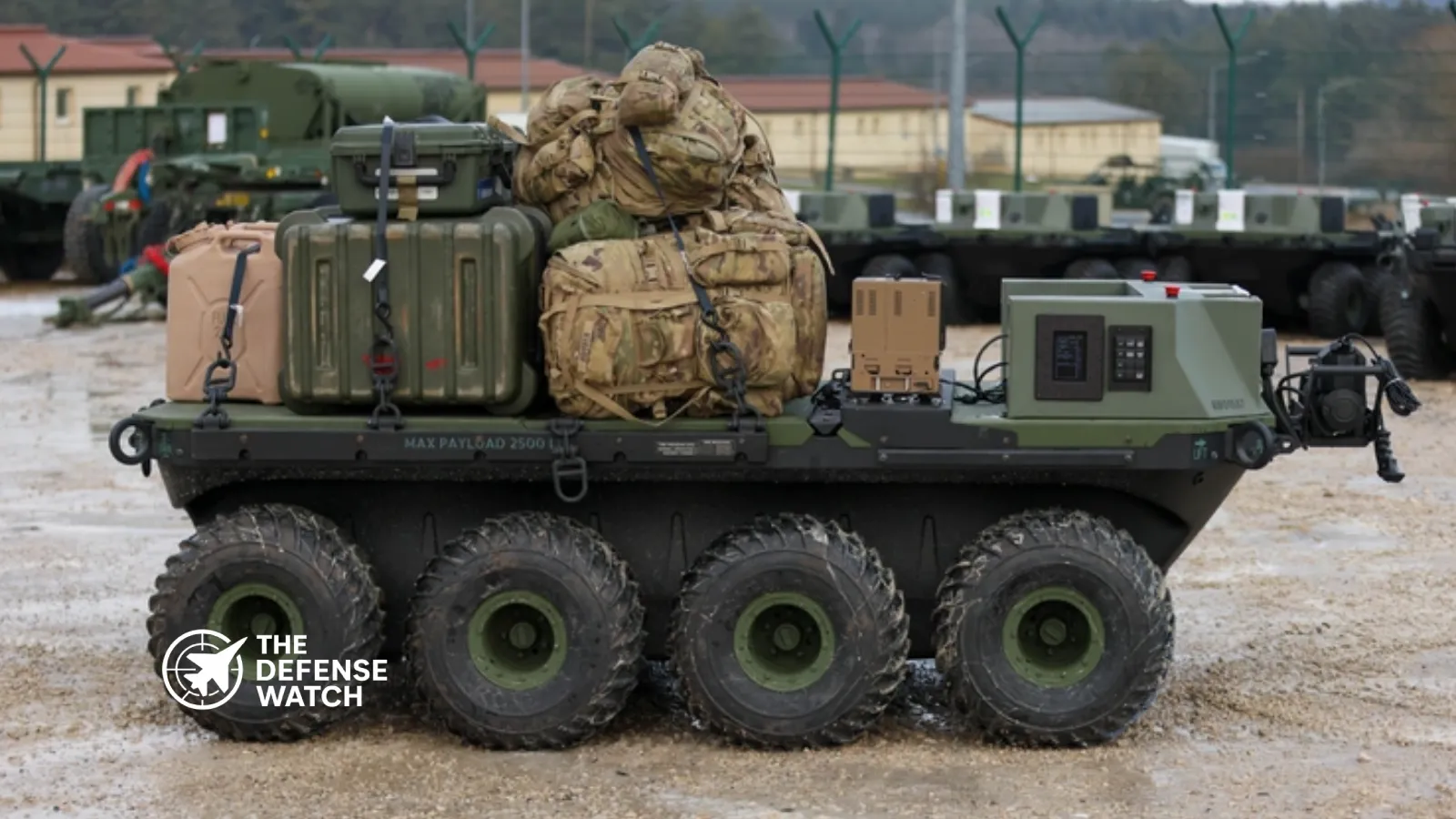
Revolutionary Autonomous Systems Target Chemical Warfare Threats
The U.S. Army is advancing a groundbreaking initiative to deploy autonomous drones and ground robots for chemical and biological weapons decontamination, marking a significant evolution in how military forces address CBRN (Chemical, Biological, Radiological, and Nuclear) threats on the battlefield.
The Autonomous Decontamination System (ADS) represents a paradigm shift in military decontamination operations, designed to scrub contaminated vehicles, critical infrastructure, and strategic terrain while substantially reducing warfighter exposure to deadly agents. According to official Army documentation, this technology will enable squad-sized elements to deliver platoon-level decontamination capabilities—a force-multiplier that addresses critical manpower constraints in chemical warfare units.
The Joint Project Manager for Chemical, Biological, Radiological, and Nuclear Protection (JPM CBRN Protection) issued a Request for Information on February 3, 2026, with responses due February 20, signaling an accelerated timeline for this capability development.
Technical Specifications Drive Innovation
The Army’s requirements outline sophisticated operational capabilities for autonomous decontamination systems. Contractors must demonstrate solutions encompassing both tethered and untethered robotic platforms transportable via light or medium tactical vehicles, ensuring rapid deployment across varied operational environments.
The ADS must execute four critical functions with precision. First, systems must conduct pre-washing operations using water to remove initial contamination layers from vehicles and equipment. Second, platforms must map contamination footprints using advanced sensors, creating detailed spatial data of affected areas.
Third, and most critically, robots must apply decontamination agents with precision targeting, ideally leveraging contamination footprint data to concentrate chemical applications on affected zones rather than applying blanket coverage. Finally, systems must perform post-wash operations and conduct post-decontamination assessments utilizing existing fielded detector technology to verify successful decontamination.
Navigation capabilities represent a key technical consideration. The Army seeks information on whether proposed systems utilize GPS, Real-Time Kinematic positioning, Visual Simultaneous Localization and Mapping (VSLAM), or alternative navigational technologies. Autonomy levels must be clearly specified—whether fully autonomous, operator-in-the-loop, or manual remote control configurations.
Operational Requirements Address Real-World Challenges
Decontamination component specifications include detailed requirements for nozzle types, flow rates, and pressure parameters. Systems must demonstrate compatibility with multiple decontaminant types including solids, liquids, and foams. Specifically, platforms must handle High Test Hypochlorite (HTH) and M333 Joint General-Purpose Decontaminant for Hardened Military Equipment (JGPD-HME), representing the Army’s standard decontamination chemicals.
According to the RFI, “contamination mitigation operations are extremely resource-intensive in terms of time, logistics, and personnel.” The document emphasizes that ADS technology will “reduce manpower and optimize resources required for decontamination operations while mitigating the risk of exposure of warfighters to chemical and biological warfare agents through robotic means.
This capability addresses a fundamental tactical problem: current decontamination operations require extensive personnel resources that may not be available when needed, particularly in high-tempo combat operations where chemical warfare units face competing demands across wide geographic areas.
Strategic Context Underscores Urgency
The timing of this initiative reflects evolving global threats. The United States confronts multiple weapons of mass destruction challenges, including nuclear-armed adversaries such as North Korea and potentially Iran, alongside emerging threats from terrorist organizations potentially leveraging artificial intelligence for biological weapons development.
The Army’s broader CBRN modernization efforts extend beyond autonomous decontamination systems. Parallel programs include the Nuclear, Biological and Chemical Reconnaissance Vehicle Sensor Suite Upgrade (NBCRV SSU), which equips Stryker armored vehicles with onboard drones capable of scouting ahead for contaminants without exposing vehicle crews to hazardous environments.
The NBCRV SSU program, announced in January 2025, will “improve maintainability, reliability, and remote maneuverability from threats by including unmanned aerial vehicles, modular mission payload (a system where different equipment components can be easily swapped or added to a platform), a data processing unit, and more,” according to Army statements.
Training Policy Questions Emerge
Interestingly, recent Army policy changes have made CBRN training optional rather than mandatory. The updated Army Regulation 350-1 specifies that training modules remain available as needed, but commanders possess discretion in deciding whether to include CBRN training in unit readiness programs.
This policy shift raises questions about how the Army balances investment in advanced autonomous decontamination technology against baseline CBRN knowledge across the force. Defense analysts suggest the contradiction may reflect confidence that autonomous systems will reduce the technical expertise required at lower echelons, centralizing specialized CBRN knowledge while distributing technological capability more broadly.
Industry Response And Development Timeline
The February 20 deadline for contractor responses indicates the Army aims to move rapidly from information gathering to potential prototype development and testing phases. Defense industry sources suggest multiple established robotics manufacturers and emerging autonomous systems developers will submit proposals.
Potential contractors face significant technical challenges balancing autonomy, decontamination effectiveness, mobility, and operational durability. Systems must function in contested environments with potential GPS denial, chemical contamination affecting sensors, and extreme environmental conditions from Arctic cold to desert heat.
The request for information stage typically precedes formal solicitation processes, suggesting actual contract awards may occur in fiscal year 2026 or early 2027, with fielding potentially beginning in 2028-2029 timeframes depending on development complexity and testing requirements.
Implications For Future Operations
Autonomous decontamination systems represent a component of broader military transformation toward robotic and autonomous platforms reducing human exposure in high-risk environments. These capabilities align with the Pentagon’s emphasis on achieving decision advantage through technology while protecting personnel from hazardous threats.
Successful ADS deployment could fundamentally alter CBRN response doctrine. Rather than requiring specialized chemical companies to deploy forward for decontamination operations—creating logistics burdens and operational delays—line units could conduct immediate decontamination using organic robotic assets, accelerating operational tempo and reducing vulnerability windows.
The technology also provides capabilities for homeland defense scenarios, including response to chemical or biological attacks on U.S. territory, industrial accidents involving hazardous materials, or consequence management following unconventional weapons employment.
International Context And Allied Cooperation
While the Army’s initiative focuses on U.S. requirements, allied nations face identical challenges regarding CBRN decontamination. NATO standardization agreements covering CBRN defense create potential pathways for allied nations to adopt compatible or interoperable autonomous decontamination systems, enhancing collective defense capabilities.
Several NATO allies including Germany, France, and the United Kingdom maintain advanced CBRN defense programs and robotics industries capable of contributing to or adopting similar technologies. Joint development or cross-procurement arrangements could reduce costs while ensuring interoperability during coalition operations.
Looking Forward
The Army’s pursuit of autonomous drones for chemical weapons decontamination reflects pragmatic recognition that future conflicts may involve CBRN threats requiring rapid, effective response capabilities exceeding current manual decontamination methods. As adversaries develop increasingly sophisticated unconventional weapons and delivery systems, robotic platforms providing standoff decontamination capabilities become operational necessities rather than technological luxuries.
Industry responses to the RFI will reveal the current state of autonomous decontamination technology and identify gaps requiring additional research and development investment. The Army’s commitment to this capability, demonstrated through formal requirements documentation and accelerated timelines, signals that autonomous CBRN defense systems will feature prominently in future force structure planning.
Get real time update about this post category directly on your device, subscribe now.
