
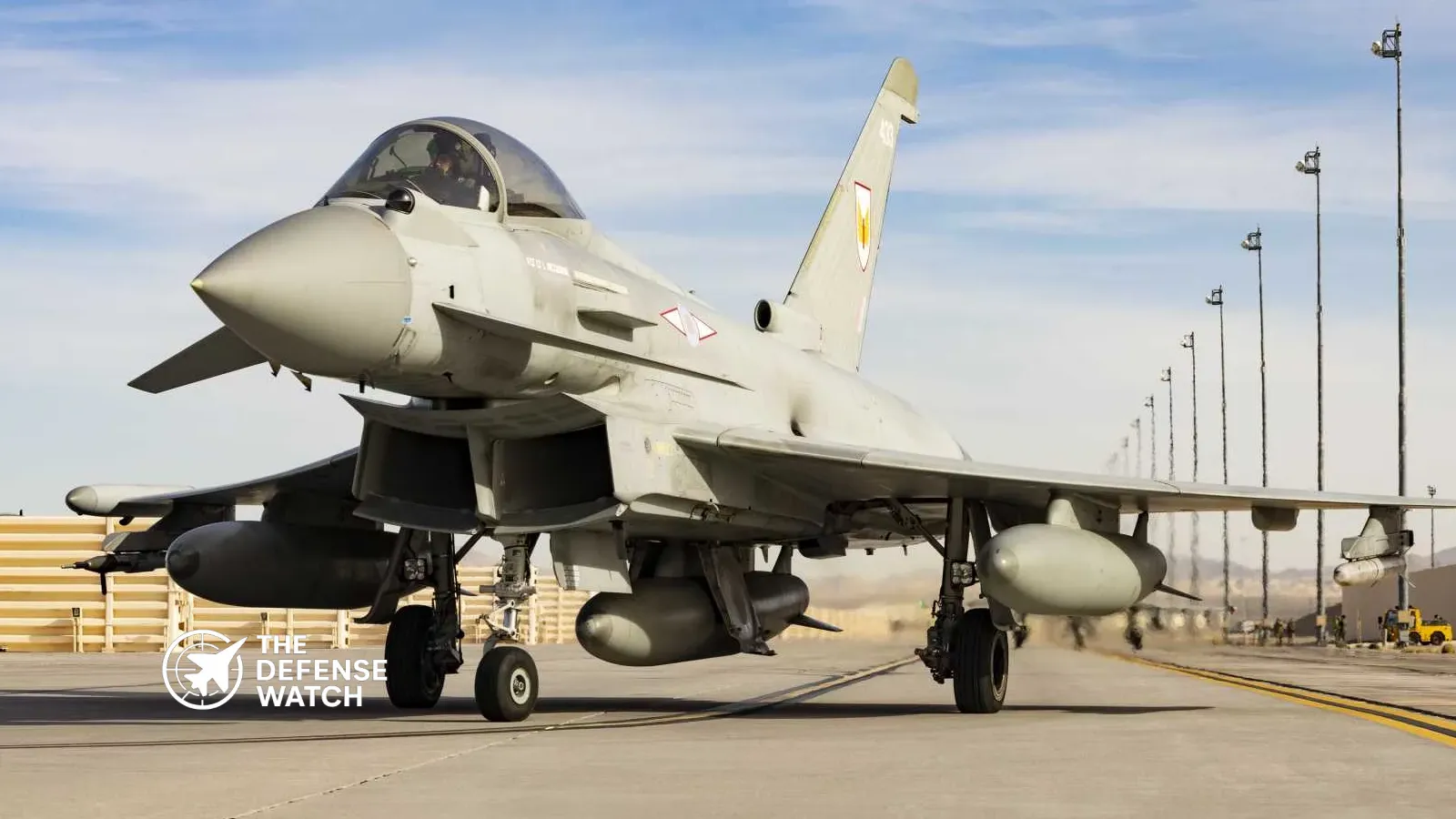
- The United Kingdom is deploying four additional RAF Typhoon fighter jets to Qatar to strengthen regional air defense operations.
- The aircraft will reinforce an existing UK–Qatar joint Typhoon squadron already operating in the Gulf.
- The move follows a drone attack on the RAF base at Akrotiri in Cyprus amid escalating regional tensions.
- RAF Typhoon and F-35B fighters have recently intercepted Iranian drones over Jordan and the Gulf region.
- The deployment expands the UK’s layered air defense posture across the Eastern Mediterranean and Gulf.
UK Deploys Additional Typhoon Fighters To Qatar
The United Kingdom is deploying additional RAF Typhoon fighters to Qatar following a drone attack on a British military base in Cyprus, expanding its air defense presence across the Middle East. British Prime Minister Keir Starmer confirmed that four additional Typhoon combat aircraft will join the existing Royal Air Force contingent operating from Qatar to reinforce defensive operations across the region.
The move comes amid rising tensions linked to the ongoing regional conflict involving Iran and its partners. The UK government says the deployment aims to protect British forces, allied installations, and regional partners from missile and drone threats.
The Big Picture
European air forces are increasing their presence across the Middle East as drone warfare and missile strikes expand across multiple fronts.
The United Kingdom has long maintained a rotational air presence in the Gulf through joint deployments with Qatar and NATO partners. The current escalation has pushed London to expand its defensive posture across several locations including Qatar, Cyprus, Jordan, and the Eastern Mediterranean.
The rapid deployment of additional fighter aircraft reflects a broader shift among Western militaries toward persistent air defense coverage in regions where drones, cruise missiles, and loitering munitions now represent the primary threat to military bases and infrastructure.
What’s Happening
British officials confirmed that four additional Eurofighter Typhoon FGR4 fighters will deploy to Qatar to reinforce the existing RAF presence in the country. The aircraft will support defensive air operations and protect allied assets across the Gulf region.
The fighters will operate alongside aircraft from the joint UK–Qatar No. 12 Squadron, which has been stationed in the region as part of ongoing defense cooperation between London and Doha.
The decision follows a drone strike on the RAF base at Akrotiri in Cyprus earlier in the week. The attack caused limited damage but highlighted the growing risk posed by long-range drones targeting Western military infrastructure.
British officials also confirmed that RAF aircraft recently intercepted several unmanned aerial vehicles operating in the region, including Iranian drones shot down over Jordan and near Qatar during defensive patrol missions.
Alongside the fighter deployment, the United Kingdom has also ordered additional defensive assets to the region, including Wildcat helicopters equipped with anti-drone missiles and the Type 45 air defense destroyer HMS Dragon.
Why It Matters
Drone warfare is rapidly changing how air forces protect overseas bases.
Relatively inexpensive one-way attack drones can travel hundreds of kilometers and threaten major military installations. These weapons have become a common feature of conflicts across the Middle East, from Yemen to Iraq and Syria.
Advanced fighters like the Typhoon provide a flexible air defense layer capable of detecting and intercepting drones before they reach their targets. Equipped with advanced radar and air-to-air missiles, the aircraft can conduct continuous combat air patrols and rapidly respond to emerging threats.
For the United Kingdom, maintaining such air patrols is critical to protecting forces stationed at key regional bases including RAF Akrotiri in Cyprus and joint coalition facilities across the Gulf.
Strategic Implications
The deployment expands the United Kingdom’s regional air defense network across multiple operational theaters.
With Typhoon fighters operating from Qatar and Cyprus, British forces now maintain overlapping air coverage stretching from the Eastern Mediterranean to the Persian Gulf. This distributed posture improves response time against missile or drone launches targeting allied bases.
The deployment also reinforces the UK–Qatar defense partnership, which has deepened in recent years through joint training, arms procurement programs, and combined operational units.
Maintaining a credible fighter presence in the Gulf allows London to support coalition air defense efforts while also protecting British nationals and military personnel stationed across the region.
Competitor View
Regional adversaries will likely view the deployment as part of a broader Western effort to strengthen air defense coverage around key military infrastructure.
Iran and its regional partners have increasingly relied on drones and precision missiles to challenge Western military positions without triggering direct conventional conflict. Expanding fighter patrols complicates those tactics by increasing interception capability across key operational corridors.
The presence of additional RAF fighters in Qatar also signals continued Western willingness to protect Gulf partners against aerial threats.
What To Watch Next
Several developments could shape how the UK deployment evolves in the coming weeks.
Military planners will monitor whether drone or missile attacks against coalition facilities continue to increase. Sustained attacks could lead to additional fighter deployments or expanded air defense assets in the region.
Naval deployments may also expand as Western countries increase maritime air defense capabilities in the Eastern Mediterranean and Gulf.
Operational tempo for RAF fighters will remain high as long as combat air patrol missions are required to defend regional airspace.
Capability Gap
The recent drone attack in Cyprus exposed the vulnerability of fixed overseas bases to low-cost aerial threats.
Traditional air defense systems often struggle to intercept large numbers of small drones launched simultaneously. Fighter aircraft help close this gap by providing rapid response capability and persistent surveillance across wide operational areas.
However, fighter patrols alone cannot provide complete protection. Effective defense against drone swarms requires layered systems including ground-based air defenses, electronic warfare capabilities, and naval radar platforms.
The UK’s current deployments suggest London is attempting to build precisely that kind of layered defense architecture across the region.
The Bottom Line
The United Kingdom’s deployment of additional Typhoon fighters to Qatar strengthens allied air defenses in a region where drones and missiles are increasingly shaping the battlefield.
Get real time update about this post category directly on your device, subscribe now.

