

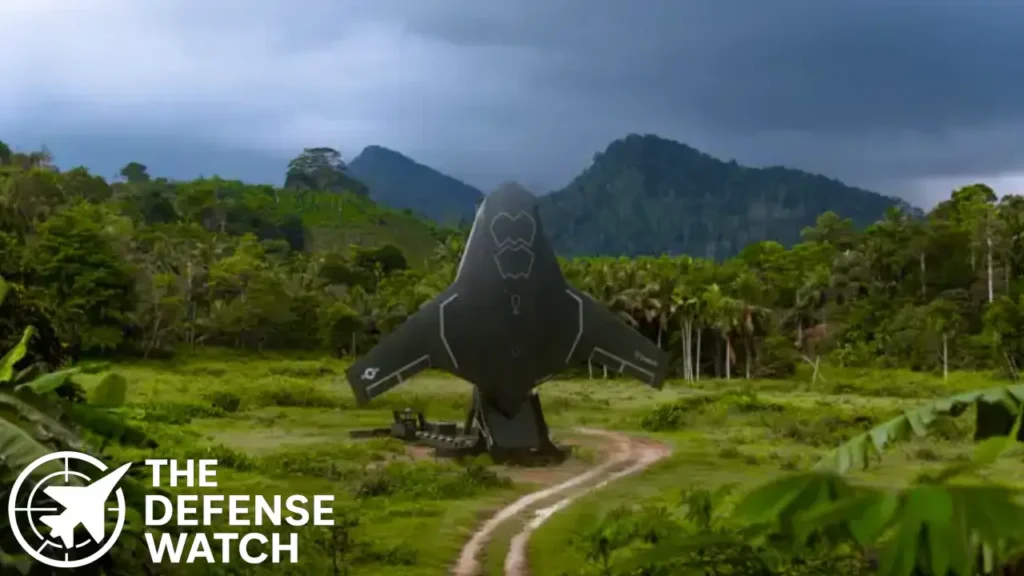
In a major unveiling on October 22 2025, U.S. defence-technology company Shield AI revealed the X-BAT, a next-generation unmanned, vertical-take-off-and-landing (VTOL) fighter-class aircraft powered by its proprietary autonomy software “Hivemind”.
Designed for runway-independent operations and missions in denied or degraded environments, X-BAT is pitched as both a standalone combat aircraft and a “loyal wingman” unmanned asset operating alongside crewed fighters.
What is the X-BAT?
Key capabilities and design
According to Shield AI’s announcement:
- X-BAT offers VTOL launch and recovery, enabling operations from ships, islands, container-vessels or forward sites without runways.
- The aircraft is said to achieve over 2,000 nautical miles of range while carrying a full mission payload.
- Designed for multi-role missions: air-to-air, air-to-surface strike, electronic warfare (EW), intelligence-surveillance-reconnaissance (ISR) and drone wingman tasks.
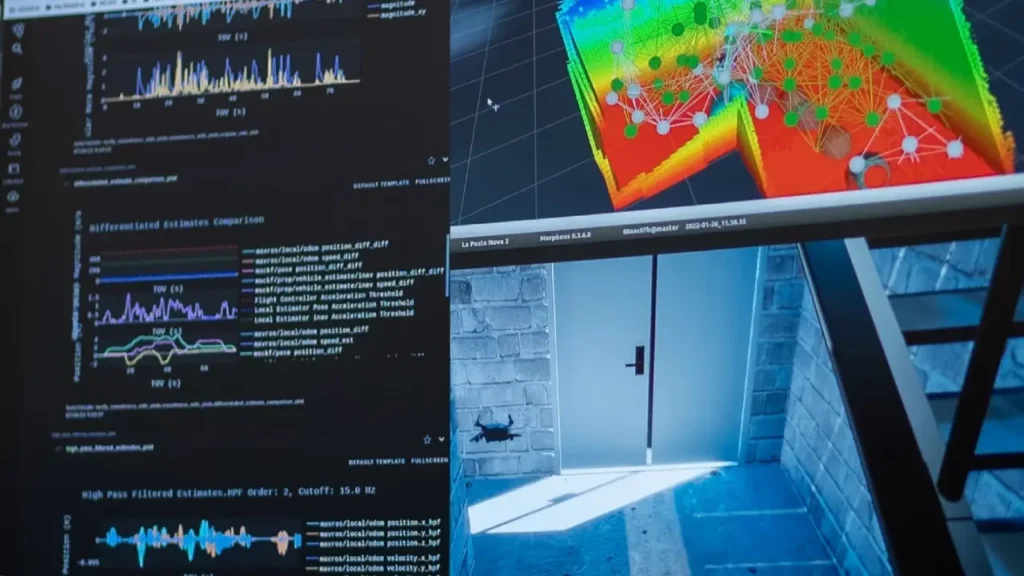
- Fueled by Shield AI’s Hivemind autonomy software, enabling operations in GPS- and communications-degraded or denied environments.
- Compact footprint: Shield AI claims that three X-BATs can fit into the deck space of one legacy fighter or helicopter.
- The company positions the price point significantly lower than legacy crewed fighters — approximately $27–30 million per unit is cited by some sources.
Development roadmap
Shield AI indicates first VTOL flights are slated for around 2026, with full mission-capability production expected by 2028–2029.
Why this matters for U.S. defence and global airpower
Autonomy and attritable force structure
The U.S. military’s interest in “loyal wingman” or unmanned combat aircraft (UCA) is well established. Programs such as the Collaborative Combat Aircraft (CCA) initiative seek to pair unmanned platforms with crewed jets for distributed operations. The X-BAT enters this field with several differentiators: runway-free VTOL, long-range, multi-mission flexibility and full autonomy capability.
From a U.S. defence perspective, this represents a shift: enabling more distributed, lower-cost airpower that can absorb losses (attritability) and extend reach in contested theatres. The lower cost and autonomous nature reduce the risk to pilots and traditional infrastructure.
Challenges to contested environments
In a high-end peer adversary scenario—especially in the Indo-Pacific where basing and logistics are vulnerable—the ability to launch combat aircraft from austere locations or ships without full runway infrastructure becomes highly advantageous. Shield AI describes the concept as “airpower without runways … the holy grail of deterrence”. The X-BAT’s autonomy to operate in GPS/communications-denied environments further supports operations in heavily contested spaces where traditional platforms may struggle.
Technology trends and strategic implications
The unveiling of X-BAT underscores several broader technology trends:
- The increasing centrality of artificial intelligence, autonomy and machine-speed decision making in air combat. For example, Shield AI’s autonomy software previously controlled a modified F-16 in a dog-fight exercise.
- The move toward smaller, more versatile platforms rather than ever larger, more expensive systems. X-BAT aims to deliver “fighter-class” performance at a fraction of traditional fifth-generation fighter cost.
- The convergence of airborne strike, ISR, electronic warfare and teaming missions into a unified, modular platform rather than specialised siloed systems.
Analysis: What the development means
For the United States, the X-BAT signals a potential leap in how airpower might be structured for future wars. Instead of relying solely on expensive, manned fifth-gen fighters and large airbases, this approach offers a distributed fleet of lower-cost, unmanned jets that can swarm, operate from austere sites, and penetrate contested air-defence zones with reduced risk to pilots.
However, major hurdles remain. Autonomy at this scale for lethal operations raises doctrinal, legal and ethical questions—especially around human control of kill decisions. Production-scale logistics, sustainment, adversary counter-measures (such as anti-access/area-denial systems) and certification of autonomous platforms remain significant challenges. Additionally, while X-BAT is compelling as a concept, it is still a concept model and does not yet carry a signed government contract.
In global context, peer competitors such as China are already investing heavily in unmanned combat aircraft and autonomy; thus, the U.S. adoption of systems such as X-BAT may be critical to maintaining air-dominance. For allies and partners, deployable, runway-free platforms offer new options for regional deterrence and crisis response.
Conclusion
The X-BAT unveiled by Shield AI represents a bold step toward autonomous, distributed airpower—one that could reshape how the U.S. and its allies project dominance in future contested environments. Over the next few years, the critical tests will be transition from concept to contract, demonstration of autonomy under mission-realistic conditions, and integration into existing force structure and doctrine. If successful, X-BAT could become a cornerstone of 21st-century air warfare—setting new performance, cost and deployment paradigms for combat aviation.
Get real time update about this post category directly on your device, subscribe now.

8 comments
[…] to Shield AI, the test proved that its AI pilot software, known for powering autonomous flight in unmanned […]
[…] defense systems adapted to counter-UAS threats. Analysts note that detecting and intercepting small unmanned aircraft remains technically difficult, especially in dark and complex […]
[…] announcement notes that whilst there are other tail-sitter designs (for example the V‑BAT from Shield AI, which is combat-proven in Ukraine), what sets Omen apart is “really the propulsion tech … […]
[…] sensing, counter-UAS systems, and battlefield networking tools. Participation from Anduril, Shield AI, and other fast-growth defense technology companies during the announcement signaled the […]
[…] to acquire up to 56 total Meadowlands and RMT systems, enabling persistent coverage across multiple global combatant […]
[…] the Netherlands, Ukraine is positioning itself to field a diverse, interoperable fleet of Western combat aircraft exceeding 250 fighters. This multi-platform approach provides operational flexibility, reduces single-source dependency, […]
[…] the past year, the Avenger has been integrated with autonomy software, most notably Shield AI’s Hivemind, enabling it to conduct complex maneuvers like combat air patrols and simulated air-to-air […]
[…] The event also underlines growing confidence from both the government and industry to invest in unmanned combat aircraft as a viable complement to crewed jets. The significance lies in the effective integration of autonomous capabilities into traditional air […]