
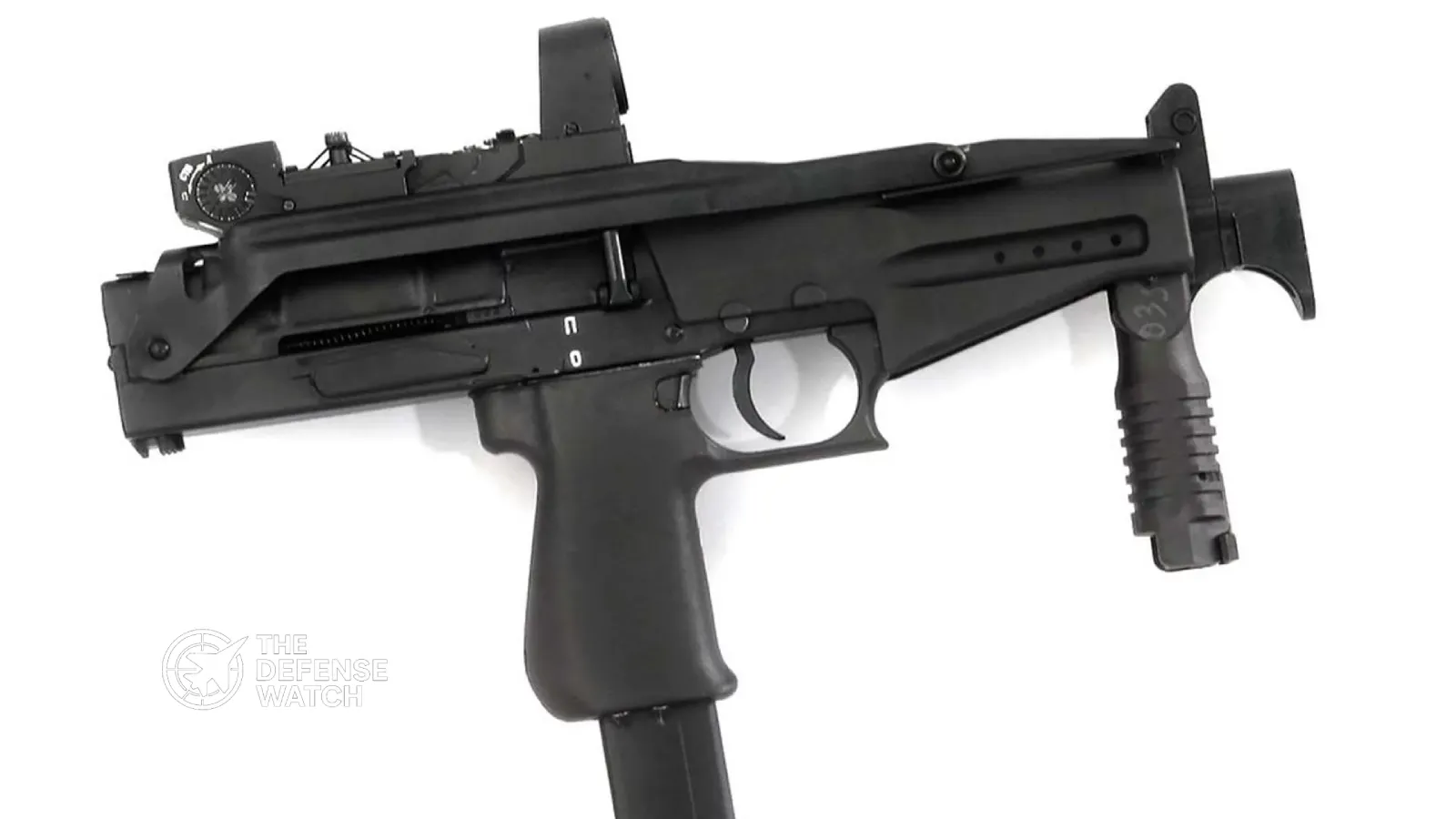
Russia Restarts SR-2M Production to Support Infantry Firepower
Russia has restarted production of the SR-2M Veresk submachine gun as part of efforts to sustain compact armor-piercing firepower for military and internal security forces. The move reflects ongoing demand for close-quarters weapons capable of defeating modern body armor.
The SR-2M, developed by TsNIITochMash under the Rostec state defense conglomerate, is chambered for the 9×21 mm cartridge. This round was designed to penetrate ballistic protection beyond the capabilities of standard 9×19 mm ammunition.
Sustaining a Niche Infantry Capability
The decision to resume SR-2M production comes as Russia continues to prioritize infantry equipment suited for urban combat, vehicle crews, and specialized units. Compact automatic weapons remain in demand for operations where maneuverability and penetration against protected targets are required.
The SR-2M is an upgraded version of the original SR-2, featuring improved ergonomics, an updated folding stock, and compatibility with modern optics. Its compact design allows it to be deployed by personnel operating in confined environments while retaining effective firepower.
Renewed production is aimed at sustaining existing inventories and ensuring replacement weapons remain available rather than introducing an entirely new platform.
Weapon Characteristics and Operational Role
The SR-2M fires the 9×21 mm SP-10 and SP-11 armor-piercing cartridges, which Russian sources claim can defeat certain levels of body armor at close range. This capability has long defined the weapon’s role within Russian internal security units and select military formations.
Key characteristics include a short barrel, high rate of fire, and detachable box magazines. The weapon is designed for close-range engagements where rapid target acquisition and penetration are critical.
The SR-2M is not intended to replace standard assault rifles but to complement them. Its role is focused on close protection details, counterterrorism units, and crews operating armored vehicles or aircraft.
Context Within Russian Small Arms Modernization
Russia’s small arms portfolio already includes platforms such as the AK-74M, AK-12, and the PP-19 Vityaz. However, the SR-2M occupies a specific niche that those systems do not fully address.
By restarting SR-2M production, Russia appears to be maintaining diversity within its infantry weapons inventory. This approach allows different units to be equipped according to mission requirements rather than adopting a single standard solution.
Analysts note that sustaining production of legacy but capable systems is often more cost-effective than developing new weapons during periods of high operational demand.
Industrial and Strategic Implications
The restart also highlights the role of Russia’s domestic defense industry in meeting internal requirements despite external pressures. TsNIITochMash has historically been responsible for specialized weapons development, particularly for ammunition and compact firearms.
Maintaining production lines for systems like the SR-2M ensures technical expertise and manufacturing capacity remain intact. This can be important for long-term sustainment and potential incremental upgrades.
While no export plans have been announced, the SR-2M has previously been marketed to select foreign customers. Any renewed production could also support future limited exports, subject to Russian government approval.
Broader Trends in Compact Weapon Demand
The SR-2M production restart aligns with broader global trends emphasizing close-quarters combat capabilities. Urban warfare, internal security missions, and protective duties continue to drive demand for compact automatic weapons with enhanced penetration.
Similar trends can be observed in other militaries that retain submachine guns or compact carbines for specialized roles rather than fully replacing them with standard rifles.
Get real time update about this post category directly on your device, subscribe now.
