
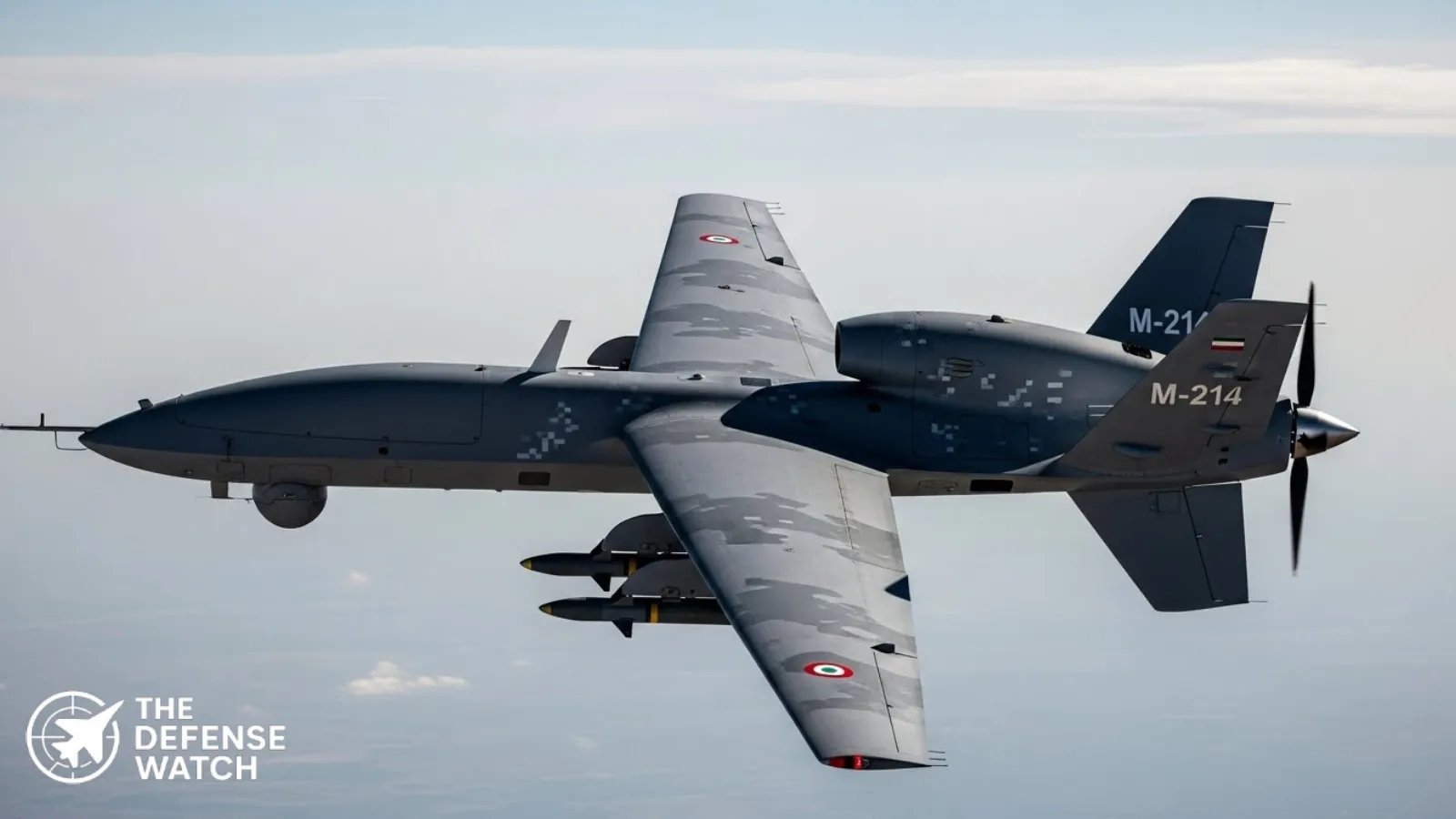
Russia Arms Shahed Drones with Anti-Aircraft Missile Capability
Russia has modified Shahed-type one-way attack drones to carry an anti-aircraft missile, marking a notable shift in how Moscow employs low-cost unmanned aerial vehicles in the Ukraine war. This change could pose new challenges for Ukrainian air defenses and aircraft tasked with intercepting kamikaze drones.
Photos circulating on social media show a Shahed-136 style UAV fitted with a man-portable air defense system, or MANPADS, mounted on the drone’s dorsal forward section instead of its usual explosive warhead.
The drone appears equipped with a camera and radio modem, enabling operators to guide and launch the missile remotely from Russian territory, according to Ukrainian officials who verified the images.
Russia now manufactures a domestic version of Iran’s propeller-driven Shahed-136, designated the Geran-2.
What This Means for the Battlefield
The adaptation suggests Russian forces are seeking ways to counter Ukrainian fixed-wing and rotary-wing aircraft that have been used to shoot down slow-moving Shahed/Geran attack UAVs. Traditional MANPADS and mounted missiles use infrared guidance, meaning the drone does not need advanced onboard sensors or power to operate the missile seeker.
Ukraine has relied on fighters like Mirage 2000s and Soviet-era MiG-29s, and helicopters with machine guns, to counter waves of attack drones.
By arming disposable UAVs with air-to-air capability, Russian units may be trying to force changes in interception tactics by Ukrainian pilots who until now did not face airborne threats from these low-cost platforms.
Wider Context
Images and reports of weaponized Shaheds surfaced amid a series of drone evolution developments in this conflict. Independent open-source analyses have identified modifications, including versions armed with air-to-air missiles such as the Soviet-era R-60.
Adding anti-air capability to one-way attack UAVs reflects ongoing adaptation by Russian forces to exploit inexpensive unmanned systems in layered roles on the battlefield.
Operational Challenges
If confirmed, this shift may force Ukraine to adjust how it allocates air defense resources. Ground-based missiles might be saved for higher-end cruise or ballistic threats while aircraft and helicopters focus on drone interception.
Ukrainian military officials are closely monitoring these developments and assessing impacts on aerial operations in the conflict.
Get real time update about this post category directly on your device, subscribe now.
