
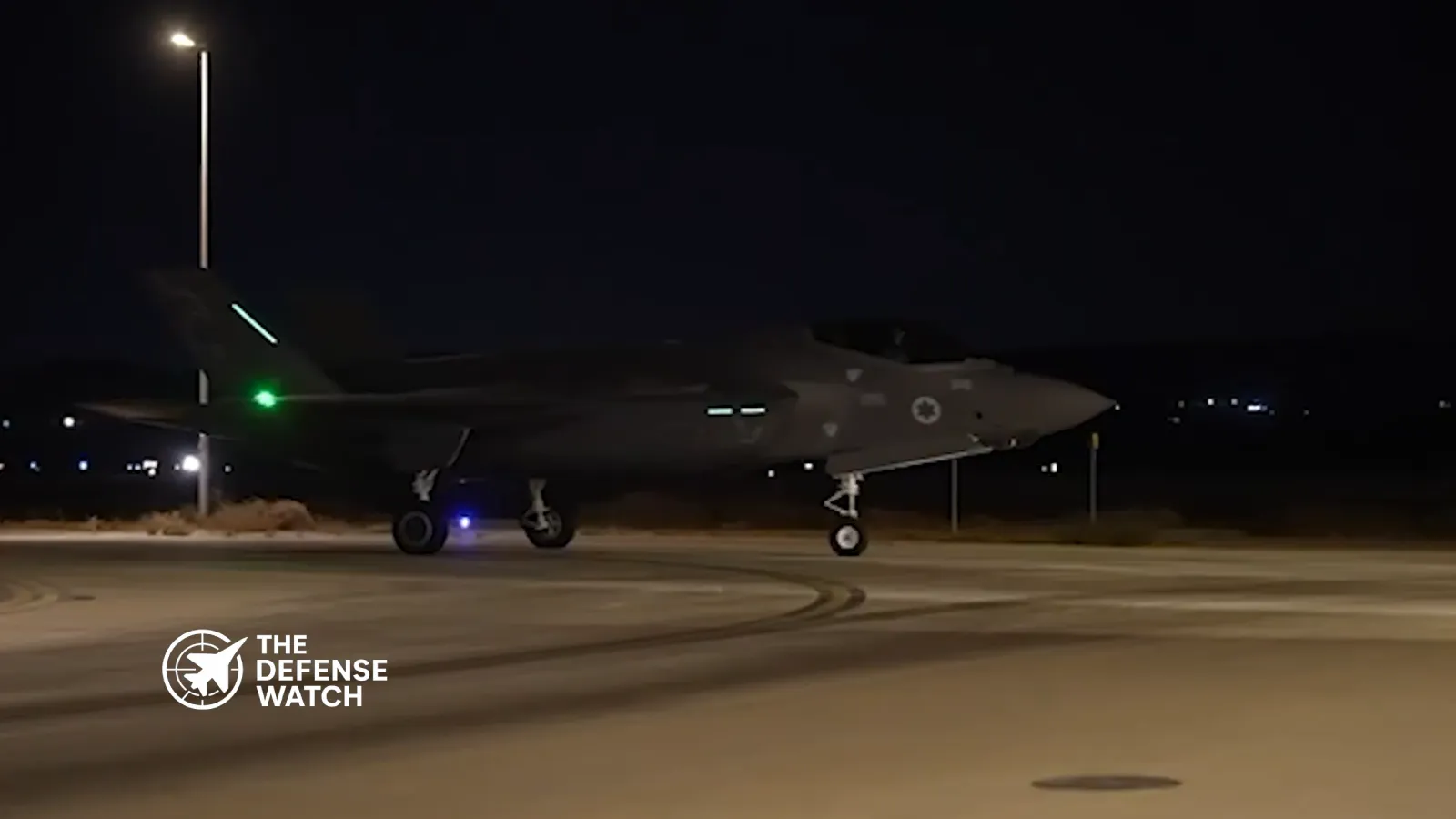
- ► Operation Roar Of The Lion launched with large-scale IDF airstrikes in western Iran.
- ► Hundreds of military targets, including missile launchers, were reportedly struck.
- ► Israeli air defenses engaged threats launched from Iran toward Israeli territory.
- ► The operation signals a significant expansion in direct Israel Iran military confrontation.
- ► Regional escalation risks increase amid ongoing missile and air defense exchanges.
Operation Roar Of The Lion Targets Western Iran
Operation Roar Of The Lion began with large-scale Israeli Defense Forces strikes on hundreds of military targets in western Iran, according to official statements released by the IDF.
The operation, described as a coordinated air campaign, focused on what Israel characterized as launchers and other infrastructure linked to the Iranian regime. Israeli officials said the targets were concentrated in western Iran, though precise locations were not disclosed for operational security reasons.
At the same time, Israel’s air defense network was activated to intercept threats launched from Iran toward Israeli territory.
The information was released through official IDF channels. As of publication, Iranian state media had not provided detailed confirmation of the scale of damage.
Scope And Military Objectives
Operation Roar Of The Lion appears designed to degrade Iranian strike capabilities in western Iran, particularly missile launchers and related infrastructure.
Israeli officials have long identified western Iran as a key staging area for ballistic missile forces capable of reaching Israeli territory. By targeting launch systems and support nodes, the IDF may be seeking to reduce immediate retaliatory capacity while signaling deterrence.
The Israeli Air Force has developed long-range strike capabilities over the past decade, integrating precision-guided munitions, advanced electronic warfare suites, and aerial refueling assets. While the IDF has not detailed the platforms used in Operation Roar Of The Lion, its fleet includes F 35I Adir stealth fighters, F 15 variants, and F 16 aircraft configured for deep strike missions.
Simultaneous activation of Israel’s multi-layered air defense network underscores the expectation of counterstrikes. Israel fields systems such as Iron Dome, David’s Sling, and the Arrow series for intercepting short, medium, and long-range threats, according to publicly available data from Israel’s Ministry of Defense and U.S. defense reporting.
Air Defense Engagements
The IDF confirmed that air defense units were operating to intercept threats launched from Iran toward Israeli territory. No immediate casualty figures or impact assessments were released.
Israel’s layered missile defense architecture has been tested repeatedly in recent years against rockets, cruise missiles, and ballistic threats. Engagement doctrine typically prioritizes intercepting projectiles assessed to threaten populated areas or critical infrastructure.
If Iranian launchers were struck early in Operation Roar Of The Lion, the effectiveness of any follow-on launches may be limited. However, without independent verification, the scale of both outgoing and incoming strikes remains difficult to confirm.
Strategic Implications
Operation Roar Of The Lion marks one of the most overt direct strike campaigns publicly acknowledged between Israel and Iran.
For years, the confrontation has largely played out through proxy actors, cyber activity, and limited covert operations. A large-scale, declared air campaign against hundreds of targets in western Iran represents a more direct military phase.
From a strategic standpoint, the operation serves several functions:
First, it reinforces Israeli red lines regarding missile threats.
Second, it tests regional air defense readiness under live conditions.
Third, it signals to regional actors, including Hezbollah and other Iran-aligned groups, that Israel is prepared to conduct deep strikes.
At the same time, escalation risks are substantial. Direct exchanges between Israel and Iran could draw in regional partners or trigger multi-front scenarios involving Lebanon, Syria, or maritime domains in the Gulf.
Regional And International Context
The United States has consistently supported Israel’s right to self-defense while urging de-escalation in periods of heightened tension. U.S. defense officials have previously emphasized coordination on missile defense and intelligence sharing with Israel.
Regional actors will closely watch whether Operation Roar Of The Lion remains limited in scope or expands beyond western Iran. Energy markets and maritime security routes could also be affected if hostilities widen.
As of now, official information remains limited to IDF statements. Independent confirmation from international monitoring bodies or satellite imagery providers may clarify damage assessments in the coming days.
What Comes Next
The immediate trajectory of Operation Roar Of The Lion will depend on the scale of Iranian retaliation and Israel’s assessment of mission objectives achieved.
If Israel concludes that key missile launch capabilities in western Iran have been significantly degraded, the operation may remain limited. If retaliatory fire intensifies, further waves of strikes are possible.
For defense planners and regional security analysts, the current exchange highlights the evolving nature of direct state-on-state confrontation in the Middle East, increasingly shaped by precision strike, air defense integration, and rapid information release.
The coming 24 to 72 hours will likely determine whether Operation Roar Of The Lion remains a contained strike campaign or becomes the opening phase of a broader regional conflict.
Get real time update about this post category directly on your device, subscribe now.
