
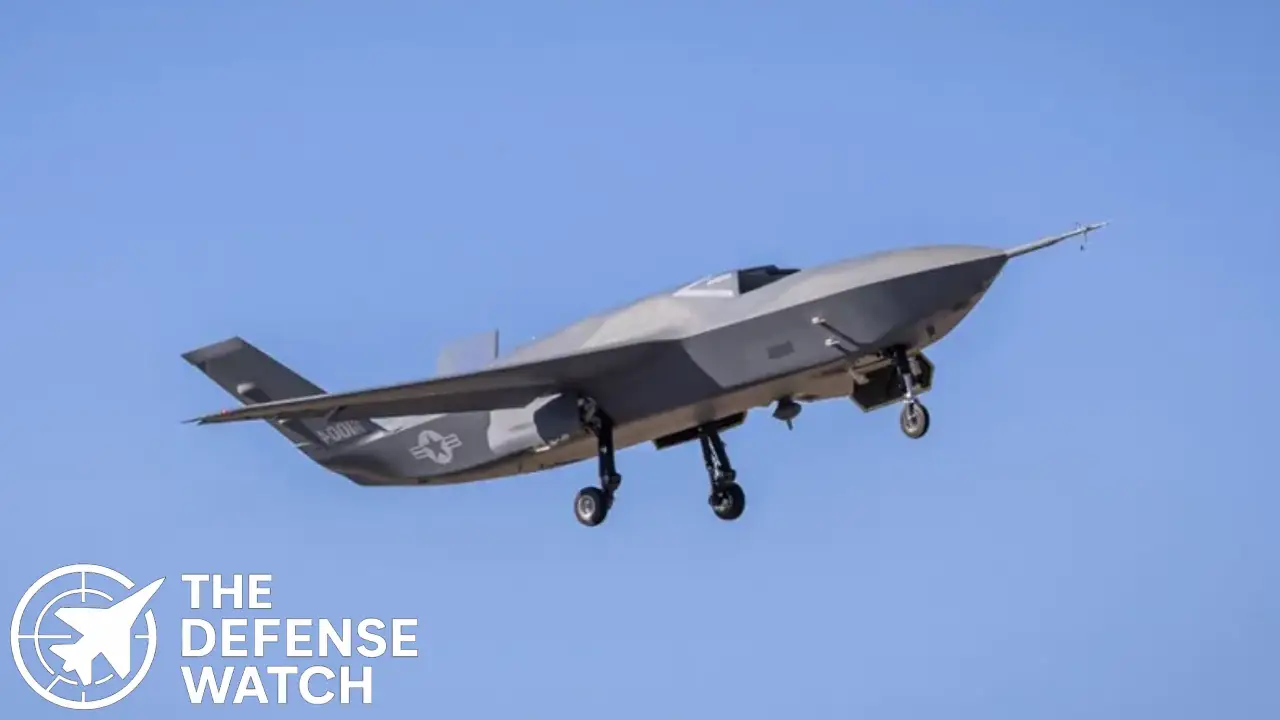
GA-ASI Pushes Ahead with Autonomous Fighter Jet Development
General Atomics Aeronautical Systems, Inc. (GA-ASI) has showcased its latest advances in autonomous fighter aircraft at a defense conference in Rome, reaffirming its commitment to deliver a production-ready uncrewed combat jet to the U.S. Air Force by summer 2025.
The announcement underscores GA-ASI’s expanding role in shaping the future of air warfare through artificial intelligence, autonomy, and collaborative mission capabilities. The company’s initiative aligns with the U.S. Air Force’s Collaborative Combat Aircraft (CCA) program — a key element of the service’s Next Generation Air Dominance (NGAD) strategy.
Pioneering the Next Era of Uncrewed Combat
GA-ASI has long been synonymous with unmanned aerial systems, producing the MQ-9 Reaper, MQ-20 Avenger, and other combat-proven platforms. Its new autonomous fighter concept builds upon decades of experience in AI-driven flight control and sensor fusion.
At the Rome conference, company officials revealed that the fighter is being designed to operate both independently and alongside manned aircraft, serving as a “loyal wingman” to platforms like the F-35 and F-15EX. It will be capable of executing strike, reconnaissance, and electronic warfare missions with minimal human intervention.
“The future of air dominance lies in human-machine teaming,” said a GA-ASI spokesperson. “We’re developing systems that can make real-time decisions, adapt to complex environments, and support pilots in contested airspace.”
Supporting the U.S. Air Force’s CCA Vision
The U.S. Air Force’s CCA program aims to deploy thousands of affordable, semi-autonomous combat drones capable of teaming with fifth- and sixth-generation fighters. GA-ASI’s prototype directly contributes to that vision, joining other industry players such as Boeing and Anduril in a competitive race to define the next generation of uncrewed aerial combat.
According to Air Force officials, the CCA program could see operational deployment before the end of the decade. The service is seeking aircraft that cost a fraction of manned fighters, allowing commanders to field “attritable” assets in high-risk missions.
GA-ASI’s approach focuses on open-architecture autonomy, enabling rapid integration of sensors, weapons, and AI decision systems across multiple mission sets.
Competitive Landscape and Global Context
The push for autonomous fighter jets is not limited to the United States. The United Kingdom’s Tempest program, Australia’s Loyal Wingman (MQ-28 Ghost Bat), and Europe’s FCAS (Future Combat Air System) all include advanced uncrewed elements. GA-ASI’s progress demonstrates the United States’ intent to maintain technological leadership in air combat autonomy.
While Anduril Industries’ YFQ-44A and Boeing’s Ghost Bat projects have captured attention, GA-ASI’s advantage lies in its operational heritage and field-tested command-and-control systems. Its existing platforms have accumulated millions of flight hours in combat zones, providing critical data to refine autonomous decision-making algorithms.
Analysis: What This Means for U.S. Defense and Global Security
GA-ASI’s autonomous fighter jet initiative represents a major step toward distributed and resilient air combat architectures. By reducing reliance on expensive manned aircraft and enabling AI-driven decision support, the U.S. Air Force can expand its operational reach while mitigating pilot risk.
Strategically, this shift supports Washington’s goal of countering near-peer adversaries like China and Russia, both of whom are investing heavily in AI and drone warfare. The introduction of combat-ready autonomous jets by 2025 could tilt the balance of aerial deterrence in favor of the United States, ensuring rapid response and scalable strike capabilities.
Moreover, autonomous systems offer logistical and economic advantages — lower maintenance, modular payloads, and the ability to deploy in swarms for complex missions such as suppression of enemy air defenses (SEAD).
Conclusion: A New Frontier for Air Dominance
General Atomics’ commitment to delivering a production-ready uncrewed fighter jet by mid-2025 signals that autonomous air combat is moving from concept to reality. As the U.S. Air Force refines its CCA roadmap, GA-ASI’s offering could become a cornerstone of next-generation airpower — one that blends human judgment with machine precision.
With defense innovation accelerating globally, the race for air dominance is increasingly defined not by who has the most pilots in the sky, but by who has the smartest aircraft in the air.
Get real time update about this post category directly on your device, subscribe now.

2 comments
[…] of the first LST-100-based LSM is expected to begin in 2026, with delivery targeted for 2029. The new class of ships will significantly expand the Navy’s amphibious transport […]
[…] adversary aircraft. In the scenario, the virtual F/A-18 served as mission lead, directing the autonomous targets to defend designated perimeters against simulated […]