French Navy Leads Adoption of Advanced VTOL Drone Technology
The French Directorate General of Armament has ordered an upgraded vertical take-off and landing version of the SMDM tactical drone from Airbus Helicopters, positioning France’s Marine Nationale as the first naval force to operate the Aliaca VTOL configuration. Deliveries are scheduled to begin in May 2026 following qualification trials.
The contract modification brings the total Aliaca systems ordered by France to 34 units since 2022. The new VTOL variant maintains operational performance while eliminating launch-and-recovery systems, streamlining deployment across multiple vessel classes.
Technical Evolution Enhances Deployment Flexibility
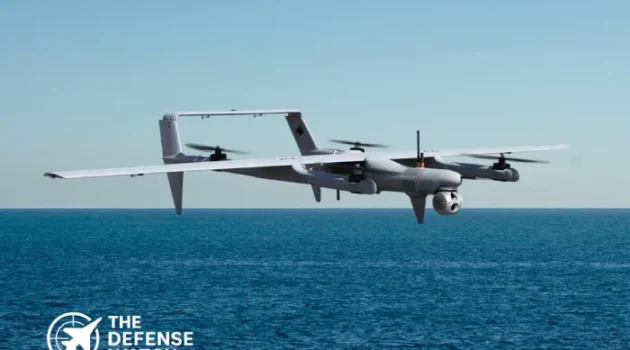
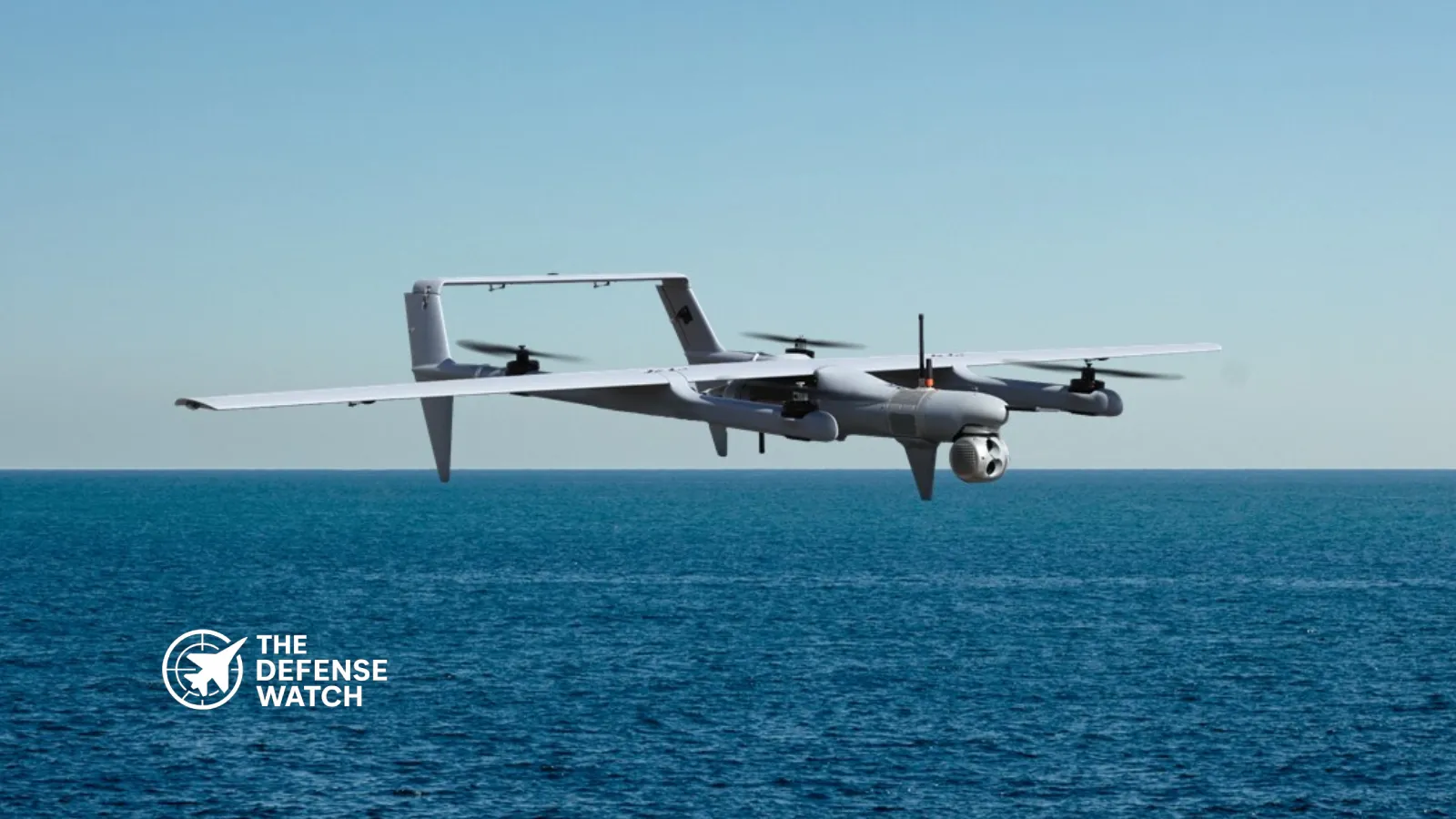
The Aliaca VTOL represents a significant configuration advancement from the fixed-wing system currently operational with French naval forces. The tactical mini-drone features four propellers enabling vertical operations while retaining fixed-wing propulsion during missions, combining the benefits of both flight profiles.
Key specifications include a maximum take-off weight of 25 kilograms, 3.5-meter wingspan, and 2.1-meter length. Mission endurance reaches two hours with a 50-kilometer operational range, providing extended situational awareness for naval commanders.
The unmanned system carries a gyro-stabilized electro-optical/infrared sensor suite and Automatic Identification System capable of detecting vessels across several hundred kilometers. This sensor package supports intelligence, surveillance, and reconnaissance missions critical to modern naval operations.
Rapid Development Demonstrates Industrial Maturity
Airbus developed the VTOL configuration in under one year from the operationally proven fixed-wing variant, according to Christophe Canguilhem, Aliaca program director at Airbus Helicopters. The accelerated timeline reflects the system’s mature design architecture and validated performance baseline.
Testing occurred throughout 2024 and 2025 in both land-based and maritime environments. The system underwent sea trials before its April 2025 public unveiling, validating launch, recovery, and operational procedures aboard French naval vessels.
Operators will utilize the existing ground control station already fielded with fixed-wing variants. This commonality preserves training pipelines and reduces logistical overhead while incorporating the enhanced deployment capabilities.
Expanding Operational Footprint Across Naval Forces
Since achieving operational status in 2022, the Aliaca system has deployed aboard French high-sea patrol vessels, overseas patrol vessels, and surveillance frigates. Summer 2023 saw coastal deployment for search and rescue operations in the English Channel, demonstrating versatility beyond traditional naval missions.
The VTOL variant will extend coverage to additional ship classes within the Marine Nationale. Mission sets include tactical situational awareness, illegal activity interdiction, traffic surveillance, coastal monitoring, search and rescue, and behavioral pattern detection.
Long-term planning envisions land-based operations supporting France’s coastal surveillance network. This dual-environment capability provides commanders with scalable ISR coverage independent of maritime platforms.
Qualification Timeline and Sustainment Plans
The French Directorate General of Armament will conduct qualification trials in early 2026 before declaring the VTOL variant operationally ready. Testing will validate both land-based and shipboard operations under representative mission profiles.
The original fixed-wing configuration will remain operational on equipped vessels with sustainment guaranteed for at least seven years. This parallel operation ensures continuous capability while the VTOL variant completes fleet integration.
The staggered deployment strategy allows the Marine Nationale to maintain operational tempo during the transition while building operator proficiency with the new configuration.
Strategic Implications for Naval Aviation
France’s adoption of the Aliaca VTOL positions the nation at the forefront of tactical unmanned maritime operations. The system addresses critical capability gaps in beyond-line-of-sight surveillance without requiring dedicated aviation support infrastructure.
Reduced logistical footprint compared to traditional launch-and-recovery systems expands deployment options across smaller combatants and auxiliary vessels. This scalability enables distributed maritime operations concepts requiring persistent ISR coverage.
The rapid development and fielding timeline demonstrates European defense industry responsiveness to evolving operational requirements. Airbus’ ability to deliver capability upgrades within twelve months provides tactical flexibility for allied naval forces.
Industry Context and Market Positioning
Airbus Helicopters develops the Aliaca through its Survey Copter subsidiary, which specializes in tactical unmanned systems. The VTOL configuration competes in a growing market for ship-based drones as navies worldwide seek affordable, persistent surveillance capabilities.
Similar systems under development or in service include Schiebel’s Camcopter S-100 and Textron’s Aerosonde, though platform-specific capabilities and operational concepts vary significantly. The Aliaca’s integration of vertical operations with fixed-wing endurance represents a hybrid approach balancing deployment flexibility with mission duration.
European defense cooperation programs increasingly emphasize unmanned systems as force multipliers for conventional platforms. France’s early operational experience with tactical UAS provides valuable lessons for allied forces evaluating similar capabilities.
Get real time update about this post category directly on your device, subscribe now.