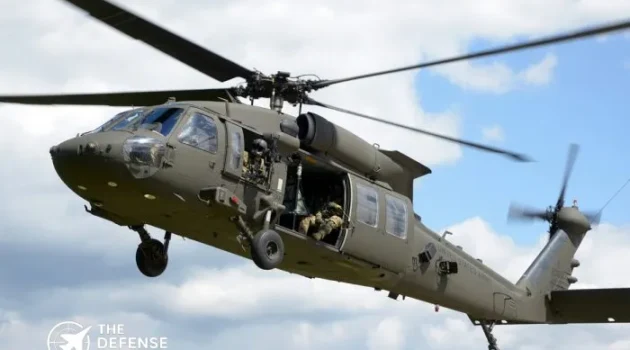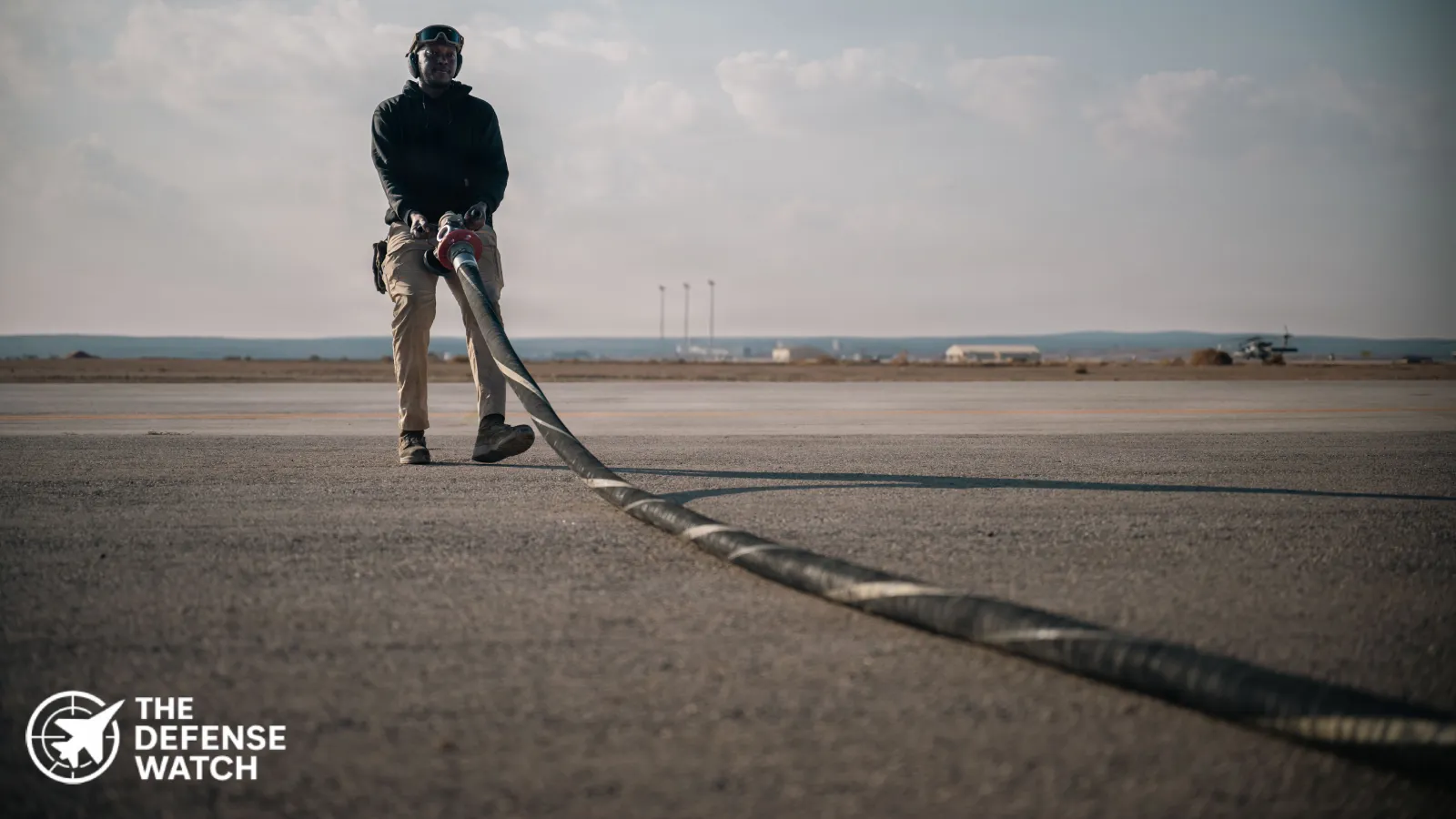
For the first time at its deployed location, the 332nd Expeditionary Logistics Readiness Squadron used the R-20 expeditionary refueling system to conduct a hot-pit refuel of a U.S. Army UH-60 Black Hawk, marking a shift in fuel support operations that cuts aircraft ground time and expands expeditionary refueling capability.
U.S. Air Force Airmen with the 332nd ELRS carried out a hot-pit refueling operation with the R-20 expeditionary refueling system on December 14 in the U.S. Central Command area of responsibility, enabling a UH-60 Black Hawk to take on fuel while its engines stayed running.
The exercise was the first time the unit’s R-20 equipment was used for hot-pit refueling at that site, and it demonstrated a capability that cuts traditional cold refuel time by roughly 66 percent. Cold refueling, which requires engine shutdown and system checks, can take up to 75 minutes for helicopters like the Black Hawk.
Staff Sgt. John Kaelin, fuels distribution noncommissioned officer in charge for the 332nd ELRS, said the R-20 lets fuel flow directly from large bulk fuel bladders into aircraft without the need for R-11 fuel trucks. That frees up assets and reduces the logistics footprint at forward sites.
Each R-20 hose can deliver up to 450 gallons per minute, and dual hoses can push up to 900 gallons per minute into aircraft. The system taps bulk bladders that can hold more than 200,000 gallons, compared with the R-11 truck’s 6,000-gallon capacity.
Airman 1st Class Samuel Ilet, a fuels distribution operator with the squadron, noted that the higher throughput and the ability to refuel multiple aircraft at once help keep sorties moving in high-tempo environments.
The successful hot-pit refuel with the R-20 underscores the unit’s ability to adapt fuel operations to deployed conditions, support rapid turnaround, and maintain readiness when mission demands rise.
Get real time update about this post category directly on your device, subscribe now.