
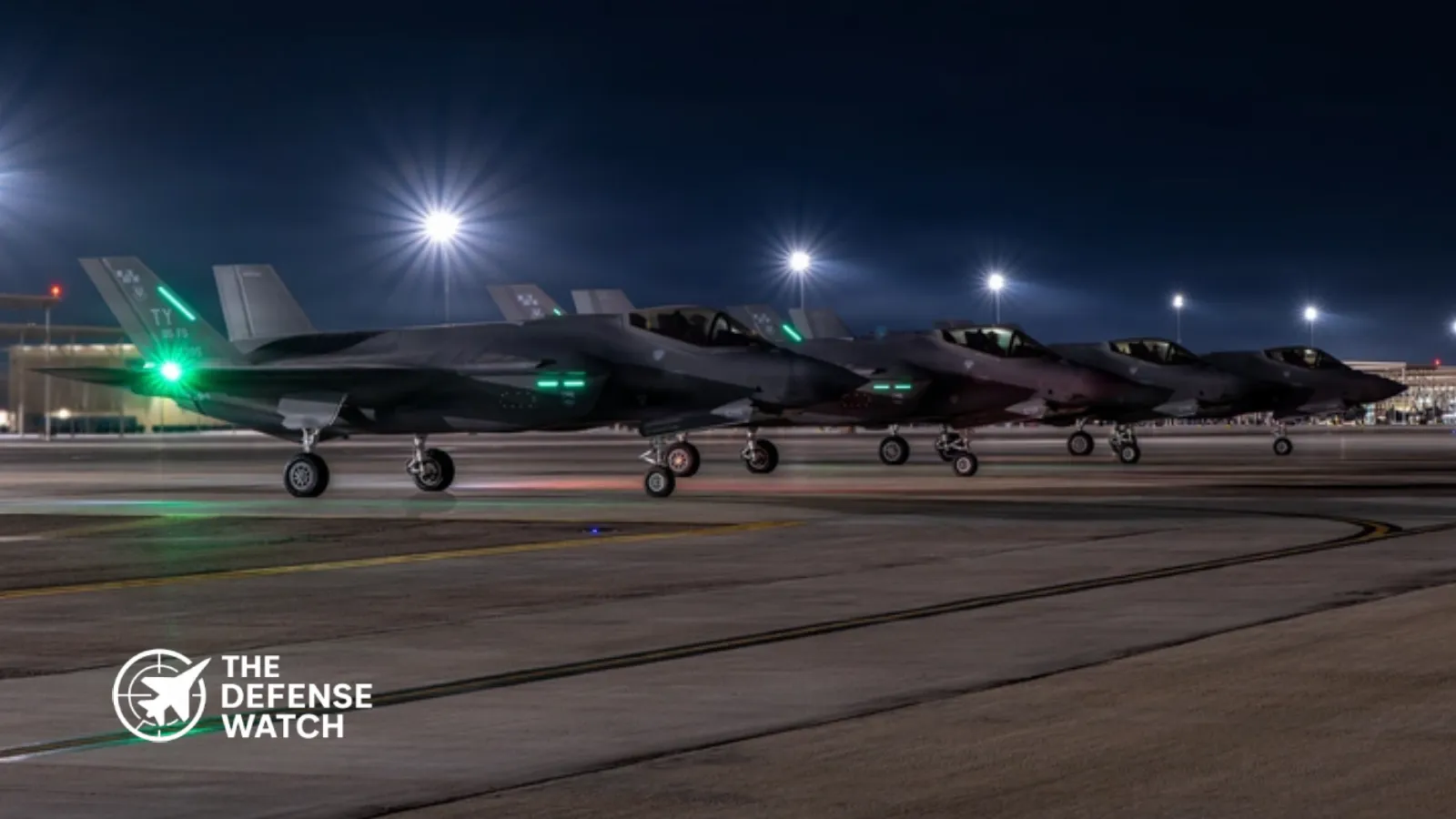
- Pentagon awards $700.4 million F-35 contract modification to Lockheed Martin.
- Funding covers long-lead materials for Lots 20 and 21 of the F-35 production program.
- Denmark and multiple international partners will receive aircraft from these production lots.
- Work spans several global facilities including the U.S., United Kingdom, and Italy through 2030.
- The contract reinforces multinational investment in the long-term F-35 fighter program.
F-35 Contract Modification Supports Denmark And Global Production
The F-35 contract modification awarded to Lockheed Martin provides $700.4 million to secure long-lead materials and components for upcoming production of the fifth-generation fighter. The funding supports aircraft planned for Denmark, as well as other international partners and Foreign Military Sales customers participating in the global F-35 program.
The Pentagon announced that the contract modification expands work under a previously awarded advanced acquisition contract. The effort focuses on procuring early components required for Lots 20 and 21 of the F-35 production line, ensuring the supply chain remains on schedule for aircraft deliveries later this decade.
The U.S. Naval Air Systems Command (NAVAIR) in Patuxent River, Maryland manages the contract.
The Big Picture
The new funding highlights the continued expansion of the F-35 Lightning II program, which remains the largest multinational fighter aircraft project in history. The aircraft serves as the backbone of U.S. and allied tactical airpower, combining stealth, sensor fusion, and networked warfare capabilities.
More than a dozen allied nations operate or plan to operate the F-35. These aircraft enable coalition forces to share targeting data, coordinate operations, and conduct joint missions across multiple domains.
Denmark represents one of several NATO members transitioning to the aircraft as part of broader modernization efforts. Copenhagen selected the F-35A to replace its aging F-16 fleet, aligning its air combat capabilities with other NATO air forces.
Securing long-lead materials early in the production cycle helps stabilize manufacturing timelines and ensures partner nations receive aircraft without delays.
What’s Happening
The Department of Defense awarded the $700,400,000 modification to Lockheed Martin Aeronautics, based in Fort Worth, Texas.
The contract includes two major funding streams.
• $305.9 million comes from F-35 cooperative program partners.
• $394.5 million comes from Foreign Military Sales customers.These funds support the purchase of long-lead materials, parts, and components required for Lots 20 and 21 of F-35 production aircraft.
The work spans a global supply chain that reflects the program’s multinational structure.
Production and manufacturing will occur across several locations:
• Fort Worth, Texas – 59 percent
• El Segundo, California – 14 percent
• Warton, United Kingdom – 9 percent
• Cameri, Italy – 4 percent
• Orlando, Florida – 4 percent
• Nashua, New Hampshire – 3 percent
• Baltimore, Maryland – 3 percent
• San Diego, California – 2 percent
• Other locations outside the continental United States – 2 percentThe program expects work to continue through December 2030.
The Pentagon did not compete the contract modification because it expands an existing agreement tied directly to the F-35 program.
Why It Matters
Long-lead components play a critical role in advanced fighter production. These materials include specialized avionics hardware, structural components, propulsion system elements, and mission system electronics that require extended manufacturing timelines.
By funding these parts years in advance, the Pentagon and its international partners protect the production schedule against supply chain disruptions.
Defense officials increasingly view this approach as essential for large programs like the F-35. The aircraft contains thousands of high-precision components sourced from a complex network of suppliers across North America and Europe.
Early procurement reduces the risk of manufacturing bottlenecks that could delay aircraft deliveries.
For partner nations such as Denmark, maintaining predictable delivery timelines is particularly important as they phase out legacy fighter fleets.
Strategic Implications
The continued expansion of F-35 procurement strengthens NATO’s collective airpower architecture.
European nations increasingly rely on the aircraft to maintain air superiority against advanced air defense systems and modern fighter aircraft fielded by potential adversaries.
The F-35’s sensor fusion allows aircraft to detect and track threats while sharing data across coalition networks. This capability transforms the aircraft into both a fighter and an intelligence platform during combat operations.
For NATO planners, interoperability remains one of the program’s most valuable features. Aircraft from different nations can operate together seamlessly, allowing coalition air forces to coordinate missions with fewer integration challenges.
Denmark’s participation also reinforces regional security in Northern Europe and the Baltic region. F-35 aircraft operating from Danish bases can support NATO missions across the Baltic Sea, the North Atlantic, and the Arctic approaches.
Competitor View
Russia and China closely monitor the expansion of the F-35 fleet among U.S. allies.
Moscow has long criticized the deployment of fifth-generation fighters near its borders, particularly in Northern and Eastern Europe. The growing number of F-35 aircraft operating within NATO enhances the alliance’s ability to detect and track air and missile threats in contested environments.
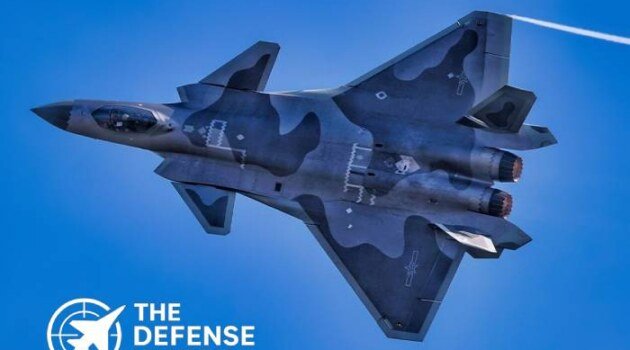
China views the aircraft primarily through the lens of global airpower competition. Beijing continues to expand its own fifth-generation fighter programs, including the J-20 and emerging stealth platforms.
The steady expansion of the F-35 user community signals that U.S. allies remain committed to a shared technological baseline for advanced air combat operations.
What To Watch Next
Several developments will shape the next phase of the F-35 program.
Production rates remain a key indicator of program stability. Lockheed Martin continues to work with the Pentagon to increase manufacturing efficiency while integrating new technology upgrades.
Upcoming aircraft will incorporate elements of the Block 4 modernization program, which introduces improved sensors, electronic warfare capabilities, and expanded weapons integration.
Denmark and other partner nations will gradually receive aircraft from these production lots as deliveries begin later in the decade.
Observers will also watch how supply chain reforms and long-lead procurement strategies affect production schedules.
Capability Gap
Modern air forces require platforms capable of operating in heavily defended airspace. Legacy fourth-generation fighters struggle against advanced radar systems and integrated air defense networks.
The F-35 addresses this gap through a combination of stealth design, advanced sensors, and networked battlefield awareness.
However, the aircraft remains part of a broader combat ecosystem. Its effectiveness depends on secure data links, aerial refueling support, and integration with other platforms such as drones and airborne early warning aircraft.
Sustaining the aircraft across multinational fleets also requires long-term investments in maintenance infrastructure and logistics networks.
The Bottom Line
The $700 million F-35 contract modification secures critical production materials and reinforces the long-term commitment of the United States and its allies to the world’s largest fifth-generation fighter program.
Get real time update about this post category directly on your device, subscribe now.



This website uses cookies to improve your experience. We'll assume you're ok with this, but you can opt-out if you wish. Accept Read More