BAE Systems Expands Marine Corps Amphibious Fleet With New Contract
BAE Systems has secured a $195 million contract from the U.S. Marine Corps for the production of 30 additional Amphibious Combat Vehicles (ACVs), the defense contractor announced February 3, 2026. The latest contract award increases the total number of ACV-30 variant vehicles ordered to more than 150 units, marking significant progress in the Marine Corps’ amphibious modernization program.
The contract represents continued investment in the ACV platform, which provides Marines with enhanced mobility, survivability, and firepower capabilities for ship-to-shore operations and inland maneuvers. Production work will take place at BAE Systems facilities in Johnstown and York, Pennsylvania, with turret integration conducted in Charleston, South Carolina.
Advanced 30mm Firepower Configuration
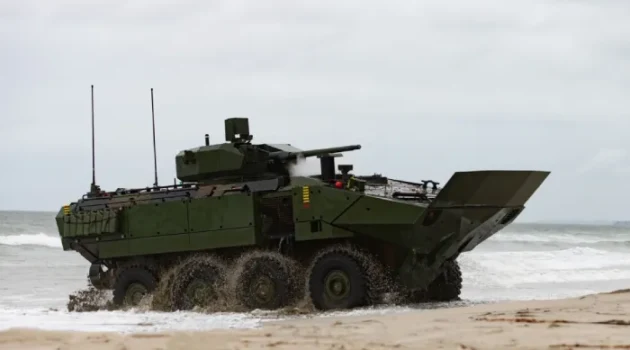
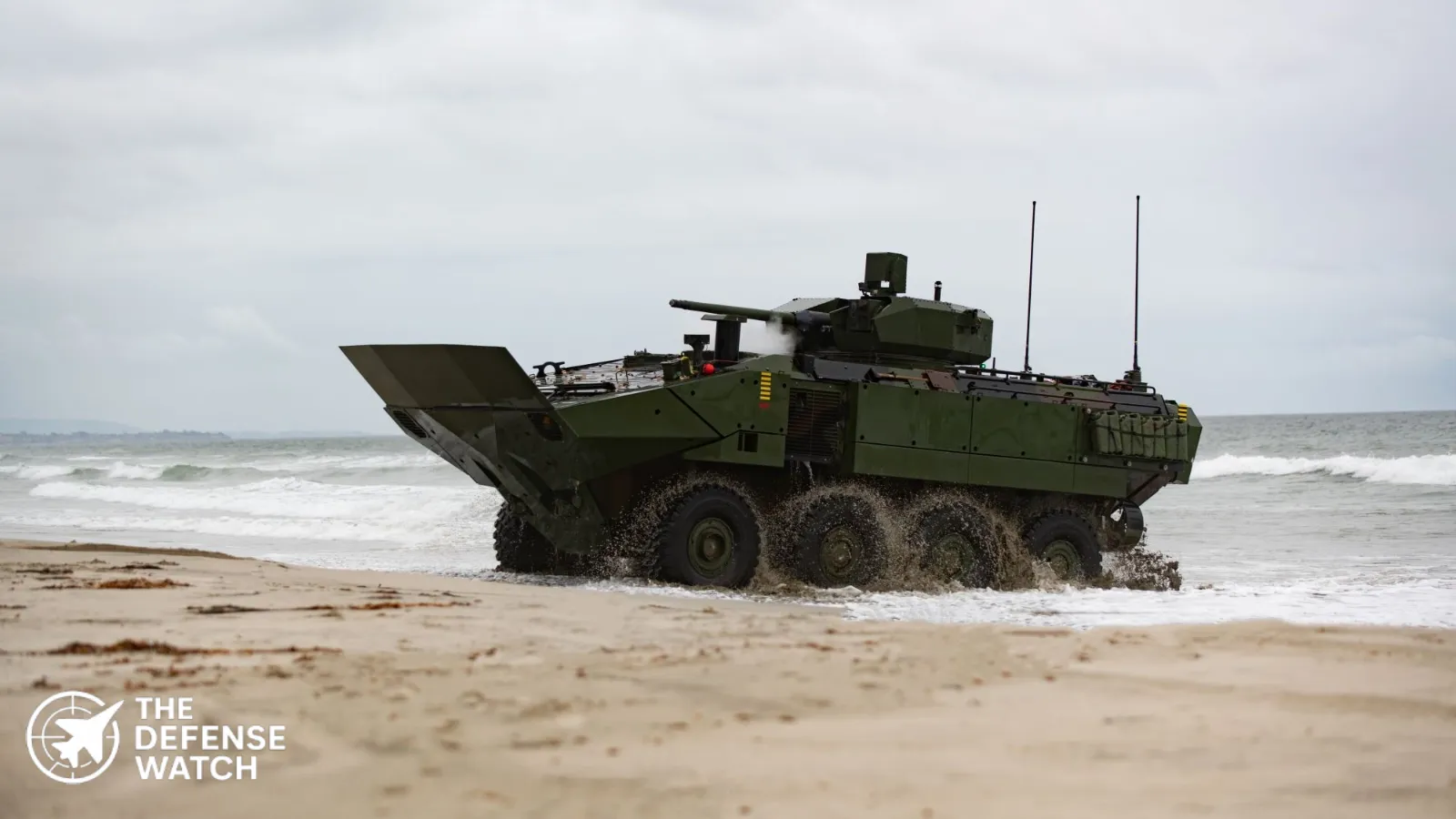
The ACV-30 variant is equipped with the KONGSBERG PROTECTOR RT-20 remote turret system mounting a 30mm Bushmaster II cannon, providing Marines with enhanced direct fire support capabilities for engaging enemy targets at extended ranges. This weapon system eliminates the internal basket requirement of traditional turret systems, freeing valuable interior space for additional troops or mission-essential equipment while maintaining crew protection.
“This award highlights the strength of our partnership and our shared commitment with the U.S. Marine Corps to equip forces with the capabilities they need to succeed,” stated Rebecca McGrane, vice president of Amphibious Vehicles at BAE Systems. McGrane emphasized that the additional vehicles keep the program aligned with operational requirements, ensuring Marines maintain readiness for diverse mission sets.
Next-Generation Amphibious Platform
The Amphibious Combat Vehicle represents a technological advancement over the aging Assault Amphibious Vehicle (AAV) that has served the Marine Corps since 1972. Based on the Iveco SuperAV 8×8 chassis, the ACV platform achieved Initial Operational Capability in November 2020 and entered full-rate production in December 2020.
The ACV-30 joins an expanding family of variants currently in production. The ACV-Personnel (ACV-P) variant can transport 13 combat-loaded Marines plus three crew members, while the ACV-Command (ACV-C) variant provides multiple workstations for maintaining situational awareness during operations. Additionally, BAE Systems has delivered three ACV-Recovery (ACV-R) variant Production Representative Test vehicles, which will provide field-level maintenance and recovery capabilities to Assault Amphibian companies.
Platform Capabilities and Specifications
The ACV platform is designed to provide true open-ocean capability with ship-to-shore and shore-to-shore operational flexibility. The vehicles feature a monocoque steel hull offering protection against small arms fire, artillery fragments, landmines, and improvised explosive devices. When combat-loaded, the vehicle has a gross weight of approximately 32,000 kilograms and includes add-on armor kits for enhanced protection.
The ACV-30’s KONGSBERG RT-20 turret features an advanced fire control system that automatically adjusts for ballistic variables including firing angle, inclination, and vehicle movement. The network-based architecture enables wireless operation and supports automated Hunter-Killer operations with target sharing capabilities among multiple vehicles.
Production Timeline and Strategic Significance
The contract continues BAE Systems’ role as prime contractor for the ACV program, a position the company has held since winning the competitive selection in 2018. The initial contract awarded in June 2018 covered 30 vehicles valued at $198 million, with options for up to 204 additional units.
Recent procurement activities demonstrate sustained momentum for the program. In January 2026, BAE Systems received a separate $184 million contract for 30 additional ACV-30s, bringing total orders beyond 100 units for that specific variant. The Marine Corps has also contracted KONGSBERG for 175 RT-20 turret systems valued at $329 million to support full-rate production Lots 5 and 6.
Program Evolution and Future Variants
The ACV program has evolved significantly since its inception. Originally planned with an acquisition objective of 1,122 vehicles, the current target stands at 632 units, adjusted to align with Marine Corps Force Design 2030 modernization initiatives. Fiscal constraints and inflationary pressures have impacted procurement schedules, with the Marine Corps reducing planned acquisition quantities for fiscal years 2025 and 2026 by 48 vehicles.
Despite these adjustments, the program maintains strong support within Marine Corps leadership. The Pentagon’s fiscal year 2026 budget confirms procurement of 59 ACV-30 gun variants and funds the first 32 ACV-R recovery vehicles, signaling the platform’s status as a foundational system for future amphibious operations.
Integration of Advanced Technologies
The modularity of the ACV platform allows for future capability integration as technology evolves. The platform was designed with growth potential to address additional mission roles including reconnaissance, electronic warfare, anti-air systems, and unmanned aerial system integration. The Marine Corps is reportedly conducting market research to examine the feasibility of incorporating counter-unmanned aerial system (C-UAS) capabilities onto ACV variants.
The KONGSBERG turret system contributes to this modernization approach. The RT-20 is part of the broader PROTECTOR family of remote weapon stations, with more than 20,000 systems delivered to over 20 nations. Its modular and digital design provides growth potential for incorporating emerging technologies to counter evolving threats.
Economic Impact and Workforce Development
The contract supports defense manufacturing operations across multiple states. Primary production occurs in Pennsylvania, where BAE Systems maintains facilities in both York and Johnstown. The Charleston, South Carolina location handles government integration of the KONGSBERG turret system. Additional program support takes place at BAE Systems locations in Sterling Heights, Michigan; Aiken, South Carolina; Stafford, Virginia; and San Jose, California.
This distributed production approach strengthens domestic defense industrial base capabilities while supporting skilled manufacturing employment across multiple regions. The program also reinforces transatlantic industrial cooperation, with KONGSBERG conducting turret development and partial manufacturing in Norway before final integration in the United States.
Operational Testing and Deployment
The ACV platform has undergone extensive testing to validate its performance in diverse operational environments. Following incidents in July 2022 involving two ACVs during training exercises off the California coast in high surf conditions, the Marine Corps conducted comprehensive internal reviews and implemented additional safety protocols. Marines in both incidents safely executed immediate action drills and returned to shore without casualties.
The ACV-30 variant entered government testing in February 2024 following delivery of the first production representative test vehicle. Testing validated the platform’s performance in surf conditions, land operations, and live-fire scenarios, confirming successful integration of the KONGSBERG turret system.
Strategic Context for Amphibious Modernization
The ACV program represents a critical component of Marine Corps transformation under Force Design 2030, which refocuses the service on maritime expeditionary operations after two decades of predominantly land-based warfare. The emphasis on amphibious capabilities addresses operational requirements for contested littoral environments, particularly in the Indo-Pacific region where distributed operations and ship-to-shore maneuver remain essential.
The addition of the ACV-30 fundamentally enhances the capabilities of Marine amphibious formations by providing organic, protected firepower during initial landing phases. This capability reduces reliance on external fire support and enables distributed operations across wider operational areas.
Program Outlook
With more than 150 ACV-30 variants now on contract and multiple other variants in full-rate production, the ACV program demonstrates the Marine Corps’ commitment to modernizing its amphibious assault capabilities. The platform’s proven performance, modular design, and growth potential position it as a long-term solution for expeditionary operations in increasingly contested operational environments.
As production continues and additional variants enter service, the ACV will progressively replace the AAV fleet in Assault Amphibian Battalions, providing Marines with enhanced protection, mobility, and firepower capabilities essential for 21st-century amphibious operations.
Get real time update about this post category directly on your device, subscribe now.