
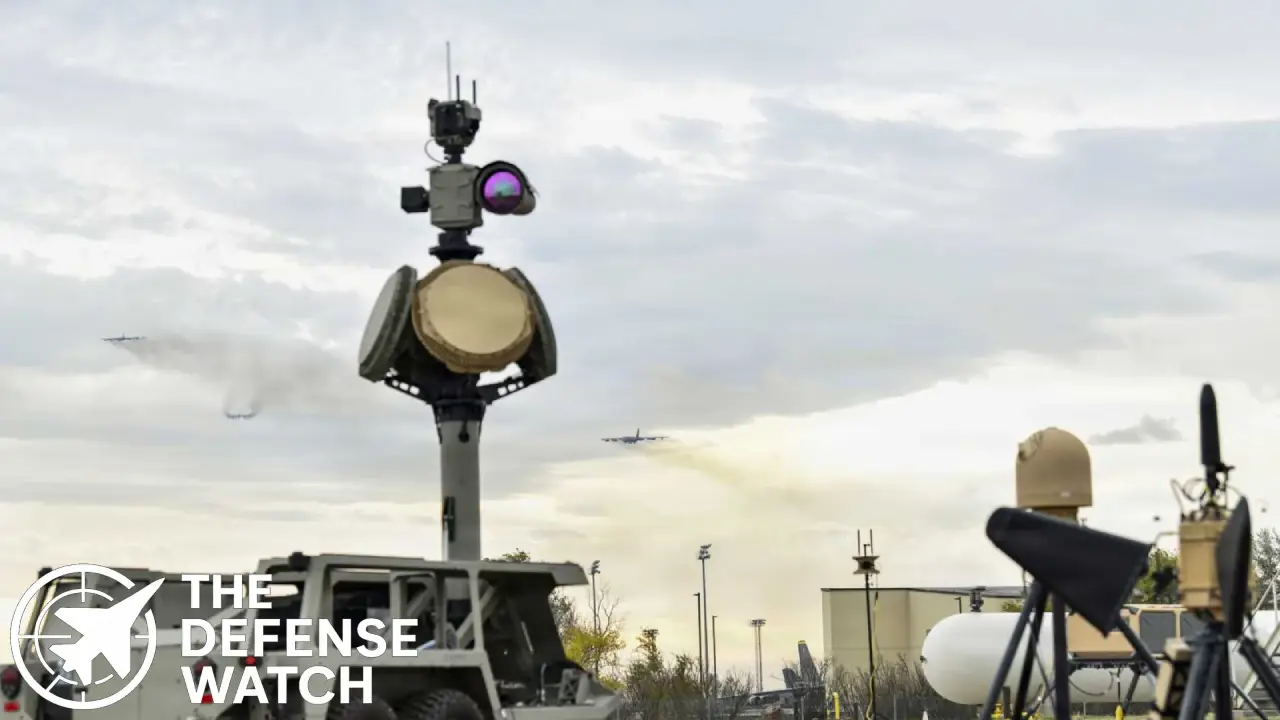
USNORTHCOM Tests Anduril’s Counter-Drone System in Live Base Defense Exercise
The U.S. Northern Command (USNORTHCOM) has successfully completed live testing of Anduril Industries’ advanced counter-drone system, marking a major step in strengthening base defense and integrated air defense operations across the United States.
The exercise evaluated Anduril’s capability to detect, track, and neutralize hostile unmanned aerial systems (UAS)—a growing concern for both domestic installations and deployed forces. The test showcased how Anduril’s AI-enabled Lattice OS platform integrates real-time data from sensors, radar, and effectors to provide rapid, automated responses to aerial incursions.
A New Era of AI-Powered Base Defense
USNORTHCOM’s evaluation focused on the effectiveness of Anduril’s counter-UAS suite in defending U.S. installations against increasingly sophisticated drone threats. The system combines autonomous detection and tracking with both kinetic and non-kinetic interception tools, including electronic warfare and directed-energy options.
According to defense officials, the system demonstrated a high level of interoperability with existing NORAD and USNORTHCOM command networks, supporting seamless data exchange for enhanced situational awareness. “The ability to counter low-cost, high-volume drone threats is central to our mission of protecting critical assets across North America,” a USNORTHCOM spokesperson said.
Anduril’s Expanding Role in U.S. Defense Technology
Founded in 2017, Anduril Industries has rapidly become one of the Pentagon’s most influential defense tech innovators. Its flagship products—including autonomous surveillance towers, AI mission command software, and expeditionary counter-UAS systems—are now deployed by multiple U.S. services and allied militaries.
The company’s Lattice OS serves as the digital backbone for these systems, fusing sensor data from multiple platforms into a single operational picture. During the recent test, Lattice enabled rapid threat identification and automated engagement sequences, showcasing the potential for AI-driven decision support in complex defense environments.
Anduril’s participation in this test aligns with the Department of Defense’s broader initiative to modernize homeland air defense through AI integration, automation, and networked sensors—key priorities under current Pentagon modernization programs.
Growing Counter-Drone Urgency
The successful trial comes amid rising global concern over drone incursions, with small, inexpensive UAVs being used in conflicts from Ukraine to the Middle East for reconnaissance and strike missions. The U.S. Department of Defense has acknowledged the urgent need for scalable counter-drone solutions capable of protecting bases, airports, and strategic infrastructure.
In 2024, the Pentagon’s Joint Counter-small Unmanned Aircraft Systems Office (JCO) emphasized a unified approach to C-UAS acquisition and fielding, consolidating efforts across the services. Anduril’s technology fits into that broader strategy by offering a modular, AI-driven architecture that can be rapidly deployed and integrated across different operational environments.
Analysis: Strengthening Homeland and Allied Defense
USNORTHCOM’s test highlights a growing recognition that AI-enabled defense systems are no longer optional—they are essential. As drone technology becomes cheaper and more accessible, adversaries from state actors to non-state groups can deploy swarming or GPS-jamming tactics that traditional defenses struggle to counter.
By adopting systems like Anduril’s, the U.S. military is moving toward a distributed, data-centric defense model—where decision cycles are compressed, human operators are supported by AI, and response times are reduced from minutes to seconds.
This also signals a shift toward public-private collaboration in national defense, as companies like Anduril, Palantir, and Shield AI bring Silicon Valley-style innovation into traditional military frameworks. The long-term goal: to achieve persistent surveillance, automated defense, and interoperability across all domains—air, land, sea, and cyber.
Globally, the U.S. remains at the forefront of counter-drone innovation, though China, Israel, and Turkey continue to advance their own C-UAS ecosystems. Continued testing and deployment of systems like Anduril’s will be critical to maintaining strategic advantage.
Conclusion: Toward a Smarter, Layered Defense Network
USNORTHCOM’s successful evaluation of Anduril’s counter-drone system marks a key milestone in the modernization of U.S. base defense. The integration of AI, autonomous decision-making, and sensor fusion offers a blueprint for how future installations could operate in a threat environment dominated by unmanned systems.
Further operational trials are expected as the Pentagon refines its Integrated Air and Missile Defense (IAMD) strategy. If adopted broadly, Anduril’s technology could become a cornerstone of U.S. homeland defense, offering scalable protection against the evolving aerial threats of the next decade.
Get real time update about this post category directly on your device, subscribe now.

5 comments
[…] of advanced UAV systems for persistent ISR […]
[…] operational capability for the aircraft is targeted for the second half of the decade, pending successful testing and production ramp […]
[…] practical alternative to traditional missile-based defenses for short-range threats. He stated the system successfully knocked UAVs out of the sky, potentially conserving interceptor missiles for higher-end […]
[…] successful test campaign reinforces the maturity of the system and the long-standing partnership between Washington and Jerusalem in missile defense […]
[…] authorities described the test as a full success, validating design assumptions for crew escape, separation, descent, and maritime […]