Strategic Analysis: Air Force Requires Expanded Sixth-Generation Fleet for Sustained Combat Operations
The U.S. Air Force needs at least 200 B-21 Raider stealth bombers and 300 F-47 next-generation fighters to effectively deny adversary sanctuaries during major conflict with China, according to a new Mitchell Institute for Aerospace Studies report released February 4, 2026. The recommendation represents nearly double current procurement targets and highlights critical gaps in America’s long-range strike capabilities.
Authors Heather Penney and retired Colonel Mark A. Gunzinger argue in their report “Strategic Attack: Maintaining the Air Force’s Capacity to Deny Enemy Sanctuaries” that existing plans for 100 B-21s and 185 F-47s constitute a raid force rather than a campaign force capable of sustained operations.
The analysis addresses a fundamental strategic challenge: how to strike high-value targets deep inside mainland China during a potential Taiwan invasion while maintaining nuclear deterrence and homeland defense capabilities.
Current Procurement Falls Short of Operational Requirements
The Air Force’s current procurement strategy primarily replaces aging B-1 Lancers and F-22 Raptors rather than expanding overall strike capacity. This approach leaves the service ill-equipped for protracted conflict against peer adversaries with extensive air defense networks and strategic depth.
Penney told defense reporters during a February briefing that budgetary constraints, not operational needs, drive current acquisition numbers. The result is insufficient aircraft to sustain pressure against adversary command centers, air bases, missile sites, and logistics nodes throughout an extended campaign.
The recommended fleet size accounts for multiple simultaneous demands on Air Force assets. Some B-21s must remain committed to nuclear deterrence missions under Strategic Command. Other aircraft need positioning for homeland defense. Additional platforms serve as operational reserves to replace combat losses. Only after accounting for these requirements can planners determine how many aircraft are available for deep strike operations against China.
Penney explained that 200 B-21 bombers provides enough capacity for nuclear deterrence hold-back requirements, credible strikes against Chinese centers of gravity, and adequate attrition reserves for prolonged conflict. The calculation assumes realistic loss rates in heavily contested airspace and the need to generate sustained sortie rates over weeks or months rather than single raid operations.
Inside-Out Operations Against Chinese Sanctuaries
The Mitchell Institute report emphasizes that B-21 and F-47 aircraft working together can penetrate adversary airspace and fight “from the inside out” rather than relying exclusively on stand-off weapons launched from safe distances. This operational concept allows strikes against time-sensitive targets, mobile systems, and hardened facilities that long-range missiles struggle to engage effectively.
Historical precedent supports this approach. In World War II and Operation Desert Storm, long-range penetrating strikes disrupted enemy war production, severed supply lines, and accelerated conflict termination. Conversely, self-imposed restrictions against striking North Korean and North Vietnamese sanctuaries during those conflicts allowed adversaries to regenerate forces, train replacements, and sustain operations indefinitely.
Ukraine’s current war against Russia demonstrates similar dynamics. Russian forces operate from sanctuaries beyond Ukrainian strike range, complicating Kyiv’s ability to disrupt logistics, destroy reserve formations, or threaten Moscow’s military-industrial base. Western restrictions on Ukrainian use of long-range weapons effectively create safe havens where Russia can marshal resources without fear of attack.
The Mitchell analysts argue that denying China comparable sanctuaries requires sufficient penetrating aircraft to strike targets throughout mainland China, not just along the Taiwan Strait. This capability would force Beijing to disperse forces, divert resources to air defense, and confront the possibility that escalation brings the war to Chinese territory.
Stand-Off Versus Stand-In Force Mix Debate
The report challenges assumptions that the Air Force should invest primarily in stand-off weapons and the sensors required to guide them against distant targets. While acknowledging the value of long-range precision strikes, Penney and Gunzinger contend that stand-off approaches alone cannot generate sufficient pressure against a peer adversary with China’s strategic depth and air defense capabilities.
Current Air Force combat aircraft are weighted toward earlier-generation non-stealthy bombers and fighters that cannot survive in contested airspace. Without substantial increases in next-generation stealth platforms, these legacy forces would need to close thousands of long-range kill chains over hundreds of hours in peer conflict—a requirement that exceeds Air Force capacity even with aggressive stand-off weapon procurement.
Stand-off weapons also carry significant cost and technical limitations. The Army’s Dark Eagle Long-Range Hypersonic Weapon costs upward of $40 million per shot, meaning just 25 strikes would consume $1 billion in munitions alone. Long-range kill chains present broad attack surfaces vulnerable to adversary electronic warfare, cyber operations, and kinetic strikes against supporting sensors and communications networks.
Penetrating stealth aircraft bring complementary advantages. They carry heavier payloads than missiles, operate across intercontinental distances, and adapt targeting in real-time based on battlefield observations. Pilots can identify and exploit emerging opportunities, shift focus between target sets, and make decisions inside the adversary’s decision cycle in ways that pre-planned missile salvos cannot replicate.
Transition Strategy and Interim Capabilities
Given that expanded B-21 and F-47 production could require a decade or longer to complete, the Mitchell Institute recommends several interim measures to preserve deep strike capacity during the transition.
First, the Air Force should not retire any B-2 Spirit bombers despite their high operating costs. The 20-aircraft B-2 fleet represents America’s only operational platform capable of striking hardened targets deep inside adversary territory while evading advanced air defenses. Maintaining these bombers preserves critical capabilities while B-21 production ramps up.
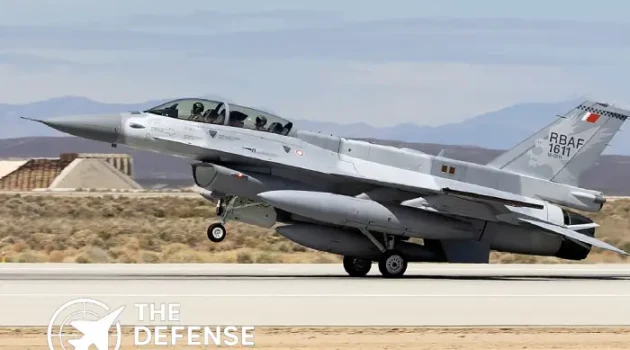
Second, the service should increase F-35 Lightning II procurement to bolster fifth-generation strike capacity. While the F-35 lacks the F-47’s range and air superiority focus, its stealth characteristics, advanced sensors, and data fusion capabilities enable operations in contested environments. Additional F-35s would supplement aging F-22 Raptors until sufficient F-47s become available.
These recommendations run counter to current Air Force budget proposals that reduce F-35 procurement in favor of F-47 development funding. The fiscal 2026 budget request cut F-35 orders from 74 to 47 aircraft while allocating $3.5 billion for the F-47 program. The Mitchell analysis suggests this trade-off creates unnecessary near-term risk by reducing proven fifth-generation capacity before sixth-generation replacements reach operational status.
Fiscal Realities and Strategic Choices
Rough estimates place the cost of an additional 100 B-21s and 115 F-47s north of $100 billion over the production run. This represents a substantial investment even within defense budgets approaching $900 billion annually. However, the Mitchell Institute authors argue these costs should be weighed against alternatives and strategic risks.
Stand-off weapons, while cheaper per unit than aircraft, require massive inventories to sustain campaign-level operations. Hypersonic missiles at $40 million each, advanced cruise missiles at $2-4 million, and supporting sensor networks add up quickly when engaging hundreds or thousands of targets. Aircraft, by contrast, are reusable assets that generate value across decades of service.
More fundamentally, Penney emphasized that insufficient strike capacity carries strategic costs beyond dollar figures. An adversary sanctuary allows China to operate freely from mainland bases, complicating American operational planning and potentially emboldening Beijing to believe it can weather limited U.S. strikes without facing existential threats to its war-making capacity.
President Trump’s proposed $1.5 trillion defense budget for fiscal 2027 could potentially accommodate expanded aircraft procurement, though competing priorities for naval shipbuilding, missile defense, space systems, and other modernization programs create difficult trade-offs. The administration must weigh sixth-generation aircraft investments against alternatives including Columbia-class ballistic missile submarines, next-generation destroyers, and ground-based strategic deterrent intercontinental ballistic missiles.
B-21 Raider Development and Production Status
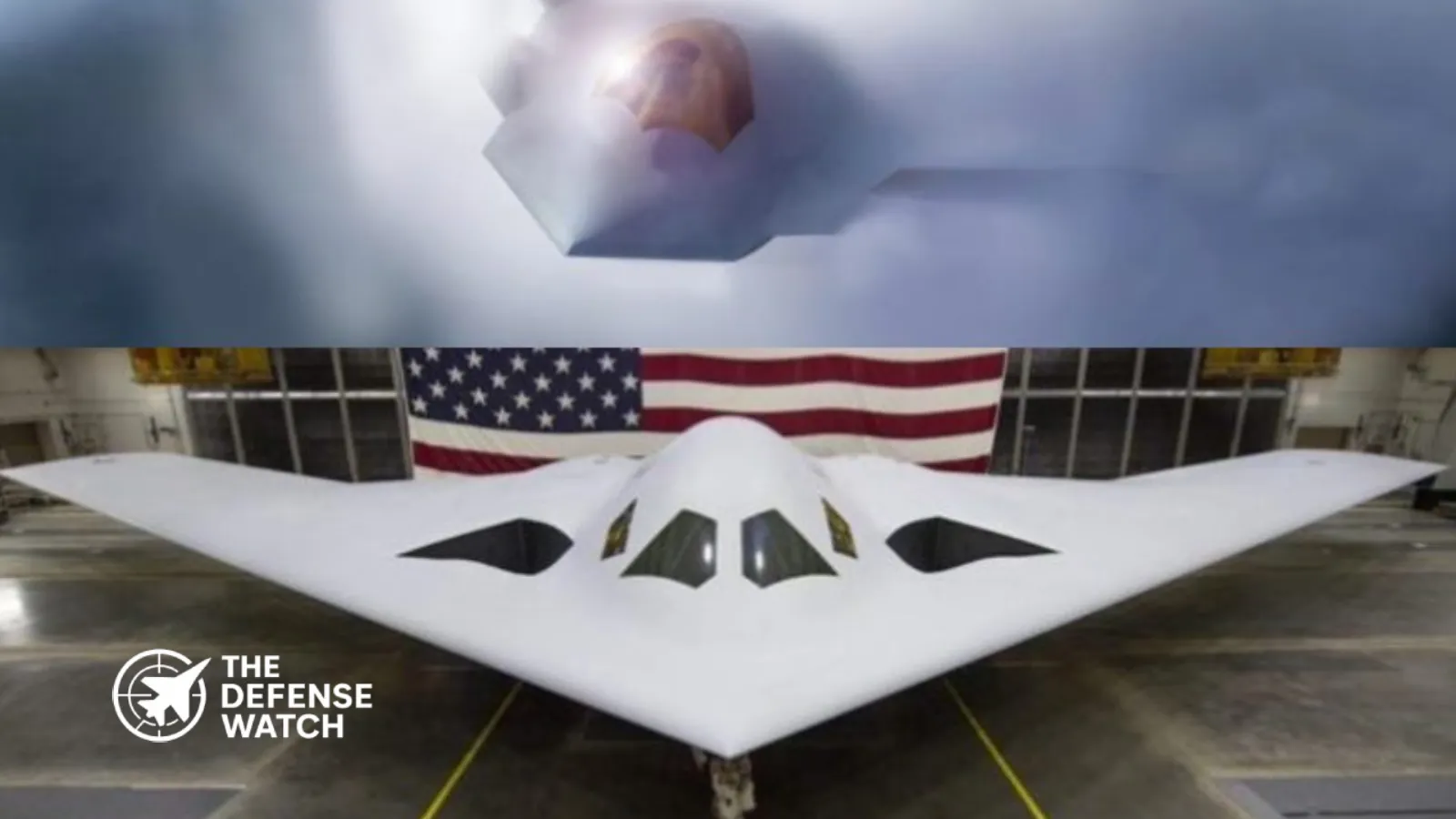
The B-21 Raider represents the Air Force’s first new bomber in over three decades and the nation’s first true sixth-generation aircraft to reach flight test. Northrop Grumman designed the platform around open-architecture principles enabling rapid integration of emerging sensors, weapons, and countermeasures as technology evolves.
Three B-21s currently conduct flight tests at Edwards Air Force Base in California, with the program progressing toward planned operational capability by 2027. The bomber costs approximately $692 million per aircraft in fiscal 2022 dollars—substantially less than the $2 billion unit cost for the B-2 Spirit it replaces.
The B-21 carries both nuclear and conventional weapons and features optional-manning capability for certain missions. Its advanced stealth characteristics reportedly provide significant improvements over the already highly-survivable B-2, though specific performance details remain classified.
Production plans call for at least 100 aircraft, with Northrop Grumman establishing manufacturing facilities at Air Force Plant 42 in Palmdale, California. The company has stated it can increase production rates if the government provides adequate funding, suggesting the industrial base could support the Mitchell Institute’s recommended expansion to 200 aircraft.
F-47 Next Generation Air Dominance Program
The F-47, officially designated Next Generation Air Dominance, won contract award to Boeing in a competition against Lockheed Martin. Air Force Chief of Staff General David W. Allvin has indicated the program targets initial operational capability within the 2025-2029 timeframe, though specific dates remain classified.
The F-47 emphasizes air superiority missions against advanced adversary fighters and air defenses while incorporating deep strike capabilities. It reportedly features significantly greater range than the F-22 Raptor, enabling operations across Pacific distances without extensive tanker support. The aircraft also integrates advanced sensors and will control Collaborative Combat Aircraft—autonomous loyal wingman drones that extend the manned fighter’s reach and lethality.
Current procurement plans call for 185 F-47s to replace retiring F-22 Raptors and supplement F-35 Lightning IIs. The Mitchell Institute recommendation for 300 aircraft would expand this force by 62 percent, providing greater capacity for simultaneous operations across multiple theaters while maintaining homeland defense commitments.
Air Force officials have characterized the F-47 as a “family of systems” rather than a single platform, emphasizing its role as quarterback for collaborative combat aircraft, long-range sensors, and distributed networks. This systems-of-systems approach distributes capabilities across multiple assets, complicating adversary targeting and improving survivability through redundancy.
Broader Fighter Force Structure Challenges
The Mitchell Institute recommendations align with official Air Force assessments identifying substantial fighter shortfalls. A 10-year force structure plan submitted to Congress indicates the service needs 1,558 combat-coded fighter aircraft—nearly 300 more than the current estimated inventory of 1,271 in fiscal 2026.
This gap reflects decades of declining procurement budgets, extended service life programs that prolong aging aircraft rather than replacing them, and higher-than-anticipated attrition rates. The average Air Force fighter is now over 30 years old, with many airframes approaching or exceeding their designed service lives.
Maintenance challenges compound the numerical shortfall. Aging aircraft require more intensive sustainment, reducing availability rates and driving up operating costs. Parts shortages and maintainer shortfalls further degrade readiness, with Air Combat Command recently identifying spare parts as the top unfunded priority if additional resources become available.
Strategic Implications for China Deterrence
The recommended expansion of B-21 and F-47 fleets would substantially enhance American deterrence in the Indo-Pacific region. By demonstrating the capability to strike targets throughout mainland China, the United States would complicate Beijing’s planning for Taiwan contingencies and increase the costs and risks of aggression.
Chinese military planners currently assume they can operate freely from mainland bases beyond the range of most U.S. strike systems. American fighters lack the range to reach deep into China from forward bases. Bombers face increasingly sophisticated air defenses approaching Chinese airspace. Stand-off weapons carry limited inventories that could be exhausted early in sustained conflict.
A force of 200 B-21s and 300 F-47s would alter this calculus. China would need to defend a vastly expanded target set including air bases, command centers, logistics hubs, and missile sites across its territory. Air defenses optimized for protecting coastal regions would require extension hundreds of miles inland. Resources dedicated to offensive operations against Taiwan would need reallocation to defensive missions protecting the mainland.
This sanctuary denial capability could prove decisive in crisis escalation dynamics. If Beijing believed that attacking Taiwan would bring the war to Chinese territory with significant economic and political costs, deterrence strengthens. Conversely, if Chinese leaders assess they can conduct operations from safe havens beyond American reach, the incentives for restraint diminish.
Allied Implications and Burden Sharing
The report’s recommendations also carry implications for allied burden-sharing and combined operations. Japan, South Korea, and Australia have all invested in F-35 procurement to enhance interoperability with U.S. forces. Additional American investment in sixth-generation penetrating aircraft would maintain technological overmatch while potentially opening opportunities for allied participation in F-47 production or collaborative combat aircraft development.
However, the scale of investment required may also prompt questions about allied contributions to collective defense. If the United States procures 200 B-21s and 300 F-47s primarily for Pacific contingencies, allies in the region could face pressure to increase their own defense spending and capabilities rather than relying exclusively on American power projection.
European NATO allies face similar dynamics as the alliance confronts renewed Russian aggression and debates force structure requirements for high-intensity conflict. American decisions about bomber and fighter procurement for Pacific scenarios will influence NATO force planning and potentially affect how the U.S. balances commitments across theaters.
Get real time update about this post category directly on your device, subscribe now.