
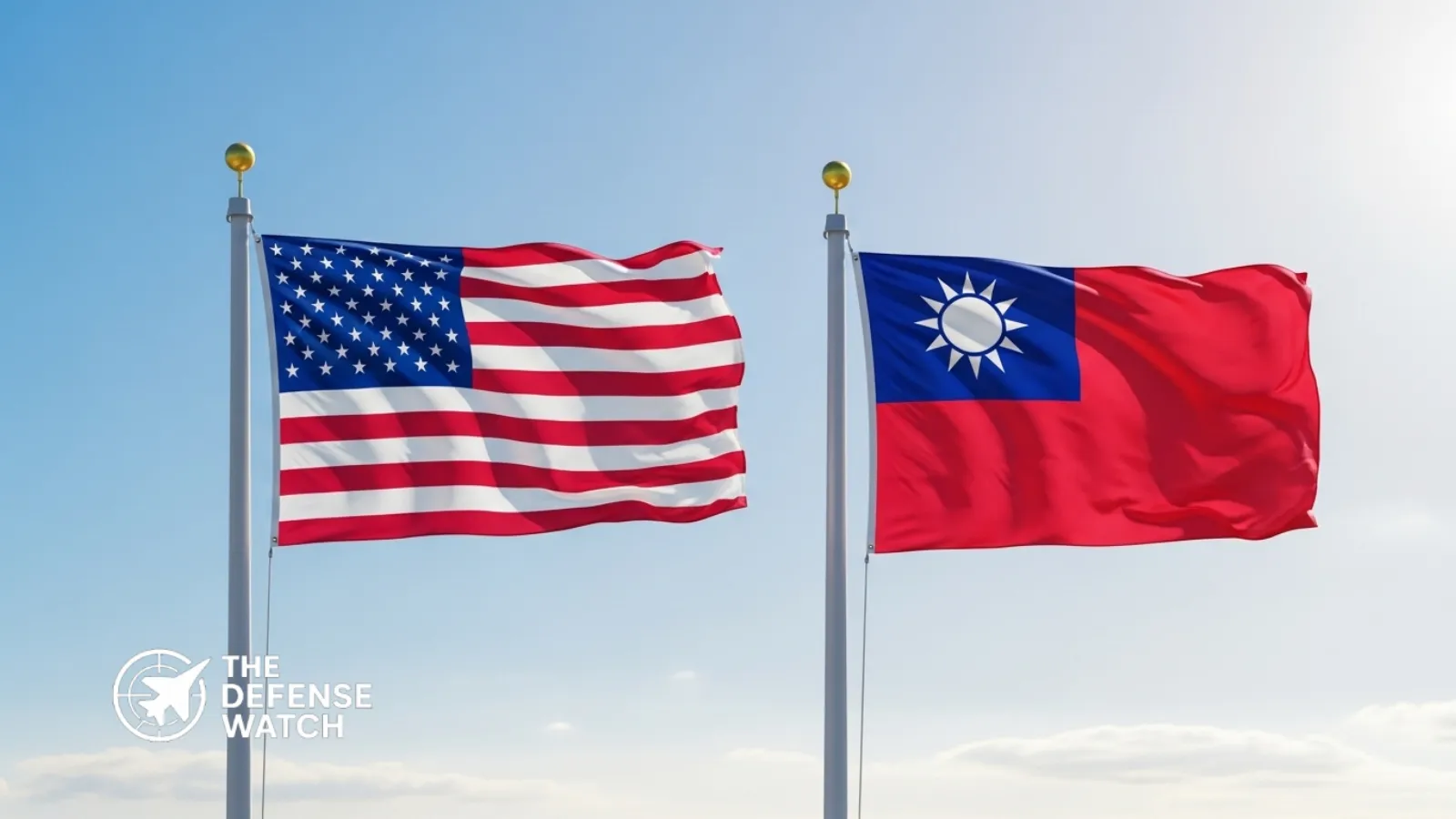
Taiwan and Kratos Complete Jet-Powered Attack Drone Test
Taiwan has successfully tested the jet-powered Mighty Hornet IV attack drone as part of a defense partnership with U.S. firm Kratos Defense & Security Solutions, aimed at boosting the island’s unmanned strike capabilities against growing Chinese military pressure. The test at Kratos’ Oklahoma City facility validated integration of a Taiwanese mission payload and marked a key step in accelerating collaborative defense work.
Joint Effort on a Low-Cost Attack UAV
The U.S. contractor and Taiwan’s National Chung-Shan Institute of Science and Technology (NCSIST) said engineers worked together in the recent test, which Kratos described as a milestone for bilateral cooperation. Taiwan is seeking systems that can be produced in numbers, are affordable, and can serve as deterrent and operational assets in the event of conflict.
The drone under development, known as the Mighty Hornet IV or Chien Feng IV in Taiwan, is based on a modified target drone design and is being shaped into a cruise missile-like weapon with high speed and range. This reflects Taipei’s emphasis on unmanned systems suited for stand-off strike roles.
Strategic Context: Rising Pressure from China
China has increased military activity near Taiwan, sending warplanes, ships and drones into the airspace and waters around the island. Taiwan’s defense officials say this activity is part of so-called grey zone tactics aimed at wearing down the island’s defenses and public resilience.
Reuters reported that the number of detected Chinese military aircraft operating near Taiwan rose by about 23 percent in 2025 compared with the previous year. Taiwan’s defense ministry sees enhanced drone capability as part of a broader response to these trends.
US-Taiwan Defense Technology Collaboration
The Kratos effort is one element of expanding defense ties between Washington and Taipei. Taiwan has sought U.S. collaboration on multiple fronts, including arms sales and joint development of systems that can be rapidly fielded and produced. These efforts reflect Taipei’s focus on bolstering its asymmetric defense posture.
In their statement, NCSIST officials framed the partnership as helping shorten development timelines for capabilities that meet Taiwan’s needs for rapid countermeasures and long-range preemptive strike options.
Mighty Hornet IV: Capabilities and Role
Industry reporting indicates the Mighty Hornet IV is being developed as a high-speed, low-cost UAV capable of sustained stand-off missions. It leverages a baseline design from a target drone adapted to serve as an attack platform. Early data suggests it could operate at speeds up to about Mach 0.8 and at altitudes above 35,000 feet.
Officials from both Kratos and Taiwan stress the importance of large numbers of such systems in shaping future operational concepts, including saturating potential adversary defenses and complicating targeting.
Broader UAV Development Trends for Taiwan
Taiwan’s wider unmanned systems push includes both foreign procurement of U.S.-made drones and expansion of its domestic production base. This reflects lessons from recent conflicts and a desire to build resilient, distributed strike and surveillance capabilities.
Defense analysts note that achieving scale remains a strategic goal, given Taiwan’s aim to match the pace of technological change and ensure its forces can operate effectively in a contested environment.
Get real time update about this post category directly on your device, subscribe now.
