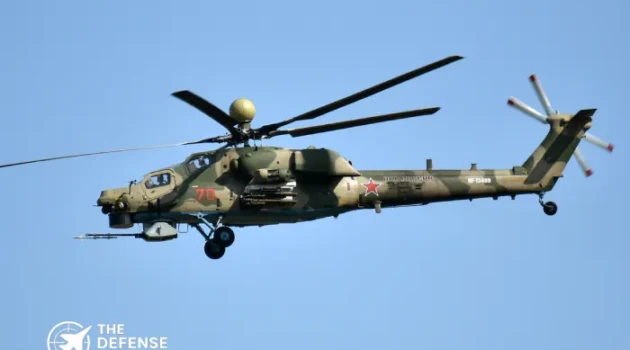
Iran Receives First Russian Mi‑28NE Attack Helicopter
Iran has begun receiving Russian‑built Mi‑28NE Havoc attack helicopters, with the first example confirmed in a Tehran facility, marking the start of deliveries under a long‑planned procurement agreement.
Delivery Confirmation and Visual Evidence
Photographs and open‑source intelligence show a Russian Mi‑28NE attack helicopter in a hangar at the Pars Aerospace Services Company facility in Tehran. The aircraft appears in a desert‑style digital camouflage and was likely transported in a partially disassembled state aboard heavy transport aircraft such as Il‑76s.
Multiple sources and imagery emerging in late January and early February 2026 confirm that Russia has begun operationally delivering at least one Mi‑28NE to Iran.
Background on the Procurement Deal
The acquisition stems from a broader Iranian defense procurement initiative announced in November 2023. Iranian Deputy Defense Minister Brigadier General Mahdi Farahi publicly stated that plans were finalized to introduce Russian Su‑35 fighters, Mil Mi‑28 attack helicopters, and Yak‑130 jet trainers into Iranian army aviation units.
Reports through late 2025 indicated a buildup of Russian Il‑76 heavy transport flights into Iran, widely interpreted by defense analysts as part of the logistics operation for helicopter delivery and related support equipment.
Mi‑28NE Capabilities and Role
The Mi‑28NE is the export variant of Russia’s Mi‑28 attack helicopter, sometimes referred to by its NATO reporting name Havoc. It is a two‑seat, dedicated attack rotorcraft designed for engaging armored targets, personnel, and low‑flying aircraft in all‑weather, day or night operations.
Key systems include a nose‑mounted 30 mm autocannon, multiple hardpoints for guided air‑to‑ground missiles such as the Ataka family, and capacity for rockets and defensive countermeasures. Its armored cockpit and advanced avionics support survival and mission effectiveness in contested environments.
For Iran, fielding the Mi‑28NE represents a significant upgrade from legacy Vietnam‑era AH‑1J Cobras, which remain the core of its helicopter gunship fleet but have suffered attrition and aging systems issues in recent years.
Strategic Context
The initial delivery occurs amid heightened regional security tensions and sustained pressure from the United States and allied partners. The first Mi‑28NE units are currently in inspection and acceptance phases rather than full operational deployment, though the presence of this modern attack helicopter signals a tangible expansion of Iranian army aviation capabilities.
Iran’s acquisition of advanced Russian platforms like the Mi‑28NE forms part of a broader pattern of deepening defense ties with Moscow, reflecting Tehran’s effort to offset sanctions and outdated indigenous systems with strategic imports.
Get real time update about this post category directly on your device, subscribe now.