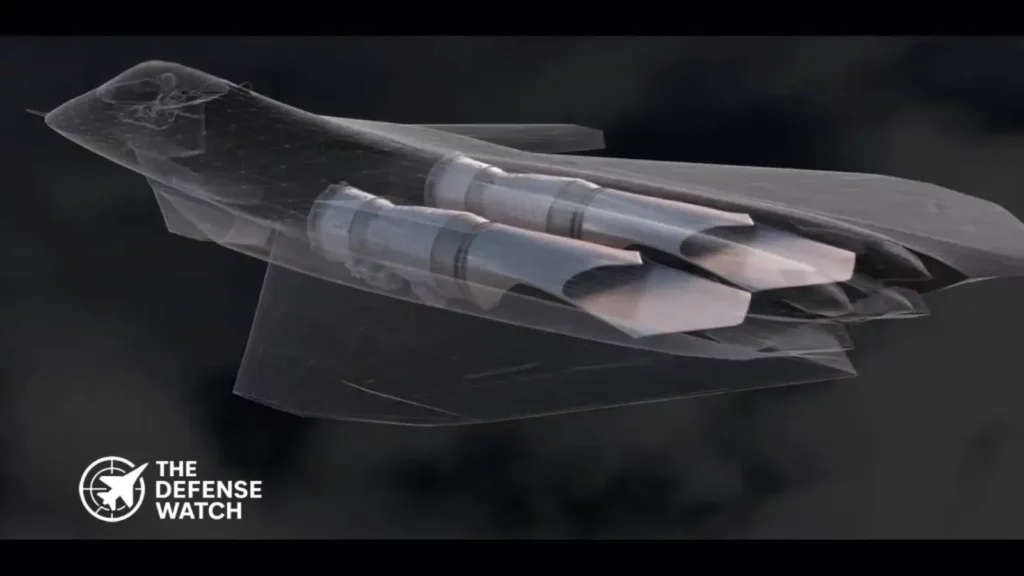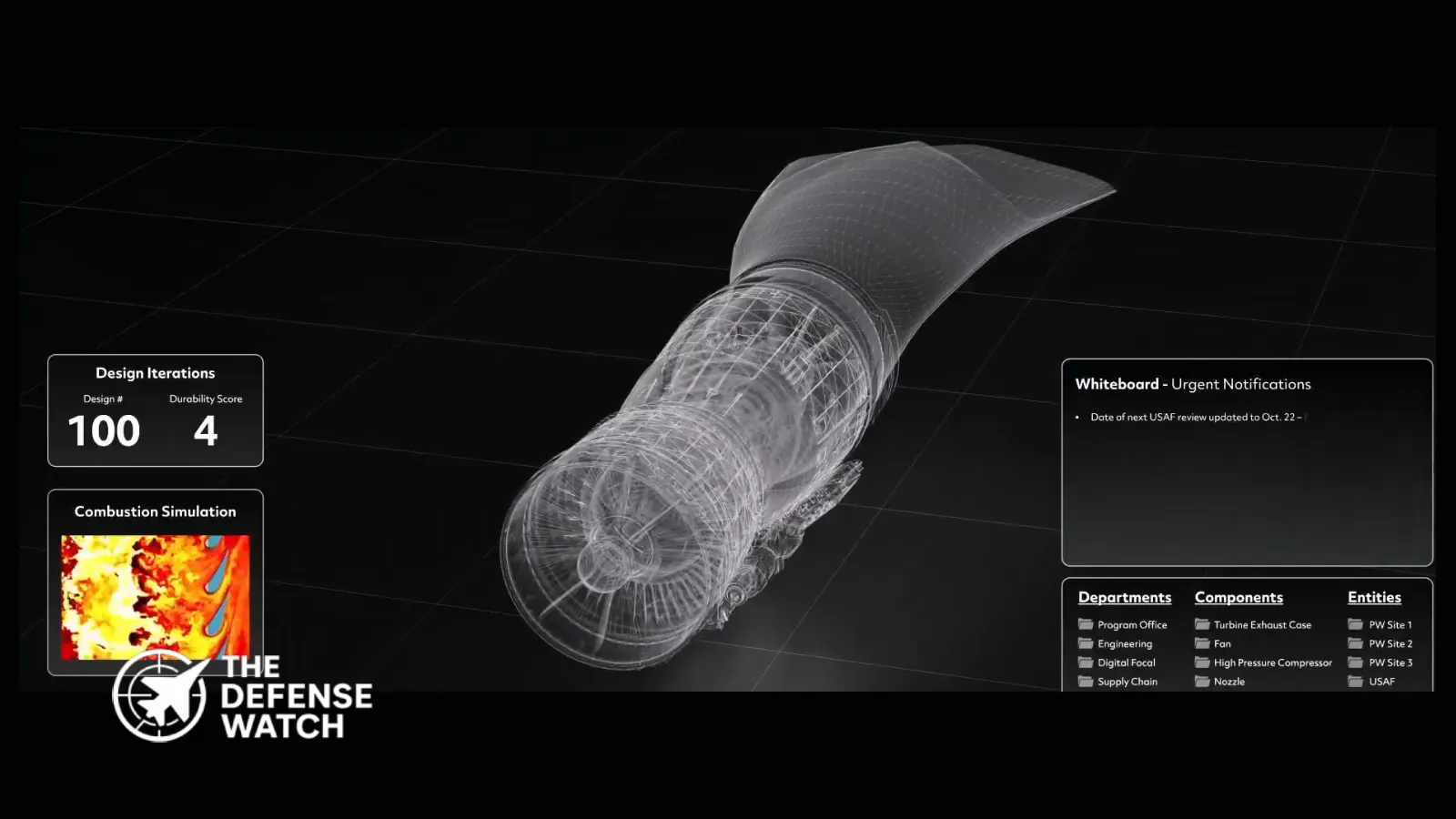
- ► Pratt & Whitney unveiled new images of the XA103 adaptive cycle engine for NGAP.
- ► XA103 will power the Boeing-built F-47 fighter under the Next Generation Air Dominance program.
- ► Engine targets up to 25% better fuel efficiency and 20% more thrust using three stream architecture.
- ► Detailed design completed in 2025, with prototype production ongoing and ground tests planned in late 2020s.
- ► F-47 program exceeds $20 billion and covers at least 185 aircraft, with first flight targeted for 2028.
Pratt & Whitney XA103 NGAP Engine Marks Critical Step For F-47
The Pratt & Whitney XA103 NGAP engine is moving into the next phase as the powerplant for the Boeing F-47 fighter under the US Air Force Next Generation Air Dominance program.
Pratt & Whitney, a business of RTX, recently released updated imagery of the XA103 adaptive cycle engine, confirming that detailed design work has been completed. Prototype production is ongoing, with ground testing scheduled for the late 2020s.
The engine is being developed under the US Air Force Next Generation Adaptive Propulsion, or NGAP, effort. NGAP is intended to deliver a new class of propulsion systems optimized for sixth generation air combat requirements, including range, survivability, thermal management, and sustained high performance.
Three Stream Adaptive Architecture
At the core of the XA103 NGAP engine is a three stream adaptive architecture. Unlike traditional two stream turbofan engines, the adaptive design allows the engine to dynamically adjust airflow between core and bypass streams depending on mission needs.
According to Pratt & Whitney, the XA103 targets up to 25 percent better fuel efficiency and up to 20 percent more thrust compared with current fifth generation fighter engines. Those gains are central to extending combat radius and improving acceleration and payload flexibility.
The adaptive cycle approach builds on lessons learned from the earlier Adaptive Engine Transition Program, where Pratt & Whitney and General Electric tested competing demonstrators. NGAP moves that technology toward an operational engine tailored specifically for the F-47.
From an operational standpoint, improved fuel efficiency directly translates into greater range or time on station without relying as heavily on aerial refueling. In a potential Indo Pacific scenario, where distances are vast and tankers may be contested, propulsion efficiency becomes a strategic enabler rather than just a technical metric.
Powering The Boeing F-47
The XA103 NGAP engine will power the Boeing F-47 fighter, a next generation aircraft designed to operate as the centerpiece of the Air Force future air dominance family of systems.

The F-47 program is valued at more than $20 billion and is expected to include at least 185 aircraft. First flight is targeted for 2028, with operational service entry planned in the 2030s.
While specific performance details of the F-47 remain classified, propulsion is widely viewed as one of the defining elements of sixth generation capability. Higher thrust supports greater payload and energy for directed energy systems, while improved thermal management is critical for advanced sensors and electronic warfare suites.
In this context, the Pratt & Whitney XA103 NGAP engine is not simply a replacement for existing powerplants. It is designed to enable the full performance envelope of the F-47, including potential integration with collaborative combat aircraft and high bandwidth data networks.
Industrial And Strategic Implications
The NGAP effort also carries industrial significance. By advancing adaptive engine technology into production, the US aerospace sector reinforces its lead in high performance military propulsion.
According to US Air Force budget documents and RTX disclosures, NGAP is structured to reduce lifecycle cost while increasing durability compared with legacy engines. That focus reflects lessons from sustainment challenges faced by earlier fighter fleets.
The scale of the F-47 program, covering at least 185 aircraft, suggests a substantial production run for the XA103 NGAP engine. Over time, propulsion decisions could influence allied interoperability and potential export pathways, depending on US policy.
From a geopolitical perspective, propulsion performance affects deterrence credibility. Extended range and higher efficiency expand operational options across contested theaters, including the Indo Pacific and European regions. In that sense, engine development is directly linked to force posture and alliance assurance.
Timeline And Next Steps
With detailed design completed in 2025, Pratt & Whitney is now focused on prototype manufacturing. Ground testing in the late 2020s will validate performance targets before integration with flight test aircraft.
The 2028 first flight target for the F-47 leaves a narrow but achievable window for propulsion validation. Historically, engine maturity has been one of the pacing elements in advanced fighter programs. Close coordination between Boeing and Pratt & Whitney will be critical to meeting schedule milestones.
As development progresses, additional data from the US Air Force and industry partners will clarify performance benchmarks and cost projections. For now, the Pratt & Whitney XA103 NGAP engine stands as a central pillar of the Air Force future air dominance architecture.
Get real time update about this post category directly on your device, subscribe now.