
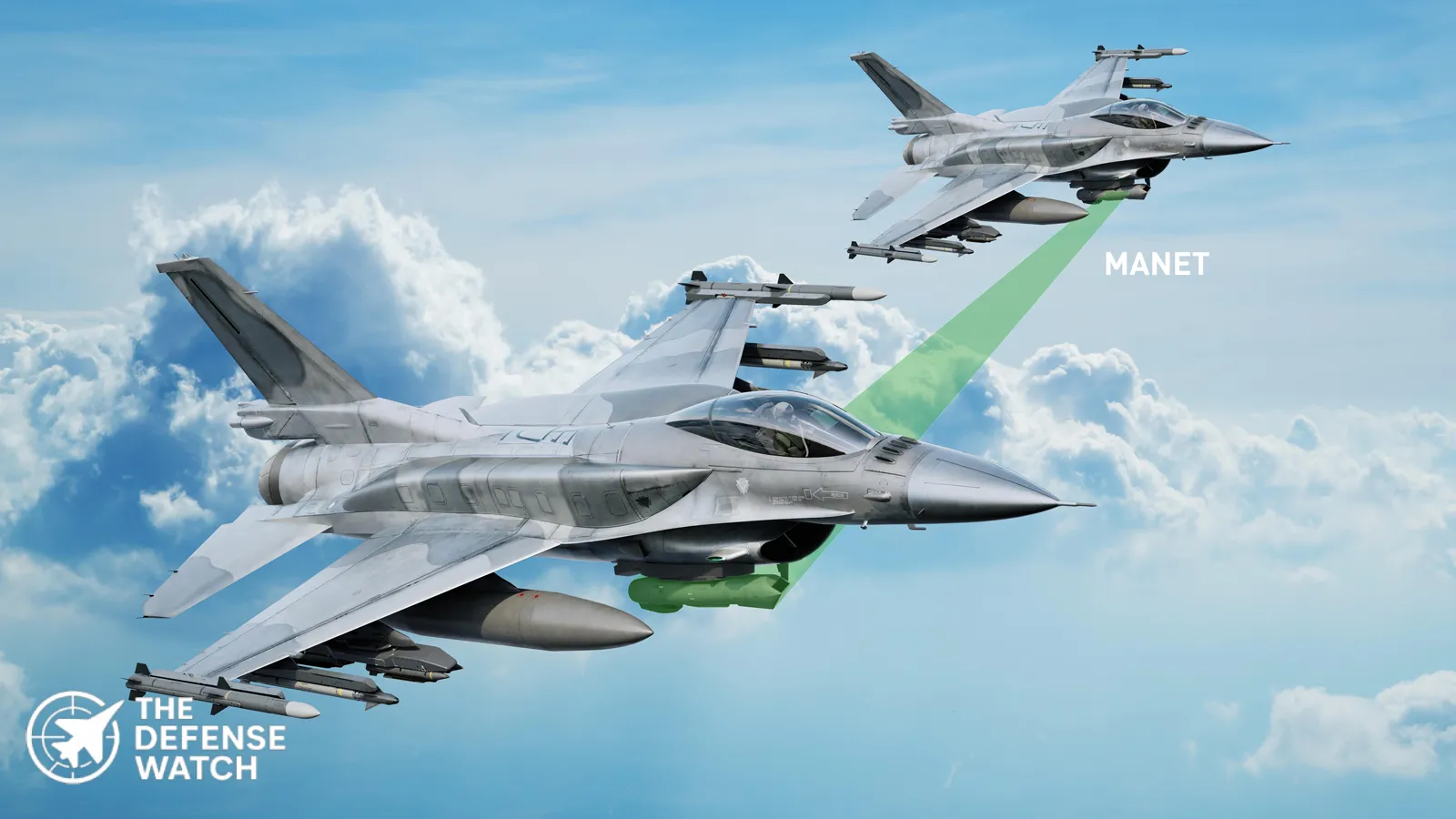
Lockheed Martin Completes First Multi-Aircraft F-16 Flight With Sniper Networked Targeting Pod
Lockheed Martin has successfully carried out the first multi-aircraft F-16 flight demonstration of its Sniper Networked Targeting Pod, a milestone in airborne sensor networking that shows real-time data exchange between platforms. The demonstration confirms networking and shared targeting data in flight, reinforcing the pod’s role in modern integrated operations.
New Capabilities for Targeting and ISR
In the recent test, two F-16 aircraft equipped with upgraded Sniper Networked Targeting Pods exchanged live targeting and sensor information while also sending data to a ground station. That shared data feed creates a common tactical picture for air and ground forces in near real time, cutting the time from target detection to engagement.
The key advance is the pod’s ability to network through secure links and mobile ad hoc network radios. These allow platforms to share sensor outputs directly and re-establish connections automatically if links falter. Networking across air, ground, and maritime assets can reduce latency and improve target tracking and situational awareness.
Building on a Proven Pod
The Sniper Networked Targeting Pod evolves Lockheed Martin’s long fielded Sniper Advanced Targeting Pod. Sniper ATP has more than 1,650 units delivered worldwide and supports high-definition imaging, laser designation, and two-way video datalinks without aircraft modification.
The networked version adds a hybrid computing and communications node that enhances interoperability between platforms, including fourth-generation jets and fifth-generation assets. It supports pod-to-pod datalinks and onboard processing while preserving Sniper’s core electro-optical and infrared sensor capabilities.
Context in Modern Warfare
Air forces and joint forces increasingly emphasize shared awareness and data fusion. Networking sensors and targeting systems can enable faster decision loops and coordinated action across domains, a priority in contested environments. The Sniper Networked Targeting Pod addresses that need by providing real-time feeds that help link ISR and targeting functions simultaneously rather than sequentially.
Lockheed Martin characterizes the flight demonstration as foundational for future networked targeting operations and a step toward integrated multi-domain command and control.
What This Means for Operators
For air forces that still operate F-16s alongside newer platforms such as F-35s, the pod’s networking ability could narrow gaps in situational awareness. The upgrade aims to help legacy jets share data with advanced fighters and ground systems, improving coordinated targeting and overall mission effectiveness.
Operators could see faster cueing of sensors and weapons, better synchronization with joint assets, and reduced time from detection to response. Networking capabilities built into targeting pods may also support coalition operations where allied forces use mixed aircraft fleets.
Get real time update about this post category directly on your device, subscribe now.
