

Table of Contents
A Century of British Fighter Jets
British Fighter Jets sit at the core of the United Kingdom’s airpower story. From propeller driven legends of the Battle of Britain to stealth aircraft flying today, the Royal Air Force has shaped modern air combat for more than eight decades. This evolution reflects not only advances in technology, but also changing threats, alliances, and defense strategy.
The journey from the Supermarine Spitfire to the F 35 Lightning shows how Britain adapted to jet propulsion, radar warfare, stealth, and networked combat. Today, programs like the RAF Typhoon and the future Tempest Fighter aim to keep the UK among the world’s leading air forces.
The Spitfire and the Battle of Britain Legacy
Defining an Era of Air Combat
No discussion of British Fighter Jets can begin without the Supermarine Spitfire. During the Battle of Britain in 1940, the Spitfire and the Hawker Hurricane formed the backbone of RAF Fighter Command. Their role was simple but critical, defend British skies against sustained German air attacks.

The Spitfire’s speed, agility, and high altitude performance gave RAF pilots a fighting chance against the Luftwaffe. Its elliptical wings became a symbol of resistance and innovation. More importantly, it proved that control of the air could decide the outcome of a wider conflict.
This lesson still shapes RAF doctrine today. Air superiority remains the first objective in any major military operation.
The Jet Age Begins, Meteor to Lightning
Britain Enters Supersonic Flight
After World War Two, British Fighter Jets entered the jet era. The Gloster Meteor became the RAF’s first operational jet fighter, initially used to counter German V 1 flying bombs. It marked the start of a rapid shift away from piston engines.
By the Cold War, aircraft like the English Electric Lightning pushed the limits of speed and climb performance. Designed to intercept Soviet bombers, the Lightning could reach Mach 2 and climb almost vertically after takeoff.
These aircraft reflected Cold War realities. The RAF focused on defending UK airspace against nuclear armed threats, relying on fast reaction alert fighters supported by radar networks.
The Harrier Revolution and Flexible Airpower
Short Takeoff Changes the Battlefield
One of Britain’s most unique contributions to fighter design was the Harrier jump jet. Entering service in the late 1960s, it could take off and land vertically or from short runways.
The Harrier proved its value during the Falklands War in 1982. Operating from small aircraft carriers, RAF and Royal Navy Harriers provided air defense and ground attack far from home bases.
This experience reinforced the importance of flexible basing and expeditionary airpower, ideas that still influence British Fighter Jets today.
RAF Typhoon, Europe’s Air Superiority Workhorse
Modern Multirole Power
The Eurofighter Typhoon, known in RAF service as the RAF Typhoon, represents the backbone of modern British air combat. Developed with Germany, Italy, and Spain, the aircraft entered RAF service in the early 2000s.
Originally designed for air superiority, the RAF Typhoon evolved into a true multirole fighter. It now conducts air policing, strike missions, and intelligence support across Europe and the Middle East.
Equipped with advanced radar, electronic warfare systems, and high thrust engines, the Typhoon ensures the RAF can counter peer level threats. Ongoing upgrades continue to expand its weapons and sensor capabilities. More details on RAF Typhoon operations can be found on the Royal Air Force official site at https://www.raf.mod.uk.
F 35 Lightning, Stealth Enters RAF Service
A New Generation of British Fighter Jets
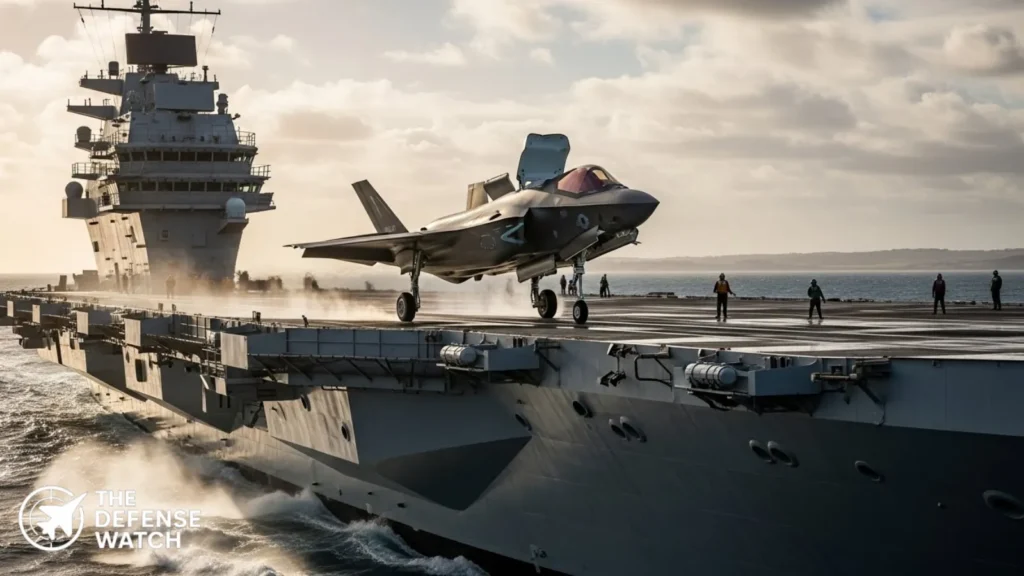
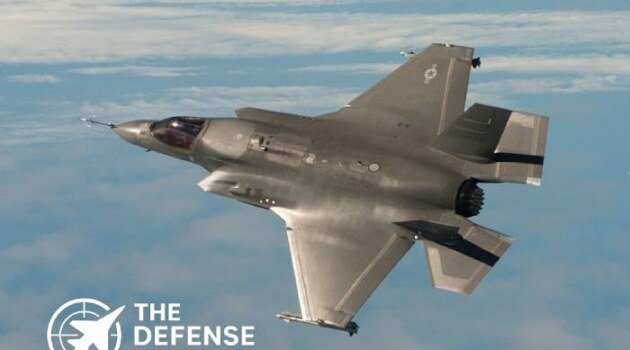
The F 35 Lightning marks a major shift in British Fighter Jets. As a fifth generation stealth aircraft, it brings low observability, sensor fusion, and deep strike capability to RAF and Royal Navy operations.
The United Kingdom operates the short takeoff variant, allowing the F 35 Lightning to fly from the Queen Elizabeth class aircraft carriers. This restores fixed wing carrier aviation to Britain for the first time in decades.
Unlike earlier fighters, the F 35 acts as a flying sensor hub. It gathers, processes, and shares data across the battlespace. This makes it a force multiplier, not just a traditional dogfighter. Program details are available from Lockheed Martin at https://www.lockheedmartin.com.
Analysis, Why Stealth and Networking Matter
The move from RAF Typhoon to F 35 Lightning highlights a shift in air combat priorities. Speed and maneuverability still matter, but information dominance is now decisive. Modern conflicts demand aircraft that can survive dense air defenses and coordinate with land, sea, and space assets.
British Fighter Jets are no longer standalone platforms. They are nodes in a larger combat network. This reflects lessons from recent conflicts and the growing threat from advanced air defense systems.
Tempest Fighter, Britain’s Vision for the Future
Beyond Fifth Generation
Looking ahead, the Tempest Fighter program aims to deliver a next generation combat aircraft by the mid 2030s. Led by the UK with partners including Italy and Japan, Tempest is designed to replace the RAF Typhoon.

concept art/render The Tempest Fighter is expected to feature advanced stealth, artificial intelligence support, and optional crewed operation. It will also integrate with drones and other autonomous systems.
BAE Systems, the program’s lead industrial partner, has highlighted Tempest as a platform built to evolve through software and modular upgrades. More information is available at https://www.baesystems.com.
Strategic Context, Airpower and British Defense Policy
British Fighter Jets play a central role in NATO commitments and global security missions. From Baltic air policing to Indo Pacific deployments, RAF aircraft support allies and deter adversaries.
Investment in F 35 Lightning and the Tempest Fighter also reflects industrial policy. These programs sustain the UK aerospace sector and protect sovereign design and manufacturing skills.
As defense budgets face pressure, the RAF’s challenge is balancing readiness today with investment for tomorrow.
Conclusion, From Heritage to High Tech
From the Spitfire over southern England to stealth fighters at sea, British Fighter Jets tell a story of adaptation and innovation. Each generation responded to new threats and new technologies.
The RAF Typhoon and F 35 Lightning ensure the UK remains a credible air power today. The Tempest Fighter aims to secure that position well into the future.
The legacy of the Battle of Britain lives on, not as nostalgia, but as a reminder that control of the air remains decisive.
FAQs
What is Britain’s most advanced fighter jet currently in service?The F-35B Lightning II represents Britain’s most advanced operational fighter, featuring fifth-generation stealth technology, advanced sensor fusion, and network-centric warfare capabilities. The RAF operates the short takeoff/vertical landing variant for both land-based and carrier operations.
How many fighter aircraft does the Royal Air Force currently operate?As of 2024, the RAF operates approximately 137 Typhoon fighters across seven squadrons and around 30+ F-35B Lightning II aircraft across two operational squadrons, with numbers increasing as deliveries continue toward the planned procurement of 138 F-35s.
When will the Tempest fighter enter service with the RAF?The Tempest sixth-generation fighter is targeted for initial operational capability around 2035, with development progressing through the Global Combat Air Program in partnership with Italy, Sweden, and Japan. Technology demonstrations are ongoing with prototype testing expected in the late 2020s.
Why did Britain choose the F-35B variant instead of the F-35A?Britain selected the F-35B variant due to its short takeoff and vertical landing (STOVL) capability, which is essential for operations from the Queen Elizabeth-class aircraft carriers. This capability provides flexibility for expeditionary operations and carrier-based power projection.
What happened to Britain’s Harrier jump jets?The BAE Harrier GR9 was retired from RAF service in 2010 as part of the Strategic Defense and Security Review cost-cutting measures. This created a capability gap in carrier-based aviation until the F-35B became operational, with the first RAF squadron achieving initial operating capability in 2019.
How does the Typhoon compare to the F-35 in RAF service?The Typhoon and F-35 serve complementary roles rather than competing directly. Typhoon excels in air superiority missions with exceptional maneuverability and proven reliability, while F-35 provides stealth penetration capability and advanced sensor fusion. Both will serve alongside each other through the 2040s with different mission emphases.
What was the most important British fighter in World War TwoThe Supermarine Spitfire played a key role during the Battle of Britain and became a symbol of RAF resistance.
Is the RAF Typhoon still in serviceYes. The RAF Typhoon remains the backbone of UK air defense and continues to receive upgrades.
Why did the UK choose the F 35 LightningIts stealth, sensor fusion, and carrier compatibility make it ideal for modern expeditionary operations.
What will replace the RAF TyphoonThe Tempest Fighter is planned to enter service in the mid 2030s as the Typhoon’s successor.
Get real time update about this post category directly on your device, subscribe now.



3 comments
[…] fighters like the Typhoon while next-generation platforms remain in development. The Future Combat Air System (FCAS), a joint French-German-Spanish program, and the UK-led Tempest initiative represent […]
[…] broader regional security environment has seen frequent air policing and intercept missions. British fighter jets deployed under NATO’s enhanced Air Policing mission have repeatedly scrambled to intercept Russian reconnaissance aircraft near […]
[…] approval occurs against the backdrop of significant tensions within the rival Franco-German-Spanish Future Combat Air System (FCAS) program. FCAS has experienced prolonged industrial disputes, particularly over workshare […]