U.S. Approves AIM-260A Missile Sale To Strengthen Australia’s Airpower
The AIM-260A missile Australia approval marks a significant step in strengthening allied air combat capability in the Indo-Pacific, as Washington clears the transfer of up to 450 next-generation air-to-air missiles to Canberra.
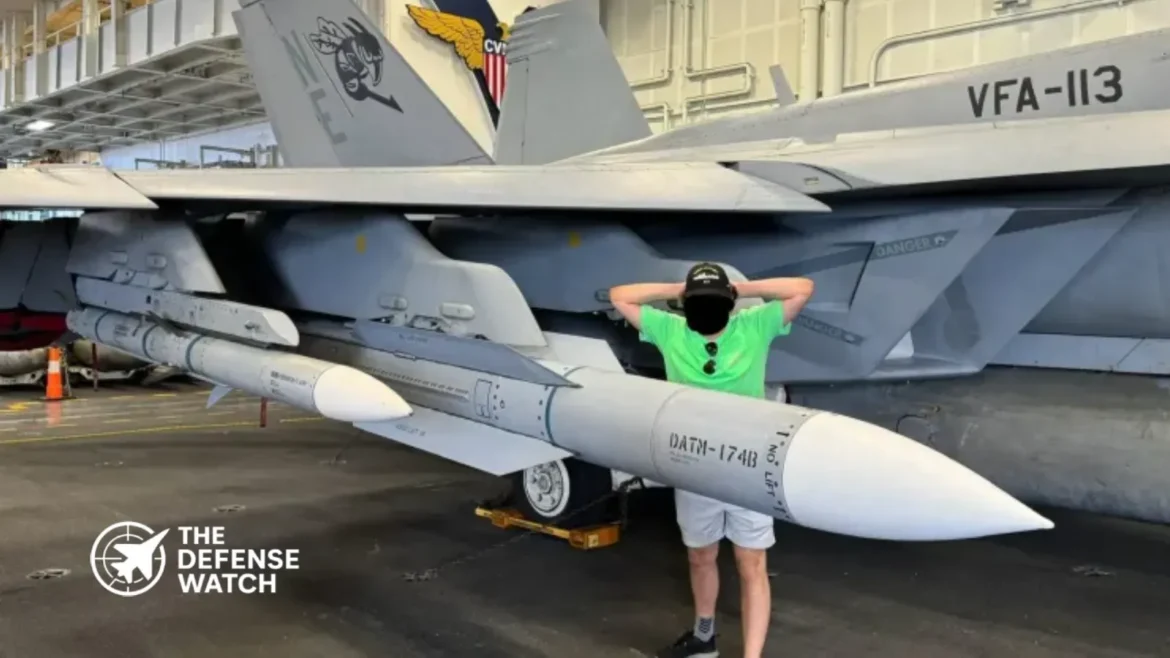
According to defense reporting and regional security sources, the approval centers on the AIM-260A Joint Advanced Tactical Missile, a program led by the U.S. Air Force to address emerging capability gaps against near-peer adversaries.
The missile is intended to replace the widely used AIM-120 AMRAAM, offering greater range and improved resistance to jamming in contested environments.
- The United States has approved the potential sale of up to 450 AIM-260A long-range air-to-air missiles to Australia.
- The AIM-260A, also known as the Joint Advanced Tactical Missile, is designed to replace the AIM-120 AMRAAM.
- The missile offers extended range and improved survivability against advanced electronic warfare environments.
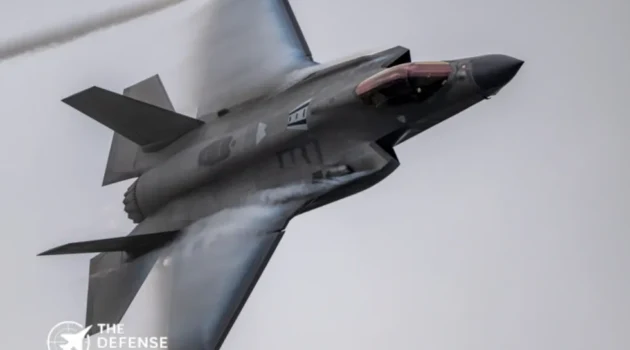
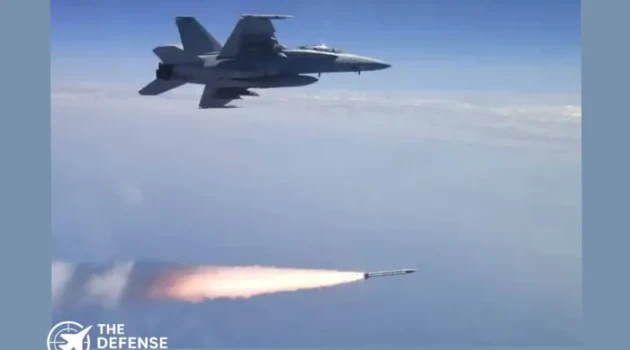
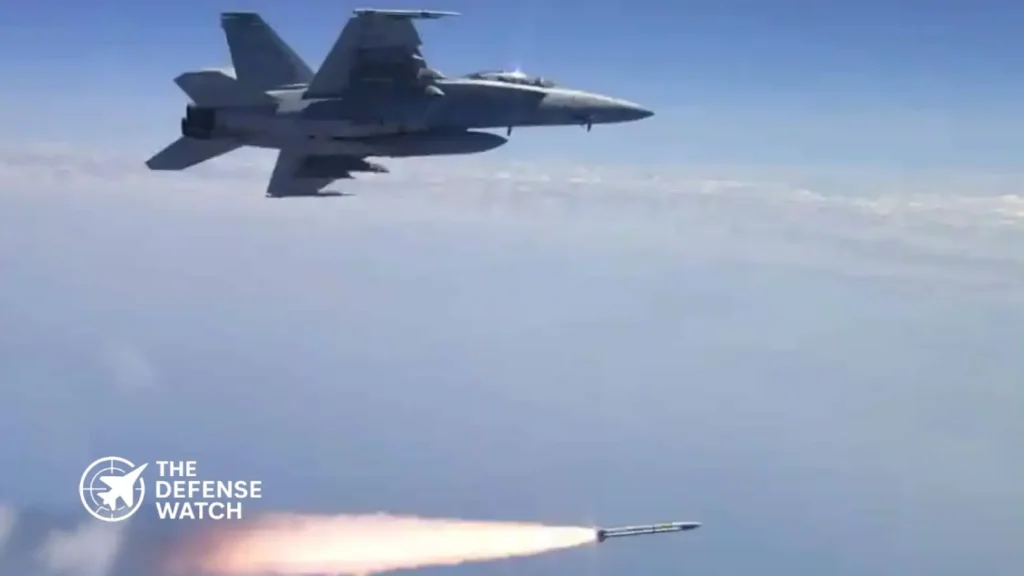
- The acquisition supports Royal Australian Air Force platforms including F-35A and F/A-18F fighters.
- The move reflects growing U.S.-Australia defense cooperation amid rising Indo-Pacific tensions.
A Next-Generation Air Combat Capability
The AIM-260A missile Australia package is expected to provide a step change in beyond-visual-range engagement capability for the Royal Australian Air Force.
While official specifications remain classified, U.S. defense officials have indicated that the AIM-260A is designed to outperform current air-to-air systems in both range and survivability. Analysts widely assess that the missile was developed in response to advanced Chinese long-range air-to-air systems such as the PL-15.
The integration of the missile with platforms like the F-35A Lightning II and F/A-18F Super Hornet will allow Australian forces to engage threats at longer distances, reducing exposure to enemy air defenses.
This shift is critical in modern air warfare, where detection and engagement ranges increasingly determine combat outcomes.
Strategic Context In The Indo-Pacific
The AIM-260A missile Australia approval comes amid rising strategic competition across the Indo-Pacific region.
The United States has been accelerating efforts to strengthen allied capabilities as part of a broader deterrence strategy. Australia, as a key partner under frameworks such as AUKUS and long-standing bilateral defense agreements, plays a central role in this posture.
From a strategic standpoint, long-range air-to-air missiles are becoming a decisive factor in potential high-end conflict scenarios. Control of the air domain depends not only on stealth and sensors, but also on the ability to strike first at extended distances.

AIM-260A Joint Advanced Tactical Missile By equipping Australia with the AIM-260A, Washington is effectively extending its own air combat network, enabling greater interoperability and shared operational reach.
Closing The Capability Gap
One of the primary drivers behind the AIM-260A missile Australia decision is the need to close a growing capability gap.
Regional competitors have invested heavily in long-range missile technology, supported by advanced radar systems and electronic warfare capabilities. This has raised concerns within U.S. defense circles about the effectiveness of legacy systems like the AIM-120 in future conflicts.
The AIM-260A addresses these concerns by offering:
- Increased engagement range
- Enhanced resistance to electronic countermeasures
- Compatibility with fifth-generation aircraft
- Improved lethality against high-speed and maneuvering targets
This aligns with Pentagon modernization priorities, which emphasize survivability and lethality in contested environments.
Operational Impact For Australia
For Australia, the acquisition significantly enhances its ability to project airpower across vast distances.
The Royal Australian Air Force operates in one of the largest areas of responsibility in the world, covering expansive maritime and airspace regions. Longer-range missiles reduce the need for forward basing and allow aircraft to operate from safer distances.
This also improves Australia’s contribution to coalition operations, particularly in scenarios involving joint U.S. and allied forces.
In practical terms, the AIM-260A missile Australia deployment will allow Australian pilots to engage adversary aircraft before entering contested zones, increasing survivability and mission success rates.
Industrial And Defense Cooperation
The approval further reinforces defense industrial ties between the United States and Australia.
Although the AIM-260A program remains tightly controlled, the sale highlights Washington’s willingness to share advanced capabilities with trusted allies. This is consistent with recent trends in U.S. defense exports, where interoperability and alliance integration are prioritized.
The deal also signals confidence in Australia’s role as a long-term security partner in the Indo-Pacific.
Broader Implications
Beyond immediate military benefits, the AIM-260A missile Australia decision carries broader geopolitical implications.
It sends a clear signal about U.S. commitment to maintaining a favorable balance of power in the region. At the same time, it underscores the accelerating pace of military modernization among Indo-Pacific nations.
As air combat evolves, missiles like the AIM-260A are likely to play a central role in shaping future engagements.
The focus is no longer just on aircraft performance, but on the entire kill chain, including sensors, data links, and long-range precision weapons.

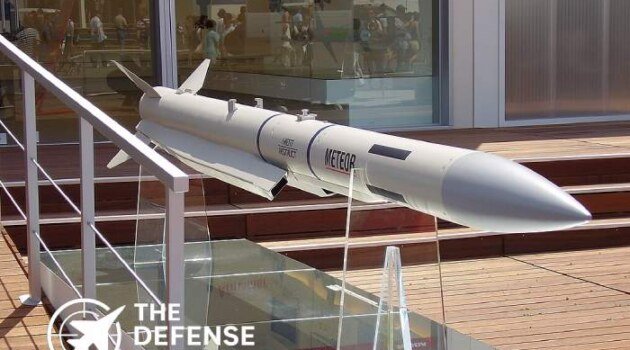
Indra has unveiled a new datalink demonstrator for the Meteor air-to-air missile designed to improve range, coverage and resistance to modern countermeasures, the company said in a statement. The Meteor Missile is a long-range, active radar guided beyond-visual-range weapon used on frontline fighters.
(adsbygoogle = window.adsbygoogle || []).push({});Spanish Defence Group Advances Meteor Datalink
The Spanish defence technology firm Indra said it has showcased an upgraded datalink system for the Meteor missile, part of the ongoing Meteor Mid Life Activities programme. The update aims to improve how Meteor exchanges guidance and control data with its launch platform during flight.
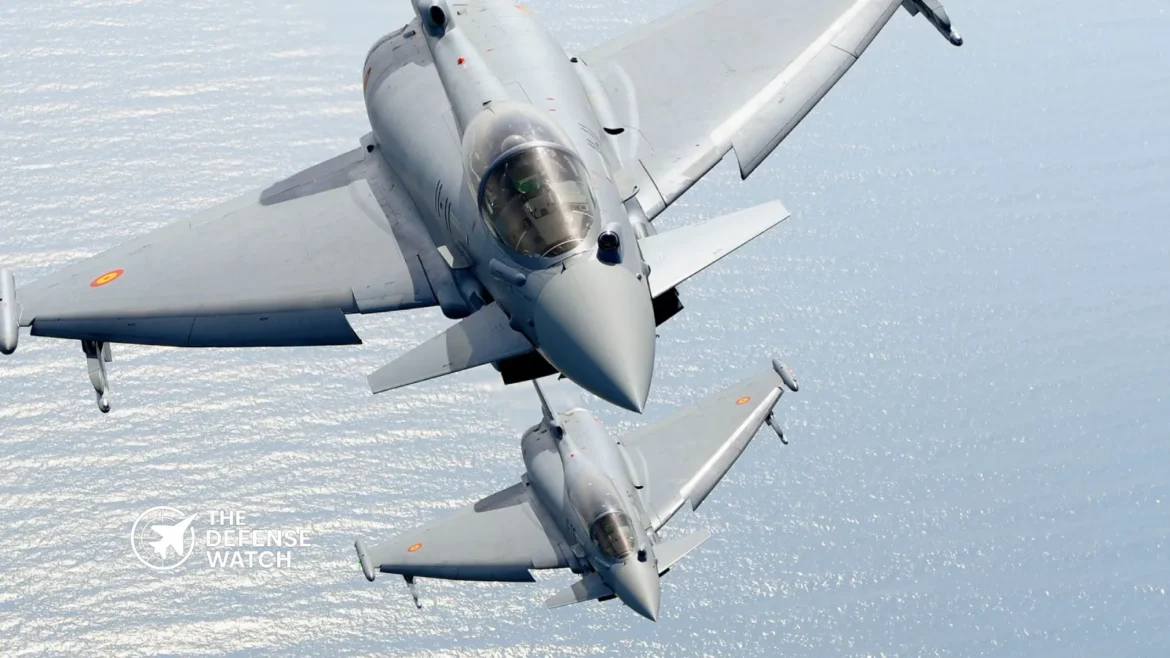
Meteor is in service with Eurofighter Typhoon, Dassault Rafale and Saab Gripen aircraft, and is also being tested for integration with the F-35 fighter. The missile’s existing datalink allows mid-course updates and retargeting from the host aircraft.
Indra said it supplies about 20 percent of the missile’s electronics across six subsystems and has delivered more than 2,300 units globally. The company has participated in the Meteor programme for 25 years.
Demonstrator Validated Against New Operational Needs
Indra presented the redesigned datalink to MBDA and the Meteor programme’s International Joint Project Office. The system completed a Preliminary Design Review and met updated technical requirements, allowing development and integration to proceed, Indra said.
(adsbygoogle = window.adsbygoogle || []).push({});The datalink upgrade is intended to strengthen communication between the launching aircraft and the missile during engagements and increase tolerance against electronic counter-measure environments. This plays into wider efforts across allied air forces to ensure long-range missile networks remain resilient against sophisticated jamming and deception technologies.
Meteor Missile Profile and Operational Context
The Meteor is a high-performance beyond-visual-range air-to-air missile with a throttleable ramjet engine and active radar seeker. It can exceed Mach 4 and has a typical operational range above 100 kilometres. A two-way datalink supports mid-course target updates and retargeting from the host aircraft or off-board sensors.
That data link is a key part of Meteor’s design. Even before this upgrade effort, it enabled the launch platform to feed updated target location and kinematic data to the missile after launch, extending its effective engagement window and adapting to dynamic battlespace conditions.
Meteor’s combination of sustained propulsion, active guidance and secure data link has made it a core long-range weapon for European partners and export customers. Continued upgrades reflect how militaries are planning for future threat environments where advanced electronic warfare is a key challenge.
(adsbygoogle = window.adsbygoogle || []).push({});What Comes Next
With preliminary design approval secured, Indra and MBDA are expected to begin full development and integration of the new datalink system. Future testing and qualification steps will determine timelines for fielding across Meteor operators.
The programme comes as air forces worldwide place greater emphasis on resilient networked weapons and interoperability across platforms, especially for fifth-generation fighters and advanced radar systems.
The European-built MBDA Meteor beyond-visual-range air-to-air missile (BVRAAM) has become a benchmark in long-range air-combat weaponry—not just in performance but in acquisition cost. Publicly available data place the unit cost around €2 million (approximately US$2.2 million) for 2019-era production. This figure highlights the premium nature of the weapon while also offering a useful comparator for air-arms budgeting and missile-procurement decisions.
Performance profile of the Meteor missile
Technical highlights
Developed by the multinational consortium led by MBDA Systems for six European partner nations (UK, Germany, Italy, France, Spain, Sweden), the Meteor is designed for air-superiority in highly contested environments.
Key publicly-stated characteristics:- Weight: ~190 kg.
- Length: ~3.65–3.7 m.
- Diameter: ~178 mm (7 in).
- Propulsion: throttle-controlled ducted-rocket/ramjet motor enabling sustained thrust to target, enhancing the “no-escape” zone compared to conventional solid-rocket missiles.
- Range: Officially rated at “in excess of 200 km” in optimum conditions; no-escape zone often quoted at ~60 km+.
- Guidance: inertial mid-course update via two-way datalink, terminal active radar homing.
Operational context
The Meteor is already in service on platforms including the Saab JAS 39 Gripen, Dassault Rafale and the Eurofighter Typhoon, with planned integration on the F‑35 Lightning II (for partner nations) in the coming years.
Given its long-range, high-kinetic-energy flight phase and ability to operate in robust ECM environments, the missile is marketed as a “game-changer” in air-combat.
Meteor Missile Full detailed Specifications
- Guidance System: Active radar seeker with two-way datalink
- Maximum Speed: Over Mach 4
- Launch Compatibility: Eurofighter Typhoon, Rafale, Gripen
- Warhead Technology: Proximity-fused fragmentation warhead
Market data: cost per unit and procurement contracts
Known unit-cost figures
Several open-source references provide insight into the Meteor’s acquisition cost:
- Wikipedia lists the unit cost at €2,000,000 in 2019.
- A 2025 article pointed to a German procurement of ~€521 million for a batch of Meteor missiles, leading to an implied cost of approximately €1.93 million per missile (≈US$2.2 million) in that contract.
- A general commentary from 2023 estimated unit costs “around €2 million” for Meteor versus roughly US$2.5 million for the US AIM‑120 AMRAAM-C-8 variant.
Example contract: Germany
In November 2024 the German Bundestag approved the latest batch of Meteor missiles valued at around €521 million. While the exact number of missiles in the batch was not specified in every public summary, earlier pieces show an approximate cost per unit close to the €2 million mark. This suggests that large-volume procurement continues to stay in that ball-park.
Why cost matters
From an air-arm’s budgeting perspective, a missile costing ~€2 million sets a high bar. For example, equipping a squadron of fighters with Meteor missiles means significant procurement costs far beyond the cost of the aircraft alone in many cases. It also affects lifecycle costs (spares, training, maintenance) and export decisions: some nations may prefer lower-cost alternatives if long-range performance is less critical.
Analysis: Strategic implications of the cost benchmark
Value proposition vs. alternatives
The Meteor’s premium cost is justified to buyers based on its advanced propulsion (ramjet), extended endgame performance and wider no-escape zone. When compared to alternatives: one article argued that despite the higher technical performance, Meteor still came in cheaper than the newer AIM-120D3 variant (approx US$3.3 million per unit for Poland’s planned purchase).
Thus, the ~€2 million unit cost of Meteor becomes a benchmark for advanced BVRAAM pricing in Western-style air forces. Buyers assessing long-range air-to-air missile alternatives can gauge whether a given missile offers “Meteor-class” performance at comparable cost, or whether they are trading down in performance (and therefore cost).
Budget and export considerations
For emerging air-forces seeking to modernize fighter fleets, the cost of high-end missiles like Meteor may challenge procurement plans. As seen in India’s case, the local BVR missile (Astra Mk I) costs around US$1 million each—significantly cheaper—though with shorter range and somewhat different performance parameters.
In export markets, cost-competitiveness matters. A missile priced at ~€2 million may be acceptable for a nation acquiring high-end fighters and seeking maximum capability, but for less capable air-arms cost may push them toward cheaper systems with shorter reach. Additionally, lifecycle and integration costs must be factored in.
Industrial-policy dimension
From an industrial perspective, the Meteor programmed represents Europe’s push for sovereign missile-capability and independence from U.S. missile exports. The cost level also reflects joint development across multiple nations, which can affect unit-cost economies (scale, overheads). As cheaper U.S. or other non-European systems come online, the cost-performance balance could shift.
Summary
The MBDA Meteor missile stands out not only for its long range and advanced propulsion but also for the high acquisition cost—roughly €2 million (~US$2.2 million) per unit based on publicly reported contracts. This figure sets a benchmark for high-end BVR air-to-air missiles and serves as a reference point for air-forces planning procurements, budgeting for missile stocks, and assessing export options. While the cost is substantial, so too is the performance—including a large no-escape zone, advanced ramjet propulsion and high resistance to counter-measures.
The real value proposition will always depend on a nation’s threat environment, the type of aircraft they field, the number of missiles they’ll stock, and how they plan to integrate such weapons into their broader air-combat capability. Nonetheless, the cost detail provides an important reality check: state-of-the-art means premium pricing, and “Meteor-class” air-to-air capability is not inexpensive.
FAQs
What is the unit cost of the MBDA Meteor missile?Public sources indicate a unit cost around €2 million (approximately US$2.2 million) per missile in 2019/2024 contracts.
Why does the Meteor cost so much?The cost reflects its advanced features—ramjet propulsion, long-range no-escape envelope, active radar homing, two-way datalink, integration into high-end fighters, and European industrial development across multiple nations.
How does this cost compare with other missiles?For comparison, one article notes the U.S. AIM-120D3 missile unit cost for Poland is about US$3.3 million, making Meteor somewhat cheaper in that context.
Does the cost include aircraft integration and training?The published “unit cost” typically refers to the missile itself and likely excludes full integration, training, support infrastructure and lifetime maintenance; those additional costs can be substantial.
How many countries use the Meteor missile?The Meteor is in service with several European air forces and is selected for multiple fighter platforms.