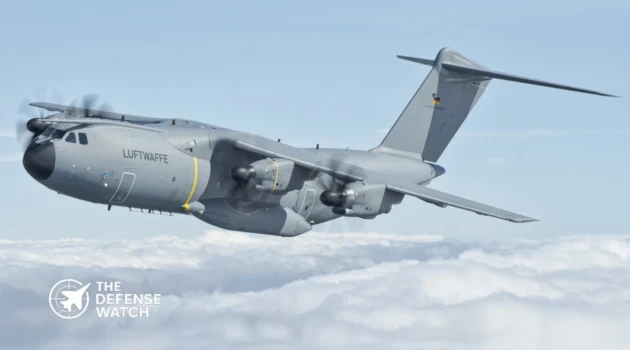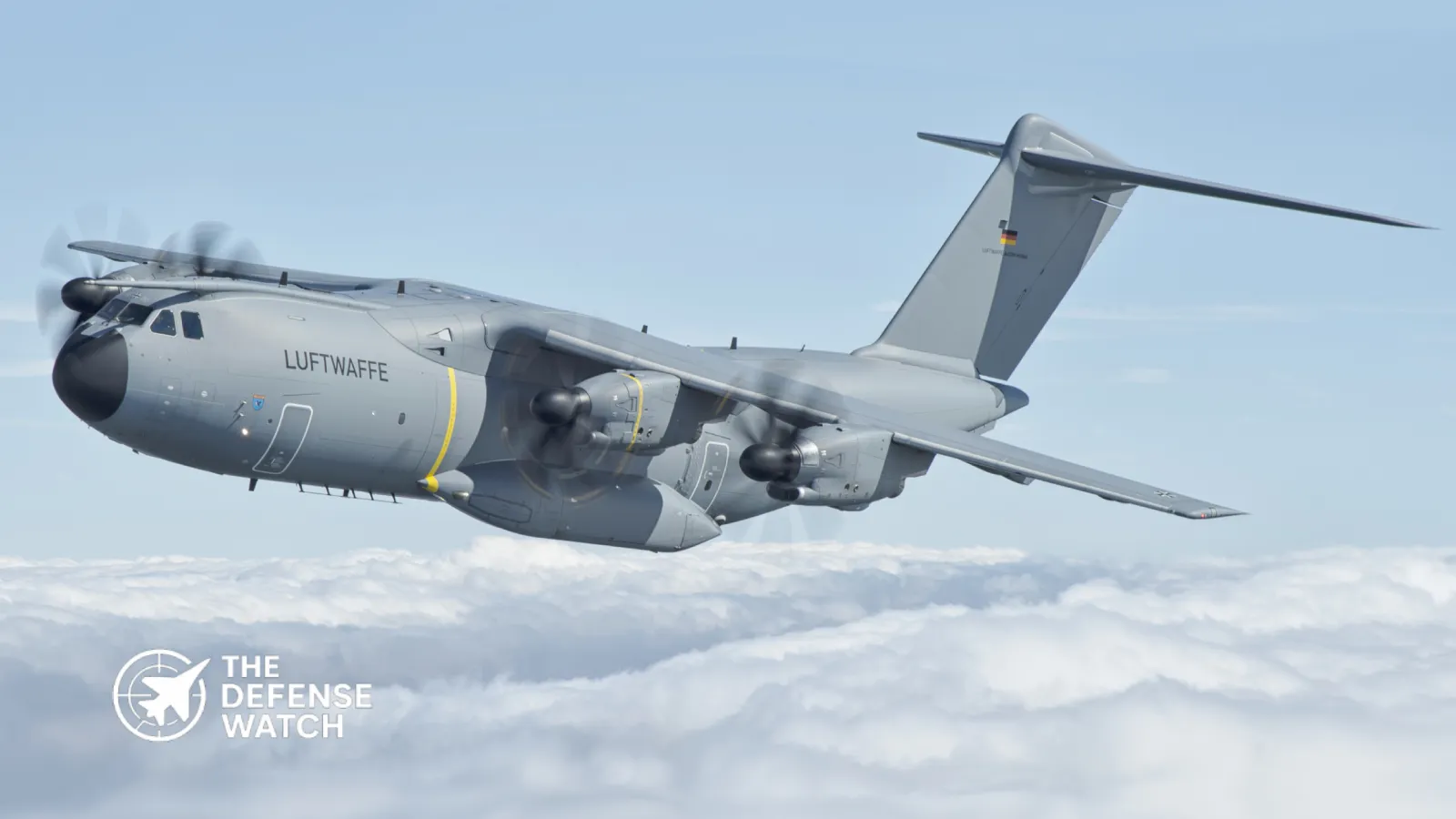
- ► Airbus Defence and Space may close the A400M assembly line in Seville by the end of 2028 without new orders.
- ► A sustainable production rate of eight aircraft per year is required to keep the line open.
- ► Of 178 firm orders to date, 137 aircraft have been delivered, leaving 41 pending.
- ► France reduced its A400M fleet target from 50 to 41 aircraft under its 2024 to 2030 Military Programming Law.
- ► Delivery of seven aircraft for France and Spain has been advanced to June 2025, shifting the production timeline.
A400M Assembly Line Faces 2028 Deadline Without New Orders
The A400M assembly line could shut down by the end of 2028 if new contracts do not materialize, according to Airbus Defence and Space. The warning centers on sustaining production at eight aircraft per year, a rate the company says is critical to keeping the Seville final assembly line operational.
The A400M program, Europe’s flagship military airlifter developed by Airbus, has struggled in recent years with slowing orders after completing the bulk of deliveries to launch customers.
Production Gap Threatens Program Stability
To date, 178 A400M aircraft have been ordered by partner nations and export customers. Airbus has delivered 137 units, leaving 41 aircraft in the current backlog. Without additional export wins or follow on orders from core European customers, that backlog will not sustain production beyond the end of the decade.
Airbus executives have emphasized that maintaining a steady output of eight aircraft annually is essential. Falling below that level increases unit costs and places pressure on suppliers across Spain, Germany, France, and the United Kingdom.
The Seville facility serves as the final assembly line for the A400M. A shutdown would mark a significant milestone for Europe’s defense industrial base, ending production of one of its most complex military aircraft programs.
France Cuts Fleet Target
Pressure on the A400M assembly line intensified after France reduced its planned fleet from 50 to 41 aircraft under its 2024 to 2030 Military Programming Law. France is one of the program’s largest customers and a core partner nation.
The revised target reflects budget prioritization toward nuclear deterrence modernization, air defense, and next generation combat air capabilities. While Paris remains committed to the A400M fleet already ordered, the reduction signals limited appetite for additional units in the near term.
Spain has also adjusted delivery schedules. Seven aircraft intended for France, four units, and Spain, three units, were advanced to June 2025. While this move accelerates near term deliveries, it effectively compresses the production timeline, bringing the potential 2028 cutoff closer.
Strategic Role Of The A400M
The A400M was designed to bridge the gap between tactical transports like the C 130 and larger strategic airlifters. It can carry heavy armored vehicles, helicopters, and troops over intercontinental distances while operating from shorter or semi prepared runways.
European air forces have used the aircraft for logistics missions, humanitarian response, and support to NATO operations. The platform has also matured technically after earlier development delays and cost overruns.
From an industrial standpoint, the A400M supports thousands of jobs across multiple European states. A closure of the A400M assembly line would have ripple effects across the supplier base and could narrow Europe’s sovereign airlift manufacturing capability.
Export Prospects And Market Reality
Airbus continues to pursue export campaigns in Asia, the Middle East, and Latin America. However, the global airlift market remains limited. Many countries rely on existing fleets or acquire second hand aircraft.
The A400M competes indirectly with platforms such as the C 130J and larger U.S. strategic airlifters. Budget constraints and shifting defense priorities in Europe further complicate new sales prospects.
Absent fresh contracts, Airbus faces a narrowing production window. The 2028 timeline reflects the current backlog profile and the need to provide long term clarity to suppliers and workforce planning.
Industrial And Policy Implications
The potential closure of the A400M assembly line raises broader questions about Europe’s defense industrial strategy. European governments have emphasized strategic autonomy and resilience in defense production. Sustaining complex programs like the A400M aligns with those objectives.
At the same time, governments must balance procurement budgets against evolving threats, including missile defense, unmanned systems, and next generation fighter programs.
For Airbus, maintaining continuity at Seville would preserve industrial skills tied to large military aircraft integration. For partner nations, additional orders would require budget tradeoffs at a time of expanding defense commitments.
The coming two years will be decisive. Without new commitments, the A400M assembly line could reach its planned endpoint in 2028, closing a major chapter in European military aviation.
Get real time update about this post category directly on your device, subscribe now.