• Home
  • About
  • Defense Systems
  • Manufacturer
  • Comparisons
  • Compare 
  • Tools
TheDefenseWatch.com
  • Aerospace & Aviation
  • Military & Ordnance
  • Naval & Maritime
  • Cyber & Space Defense
  • Policy & Strategy
  • Global News
  • Tools Library
    • Smart Calculator
    • Drone Flight Time Calculator
    • Drone Range Calculator
    • Counter-Drone Jammer Effective Range Calculator
    • Counter-Battery Radar Detection Calculator
    • Artillery Fire Correction Calculator
    • Thermal Camera Detection Range Calculator
    • Missile Range & Time-of-Flight Calculator
    • Radar Detection Range Calculator
    • FPV Strike Drone Payload vs Range Calculator
    • Loitering Munition Endurance Calculator
    • Sniper Ballistic Drop & Windage Calculator
    • Bullet Drop Calculator
    • U.S. Army Combat Fitness Test (ACFT) Calculator
    • Military Pension Calculator
    • Military Retirement Calculator
    • Military Pension Calculator
    • Large Number Calculator
Font ResizerAa

TheDefenseWatch.com

The Defense Watch | U.S. & Global Defense News, Analysis & Military Updates

Search
  • Home
  • About
  • Defense Systems
  • Manufacturer
  • Comparisons
  • Compare 
  • Tools

Stay Updated

Get the latest update

Subscribe

Explore

  • Drone
  • Fighter Jets & Military Aircraft
  • Hypersonic Weapons
  • Aircraft Carriers
  • Strategic History & Missions
  • Tools Library
Home » U.S. Military To Integrate Hypersonic Strike Weapon onto Mobile Launchers
Global News

U.S. Military To Integrate Hypersonic Strike Weapon onto Mobile Launchers

TeamDefenseWatch
Last updated: October 25, 2025 5:34 am
TeamDefenseWatch
Share
2 Min Read
U.S. military hypersonic weapons modernization program
SHARE

Mobile Launcher Adaptation Signals New Phase in Hypersonic Warfare

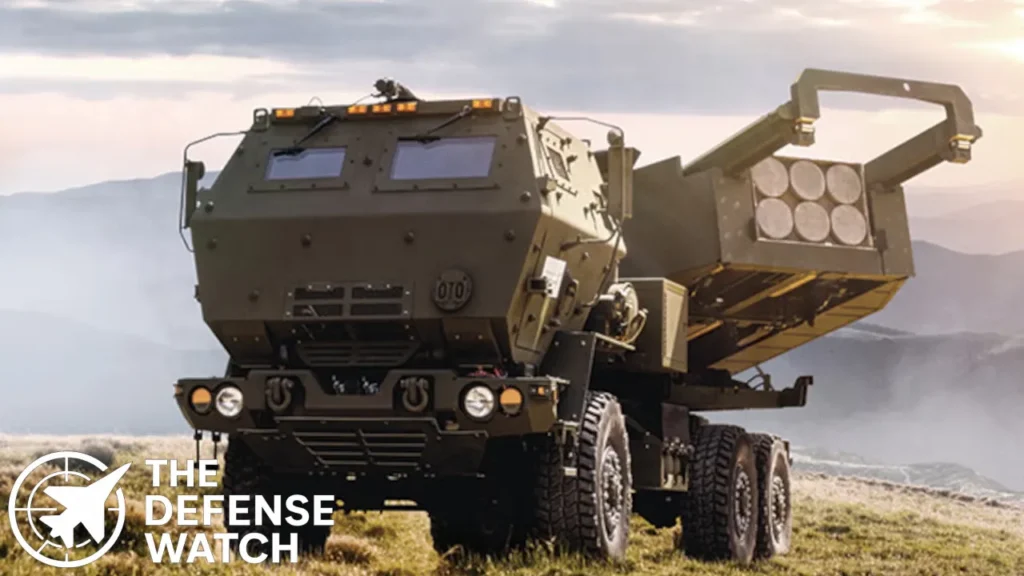
The U.S. military is taking a significant step in the evolution of its strike capabilities by adapting a new hypersonic weapon system for deployment on mobile launchers. According to a report by Reuters on 24 October 2025, defense startup Castelion has secured contracts to integrate its “Blackbeard” hypersonic strike weapon with the HIMARS (High Mobility Artillery Rocket System) platforms used by the U.S. Army.
This initiative marks the first step toward widespread fielding of high-speed, difficult-to-intercept weapons on mobile, conventional launch systems, broadening the operational flexibility of U.S. strike forces.
Contents
Mobile Launcher Adaptation Signals New Phase in Hypersonic WarfareIntegration with Current PlatformsStrategic Context: Hypersonics in the U.S. Defense PortfolioWhat This Means—AnalysisOperational ImpactStrategic & Global Security ImplicationsTechnology & Procurement TrendConclusion & Looking Forward
U.S. military hypersonic weapons modernization program
Image Credit: Creative Commons.

Integration with Current Platforms

Under the announced contracts, Castelion will work with the U.S. Army—and potentially the U.S. Navy—to mount the Blackbeard system onto mobile rocket launchers such as those used by HIMARS. The unit cost is reportedly targeted in the “hundreds of thousands of dollars” per missile, and the company aims for thousands of units annually in full-production.
The article does not disclose detailed contract terms, nor does it fully specify time-lines for deployment; however, the move signals intent to field hypersonic options more affordably and more flexibly.

Strategic Context: Hypersonics in the U.S. Defense Portfolio

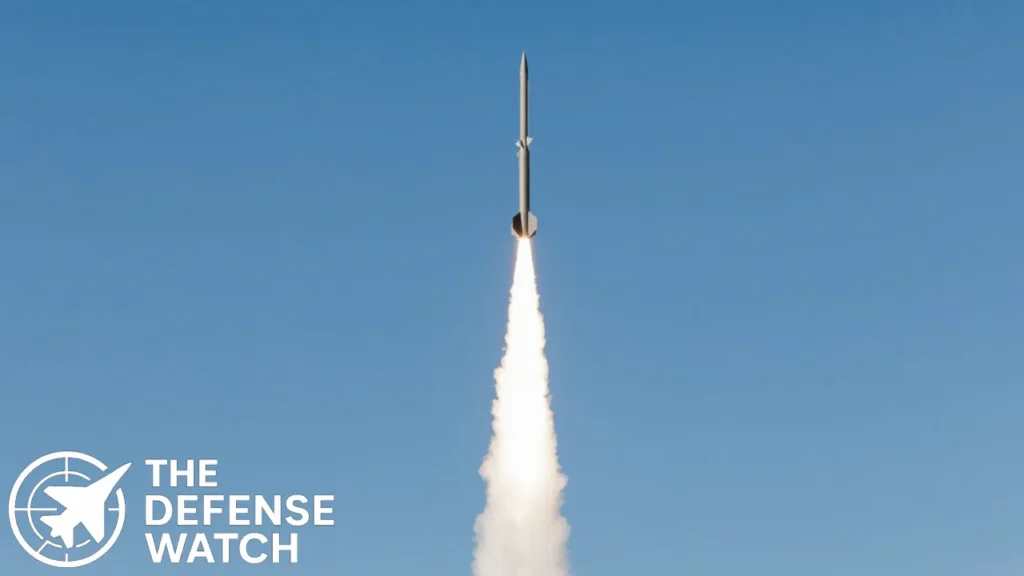
Hypersonic weapons — defined as manoeuvring missiles or glide-vehicles travelling at Mach 5 or greater — have been a priority topic for the U.S. defense establishment for years. A majority of U.S. efforts focus on conventional (non-nuclear) strike rather than nuclear-armed systems.
In recent years the U.S. has pursued major programmes such as:

  • Long‑Range Hypersonic Weapon (LRHW) for the Army.
  • Hypersonic Attack Cruise Missile (HACM) for the Air Force.

Until now, many of the systems remained in development with limited mobility or large, specialised platforms. The recent announcements mark a pivot toward mobile, ground-launchable hypersonics, increasing warfighter flexibility.
- Advertisement -
U.S. military hypersonic weapons modernization program

What This Means—Analysis

Operational Impact

Integrating hypersonic weapons into mobile launcher fleets like HIMARS changes the tactical and operational calculus. Mobile platforms are harder for adversaries to target, can be repositioned, and introduce short-warning strike capability from dispersed launch nodes.
Because hypersonic weapons combine speed, manoeuvrability and altitude-profile complexity, they compress decision timelines for an adversary.

Strategic & Global Security Implications

The U.S. move comes amid intensified competition with nations such as China and Russia in hypersonics. Both have reported fielding or testing capabilities. Congress.gov Deploying more mobile hypersonic strike systems increases the perception of prompt-global-strike reach and may drive further arms behaviour among peer adversaries.
On the other hand, this increase in mobile-launcher hypersonics has potential arms-control implications. Because they can be dual-use, difficult to detect, and fast, they may raise escalation risks if adversaries misinterpret launches or cannot discriminate the target set.

Technology & Procurement Trend

The focus in the announcement on “mass production” and lower unit cost (hundreds of thousands of dollars) signals a shift away from ultra-expensive, niche hypersonic solutions toward scalable strike options. This is notable because one past constraint in hypersonic deployment has been cost and production tempo.
Also, the use of existing launch platforms (HIMARS) accelerates deployment timeline by leveraging logistic and operational infrastructures already in service, rather than requiring wholly new systems.

Conclusion & Looking Forward

The U.S. decision to adapt hypersonic weapons for mobile ground launchers marks a significant inflection point in how strike capabilities are being fielded. As the system moves from development into operational integration, we should watch for:

  • The timeline for “initial operational capability” of the Blackbeard-HIMARS pairing.
  • The quantity and dispersion of mobile hypersonic launchers assigned in the U.S. force posture.
  • The adversary reaction: whether China, Russia, or other states adjust their own posture or accelerate counter-measures.
  • The evolution of defense against hypersonics—many analysts note challenges in detection, interception and command-control when facing manoeuvring high-speed weapons. Congress.gov

In the coming years, if this mobile hypersonic strategy proves viable, we may see a broader proliferation of similar launch-capabilities across U.S. services and possibly allies — reshaping both how the U.S. projects power and how adversaries must defend against it.


TAGGED:Blackbeard missileHIMARS upgradeHypersonic weaponsmobile launchersU.S. Army strike
Share This Article
Facebook Copy Link Print
ByTeamDefenseWatch
TeamDefenseWatch is the official editorial byline of TheDefenseWatch.com. Working under one umbrella, TheDefenseWatch.com, the team delivers verified, factual reporting on global defense, military technology, aerospace systems, and security developments. Articles are sourced from official statements, defense industry releases, and trusted media, with editorial review to ensure accuracy and clarity.Contact: info@TheDefenseWtach.com
12 Comments
  • Pingback: Northrop Grumman Advances IVEWS Production for F-16 Fleet with First Units Assigned to Middle East Deployment
  • Pingback: India Eyes Acquisition of 114 Rafales to Boost Air Capabilities | TheDefenseWatch.com
  • Pingback: Greece Announces $3.5 Billion Deal with Israel for Missile Systems under “Achilles Shield” Air-Defense Program
  • Pingback: Venezuela Mobilizes 200,000 Troops and Advanced Air-Defenses Amid Possible U.S. Air Strikes
  • Pingback: HIMARS vs Kalibr: Detailed Range, Strike Power & Capability Comparison
  • Pingback: China Publicly Tests HQ-20 Air Defense System, Signaling Operational Deployment
  • Pingback: Australia Fires First Live Rounds from AS9 Huntsman Howitzers in Milestone Artillery Test
  • Pingback: U.S. Tests PERCH Loitering Drone Launcher on M1A2 SEP V3 Abrams — Tanks Gain Beyond-Line-of-Sight Strike Capability
  • Pingback: Trump Administration Expands Militarized Zone Along California Border
  • Pingback: RTX Launches Blue Canyon Satellite for NASA Pandora Exoplanet Mission | TheDefenseWatch.com
  • Pingback: Northrop Grumman Tests Second Advanced Solid Rocket Motor in Two Months Under Rapid Development Program | TheDefenseWatch.com
  • Pingback: Castelion Begins Construction of Project Ranger Hypersonic Campus in New Mexico | TheDefenseWatch.com

Leave a Reply Cancel reply

Your email address will not be published. Required fields are marked *

Search Defense Systems

Latest Defense Systems

  • B61 Nuclear Bomb B61 Nuclear Bomb
  • Japan E-767 Airborne Japan E-767 Airborne
  • Remington 870 Shotgun Remington 870 Shotgun
  • RUTA B1 Cruise Missile RUTA B1 Cruise Missile
  • XQ-67A Drone XQ-67A Drone
  • B-25 Mitchell Bomber B-25 Mitchell Bomber
  • F-100 Super Sabre F-100 Super Sabre
  • North American F-86 Sabre North American F-86 Sabre
  • North American XB-70 Valkyrie North American XB-70 Valkyrie

Recent Compares

  • J-10C vs JF-17 Thunder: Which Fighter Is More Capable? J-10C vs JF-17 Thunder: Which Fighter Is More Capable? View Comparison →
  • Tejas vs Gripen: Key Differences and Capabilities Tejas vs Gripen: Key Differences and Capabilities View Comparison →
  • Tejas vs MiG-21 Bison: How India Replaced Its Iconic Supersonic Fighter Tejas vs MiG-21 Bison: How India Replaced Its Iconic Supersonic Fighter View Comparison →
  • F-35 vs F-16: Stealth, Sensors and Combat Roles F-35 vs F-16: Stealth, Sensors and Combat Roles View Comparison →
  • Tejas Fighter Jet vs F-16 Fighting Falcon: Capability Compared Tejas Fighter Jet vs F-16 Fighting Falcon: Capability Compared View Comparison →
  • Rafale Fighter Jet vs F-16 Fighting Falcon : Which Fighter Has the Edge? Rafale Fighter Jet vs F-16 Fighting Falcon : Which Fighter Has the Edge? View Comparison →
  • Su-57 Fighter Jet vs J-20 Fighter Jet: Stealth and Air Combat Compared Su-57 Fighter Jet vs J-20 Fighter Jet: Stealth and Air Combat Compared View Comparison →
  • Mirage 2000 vs Tejas Mk1A: Legacy Combat Power vs Indigenous Modernization Mirage 2000 vs Tejas Mk1A: Legacy Combat Power vs Indigenous Modernization View Comparison →
  • Rafale Fighter Jet vs F-22 Raptor: Which Air Dominance Fighter Has the Edge? Rafale Fighter Jet vs F-22 Raptor: Which Air Dominance Fighter Has the Edge? View Comparison →
  • Tejas Fighter Jet vs. Rafale Fighter Jet: India’s Indigenous Fighter Meets France’s Proven Multirole Combat Aircraft Tejas Fighter Jet vs. Rafale Fighter Jet: India’s Indigenous Fighter Meets France’s Proven Multirole Combat Aircraft View Comparison →

Recent Posts

  • General Atomics to Supply Components for U.S. Army and Navy Hypersonic Weapons
  • Lockheed Martin Tests Mk21A Reentry Vehicle for Sentinel ICBM
  • Lockheed Martin Wins $122.4 Million Trident II Navigation Contract
  • Pentagon Prepares Review of Military Legal System and JAG Corps
  • U.S. and Colombia Launch Southern Vanguard 2027 Exercise

You Might Also Like

PURL Ukraine weapons
Global News

Ukraine to Receive 5 Billion in Weapons Through NATO PURL Program by Year’s End

December 13, 2025
US Aegis upgrade sale Spain
Global News

US Clears $1.7B Aegis Combat System Upgrade for Spain F-100 Frigates

January 31, 2026
Denmark Greenland defense strategy
Global News

Denmark Faces Greenland Challenge Amid U.S. Interest

January 10, 2026
Northrop Grumman Europe
Global News

Northrop Grumman Expands Air Defense and Weapons Collaboration Across Central Europe

September 11, 2026

Logo

Copyright © 2026 TheDefenseWatch.com

Helpful Links

  • Home
  • About Us
  • Privacy Policy
  • Terms of Use / Disclaimer
  • U.S. Privacy Notice – CCPA Compliance

Defense Systems

  • Defense Systems
  • Comparisons 
  • Manufacturer
  • Tactical Calculators

Popuplar

Which 5 Air Forces Possess the Costliest Fighter Jet Fleets in the World
Evolving Strategic Value: Carrier Strike Groups in the Indo-Pacific’s Future Security Architecture
Autonomous Weapon Systems Spark U.S. Ethics Debate Amid Rapid Military AI Integration

We report on developments involving military forces, governments, defense companies, research organizations, and security institutions around the world. 

Welcome Back!

Sign in to your account

Username or Email Address
Password

Lost your password?