The U.S. Air Force has tested the XQ-67A uncrewed aircraft with integrated mission systems and beyond-line-of-sight communications, examining technologies intended to help autonomous aircraft operate across dispersed combat areas.
The flight was conducted under the Demonstration of Autonomous Collaborative Platform Performance and Effectiveness, known as Demon APE, a project led by the Air Force Research Laboratory (AFRL) in cooperation with Air Combat Command. The October 27, 2026, announcement described a test combining onboard sensors, mission computers, power and thermal management hardware, data links, and live, virtual and constructive simulation.
The results are relevant to the Air Force’s wider effort to introduce Collaborative Combat Aircraft (CCA), uncrewed platforms designed to operate alongside crewed fighters. The latest test focused on the systems needed to coordinate aircraft and process mission information, rather than announcing a new operational drone or a deployment decision.
Testing the systems behind autonomous combat aircraft
The XQ-67A serves as a technology demonstrator for autonomous collaborative operations. Developed by General Atomics Aeronautical Systems, the aircraft first flew on February 28, 2024, under AFRL’s Off-Board Sensing Station program. That effort explored whether a common aircraft structure could support different mission configurations, potentially reducing the time and cost associated with developing new uncrewed platforms.
The Demon APE test examined several connected systems:
- Sensors and mission computers: The equipment used to collect and process information needed for mission execution.
- Power and thermal management: The onboard systems needed to supply electricity to mission equipment and remove the heat it generates.
- Beyond-line-of-sight data links: Communications intended to support aircraft operations when direct line-of-sight connections are unavailable.
- Live, virtual and constructive simulation: An approach that combines real aircraft activity with simulated platforms and operational conditions.
AFRL’s reported test results indicate that these elements were evaluated as part of an integrated aircraft configuration. However, the laboratory did not publicly identify the specific sensors used, disclose the communication architecture, or provide detailed performance measurements for the flight. Defence Industry+1
Those omissions matter. Testing an integrated system is an important engineering step, but it does not by itself establish how reliably the aircraft would perform under combat conditions, electronic attack, or disruption of communications.
Why beyond-line-of-sight communications matter
Autonomous aircraft operating ahead of crewed fighters may need to exchange information across distances that exceed the coverage of direct radio links. Beyond-line-of-sight communications can help address that problem, allowing command information and mission data to move across a more widely distributed force.
The challenge extends beyond maintaining a connection. The aircraft must also receive useful information, process it correctly, and coordinate its actions with other platforms. A link that remains available but cannot deliver timely, relevant data may offer limited operational value.
The Air Force has therefore been exploring autonomy and communications as connected parts of its collaborative aircraft concept. In a July 2025 flight test, General Atomics reported that the XQ-67A integrated government-owned autonomy software with an active tactical data link. According to the company, the aircraft received real-time updates and situational information during the test.
The newer Demon APE activity extends this line of experimentation by combining mission systems and beyond-line-of-sight links with simulated operational conditions. Public information does not establish which communication pathways were used or whether the test included deliberate jamming or other contested-network conditions.
The XQ-67A’s connection to the Collaborative Combat Aircraft program
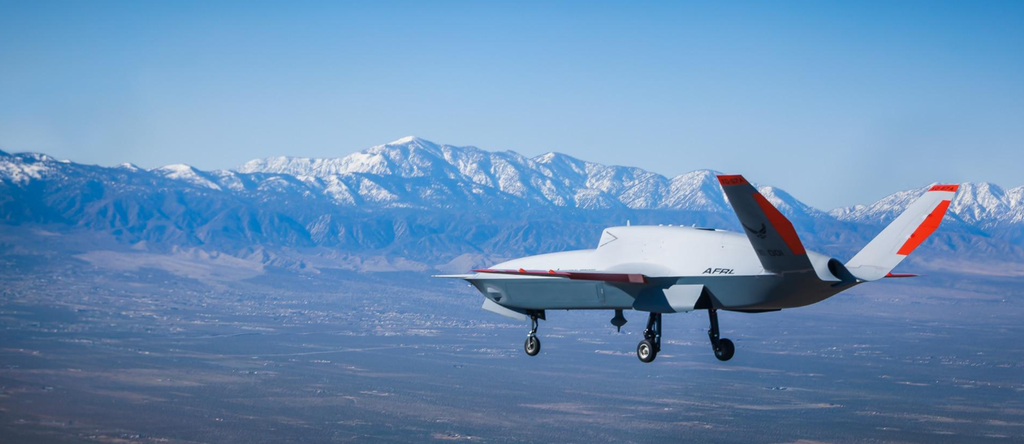
The XQ-67A’s importance is also linked to the Air Force’s effort to develop aircraft that can operate alongside crewed fighters.
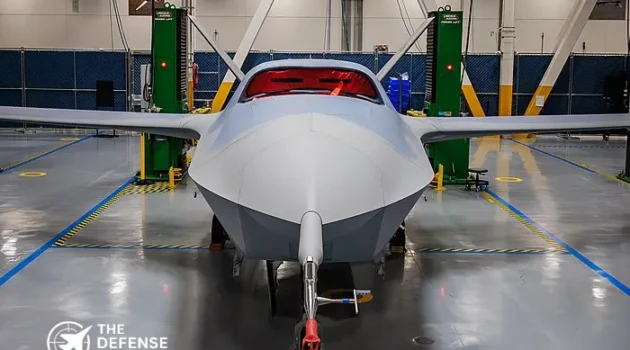
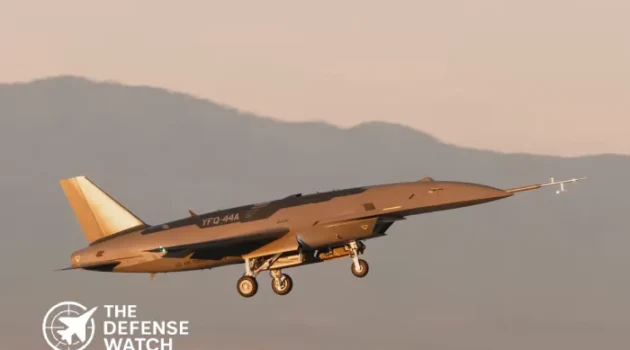
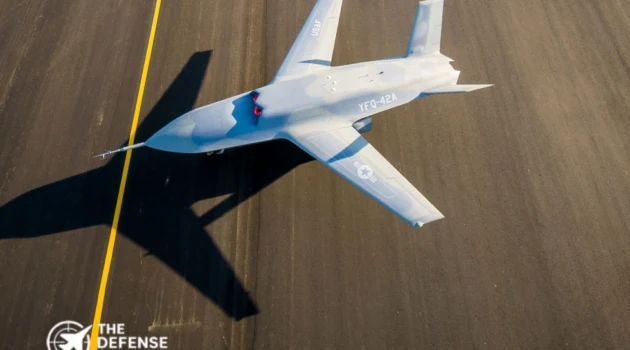
The service selected General Atomics and Anduril Industries for the first CCA production increment. Their respective aircraft programs are the YFQ-42A and YFQ-44A. General Atomics has identified the XQ-67A as part of the development lineage behind its CCA design. The demonstrator is therefore relevant to the technologies that could support future collaborative aircraft, although that does not mean every system tested on the XQ-67A will be installed on production aircraft.
The Congressional Research Service describes CCAs as jet-powered uncrewed aircraft intended to complement existing and future crewed combat aircraft. Potential missions include intelligence, surveillance and reconnaissance, targeting, electronic warfare, and air-to-air or air-to-ground operations. The precise capabilities of individual aircraft will depend on their configuration and development status.
For the Air Force, the operational attraction is the possibility of distributing sensors, weapons and other mission functions across more aircraft, rather than relying entirely on a small number of expensive crewed fighters.
That approach also introduces integration challenges. Different aircraft must exchange information, work with command-and-control systems, and respond predictably to human direction. Testing government-owned autonomy software and interoperable communications can help the service assess these challenges before committing technologies to operational configurations.
Power, cooling and software integration remain practical constraints
Autonomy is often discussed in terms of decision-making software, but the supporting hardware is equally important.
Sensors, processors and communications equipment all consume electrical power and generate heat. Adding mission systems to an aircraft can require changes to its electrical generation, cooling capacity, wiring and onboard computing architecture. If these systems cannot operate together reliably, the aircraft may be unable to deliver the intended mission capability.
The XQ-67A provides a test environment for examining these issues without requiring every change to be introduced first on a production aircraft.
The wider CCA effort also depends on software portability and interoperability. If autonomy software can operate across aircraft from different manufacturers, the Air Force may have more flexibility when selecting mission systems and updating capabilities. That benefit, however, depends on successful integration and verification, not simply on adopting a common software architecture.
The latest flight provides evidence of continued experimentation with these connected systems. It does not establish that the technology has completed qualification for operational use.
What the latest test establishes, and what remains unknown
The publicly reported findings support three conclusions.
First, the XQ-67A remains an active test platform for integrating autonomy-related mission equipment and communications. Second, the Air Force is examining how uncrewed aircraft can be managed through distributed command-and-control arrangements. Third, this work is relevant to the technical foundations of the broader CCA effort.
Several questions remain unanswered. AFRL has not publicly detailed the sensors carried during the latest flight, the performance of the beyond-line-of-sight links, the autonomy functions exercised, or the extent to which the results will inform a specific production aircraft.
The laboratory also has not established a public timetable for transferring the tested configuration to operational service.
For now, the XQ-67A’s role is to help reduce technical uncertainty before more complex systems enter service. The value of the Demon APE work will ultimately depend on whether the technologies can deliver reliable information sharing, manageable integration costs and effective coordination across aircraft operating in demanding environments.