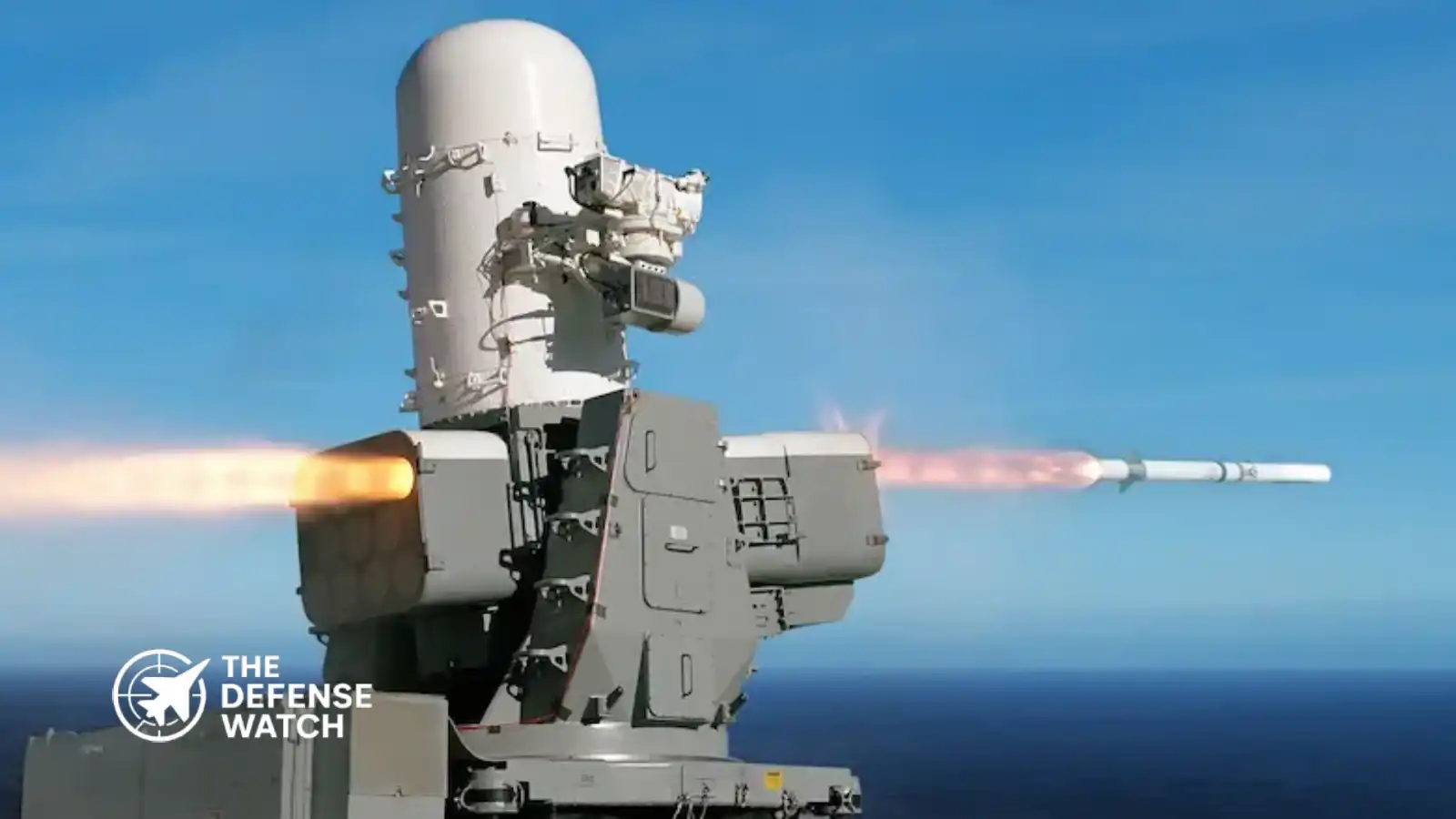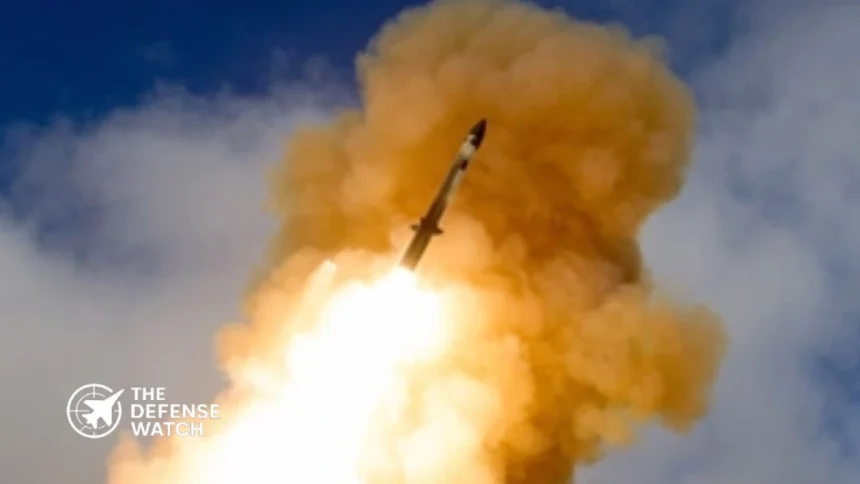
RTX is preparing a major expansion of its missile manufacturing operations after securing multiyear U.S. defense contracts covering four critical weapons, with production increases of two to four times current levels planned across the programs.
RTX Chairman and CEO Chris Calio outlined the expansion during the company’s third-quarter earnings discussions on October 20, 2026. The contracts cover Tomahawk cruise missiles, Advanced Medium-Range Air-to-Air Missiles (AMRAAM), Standard Missile-6 (SM-6) and Standard Missile-3 Block IB (SM-3 IB) interceptors. The company expects the production ramp-up to continue through the end of the decade.
The agreements give Raytheon, RTX’s defense business, a longer planning horizon for factory investment, equipment purchases and supplier commitments. However, higher production will depend on manufacturing execution, component availability and continued government funding.
Four missile programs anchor the expansion
The four contracts cover different operational requirements, from air-to-air combat and long-range precision strike to naval warfare and ballistic missile defense.
Contract values below are maximum stated values, not necessarily the amounts already funded or paid.
| Missile systemMaximum contract valuePrimary role | ||
|---|---|---|
| Tomahawk | About $22.9 billion | Long-range conventional land attack and maritime strike |
| AMRAAM | Up to $20.7 billion | Beyond-visual-range air combat and NASAMS air defense |
| SM-6 | Up to $24.4 billion | Naval air and missile defense, with additional strike roles |
| SM-3 Block IB | Up to $6.3 billion | Ballistic missile interception |
Together, the four awards have stated maximum values of approximately $74.3 billion. Their terms differ: the Tomahawk agreement spans seven years, while the AMRAAM, SM-6 and SM-3 Block IB contracts cover five years with two additional one-year options. These values should not be interpreted as guaranteed revenue independent of funding, options and contract execution.
RTX has said the arrangements are intended to increase annual output substantially. Its February framework announcement also covered the SM-3 Block IIA interceptor, a separate variant that should not be confused with the four programs in the current expansion discussion.
The production targets require more than new factory space
The planned increases will require Raytheon to expand capacity across manufacturing, testing and its supplier network. Missile production depends on specialized components, propulsion systems, electronics, guidance hardware and qualification processes that cannot necessarily be scaled at the same pace.
According to reporting by Defence Industry Europe, Calio said the company had moved into the execution phase, placing orders for tooling and test equipment and preparing suppliers for higher output. RTX is also working with the Pentagon on simplifying testing requirements, addressing obsolete components and qualifying additional suppliers.
These steps matter because increasing the number of assembly lines alone does not guarantee a corresponding rise in completed missiles. A shortage of one critical component, or a testing bottleneck, can delay deliveries even when other parts of a production line have spare capacity.
RTX’s latest expansion builds on earlier production improvements. The company reported that Raytheon’s output of critical munitions had increased by more than 90% during 2026 to the point described in the October earnings coverage. That figure applies to the broader critical-munitions group, not necessarily to each of the four missile programs individually.
Why the Pentagon is pursuing multiyear missile orders
Traditional annual procurement cycles can make it difficult for manufacturers to justify expensive factory upgrades and long-term supplier agreements. Multiyear arrangements give companies better visibility into expected demand and allow them to plan investments over a longer period.
For the U.S. military, the objective is to improve the availability of weapons that support several distinct missions. Tomahawk provides long-range strike capability, AMRAAM supports fighter aircraft and ground-based air defense, SM-6 equips naval forces for multiple engagement roles, and SM-3 Block IB provides a ballistic missile defense capability.
These systems are not interchangeable. Expanding their production addresses several different inventory requirements, although the available contract announcements do not establish how many additional missiles will be delivered to individual services each year.
The industrial implications extend beyond Raytheon itself. Higher production rates require suppliers to increase output, maintain quality standards and deliver components on schedule. RTX has also identified competition for certain materials and critical minerals as a constraint on expanding manufacturing capacity.
Full-rate production is expected by 2030
RTX expects the manufacturing ramp-up to build over several years rather than produce an immediate increase in deliveries.
During the October 20 earnings discussion, CFO Neil Mitchill said the company would make capital and other investments over the following two to three years. Revenue contributions are expected to increase as production work and capacity expansion progress, with full-rate production across the four programs targeted by 2030.
The timing matters because defense contracts can establish demand without immediately creating the industrial capacity needed to meet it. Factory modifications, specialized tooling, testing equipment, workforce training and supplier qualification all take time.
Funding is another consideration. RTX’s third-quarter filing describes the awards as undefinitized contract actions, with funding subject to congressional appropriations on a fiscal-year basis. Although the contracts establish a framework for increased production, they do not remove the risk of future budget changes or delays in executing the planned ramp-up.
The company has said contractual protections address potential changes in budgets and order volumes, but it has not publicly detailed all those provisions.
What the expansion means for U.S. military readiness
The production initiative is an industrial response to the need for more dependable supplies of precision weapons and interceptors. Its success will depend on whether planned factory investments translate into sustained increases in completed weapons and deliveries to military customers.
The stated target of increasing output by two to four times is a broad company-level ambition across the covered programs. Public reporting has not provided a complete program-by-program production schedule showing current annual output, future annual targets and delivery milestones for all four missiles.
That distinction is important when assessing the scale of the expansion. Contract values and production targets indicate the level of planned investment and ambition, but they are not a substitute for verified delivery figures.
By 2030, the central measure of progress will be whether Raytheon can meet the contracted production requirements consistently, while maintaining quality and securing the components needed to sustain output. Until detailed delivery schedules and annual production figures become public, the precise contribution to U.S. and allied weapons inventories will remain difficult to quantify.