China plans to use the 16th China International Aviation and Aerospace Exhibition, known as Airshow China 2026, to present a wider range of military equipment, including new public appearances by People’s Liberation Army (PLA) Air Force combat platforms and an expanded display of active-duty naval systems.
The exhibition is scheduled for December 7 to 13 in Zhuhai, Guangdong province, according to the event organizer and a report published by China’s state-run Global Times on October 13.
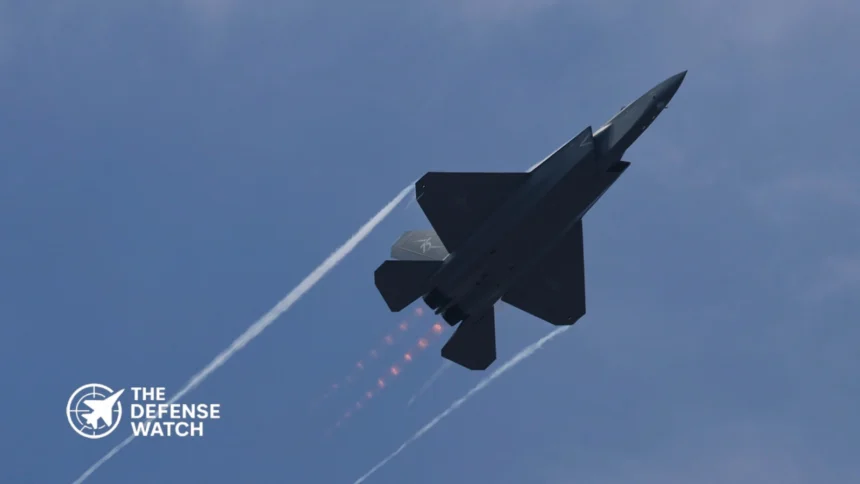
Organizers say the event will expand beyond its established aviation focus by introducing a dedicated maritime equipment display area. The PLA Air Force also plans to present upgraded platforms, reconnaissance and early-warning systems, unmanned equipment, air defense capabilities and munitions.
The announcement outlines the intended scope of the exhibition, but it does not identify every new aircraft or weapon expected to appear. The operational status and technical performance of individual systems will therefore need to be assessed from subsequent official disclosures and demonstrations.
Zhuhai exhibition expands to include naval equipment
Airshow China has become an important venue for China to display military aviation technology alongside aerospace products and defense equipment. The 2026 edition is set to place greater emphasis on the naval domain by concentrating active-duty PLA Navy equipment in a dedicated exhibition area.
The change could give visitors a broader view of how China’s armed services are developing their respective capabilities. However, a larger exhibition presence does not necessarily indicate that a particular weapon has entered service, achieved initial operational capability or completed testing.
The PLA Navy has previously used the exhibition to display aviation-related equipment. At the 2024 event, the service presented naval aviation platforms and demonstrated elements of carrier-related operations, according to a report from China’s Ministry of National Defense.
The 2026 exhibition could provide additional information about China’s naval aviation and supporting equipment, depending on the final display lineup. The announcement does not yet provide a complete list of ships, aircraft, sensors or weapons scheduled for exhibition.
Air Force plans new public appearances
The PLA Air Force intends to combine static displays with flight demonstrations to present established combat platforms alongside upgraded equipment and capabilities.
According to Global Times, the planned exhibits will cover several areas:
- Reconnaissance and airborne early warning
- Air defense and mission-support systems
- Airborne operations
- Unmanned aircraft and related equipment
- Intelligent systems and munitions
- Upgraded combat platforms
The Air Force has not publicly identified all the platforms described as making their Airshow China debut in the announcement. It would therefore be premature to attribute the statement to a specific new fighter, radar, missile or aircraft variant.
The distinction matters because an airshow debut can mean different things. A system may be displayed as a prototype, demonstrated in flight, presented as a production aircraft or shown after entering operational service. Those stages provide different levels of evidence about its maturity.
For defense analysts, the most useful information will be whether the exhibition reveals new hardware, confirms previously reported configurations or demonstrates capabilities that have not been publicly shown before.
Flight demonstrations and combat formations
The PLA Air Force also plans to organize flight demonstrations around combat formations and maneuvers. Such displays can provide information about aircraft handling, formation procedures and visible aspects of crew training.
They cannot, by themselves, establish combat effectiveness. An airshow does not reproduce the full conditions of operational missions, which can involve contested communications, electronic warfare, long-range weapons, integrated air defenses and incomplete information about an adversary.
The value of the demonstrations will depend on what is actually shown and how much new information can be established from the event.
AI and unmanned systems receive greater attention
Another feature of the planned exhibition is a dedicated digital-intelligence section at the PLA Air Force booth.
Global Times reported that the display will include humanoid robots, virtual digital humans, digital maintenance applications and intelligent inspection technologies. The announcement also refers to AI-related activities and assessments associated with resistance to motion sickness.
These exhibits point to an effort to present digital technology as part of the Air Force’s wider modernization program. They do not establish that every displayed technology is deployed in frontline units or integrated into operational combat systems.
The distinction is especially relevant to artificial intelligence in military aviation. Digital maintenance and automated inspection can support aircraft availability, while AI-enabled information processing may assist personnel with analyzing large volumes of data. Their military value depends on reliability, integration with existing systems, cybersecurity and the ability to function under operational conditions.
Unmanned systems present a separate set of questions. Their effectiveness depends on mission design, communications, autonomy, sensor performance, command arrangements and how they operate alongside crewed aircraft.
The exhibition could offer useful insight into China’s publicly disclosed work in these areas, but the announcement provides no detailed performance data or deployment figures for the systems concerned.
What the exhibition can reveal about Chinese military modernization
Airshow China 2026 will offer an opportunity to examine how Beijing presents its air and naval modernization priorities to domestic and international audiences.
The combination of combat aircraft, early-warning equipment, unmanned systems, munitions and naval equipment is particularly relevant because modern military operations depend on networks of complementary capabilities rather than individual platforms alone.
For example, airborne early-warning aircraft can support the detection and tracking of airborne activity, while combat aircraft and surface-based air defenses perform different engagement and protection roles. Unmanned platforms may provide additional surveillance or mission-specific capabilities, depending on their configuration and operating concept.
A public exhibition can reveal elements of this equipment portfolio. It is less effective at establishing how well the systems work together during demanding operational scenarios.
The same caution applies to claims about new combat capabilities. A new display, an upgraded configuration and a demonstrated operational capability are not interchangeable. Independent confirmation may require technical documentation, observable testing, procurement information or evidence of sustained operational use.
For international defense observers, the event’s significance will therefore depend less on the number of exhibits than on the quality of the information released about them.
Key details remain unannounced
The exhibition organizer has confirmed the December dates, while the Global Times report describes the planned military displays. Several important details remain outstanding.
These include the full list of new Air Force platforms, the specific naval equipment to be displayed, the extent of any live demonstrations and whether previously unseen systems will be shown in operational configurations.
The announcement also provides no new procurement figures, production rates, contract values or timelines for entering service. It should not be interpreted as evidence that the equipment on display has received new funding or reached a new development milestone.
The next useful indicator will be the release of a detailed exhibition lineup and any accompanying technical information from the relevant military organizations or manufacturers.
For now, Airshow China 2026 is set to provide a broader public presentation of Chinese military aviation, naval equipment and digital technologies. The extent to which it offers new evidence about operational capabilities will become clearer when the equipment and demonstrations are identified.