Executive Summary
- Sweden will deploy JAS 39 Gripen fighters for NATO operations over Poland beginning in October 2026, with the aircraft primarily based in Sweden and supported by a smaller forward operating presence in Poland.
- The mission will contribute to NATO airspace surveillance and help protect a major logistics hub in southeastern Poland used to move military and civilian assistance to Ukraine.
- The deployment represents Sweden’s second fighter contribution to this mission and comes as NATO expands its eastern-flank air defense architecture through Air Policing, Eastern Sentry and integrated air and missile defense.
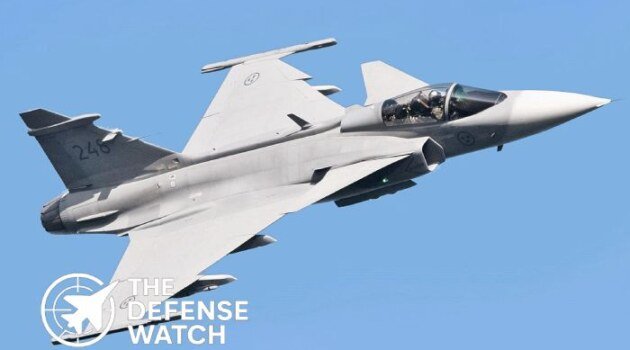
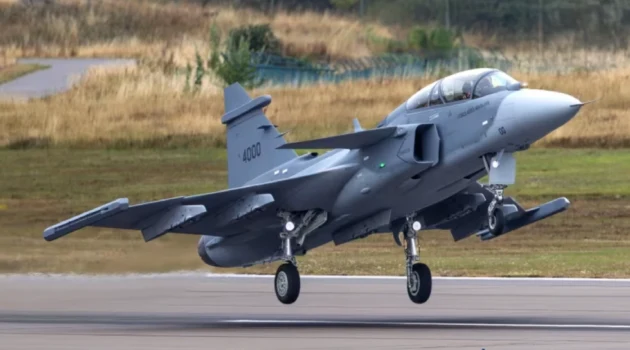
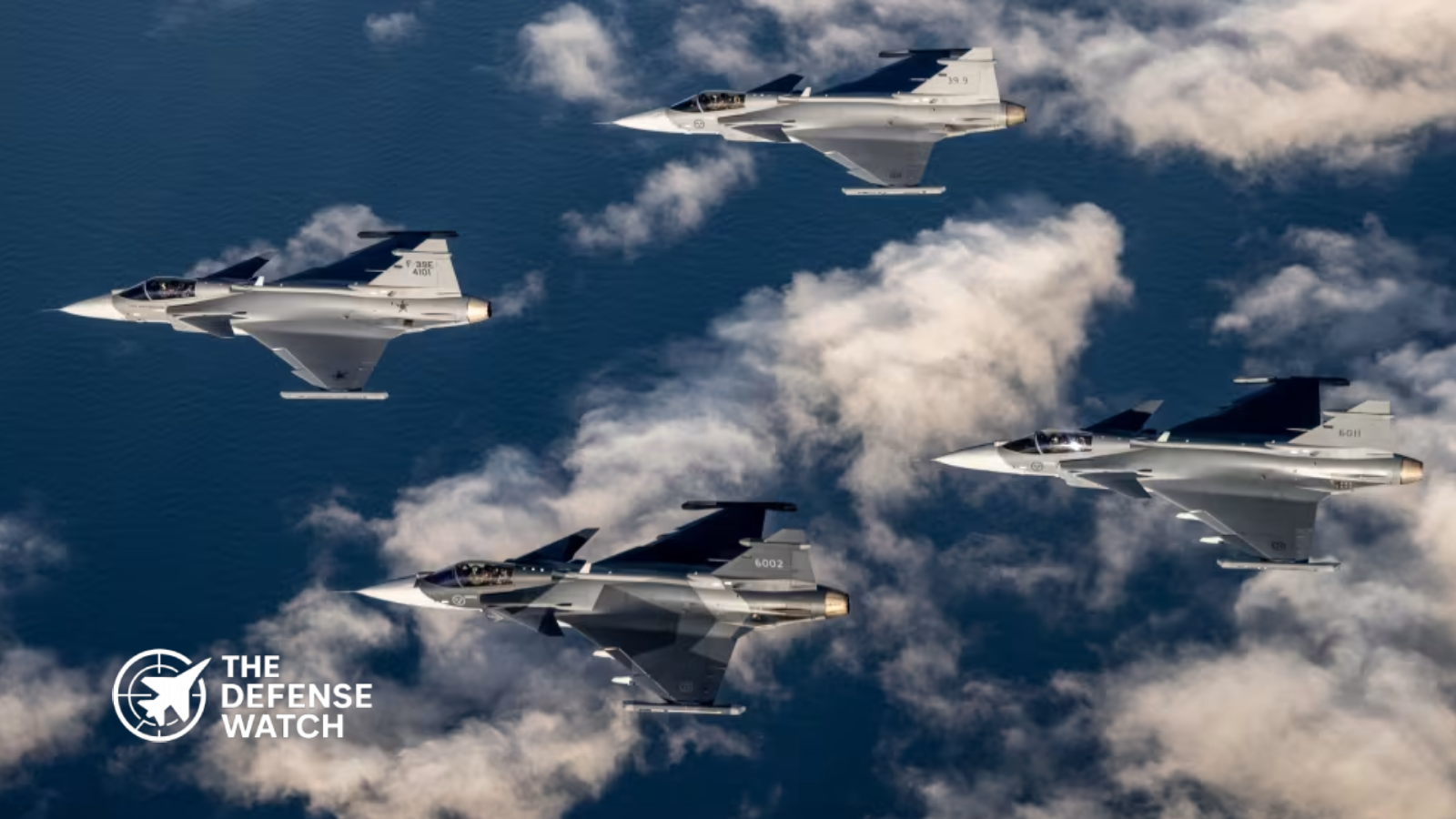
Sweden will deploy JAS 39 Gripen fighter aircraft for NATO operations over Poland from October 2026, reinforcing surveillance of Polish airspace and contributing to the protection of logistics supporting Ukraine.
The Swedish deployment will be conducted mainly from Swedish territory, while a smaller forward operating base in Poland will support the mission. Swedish officials say the fighters will contribute to NATO’s defense of Allied airspace and protect important logistical flows of military and civilian assistance to Ukraine.
The deployment is significant because it comes after a previous Swedish Gripen mission in Poland in 2025 and as NATO continues strengthening its eastern-flank air defense following repeated Russian airspace incidents. Sweden joined NATO in March 2024, making its continued use of Gripen aircraft in multinational air operations an increasingly important part of its contribution to the Alliance.
Sweden Returns Gripen Fighters to Poland
The new mission will be Sweden’s second fighter contribution to protecting the Polish logistics network supporting Ukraine.
During 2025, Swedish JAS 39 Gripen aircraft operated from Poland’s 22nd Tactical Air Base at Malbork as part of NATO’s enhanced Air Policing mission. Swedish pilots also supported protection of the airspace around the logistics hub in the Rzeszów region. Poland says that mission ran from April through the end of August 2025.
Sweden’s government previously described the 2025 deployment as the first time Swedish combat aircraft participated in enhanced NATO airspace surveillance from the territory of another Allied country and under NATO command.
The return of Swedish fighters therefore builds on an operational arrangement that has already been tested rather than creating a new deployment model from scratch.
Key elements of the 2026 mission
Element Current information Aircraft JAS 39 Gripen Contributing nation Sweden Operating area Polish airspace Start October 2026 Primary mission NATO airspace surveillance and defense Additional task Protection of logistics supporting Ukraine Basing concept Primarily Sweden, with smaller forward operating support in Poland Previous Swedish deployment April to August 2025 NATO framework Air Policing and broader eastern-flank defense The Swedish government and defense authorities have not publicly disclosed in the available announcement the exact number of Gripen aircraft assigned to the new deployment. That figure should therefore not be assumed.
Why Poland’s Airspace Has Become a NATO Priority
Poland occupies a central position in NATO’s eastern-flank defense architecture. It borders Ukraine and Belarus and provides a major transportation corridor for international assistance moving toward Ukraine.
The Rzeszów area is particularly important. NATO has described Poland as hosting a logistics hub supporting assistance to Ukraine, while Polish authorities have highlighted the role of the region in the movement of aid.
That creates an air-defense problem extending beyond conventional protection of national airspace. NATO must also maintain sufficient surveillance and fighter availability around critical infrastructure and transportation nodes whose disruption could affect the movement of military supplies.
The Swedish Gripen deployment therefore serves two related purposes: maintaining NATO airspace security and adding fighter capacity around infrastructure supporting Ukraine.
Gripen Adds a Flexible Fighter Layer
The JAS 39 Gripen is a multirole fighter designed for air defense and other combat missions. In a NATO air-policing role, its value is not simply the aircraft’s weapons or individual performance.
The more important contribution is the addition of another fighter force that can be connected to NATO’s wider surveillance, command and control architecture.
NATO describes Air Policing as a continuous mission intended to monitor European airspace and allow Allied aircraft to respond to unusual or potentially hostile activity. The mission operates within NATO’s Integrated Air and Missile Defence framework, which also includes radars, command and control assets and surface-based air-defense systems.
That layered architecture matters because fighter aircraft alone cannot provide comprehensive protection against the range of threats encountered on NATO’s eastern flank.
From Air Policing to Integrated Air Defense
NATO’s eastern-flank posture has changed substantially since Russian drones entered Polish airspace in September 2025.
NATO subsequently launched Eastern Sentry, a broader activity that brings together additional fighter aircraft, helicopters, transport aircraft, surveillance platforms and air-defense systems. NATO says the initiative is designed to improve vigilance and strengthen deterrence and defense across the eastern flank.
NATO’s current Integrated Air and Missile Defence approach also reflects this evolution. The Alliance says Air Policing has increasingly been integrated with other activities into a broader air-defense posture during 2026, covering a wider range of threats and providing greater flexibility.
Sweden’s Gripen deployment fits directly into that shift.
Instead of treating air policing as a narrow peacetime interception mission, NATO is increasingly using distributed aircraft, sensors, command systems and ground-based air defenses as parts of a larger network.
The Counter-Drone Problem
The Polish mission also has to be understood in the context of the growing use of unmanned aircraft in the war in Ukraine and around NATO’s borders.
Fighter aircraft remain important for identifying and responding to aircraft and selected airborne threats, but using expensive fast jets against large numbers of small drones is not necessarily an efficient solution.
NATO’s Eastern Sentry architecture therefore combines fighter aircraft with other capabilities. NATO specifically identifies counter-UAS systems as part of its expanding eastern-flank defense posture.
This distinction is important. The Gripen deployment should not be interpreted as a stand-alone solution for drone defense around Polish infrastructure. Its greater value comes from providing an additional fighter layer within a system that includes sensors, command networks, ground-based air defenses and dedicated counter-drone capabilities.
Sweden’s Broader NATO Air Contribution
The Polish mission is part of a wider change in how Sweden employs its air force following NATO accession.
In February 2026, Sweden announced that Gripen aircraft would also contribute to NATO’s Arctic Sentry operation around Iceland and Greenland.
In September, Swedish Gripen aircraft participated in a joint Finnish-Swedish Quick Reaction Alert mission to identify Russian military aircraft over the Gulf of Finland. The Swedish Armed Forces said the operation was the first joint operational identification mission involving Finnish and Swedish fighter aircraft.
The pattern is clear at the force-employment level. Sweden is moving from operating a nationally focused fighter force toward using Gripen as a contribution to several geographically distributed NATO missions.
That places additional importance on aircraft availability, logistics, spare parts, trained personnel and the ability to operate from multiple locations.
Gripen Availability and Swedish Force Expansion
Sweden has simultaneously been investing in greater Gripen availability.
In October 2025, the Swedish government announced more than SEK 1.5 billion in additional investment to expand Gripen capabilities. The package included additional spare parts, mission equipment and base equipment intended to increase the Swedish Air Force’s ability to deploy across more air bases and operate from temporary road bases.
That investment has direct relevance to overseas NATO operations.
A fighter force designed around dispersed operations can potentially sustain deployments without concentrating all aircraft and support infrastructure at a small number of permanent bases. Sweden’s emphasis on temporary road bases is particularly consistent with a defense model built around survivability and distributed operations.
The exact readiness rates and aircraft availability for the October 2026 deployment have not been publicly disclosed in the sources reviewed.
Ukraine Adds a Second Strategic Dimension
The deployment also occurs alongside Sweden’s expanding military support for Ukraine.
In May 2026, Sweden announced that Ukraine intended to purchase up to 20 Gripen E/F aircraft and that Sweden planned to donate up to 16 JAS 39 Gripen C/D aircraft from its existing fleet, subject to the conditions outlined by the Swedish government. The support package was valued at approximately SEK 25.2 billion and included ammunition, electronic warfare equipment and other capabilities.
That creates an important force-management consideration for Sweden.
Sweden is simultaneously contributing Gripen aircraft to NATO missions while preparing to transfer aircraft to Ukraine and expand its own newer Gripen E/F fleet. The government’s May announcement specifically included replacement procurement for Gripen C/D aircraft donated to Ukraine.
The result is a broader Swedish fighter-force transition involving national defense, NATO commitments and direct support to Ukraine.
What the Deployment Means for NATO
The immediate effect of the Swedish contribution is additional fighter capacity over Poland. Its wider significance is the continued integration of Swedish airpower into NATO’s eastern-flank command and defense structure.
Three developments stand out:
First, distributed fighter capacity. Sweden is providing another source of aircraft for NATO airspace surveillance rather than leaving the burden concentrated among a smaller group of eastern-flank Allies.
Second, protection of critical logistics. The mission links air defense directly to the protection of infrastructure supporting the movement of assistance to Ukraine.
Third, deeper Swedish integration. Repeated Gripen deployments in Poland, Arctic operations and joint Baltic missions demonstrate how Sweden’s NATO membership is translating into regular operational contributions.
The mission does not eliminate the need for ground-based air defense, counter-UAS systems, surveillance aircraft or resilient logistics. Instead, it adds another layer to the network.
A More Distributed Eastern-Flank Air Defense Model
The evolution of NATO’s eastern-flank posture is increasingly defined by distribution.
Fighter aircraft can respond to conventional aircraft and some airborne threats. Ground-based systems provide another layer against aircraft, cruise missiles and ballistic threats. Surveillance aircraft and ground radars extend detection, while counter-UAS systems address smaller and slower threats.
NATO’s own description of its Integrated Air and Missile Defence system emphasizes the interconnection of sensors, command and control assets and weapons systems.
The Swedish Gripen deployment is therefore best understood as one component of that larger architecture.
For Poland, the immediate requirement is protecting national airspace and critical infrastructure. For NATO, the deployment also demonstrates that newer members can provide deployable combat power to collective defense missions. For Sweden, it provides another opportunity to build operational experience inside NATO’s command and control structure.
Outlook
Sweden’s October 2026 Gripen deployment reinforces a pattern that began with its first NATO fighter mission in Poland in 2025.
The operational environment has since become more demanding. NATO is integrating Air Policing with a wider eastern-flank air-defense posture, while Poland remains a key logistical corridor for assistance to Ukraine.
The main challenge will be sustaining this distributed defense model over time. Fighter deployments require aircraft availability, trained crews, maintenance capacity, weapons, fuel, secure communications and supporting surveillance and command infrastructure.
Sweden’s expanding Gripen force and investments in dispersed operations give it additional capacity to contribute, while the continued integration of Swedish aircraft into NATO missions should provide operational experience that extends beyond Poland.
The October deployment is therefore more than another fighter rotation. It is part of NATO’s continuing effort to build a layered and distributed air-defense system across its eastern flank while protecting the infrastructure that supports Ukraine.