Takeaways
Sweden has moved its Taurus KEPD 350 and Gripen integration program into live missile testing, creating a new long range strike option for the Swedish Air Force.
Sweden Conducts First Taurus Launch From Gripen
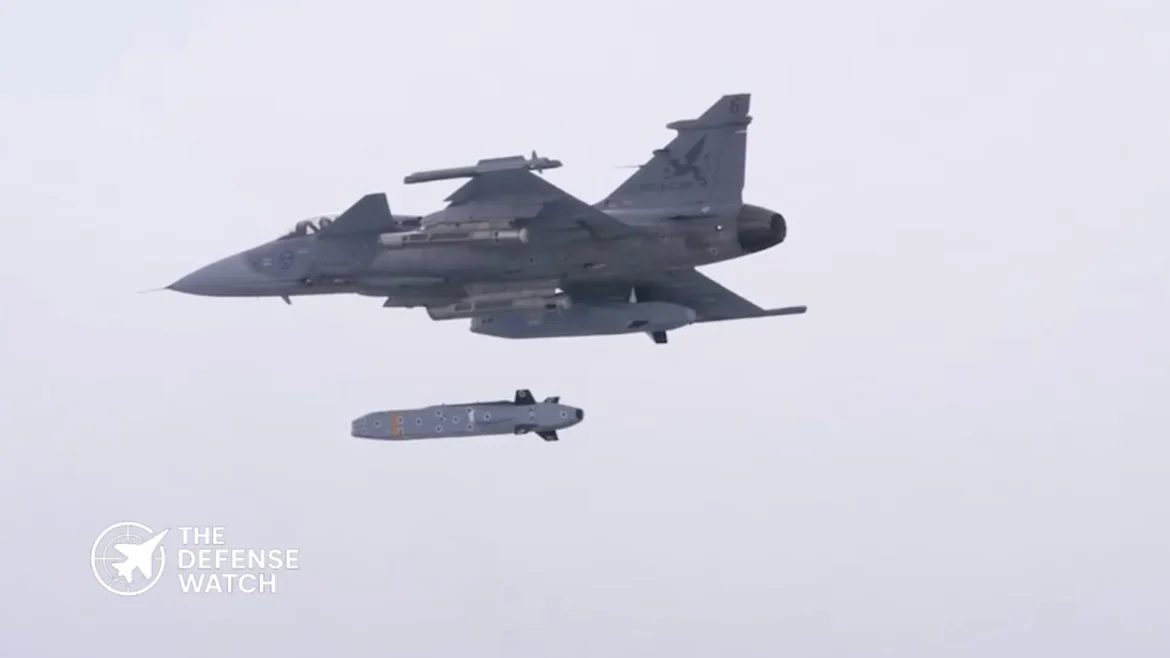
Sweden has conducted the first confirmed launch of a Taurus KEPD 350 cruise missile from a JAS 39 Gripen, marking a major milestone in the country’s effort to establish a long range precision strike capability. The Swedish Air Force said the test took place on August 21, 2026, at the Vidsel Test Range in Norrbotten, northern Sweden.
The Swedish Air Force described Taurus as a long range cruise missile that introduces a new deep strike capability. The test was supported by Sweden’s Defence Materiel Administration, FMV, which released imagery of the launch.
The event is significant because Sweden is moving from integrating the weapon with the Gripen platform toward demonstrating the complete weapon and aircraft combination during an actual missile launch.
What the Taurus KEPD 350 Adds to Gripen
The TAURUS KEPD 350 is a heavy air launched stand off cruise missile developed by TAURUS Systems, a joint venture involving Saab and MBDA Deutschland. The weapon is designed primarily for precision strikes against hardened and high value targets.
According to MBDA, the missile weighs approximately 1,400 kilograms and is about 5 meters long. Its operational range is stated as more than 500 kilometers. The weapon uses a dual stage warhead system and is designed to penetrate hardened targets while also providing blast and fragmentation effects against other target types.
| Capability | Taurus KEPD 350 |
|---|---|
| Type | Air launched stand off cruise missile |
| Length | About 5 meters |
| Weight | About 1,400 kg |
| Range | More than 500 km |
| Propulsion | Turbofan |
| Navigation | INS, GPS, terrain reference and image based navigation |
| Mission | Deep strike and precision attack |
| Carrier | JAS 39 Gripen and other compatible aircraft |
The missile is designed to fly at very low altitude and use terrain following to reduce exposure to ground based detection and air defenses. Its navigation architecture combines inertial navigation with GPS, terrain reference and image based navigation, allowing the weapon to maintain its planned route even when continuous GPS availability cannot be assumed.
That combination is important in heavily defended environments. A long range missile does not simply provide additional distance. Its value also depends on the ability to approach a target while reducing the opportunities for detection and interception.
(adsbygoogle = window.adsbygoogle || []).push({});Why the First Launch Matters
The August 21 launch represents more than another weapons test. It demonstrates that Sweden’s Gripen force is moving toward a different role in the country’s overall strike architecture.
Historically, the Swedish Air Force has placed considerable emphasis on air defense, dispersed operations and the ability to preserve combat aircraft in a demanding regional environment. The addition of Taurus creates a complementary offensive option that allows aircraft to attack targets from stand off distances rather than requiring the fighter to approach the target area directly.
Swedish Air Force commander Maj. Gen. Jonas Wikman previously described the deep strike requirement as an important change for Sweden, noting that the country had not previously possessed a comparable offensive counter air or deep strike capability.
This distinction is important. Taurus does not turn Gripen into a dedicated bomber. Instead, it expands the range of missions that can be performed by an existing multirole fighter fleet.
The Technical Challenge of Integrating Taurus With Gripen
A missile launch from a fighter is the visible part of a much larger integration process.
The aircraft must be able to safely carry and release a weapon weighing roughly 1.4 tons. Its avionics must also exchange the necessary mission data with the missile, while the aircraft’s flight control, weapons management and mission planning systems must account for the weapon throughout the launch sequence.
The missile itself requires accurate prelaunch mission data. Its navigation system then combines several methods to maintain the planned route and guide the weapon toward the designated target area.
Saab has long presented Taurus as compatible with the Gripen family. Saab’s earlier Gripen documentation lists the TAURUS KEPD 350 as a stand off weapon, while the company has also described Taurus as an option for Gripen E.
The recent Swedish test is therefore an important distinction between theoretical compatibility and demonstrated national operational integration.
Sweden’s 2028 Target and Acceleration Effort
Sweden announced plans to integrate and procure Taurus for its Gripen force in 2025. Public reporting has indicated that the original objective was to establish the capability by 2028, although Swedish authorities and industry have worked to accelerate the process.
The August launch suggests that the program has reached an advanced flight test stage before the planned operational date. However, a successful launch should not be interpreted as proof that the full capability is already operational.
Additional work normally remains after a first live firing, including qualification, mission planning validation, training, logistics, maintenance arrangements and broader operational certification.
What It Means for Swedish Air Power
The introduction of Taurus gives Sweden a new way to hold important fixed targets at risk without sending the launching fighter into the immediate vicinity of the target.
The missile is specifically designed for hardened and deeply buried targets, large radar installations and other high value fixed targets. Saab has described the weapon as a precision system intended for demanding air operations against defended targets.
This could strengthen several parts of Sweden’s wider air campaign architecture.
First, it can increase the separation between the aircraft and the target. Second, it can allow Gripen to contribute to deep strike missions while retaining the aircraft’s other multirole functions. Third, it adds another option for attacking fixed infrastructure that may be difficult to reach with shorter range weapons.
The capability also fits Sweden’s broader military modernization as the country adapts to its NATO membership and a more demanding European security environment.
Implications for NATO’s Northern Flank
For NATO, the significance of the Swedish Taurus integration extends beyond the Swedish Air Force.
Sweden occupies a strategically important position in northern Europe and controls territory and airspace that are central to the defense of the Nordic region and the Baltic Sea area. A long range air launched strike capability gives Swedish combat aviation another tool for contributing to wider alliance operations.
The combination of Gripen and Taurus also offers an example of how relatively compact fighter fleets can gain greater reach through stand off weapons rather than relying exclusively on larger aircraft.
This matters for countries operating under constrained force structures. The ability to launch a long range precision weapon from a multirole fighter can increase the number of aircraft capable of contributing to deep strike missions without creating a separate bomber fleet.
The Gripen Taurus Combination in a Wider European Context
Taurus is not a new weapon. The system has been associated with European combat aircraft for more than two decades, and Saab’s 2002 production announcement identified Gripen among the aircraft capable of carrying the weapon.
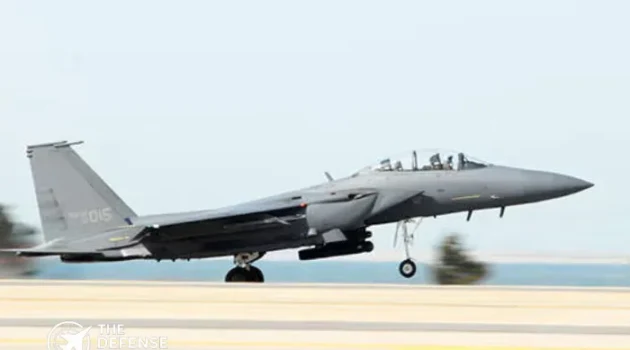
The missile has also been integrated with other aircraft, including the German Tornado, South Korean F-15K and Spanish F/A-18 variants. MBDA currently lists Gripen, Tornado, F-15K, Eurofighter Typhoon and EF-18 among Taurus carrier platforms.
What is new is Sweden’s move to validate the weapon within its own Gripen fleet and establish an indigenous operational capability.
The development also comes as Germany works on modernization of its existing Taurus inventory. Saab received a SEK 1.7 billion order in 2025 covering components, modernization and ten years of life cycle maintenance for German Taurus missiles.
MBDA has separately announced work on Taurus NEO, indicating that the Taurus family is being developed further rather than treated as a static legacy weapon.
What Comes Next
The immediate significance of the Swedish test is that the Taurus and Gripen combination has now completed a publicly confirmed live launch.
The next stage will be to translate that test milestone into a fully qualified and sustainable operational capability. That process includes continued flight testing, weapon certification, pilot and maintenance training, mission planning and integration into Sweden’s broader command and control architecture.
Sweden’s future fighter force also includes Gripen E, adding another dimension to the integration effort. FMV has already delivered Gripen E aircraft to the Swedish Armed Forces, while Sweden is also preparing a future Gripen E fleet for Ukraine under a separate agreement.
For the Swedish Air Force, however, the immediate priority is clear. The first Taurus launch from Gripen demonstrates that Sweden is making measurable progress toward a long range precision strike capability that can complement its established air defense and multirole fighter missions.
The August 21 test therefore represents a significant program milestone, but not the final step. The operational value of the capability will ultimately depend on completing certification, training and integration and placing the weapon into a reliable combat-ready structure.
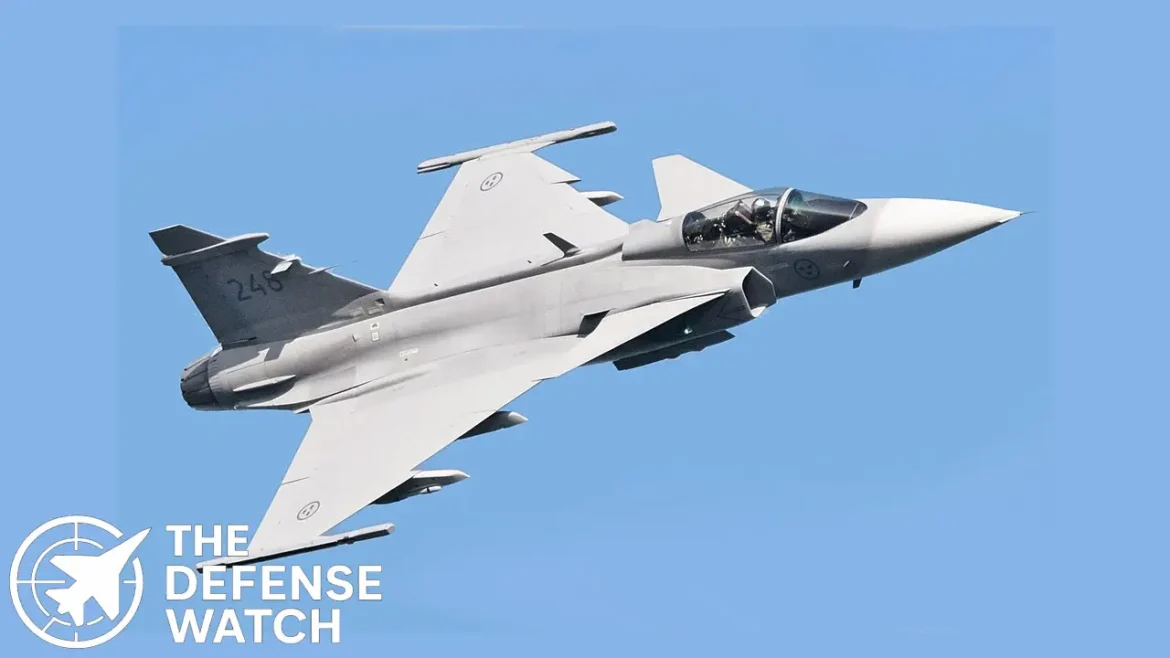
Saab JAS 39 Gripen — Sweden’s Pride in the Sky
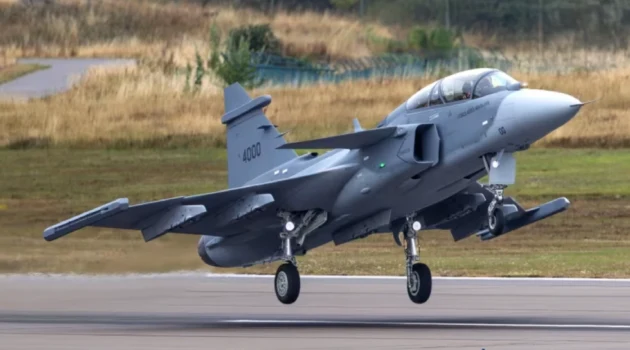
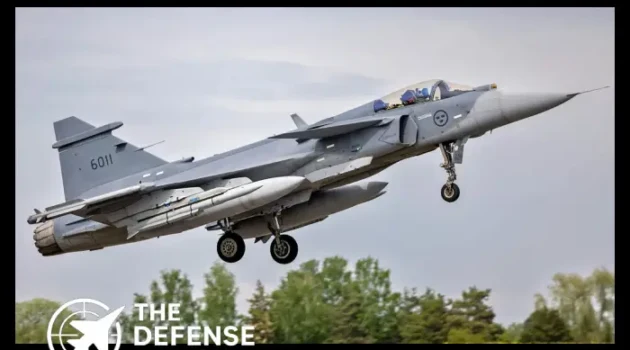
The Saab JAS 39 Gripen stands as one of Europe’s most remarkable achievements in modern combat aviation. Developed by Saab AB in Sweden, the Gripen was designed to meet the demanding requirements of a 21st-century air force—speed, versatility, and cost efficiency. As a lightweight multirole fighter, it has earned global recognition for its balance of advanced technology and affordability, making it a preferred choice for nations seeking high-end performance without the price tag of fifth-generation jets.
A Vision of Independence and Innovation
Sweden’s decision to build its own fighter aircraft stemmed from a national policy of strategic independence. During the Cold War, Stockholm recognized the need for an aircraft that could operate from short, improvised runways and adapt to both defensive and offensive missions.
The result was the JAS 39 Gripen, where “JAS” stands for Jakt (Fighter), Attack, and Spaning (Reconnaissance)—a true multirole concept that replaced several older aircraft types in Swedish service.
Engineering and Design Philosophy
The Gripen’s design reflects Sweden’s focus on efficiency and smart engineering. With a delta wing and canard configuration, the aircraft achieves exceptional agility and short takeoff capability. It can operate from road bases as short as 800 meters—a critical advantage for dispersed operations.
Under its streamlined airframe lies a General Electric F404-derived RM12 engine, delivering a thrust-to-weight ratio that enables speeds up to Mach 2. The Gripen’s fly-by-wire control system, combined with advanced aerodynamics, ensures superior maneuverability and pilot control even in demanding flight conditions.
Avionics and Combat Systems
Modern Gripen variants—especially the Gripen E/F—boast some of the most sophisticated avionics in the 4.5-generation class. The aircraft features the Raven ES-05 active electronically scanned array (AESA) radar, IRST (Infrared Search and Track), and a modular avionics architecture that allows easy software and hardware upgrades.
Weapons integration is equally impressive. The Gripen can carry an extensive array of air-to-air missiles (Meteor, IRIS-T, AIM-9, AIM-120), air-to-ground precision munitions, and anti-ship missiles. Its Link 16 datalink and sensor fusion capabilities make it a true network-enabled asset.
Gripen E: The Next Generation
The latest variant, Gripen E, takes the platform into a new era of capability. It includes the GE F414G engine, offering 20% more thrust, an AESA radar, an electronic warfare (EW) suite, and a new wide-area cockpit display.
Gripen E also introduces advanced sensor fusion and artificial intelligence-assisted systems for enhanced situational awareness. Despite its advanced systems, it maintains a low operational cost—estimated to be one-third that of the F-35 Lightning II—making it one of the most cost-effective combat aircraft in the world.

Operational Users and Export Success
The Gripen serves as the backbone of the Swedish Air Force, but it has also found success abroad. Nations such as Brazil, the Czech Republic, Hungary, Thailand, and South Africa have adopted the Gripen due to its reliability and ease of maintenance.
In Brazil, the Gripen E/F (locally designated F-39E/F) is being co-produced under a technology transfer partnership—a move that strengthens Brazil’s domestic aerospace capabilities.
Gripen in the Future Battlespace
With the rise of network-centric warfare, the Saab JAS 39 Gripen remains relevant through its adaptability. Saab continues to evolve the platform with new datalink systems, electronic warfare capabilities, and AI-assisted mission planning tools.
Furthermore, the Gripen’s integration with swarm drones, EW pods, and stealth countermeasures demonstrates its ability to operate effectively in high-threat environments.
As global tensions rise and nations seek affordable yet potent airpower solutions, the Gripen offers an ideal balance between performance, technology, and sustainment.
Strategic Context and Analysis
In an era dominated by fifth-generation aircraft like the F-35 and Su-57, the Saab JAS 39 Gripen remains a pragmatic alternative for smaller nations. Its interoperability with NATO systems, low operational footprint, and indigenous upgrade roadmap ensure it continues to hold a niche in global defense markets.
Analysts note that the Gripen’s design philosophy—focusing on survivability, ease of maintenance, and flexibility—aligns with the modern doctrine of distributed air operations, where survivability depends on mobility and readiness rather than sheer stealth.
Conclusion
The Saab JAS 39 Gripen exemplifies Sweden’s philosophy of smart defense innovation. Combining high performance, modular design, and economic efficiency, the Gripen remains a cornerstone of modern airpower for middle-sized air forces worldwide. As global security challenges evolve, this Swedish-made fighter continues to prove that agility and intelligence can rival brute force in the skies.
FAQs
What makes the Saab JAS 39 Gripen unique?Its ability to operate from short runways, advanced avionics, and low lifecycle costs make it one of the most efficient 4.5-generation fighters in service.
Which countries operate the Gripen?Sweden, Brazil, Czech Republic, Hungary, South Africa, and Thailand currently operate different Gripen variants.
How does Gripen compare to the F-35?While the F-35 offers stealth, the Gripen delivers lower costs, easier maintenance, and superior operational flexibility for smaller air forces.
What is the newest version of the Gripen?The Gripen E/F, equipped with the GE F414G engine, AESA radar, and advanced EW suite.