Robin Radar Expands U.S. Counter Drone Operations
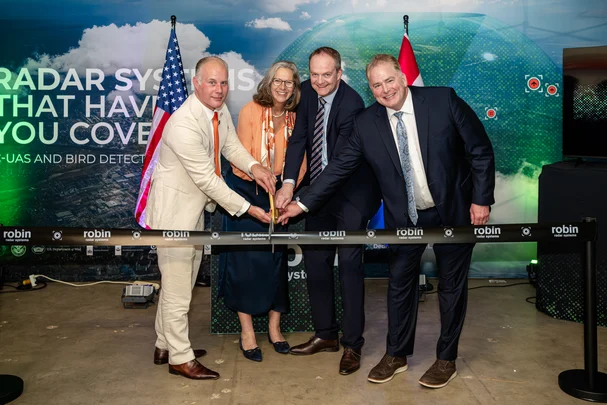
Robin Radar Systems is expanding its U.S. counter drone operations after reporting a 75% increase in sales of its IRIS drone detection radar during the first half of 2026. The Dutch company opened a larger operations center in Northern Virginia on August 26 as it seeks to expand its presence across the U.S. government, defense and security markets.
- Robin Radar Expands U.S. Counter Drone Operations
- Takeaways
- Northern Virginia Becomes Robin’s U.S. Hub
- IRIS Sales Jump 75% In First Half Of 2026
- What The IRIS Radar Brings To Counter UAS Operations
- Micro Doppler Classification Addresses A Major C UAS Problem
- Integration Is Central To The System’s Role
- Why The U.S. Market Matters
- The Operational Tradeoff Behind Small Drone Radars
- Ukraine And The Changing Counter Drone Requirement
- A Larger U.S. Presence For Robin Radar
Takeaways
Robin Radar Systems is expanding its U.S. presence as demand for deployable counter drone detection and tracking technology continues to increase.
The expansion comes as U.S. agencies place greater emphasis on detecting, tracking and identifying small unmanned aircraft. The Department of Defense has identified unmanned systems as an increasingly important threat and has been pursuing a broader counter UAS approach across military services and agencies.
Northern Virginia Becomes Robin’s U.S. Hub
Robin said its new Northern Virginia facility will support 20 additional roles and provide more capacity for its North American operations.
The company selected Northern Virginia because of its established defense and government ecosystem and its proximity to customers and partners. Robin said the facility is intended to support activities ranging from system evaluation and deployment to ongoing operations.
The expansion also reflects a wider shift in the counter UAS market. Rather than treating drone detection as a standalone military requirement, government organizations increasingly require sensors that can operate as part of larger airspace security architectures.
That distinction is important because detecting a drone is only the first step. A useful counter UAS sensor must provide accurate tracks, distinguish potential threats from nonthreats and transmit usable information to command and control systems or other sensors.
IRIS Sales Jump 75% In First Half Of 2026
Robin reported that it sold 75% more IRIS radars in the first half of 2026 compared with the first half of 2025.
The company also said it had signed its largest U.S. deal to date with a counter UAS integration partner supporting both federal and State, Local, Territorial and Tribal customers. Robin did not disclose the value of that agreement.
The company reported more than 30 IRIS radars were deployed across North America during security operations associated with the FIFA World Cup 2026.
That deployment is significant because major sporting events create a different counter UAS problem from a battlefield. Security organizations need persistent monitoring across populated areas while dealing with large numbers of legitimate aircraft, birds and other airborne objects.
Robin says IRIS was used to provide airspace awareness for U.S. government and SLTT customers during those operations.
What The IRIS Radar Brings To Counter UAS Operations
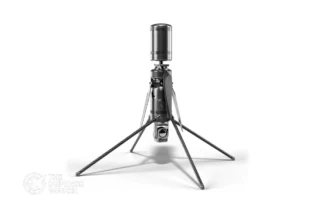
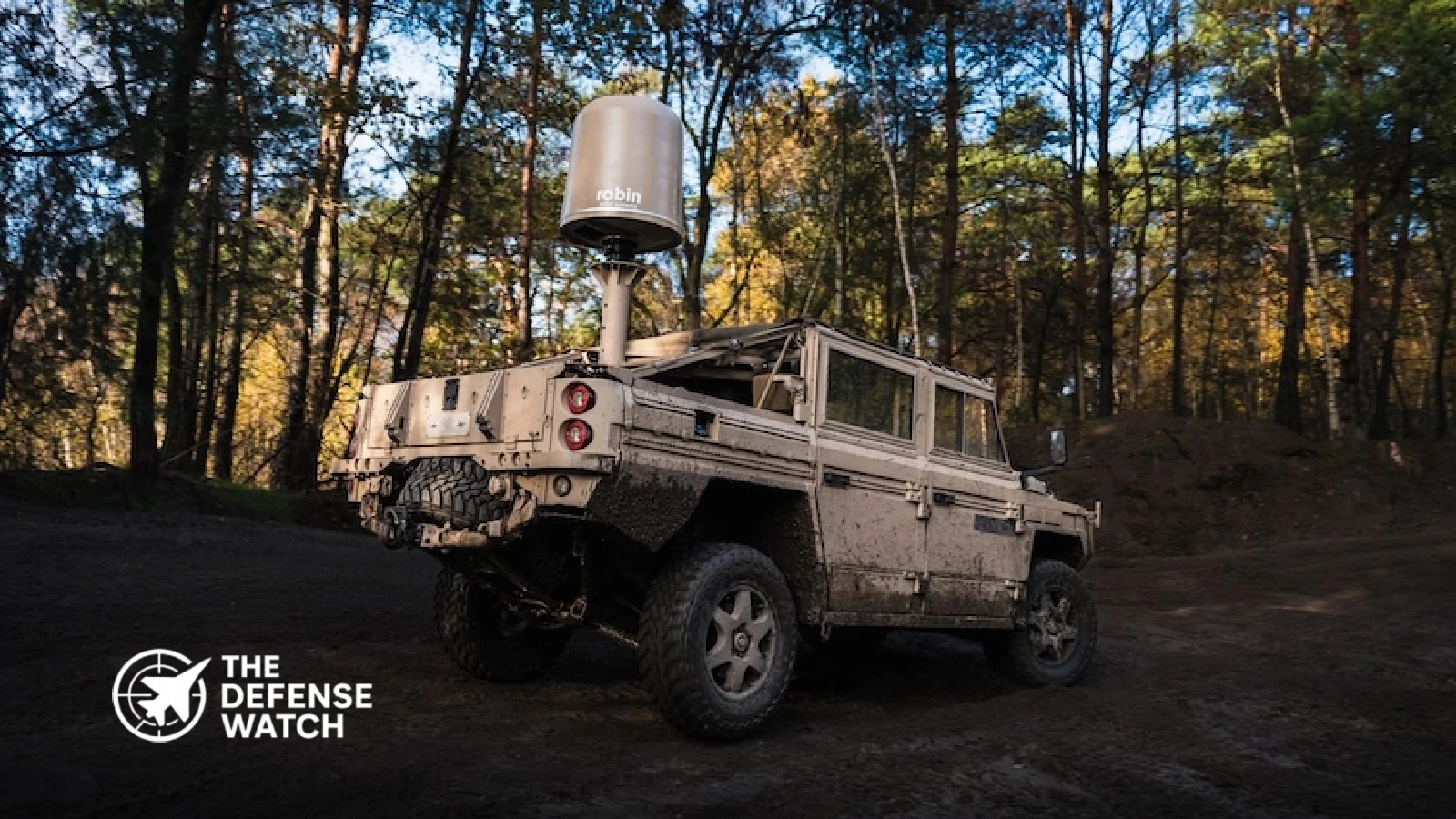
IRIS is a compact X band FMCW radar designed specifically for detecting, tracking and classifying drones.
The system provides 360 degree azimuth coverage and 60 degree elevation coverage. Robin lists a standard instrumented range of 5 kilometers, while its Long Range Mode can extend the instrumented range to 12 kilometers.
| IRIS Capability | Published Specification |
|---|---|
| Radar technology | FMCW |
| Frequency | X band |
| Standard instrumented range | 5 km |
| Long Range Mode | Up to 12 km |
| Azimuth coverage | 360 degrees |
| Elevation coverage | 60 degrees |
| Weight | 29 kg |
| Rotation speed | 30 rpm |
| Deployment | Less than 15 minutes |
| On the move capability | Up to 100 km/h |
| Classification | Micro Doppler and DNN |
Robin’s published specifications show that the radar weighs 29 kilograms and measures 550 millimeters in diameter by 630 millimeters in height. The company says it can be deployed in less than 15 minutes and mounted on tripods, buildings, vehicles and maritime platforms.
The system’s on the move capability is another important feature. With the appropriate configuration, IRIS can detect, track and classify drones while mounted on a vehicle traveling at up to 100 km/h.
Micro Doppler Classification Addresses A Major C UAS Problem
One of the central challenges in counter UAS operations is determining what a radar has detected.
Small drones can present radar signatures that overlap with birds and other objects. A sensor that generates large numbers of false tracks can overwhelm operators and reduce the value of the wider counter UAS network.
IRIS uses micro Doppler classification to analyze motion associated with rotating components such as propellers. Robin also says its system uses deep neural network technology to support classification between drones and birds.
The distinction between detection and classification matters operationally. Radar can establish that an object is present, but additional information about the object’s characteristics helps determine whether the track should be handed to another sensor or countermeasure.
This is particularly important for layered systems in which radar provides the initial track and electro optical, infrared, radio frequency or other sensors provide additional confirmation.
The U.S. Department of Defense describes counter UAS architectures as involving multiple sensing technologies, including radar, RF collection, electro optical and infrared sensors and acoustic systems.
Integration Is Central To The System’s Role
Robin positions IRIS as a sensor within a broader counter UAS architecture rather than as a complete defeat system.
The radar can feed tracking information into command and control systems and other counter UAS components. The company lists Asterix, SAPIENT and XML API interfaces and says IRIS is designed to integrate with more than 25 systems and partners.
That architecture is important because a radar does not itself neutralize a drone.
Its role is to establish an air picture, identify potential threats and provide sufficiently accurate information for another component to determine the appropriate response.
The Pentagon has similarly emphasized the distinction between detection and defeat. U.S. officials have described radar as an active detection method, while counter UAS effectors can include separate nonkinetic or kinetic systems.
Why The U.S. Market Matters
The growth of Robin’s U.S. business comes against a broader expansion of American counter UAS requirements.
The Pentagon’s counter unmanned systems strategy recognizes drones as an urgent and enduring threat to U.S. personnel, facilities and assets. The department has also identified the need to integrate sensing, command and control and defeat capabilities rather than relying on a single technology.
The U.S. Department of Homeland Security is also pursuing counter UAS capabilities. A 2026 DHS acquisition forecast describes requirements for detecting, identifying, monitoring and tracking unmanned aircraft as part of its counter UAS program.
This creates demand beyond traditional military installations.
Critical infrastructure, airports, government facilities, borders and large public events all face different versions of the same basic problem: small unmanned aircraft can be difficult to identify quickly while operating in complex airspace.
For these customers, a relatively lightweight radar that can be deployed quickly has practical advantages over systems designed primarily for fixed military air defense networks.
The Operational Tradeoff Behind Small Drone Radars
The compact design of IRIS also highlights an important tradeoff in counter UAS sensing.
A 29 kilogram radar can be moved and deployed considerably more easily than a large air defense sensor. That makes it useful for temporary security operations, mobile units and dispersed sites.
However, small radar systems are not intended to replace larger air surveillance radars. Their value comes from focusing on the lower altitude and smaller target problem and feeding information into a wider sensor and command network.
Robin’s own specifications illustrate this distinction. Its standard IRIS configuration has a 5 kilometer instrumented range, while Long Range Mode extends that figure to 12 kilometers. The company’s published detection and classification ranges for small targets are lower than the instrumented range and vary according to target size and conditions.
That difference is important when assessing radar performance. Instrumented range describes the radar’s stated measurement envelope, while the practical distance at which a particular small drone can be detected and classified depends on factors including target characteristics, clutter and environmental conditions.
Ukraine And The Changing Counter Drone Requirement
Robin says operational experience from recent conflicts, including Ukraine, is influencing U.S. counter UAS procurement requirements.
The broader lesson is that drone threats are becoming more diverse. Forces and security organizations must contend with small commercial style quadcopters, fixed wing unmanned aircraft, autonomous systems and loitering munitions.
The Pentagon has repeatedly highlighted the importance of countering unmanned aircraft, while U.S. military experimentation has included radar, electronic warfare, directed energy and kinetic systems.
For radar suppliers, this increases the importance of classification and network integration. A detection system must not simply find airborne objects. It must contribute useful information quickly enough for the wider defensive architecture to respond.
A Larger U.S. Presence For Robin Radar
Robin’s Northern Virginia expansion therefore represents more than additional office space.
The company is using the facility to increase local staffing and work more closely with U.S. government organizations, defense companies and security customers. Robin says the investment is intended to support customers through evaluation, deployment and continued operations.
The company’s U.S. sales growth provides a commercial indicator of the expanding demand for dedicated drone detection systems.
At the same time, the reported 75% increase in IRIS sales should be understood as a company reported figure rather than a measure of the entire U.S. counter UAS market.
What is clear is that the U.S. requirement is moving toward layered, networked systems in which radar provides persistent detection and tracking while other sensors and effectors handle identification, assessment and defeat.
Robin’s decision to expand in Northern Virginia places the company closer to that increasingly important U.S. defense and security ecosystem.