The Army’s Small Vehicle Is Becoming A Big Procurement Program
The U.S. Army’s Infantry Squad Vehicle, or ISV, was originally supposed to fill a narrow mobility gap. The service initially set a procurement objective of 649 vehicles in 2019.
By February 2026, that objective had reached 11,582 vehicles, an increase of roughly 18 times the original requirement. Army officials attribute the expansion not to traditional requirements growth, but to soldiers repeatedly validating the vehicle during operational experimentation and demanding more of it.
Takeaways
The Infantry Squad Vehicle is evolving from a lightweight transport into a major component of the Army’s mobile brigade concept.
1. Procurement Grew 18-Fold
The Army’s requirement increased from 649 vehicles in 2019 to 11,582 in February 2026, reflecting sustained demand from soldiers during operational experimentation.
2. Nine Soldiers And 3,200 Pounds
The ISV carries a nine-soldier infantry squad and up to 3,200 pounds of payload, giving light formations significantly greater tactical mobility.
3. Designed For Air Mobility
The vehicle can be transported by UH-60 and CH-47 helicopters and delivered by low-velocity airdrop from C-130 and C-17 aircraft.
4. Commercial Technology Cuts Time
The ISV uses a high percentage of commercial off-the-shelf components, helping the Army reduce development time compared with traditional military vehicle acquisition.
5. Mobility Must Work With Sensors
Because the ISV emphasizes mobility over armor, its battlefield effectiveness depends heavily on reconnaissance, concealment, drones, command networks and fires that help prevent the vehicle from becoming an exposed target.
That distinction matters.
The ISV represents a different acquisition philosophy from the heavily engineered tactical vehicles that traditionally dominate Army procurement. Instead of trying to make one platform perform every battlefield function, the Army kept the ISV focused on moving an infantry squad, its equipment and additional payload quickly across difficult terrain.
The result is a vehicle that gives up armor and some onboard sophistication in exchange for mobility, transportability and speed.
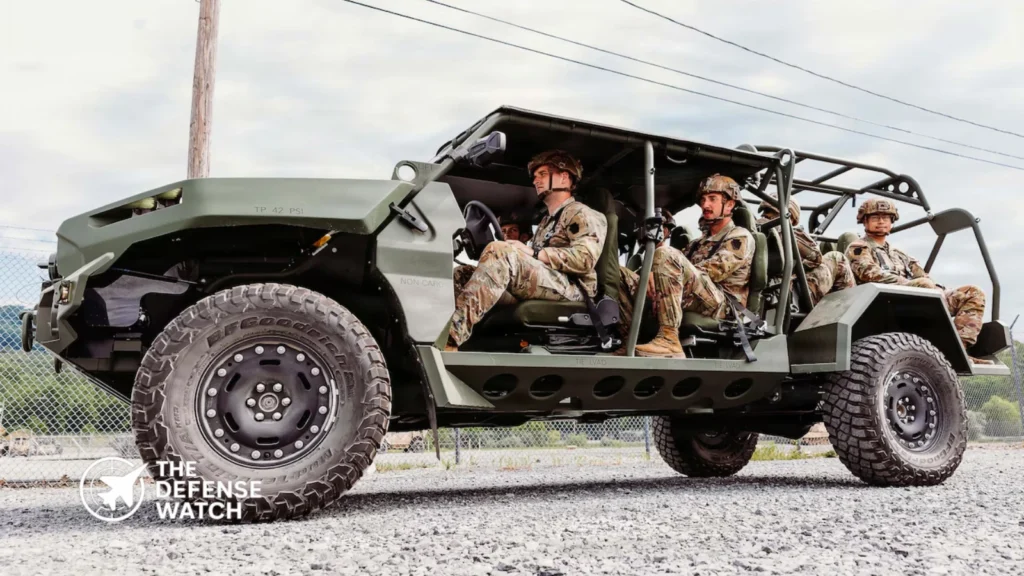
The Army describes the ISV as a nine-soldier vehicle with a 3,200-pound payload. It can be sling loaded by a UH-60 Black Hawk, transported by CH-47 Chinook and delivered by low-velocity airdrop from C-130 or C-17 aircraft.
That combination makes the ISV more than a replacement for a Humvee. It is a mobility tool designed around getting infantry to the fight without turning the vehicle itself into the center of the formation.
Why The ISV Is So Different From A JLTV
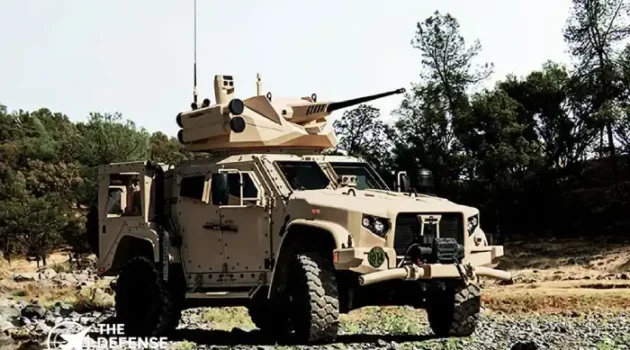
The Joint Light Tactical Vehicle and ISV solve different problems.
The JLTV was designed around a difficult balance of protection, payload and mobility. Its mission set demands considerably more vehicle mass because survivability is a major part of the design.
The ISV takes almost the opposite approach.
Its value comes from being small enough to move with infantry formations and light enough to exploit aviation assets. The Army has described it as a platform that can be inserted by helicopter or fixed-wing aircraft and then operate across challenging terrain.
The vehicle is based heavily on commercial technology. GM Defense’s production design uses the Chevrolet Colorado ZR2 architecture and a high percentage of commercial off-the-shelf components.

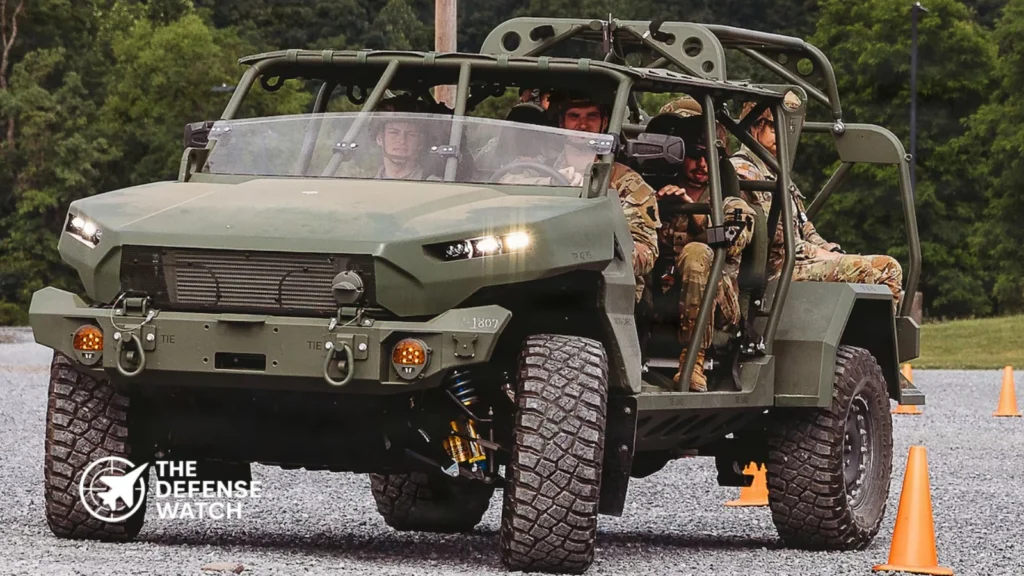
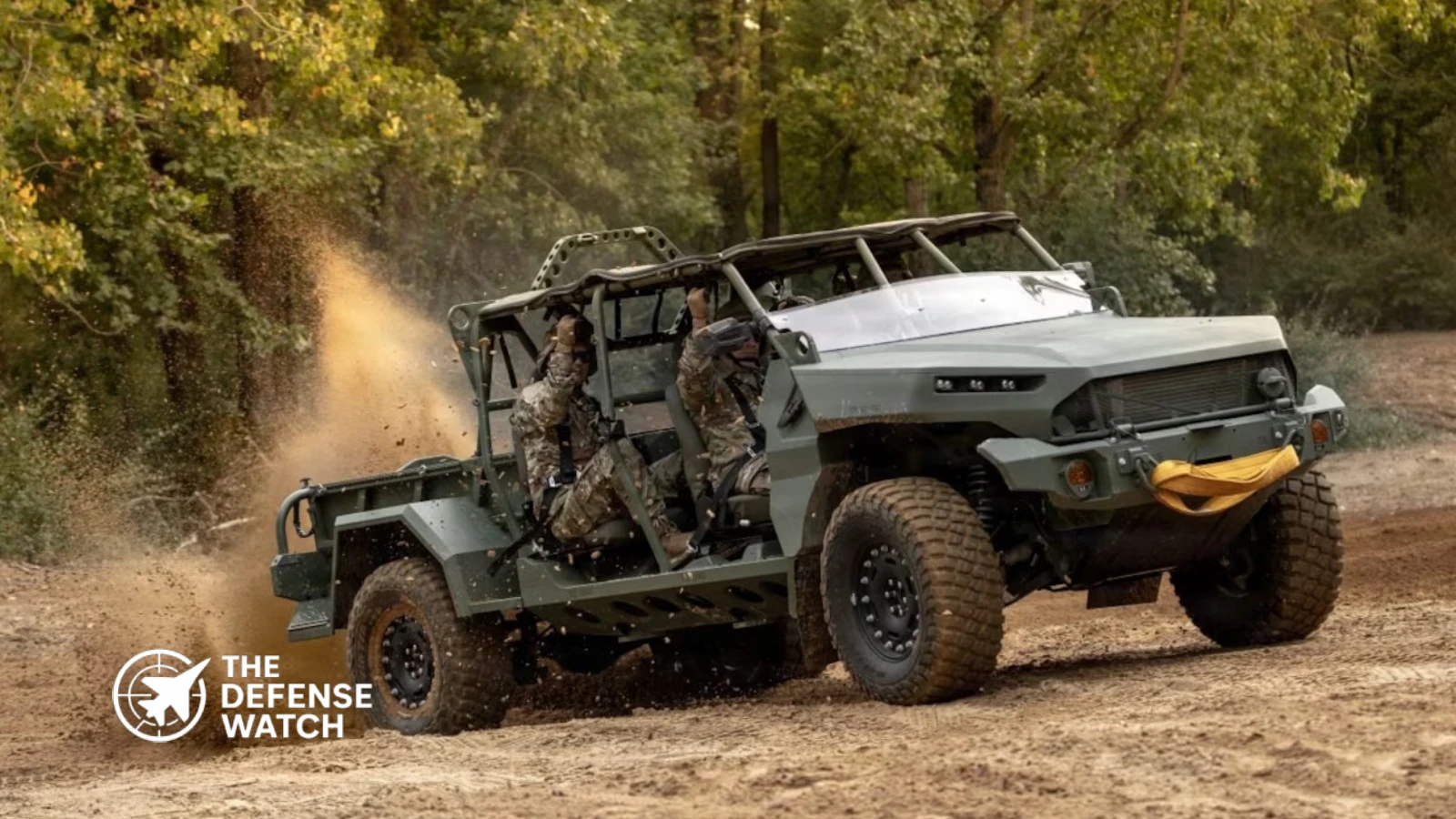
Soldiers assigned to Alpha Company, 1st Battalion, 112th Infantry Regiment, 56th Mobile Brigade Combat Team, complete a driver’s course designed to introduce them to the Infantry Squad Vehicle’s mobile capabilities at Fort Indiantown Gap, Pa., June 17, 2026. That commercial foundation helped the Army shorten the development timeline. According to the program officials cited in the source material, the rapid acquisition model allowed the first unit to receive the capability within about 24 months.
This is important because battlefield technology can become obsolete while a conventional acquisition program is still moving through its testing and milestone process.
The ISV approach instead accepts that a useful vehicle today can be more valuable than a theoretically perfect vehicle delivered years later.
The Numbers Behind The ISV Expansion
The program’s growth is one of its most revealing characteristics.
The original 2019 requirement was 649 vehicles. It rose to 900 in February 2021, then increased again until reaching 2,593 vehicles.
In April 2025, the Army approved an ISV utility variant and raised the combined procurement objective to 5,733 vehicles.
By February 2026, the Army had established a current position and procurement objective of 11,582 vehicles.
Metric Army ISV Program Original 2019 procurement objective 649 vehicles 2021 procurement objective 900 vehicles Later procurement objective 2,593 vehicles April 2025 combined objective 5,733 vehicles February 2026 objective 11,582 vehicles Original squad capacity 9 soldiers Payload 3,200 pounds UH-60 transport External sling load CH-47 transport Internal load/external lift Fixed-wing transport C-130 and C-17 low-velocity airdrop FY2026 ISV-U unit cost About $194,000 The FY2026 Army budget documentation lists a unit cost of about $194,000 for the Infantry Squad Vehicle Utility variant. That figure is substantially below the cost of many heavily equipped tactical vehicles, although it should not be treated as the total program cost because fielding, support, engineering and other expenses are separate budget elements.
Soldiers assigned to Alpha Company, 1st Battalion, 112th Infantry Regiment, 56th Mobile Brigade Combat Team, are introduced to the Infantry Squad Vehicle at Fort Indiantown Gap, Pa., June 17, 2026. The soldiers learned how to properly maintain and drive the new vehicle while completing a driver’s course. The same budget documentation shows how quickly the ISV-U fleet was expected to grow. Planned fielding increased from 96 vehicles in FY2025 to 1,275 in FY2026, requiring additional funding for fielding, training, transportation, spares and contractor support.
That is a useful indicator of where the Army sees the vehicle going.
This is no longer an experimental niche platform. It is becoming an important component of the Army’s mobile brigade concept.
The Real Advantage Is Not Speed Alone
The ISV’s greatest contribution is the distance between the infantry squad and its next tactical position.
An infantry unit moving on foot is limited by human endurance and the weight of its equipment. A conventional tactical vehicle solves that problem but can impose its own limitations because of size, weight and transport requirements.
The ISV sits between those extremes.
Army infantry publications have described ISVs as a way to increase the amount of terrain an infantry formation can cover without making the unit dependent on the vehicle to conduct the fight.
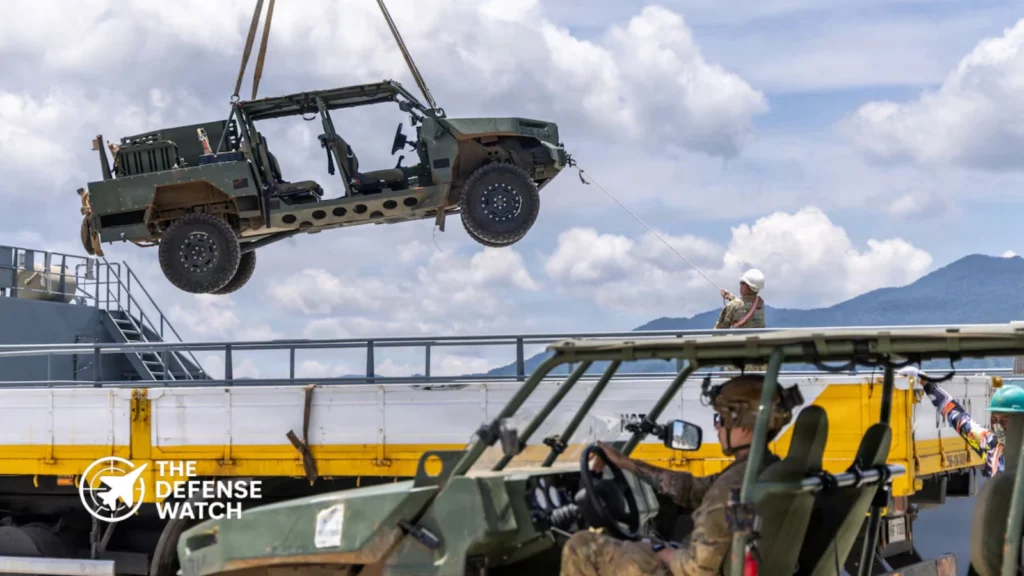
Soldiers assigned to 2nd Battalion, 27th Infantry Regiment, 25th Infantry Division, load Infantry Squad Vehicles onto a logistics support vessel at Port Irene in Santa Ana, Philippines, June 16, 2026. That distinction is particularly important for mobile brigade combat teams.
During training at the Joint Readiness Training Center, the 2nd Battalion, 26th Infantry Regiment used ISVs to move forces rapidly as a counterattack element. Army analysis concluded that the vehicle helped make a mobile defense viable for an infantry brigade formation.
The lesson is straightforward: mobility creates tactical options.
A commander who can reposition an infantry squad quickly can reinforce a threatened position, exploit a gap or launch a counterattack before an opposing force can adjust.
The Price Of Being Ultra-Light
There is a major tradeoff.
The ISV is an unarmored or lightly protected platform. Its survivability comes primarily from mobility, dispersion, terrain use and avoiding detection rather than absorbing direct hits.
That becomes increasingly important as drones, persistent surveillance and precision fires make exposed movement more dangerous.
Army units have already adapted their ISV tactics around this problem. During one training rotation, infantry used small unmanned aircraft hundreds of meters ahead of ISV formations to identify enemy positions before the vehicles entered exposed areas. Units also practiced concealment and formation techniques when enemy drone activity was expected.
This suggests a key point about the ISV.
It should not be viewed as a smaller armored vehicle.
It is better understood as part of a larger reconnaissance, mobility and fires system.
The vehicle gets the squad there. Drones, sensors, fires and command networks help determine where there is enough room to move.
From Commercial Pickup Architecture To Military Capability
The ISV’s commercial heritage is central to the program’s story.
The production vehicle is derived from the Chevrolet Colorado ZR2 architecture, allowing the Army to use mature commercial automotive components rather than developing every component from the ground up.
The 2.8-liter turbo-diesel engine and six-speed automatic transmission documented during Army testing illustrate that philosophy.
That does not mean the vehicle is simply a civilian pickup with military markings.
Military requirements drove changes to the platform, and the Army subjected the ISV to transportability, reliability and operational testing. It also conducted certification for helicopter sling loading and airdrop operations.
The important acquisition lesson is that commercial technology provided the starting point rather than the finished military capability.
The Transformation In Contact Connection
The ISV’s growth also illustrates what the Army means by Transformation in Contact.
TiC puts soldiers into realistic training environments with emerging equipment and uses their feedback to shape subsequent development. The process is intended to shorten the distance between experimentation and fielded capability.
The Army has increasingly used the approach to change how units organize, train and acquire equipment. In 2025, Army officials described TiC as a method for rapidly putting new systems into soldiers’ hands and using their observations to influence capability development.
That philosophy is particularly relevant to the ISV because its original requirement was not large enough to reflect what soldiers eventually learned through use.
The soldiers effectively became part of the requirements process.
That is why the 11,582-vehicle objective is more significant than the number itself.
It demonstrates that field experimentation can change procurement decisions after equipment reaches operational users.
The ISV’s biggest lesson is that mobility can be treated as a capability in its own right, rather than simply as a feature added to a larger tactical vehicle.
The ISV Is Also Becoming A Family Of Vehicles
The Army’s future plans show that the ISV concept is expanding beyond basic troop transport.
The service is developing heavier and utility-oriented variants to support the emerging mobile brigade combat team structure.
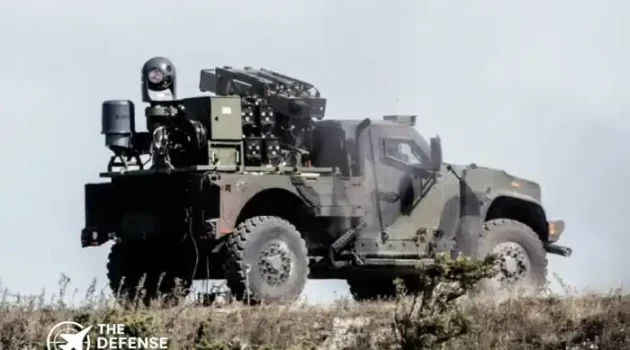
The utility configuration can support equipment and logistics missions that previously depended on larger vehicles or trailers. Army infantry professionals have also explored ISV-based solutions for command and control, communications and other specialized missions.
The heavy variant is expected to provide additional onboard electrical generation and energy storage for next-generation command and control equipment.
That could prove important as Army formations become more dependent on sensors, radios, computing equipment, unmanned systems and electronic warfare capabilities.
The more technology infantry units carry, the more important onboard power becomes.
A Different Kind Of Military Mobility
There is also an interesting cultural comparison with competitive gaming.
In games such as Call of Duty, mobility often determines whether a player controls the next engagement. A fast player can reposition, attack from an unexpected angle and disengage before an opponent can respond.
The ISV applies a similar principle at formation level, although the real battlefield is vastly more complex and unforgiving.
The vehicle does not make infantry invulnerable. It creates opportunities to move faster than an opponent expects.
That concept has appeared repeatedly in military history. From airborne operations to air assault formations, commanders have sought ways to move infantry beyond the constraints imposed by terrain and marching speed.
The ISV modernizes that idea for a battlefield where movement must be coordinated with drones, sensors and precision fires.
The difference is that speed alone is not enough.
An ISV moving quickly into an enemy’s observation and fires network is simply a fast target. Its value appears when speed, concealment, reconnaissance and command decisions work together.
What The 11,582-Vehicle Objective Signals
The Army’s decision to expand the ISV fleet suggests that lightweight mobility is becoming a structural requirement for its mobile formations.
The service is building formations that are expected to operate with greater dispersion, move rapidly and integrate unmanned systems and precision effects.
Army publications have described the emerging mobile brigade combat team as smaller, faster and more dispersed than traditional infantry formations.
The ISV fits that model because it does not attempt to carry the entire battlefield architecture.
It carries soldiers.
Other systems provide sensing, communications, fires, protection and sustainment.
That division of labor may become increasingly important as the Army tries to avoid putting every capability on every vehicle.
Next Step: More Power, More Payload
The next ISV variants will determine whether the concept can remain lightweight while supporting a much more technology-heavy infantry force.
Additional electrical power, energy storage, communications equipment and mission systems all create pressure to increase weight.
That creates the central engineering challenge.
The Army wants more capability without losing the transportability and mobility that made the original ISV attractive.
The program’s future success will therefore depend on maintaining the discipline that helped create it: resist unnecessary requirements, use commercial technology where practical, test with soldiers and make changes based on operational evidence.