• Home
  • About
  • Defense Systems
  • Manufacturer
  • Comparisons
  • Compare 
  • Tools
TheDefenseWatch.com
  • Aerospace & Aviation
  • Military & Ordnance
  • Naval & Maritime
  • Cyber & Space Defense
  • Policy & Strategy
  • Global News
  • Tools Library
    • Smart Calculator
    • Drone Flight Time Calculator
    • Drone Range Calculator
    • Counter-Drone Jammer Effective Range Calculator
    • Counter-Battery Radar Detection Calculator
    • Artillery Fire Correction Calculator
    • Thermal Camera Detection Range Calculator
    • Missile Range & Time-of-Flight Calculator
    • Radar Detection Range Calculator
    • FPV Strike Drone Payload vs Range Calculator
    • Loitering Munition Endurance Calculator
    • Sniper Ballistic Drop & Windage Calculator
    • Bullet Drop Calculator
    • U.S. Army Combat Fitness Test (ACFT) Calculator
    • Military Pension Calculator
    • Military Retirement Calculator
    • Military Pension Calculator
    • Large Number Calculator
Font ResizerAa

TheDefenseWatch.com

The Defense Watch | U.S. & Global Defense News, Analysis & Military Updates

Search
  • Home
  • About
  • Defense Systems
  • Manufacturer
  • Comparisons
  • Compare 
  • Tools

Stay Updated

Get the latest update

Subscribe

Explore

  • Drone
  • Fighter Jets & Military Aircraft
  • Hypersonic Weapons
  • Aircraft Carriers
  • Strategic History & Missions
  • Tools Library
Home » L3Harris Secures Seven Year Framework To Nearly Triple PAC-3 MSE Propulsion Production For U.S. Missile Defense
Defense Contracts

L3Harris Secures Seven Year Framework To Nearly Triple PAC-3 MSE Propulsion Production For U.S. Missile Defense

Samuel Drake | Defense Analyst
Last updated: September 8, 2026 8:30 pm
Samuel Drake | Defense Analyst
Share
3 Min Read
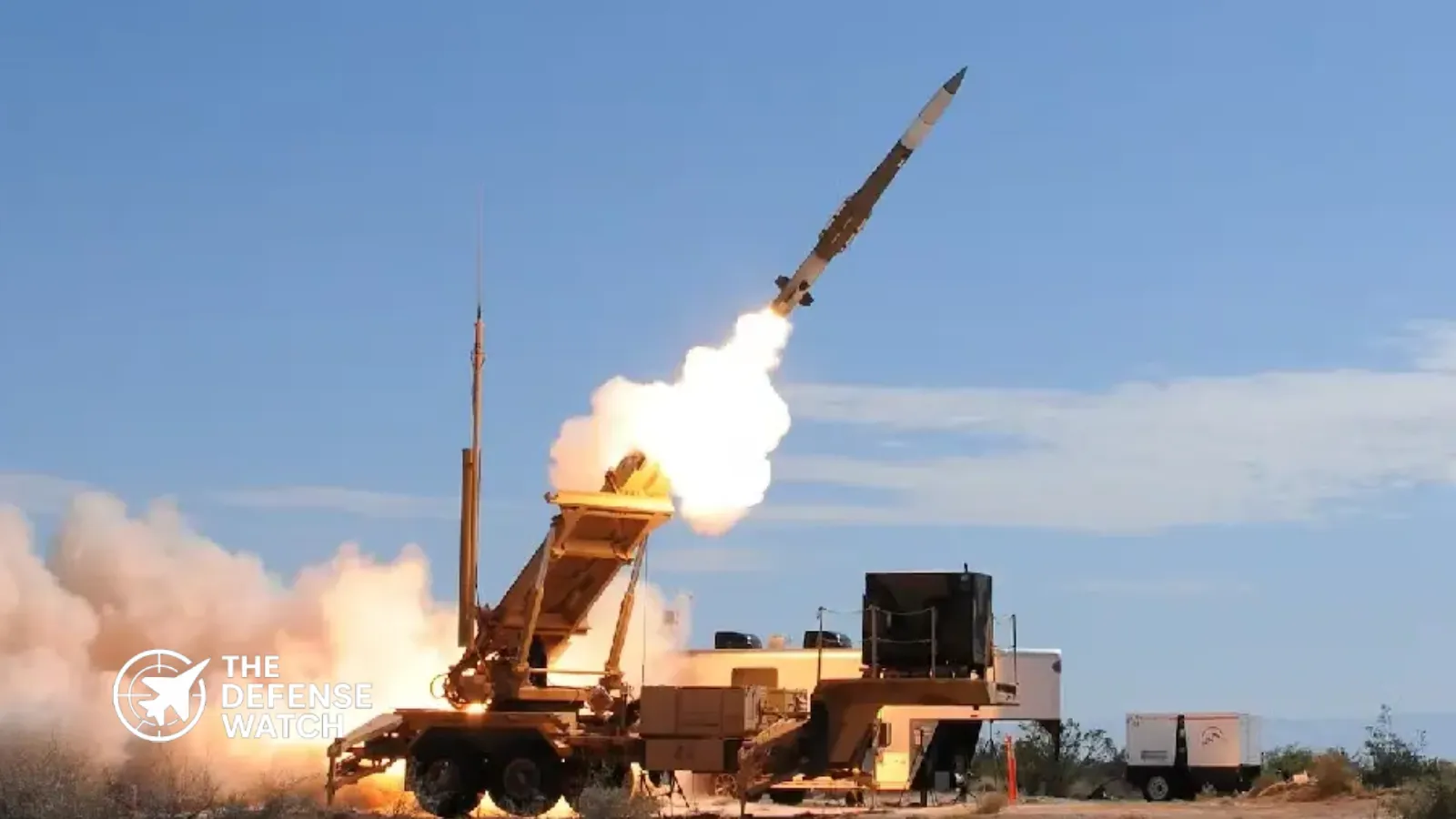
PAC-3 MSE propulsion production
Photo: Lockheed Martin.
SHARE

Executive Summary:

L3Harris Technologies, Lockheed Martin, and the U.S. Department of War have established a seven year manufacturing framework designed to nearly triple production of propulsion systems for the PAC-3 Missile Segment Enhancement interceptor. The agreement provides long term demand certainty for suppliers while supporting expanded Patriot missile production to meet growing requirements from the United States and allied nations.

L3Harris Expands PAC-3 MSE Propulsion Production Under New Framework

L3Harris Technologies will significantly expand PAC-3 MSE propulsion production under a new seven year framework agreement with Lockheed Martin and the U.S. Department of War, marking another major step in Washington’s effort to accelerate missile manufacturing capacity across the defense industrial base. According to company and government statements, the agreement is expected to become L3Harris’ largest PAC-3 propulsion award once a production contract is finalized later this year.

Contents
  • L3Harris Expands PAC-3 MSE Propulsion Production Under New Framework
  • Propulsion Components At The Center Of PAC-3 MSE Production
  • Part Of A Broader Missile Production Expansion
  • Why Long Term Framework Agreements Matter
  • Strategic Analysis
  • Key Program Data

The framework leverages U.S. multi year procurement authorities to provide manufacturers with stable long term demand, allowing industry to invest in additional production capacity, workforce expansion, automation, and supplier development before annual procurement decisions are finalized.

The agreement follows similar production expansion frameworks signed with Lockheed Martin, Boeing, and Honeywell as the Patriot industrial base prepares for substantially higher interceptor output over the coming years.

Propulsion Components At The Center Of PAC-3 MSE Production

Under the agreement, L3Harris will increase manufacturing of several critical propulsion elements used in the PAC-3 Missile Segment Enhancement interceptor:

- Advertisement -
ComponentOperational Role
Two pulse solid rocket motorProvides primary propulsion and extended engagement range
Attitude Control Motors (ACM)Enables high maneuverability during terminal intercept
Lethality EnhancerExpands interceptor effectiveness against incoming threats

These propulsion systems enable the PAC-3 MSE to engage tactical ballistic missiles, cruise missiles, advanced aircraft, and other high speed aerial threats. The interceptor remains the primary hit to kill missile used within the Patriot air and missile defense system deployed by the U.S. Army and numerous allied operators.

  • PAC-3 MSE Missile

    PAC-3 MSE Missile

    • Guidance System: Active radar homing with inertial navigation
    • Maximum Speed: Mach 4 plus
    • Launch Compatibility: Patriot missile launcher
    • Warhead Technology: Hit to kill kinetic interceptor
    • View Details →
    8.0

    L3Harris manufactures these propulsion systems at its Camden, Arkansas facility, where the company has invested in dedicated processing bays and automated digital X ray inspection equipment to shorten manufacturing and quality assurance timelines.

    Part Of A Broader Missile Production Expansion

    The propulsion agreement forms one element of a much larger U.S. effort to expand PAC-3 MSE production across the complete manufacturing chain.

    Earlier framework agreements established plans to increase annual PAC-3 MSE interceptor production from approximately 600 missiles per year to roughly 2,000 annually over seven years. Lockheed Martin reported delivering a record 620 PAC-3 MSE interceptors during 2025 and intends to continue scaling production through investments in facilities, workforce, tooling, and supplier capacity.

    Boeing is simultaneously expanding production of the missile’s advanced seeker, another critical subsystem that historically limited overall manufacturing throughput.

    By expanding propulsion, seeker, and final interceptor assembly simultaneously, the Department of War aims to remove bottlenecks throughout the Patriot production ecosystem rather than increasing output at only one stage of manufacturing.

    Why Long Term Framework Agreements Matter

    Unlike traditional annual procurement contracts, the new framework provides manufacturers with predictable production demand extending over seven years.

    That certainty allows companies to:

    • Invest in new manufacturing facilities.
    • Hire and train skilled workers.
    • Expand supplier networks.
    • Purchase long lead production equipment.
    • Automate manufacturing processes.

    According to the Department of War, the initiative supports its broader Acquisition Transformation Strategy, which seeks to reduce procurement delays and place U.S. defense manufacturing on a more responsive footing capable of sustaining prolonged high volume missile production.

    Strategic Analysis

    The propulsion agreement illustrates that expanding missile production is no longer viewed as solely an industrial objective but as a strategic requirement for U.S. and allied deterrence.

    Recent conflicts have highlighted the enormous consumption rates of modern air defense interceptors, while growing demand from NATO, Indo Pacific allies, and Middle Eastern operators continues to pressure existing production capacity. Expanding Patriot manufacturing therefore requires synchronized investment across every supplier responsible for propulsion, guidance, seekers, electronics, and final missile integration.

    The L3Harris agreement is particularly significant because solid rocket motors remain one of the most constrained segments of the U.S. missile industrial base. Increasing production of these propulsion systems helps reduce one of the most important bottlenecks affecting not only Patriot interceptors but broader precision munitions manufacturing.

    The framework also reflects a shift in U.S. acquisition policy. Rather than relying on short term annual orders that discourage capital investment, the Department of War is providing industry with long term production visibility, allowing manufacturers to finance facility expansion with substantially lower business risk. If successfully implemented across multiple missile programs, this model could become a template for future production increases involving THAAD, Precision Strike Missile, JASSM, LRASM, and other critical munitions programs.

    • THAAD Missile Defense System

      THAAD Missile Defense System

      • Maximum Range: 200 km
      • Maximum Altitude: 150 km
      • Radar Detection Range: 1,000 km (AN/TPY-2)
      • Missile Speed: Mach 8
      • View Details →
      8.0

      Growing global demand further reinforces this approach. The Patriot system remains one of the world’s most widely deployed integrated air and missile defense platforms, and expanding interceptor production directly improves the ability of the United States to replenish inventories while supporting allied procurement without extending delivery timelines.

      Key Program Data

      CategoryDetails
      Framework DurationSeven years
      Prime ParticipantsL3Harris Technologies, Lockheed Martin, U.S. Department of War
      Primary ProductPAC-3 Missile Segment Enhancement propulsion systems
      Manufacturing SiteCamden, Arkansas
      Major ComponentsTwo pulse solid rocket motor, Attitude Control Motors, Lethality Enhancer
      Production ObjectiveNearly triple propulsion manufacturing capacity
      Related ExpansionPAC-3 MSE interceptor production planned to increase from about 600 to 2,000 annually
TAGGED:L3HarrisPAC-3 MSE
Share This Article
Facebook Copy Link Print
BySamuel Drake | Defense Analyst
Follow:
Samuel Drake is a defense analyst at TheDefenseWatch.com covering naval warfare, military ordnance, maritime technology, fleet modernization, and defense procurement. His reporting focuses on documented capabilities, procurement programs, and military technology.
Leave a Comment

Leave a Reply Cancel reply

Your email address will not be published. Required fields are marked *

Latest Defense Systems

  • RUTA B1 Cruise Missile RUTA B1 Cruise Missile
  • XQ-67A Drone XQ-67A Drone
  • B-25 Mitchell Bomber B-25 Mitchell Bomber
  • F-100 Super Sabre F-100 Super Sabre
  • North American F-86 Sabre North American F-86 Sabre
  • North American XB-70 Valkyrie North American XB-70 Valkyrie
  • Northrop YF-23 Fighter Northrop YF-23 Fighter
  • P-51 Mustang Fighter Aircraft P-51 Mustang Fighter Aircraft
  • Rafale F5 Fighter Rafale F5 Fighter

Recent Compares

  • J-10C vs JF-17 Thunder: Which Fighter Is More Capable? J-10C vs JF-17 Thunder: Which Fighter Is More Capable? View Comparison →
  • Tejas vs Gripen: Key Differences and Capabilities Tejas vs Gripen: Key Differences and Capabilities View Comparison →
  • Tejas vs MiG-21 Bison: How India Replaced Its Iconic Supersonic Fighter Tejas vs MiG-21 Bison: How India Replaced Its Iconic Supersonic Fighter View Comparison →
  • F-35 vs F-16: Stealth, Sensors and Combat Roles F-35 vs F-16: Stealth, Sensors and Combat Roles View Comparison →
  • Tejas Fighter Jet vs F-16 Fighting Falcon: Capability Compared Tejas Fighter Jet vs F-16 Fighting Falcon: Capability Compared View Comparison →
  • Rafale Fighter Jet vs F-16 Fighting Falcon : Which Fighter Has the Edge? Rafale Fighter Jet vs F-16 Fighting Falcon : Which Fighter Has the Edge? View Comparison →
  • Su-57 Fighter Jet vs J-20 Fighter Jet: Stealth and Air Combat Compared Su-57 Fighter Jet vs J-20 Fighter Jet: Stealth and Air Combat Compared View Comparison →
  • Mirage 2000 vs Tejas Mk1A: Legacy Combat Power vs Indigenous Modernization Mirage 2000 vs Tejas Mk1A: Legacy Combat Power vs Indigenous Modernization View Comparison →
  • Rafale Fighter Jet vs F-22 Raptor: Which Air Dominance Fighter Has the Edge? Rafale Fighter Jet vs F-22 Raptor: Which Air Dominance Fighter Has the Edge? View Comparison →
  • Tejas Fighter Jet vs. Rafale Fighter Jet: India’s Indigenous Fighter Meets France’s Proven Multirole Combat Aircraft Tejas Fighter Jet vs. Rafale Fighter Jet: India’s Indigenous Fighter Meets France’s Proven Multirole Combat Aircraft View Comparison →

Recent Posts

  • U.S. Plans Resilient Military Bases With Independent Power and Water Systems
  • China Addresses Report on New Nuclear Submarine Missile Test
  • Destinus Produces 1,750 Ruta B1 Cruise Missiles as European Output Expands
  • Boeing Wins $11.1 Million Contract Modification for Kuwait F/A-18 Training Support
  • U.S. Navy Awards $23.1 Million Contract for Cybersecurity of Shipboard Power Systems

You Might Also Like

MIDS-LVT contract award
Defense Contracts

US Navy Awards $307M MIDS-LVT Contract To Boost Tactical Data Link Capability

September 17, 2026
Boeing P-8A Poseidon contract
Defense Contracts

Boeing Awarded $121.2 Million Contract to Upgrade U.S. Navy and Australian P-8A Poseidon Fleets

September 7, 2026
F-16 sustainment contract
Defense Contracts

US Air Force Awards $98.8M F-16 Sustainment Contract To BAE Systems

February 23, 2026
SBIRS logistics support contract
Defense Contracts

Lockheed Martin Secures $86M Deal For SBIRS Logistics And Space Support

September 7, 2026

Logo

Copyright © 2026 TheDefenseWatch.com

Helpful Links

  • Home
  • About Us
  • Privacy Policy
  • Terms of Use / Disclaimer
  • U.S. Privacy Notice – CCPA Compliance

Defense Systems

  • Defense Systems
  • Comparisons 
  • Manufacturer
  • Tactical Calculators

Popuplar

Which 5 Air Forces Possess the Costliest Fighter Jet Fleets in the World
Evolving Strategic Value: Carrier Strike Groups in the Indo-Pacific’s Future Security Architecture
Autonomous Weapon Systems Spark U.S. Ethics Debate Amid Rapid Military AI Integration

We report on developments involving military forces, governments, defense companies, research organizations, and security institutions around the world. 

Welcome Back!

Sign in to your account

Username or Email Address
Password

Lost your password?