Executive Summary:
NATO has concluded Neptune Strike 2026, a large-scale maritime vigilance activity conducted across the Mediterranean and Black Sea operational areas. The exercise focused on improving allied interoperability, maritime situational awareness, and rapid response capabilities amid growing regional security pressures.
NATO Neptune Strike 2026 Highlights Allied Maritime Readiness
NATO has completed Neptune Strike 2026, a multinational enhanced vigilance activity designed to strengthen maritime coordination and operational readiness across the Mediterranean and Black Sea regions. The exercise brought together naval, air, and joint forces from allied nations as NATO continues adapting to a more contested European security environment.
Neptune Strike 2026 tested command integration, maritime surveillance, deterrence operations, and rapid response procedures across multiple operational theaters.
The exercise comes as NATO increases focus on maritime security challenges linked to the war in Ukraine, regional instability, critical sea lane protection, and expanded Russian naval activity in the Black Sea and Eastern Mediterranean.
Multi-Theater Naval Operations Across Strategic Waters
Neptune Strike 2026 involved coordinated activities spanning two strategically important maritime regions. NATO has increasingly emphasized the Mediterranean and Black Sea as interconnected operational environments where naval presence, intelligence sharing, and interoperability are essential for alliance deterrence.
The Black Sea remains a high-priority theater following Russia’s continued military operations in Ukraine and the disruption of regional shipping routes. NATO member states bordering the Black Sea have pushed for stronger allied coordination, enhanced maritime awareness, and improved response timelines for potential regional contingencies.
In the Mediterranean, allied naval forces continue monitoring migration routes, energy infrastructure security, undersea communication networks, and military activity tied to broader Middle East and North African instability.
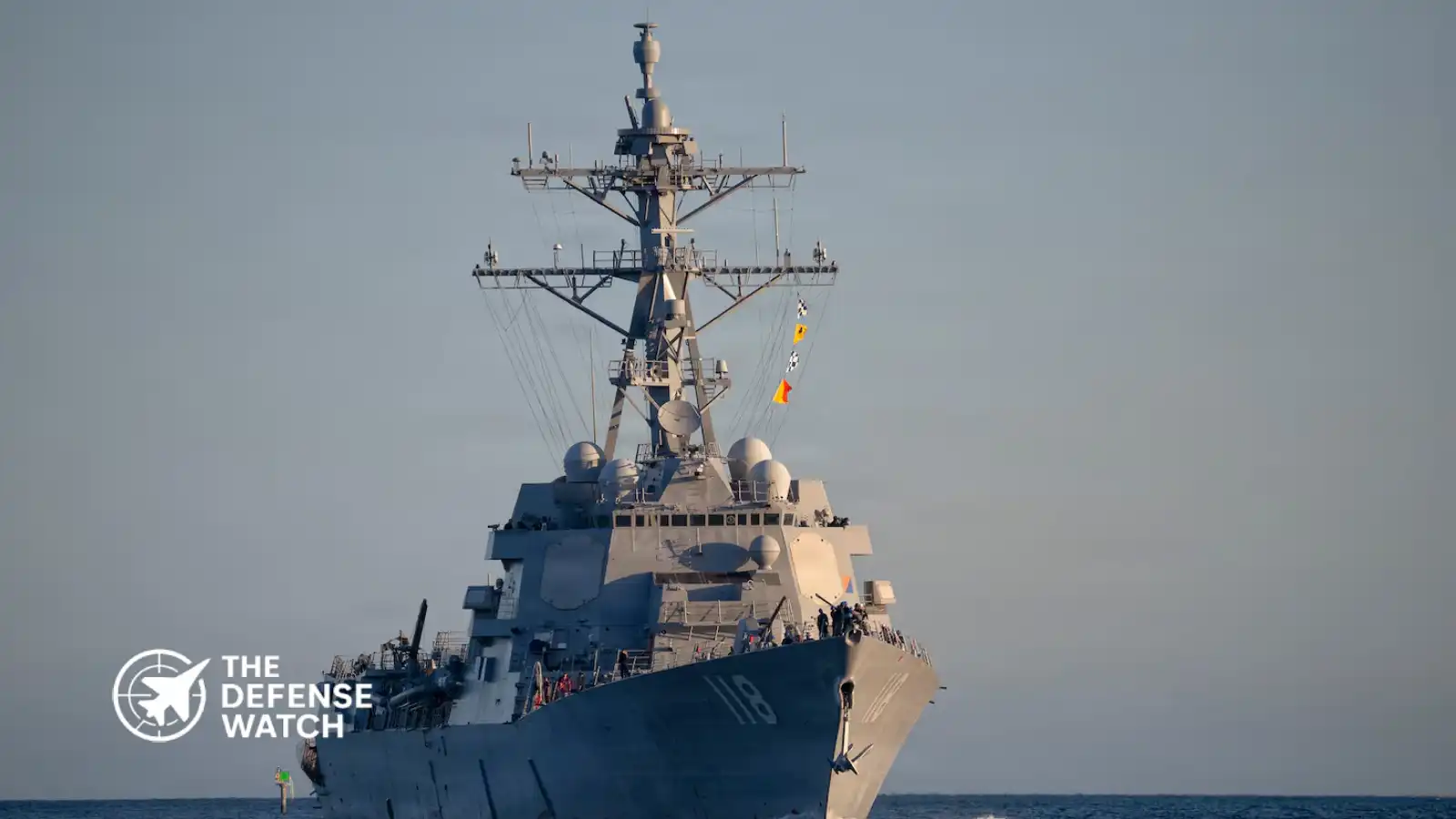
NATO stated that Neptune Strike 2026 integrated carrier strike group operations, maritime patrol activities, command-and-control coordination, and cross-domain operations involving naval and air assets.
Interoperability Remains Central To NATO Maritime Strategy
One of the primary objectives of Neptune Strike 2026 was improving interoperability among allied naval forces operating under complex operational conditions.
Modern NATO exercises increasingly focus less on symbolic presence and more on real-time operational integration. That includes secure data sharing, distributed command structures, coordinated targeting procedures, and synchronized maritime surveillance capabilities.
The exercise demonstrated how NATO is shifting toward a more persistent readiness posture rather than relying solely on periodic deployments. Allied naval planners are placing greater emphasis on rapid force integration, particularly in regions where response times could shape escalation dynamics during a crisis.
Carrier-enabled operations reportedly played a key role during the exercise, allowing NATO forces to practice joint maritime strike coordination and long-range operational planning.
Black Sea Security Environment Continues To Evolve
The Black Sea has become one of NATO’s most sensitive maritime fronts since 2022. Russia’s naval posture, the use of long-range missile systems, and ongoing threats to commercial shipping have transformed the operational environment for allied forces.
While NATO’s direct military presence in the Black Sea remains shaped by the Montreux Convention governing access through the Turkish Straits, allied nations continue expanding intelligence sharing, rotational deployments, and maritime surveillance operations in nearby areas.
Exercises such as Neptune Strike 2026 allow NATO to rehearse command coordination and reinforce collective defense messaging without establishing permanent large-scale naval concentrations inside the Black Sea itself.
This operational model reflects a broader NATO strategy focused on flexibility, rapid reinforcement capability, and distributed maritime operations.
Maritime Security Extends Beyond Conventional Threats
Another important aspect of Neptune Strike 2026 is NATO’s growing concern over hybrid and non-traditional maritime threats.
Alliance planners increasingly view undersea infrastructure protection, cyber resilience, electronic warfare defense, and unmanned system integration as critical parts of future naval operations. Recent incidents involving damaged subsea cables and energy infrastructure in European waters have elevated maritime infrastructure protection higher on NATO’s agenda.
Exercises conducted under the Neptune Strike framework provide opportunities for allied forces to test coordination against both conventional military threats and gray-zone activities that fall below the threshold of open conflict.
The integration of maritime patrol aircraft, surveillance assets, and naval command networks also reflects NATO’s effort to maintain persistent situational awareness across heavily contested maritime corridors.
Strategic Significance For NATO’s Southern And Eastern Flanks
Neptune Strike 2026 also underscores NATO’s effort to balance attention between its eastern and southern flanks.
While much of the alliance’s military planning remains focused on Eastern Europe, instability across the Mediterranean continues influencing NATO force posture decisions. Maritime security concerns tied to energy transit routes, regional conflicts, and Russian naval access patterns have reinforced the importance of sustained allied naval operations in southern waters.
The exercise highlighted NATO’s broader transition toward multi-domain operational planning, where naval, air, cyber, and intelligence assets operate within a unified command structure.
That evolution is increasingly important as NATO prepares for a future security environment defined by long-range precision weapons, unmanned systems, electronic warfare, and high-tempo maritime operations.
Analysis
Neptune Strike 2026 reflects NATO’s continuing effort to normalize high-frequency readiness operations across Europe’s most contested maritime regions. Rather than functioning solely as a demonstration exercise, the activity appears designed to strengthen operational cohesion among allied forces under realistic regional conditions.
The exercise also highlights how maritime deterrence has become central to NATO’s wider strategic posture. Sea control, infrastructure protection, intelligence sharing, and rapid force integration are now treated as interconnected elements of alliance defense planning.
For NATO, the Mediterranean and Black Sea are no longer separate operational spaces. They are increasingly viewed as linked strategic corridors where naval presence, surveillance capability, and allied interoperability directly influence regional stability.