

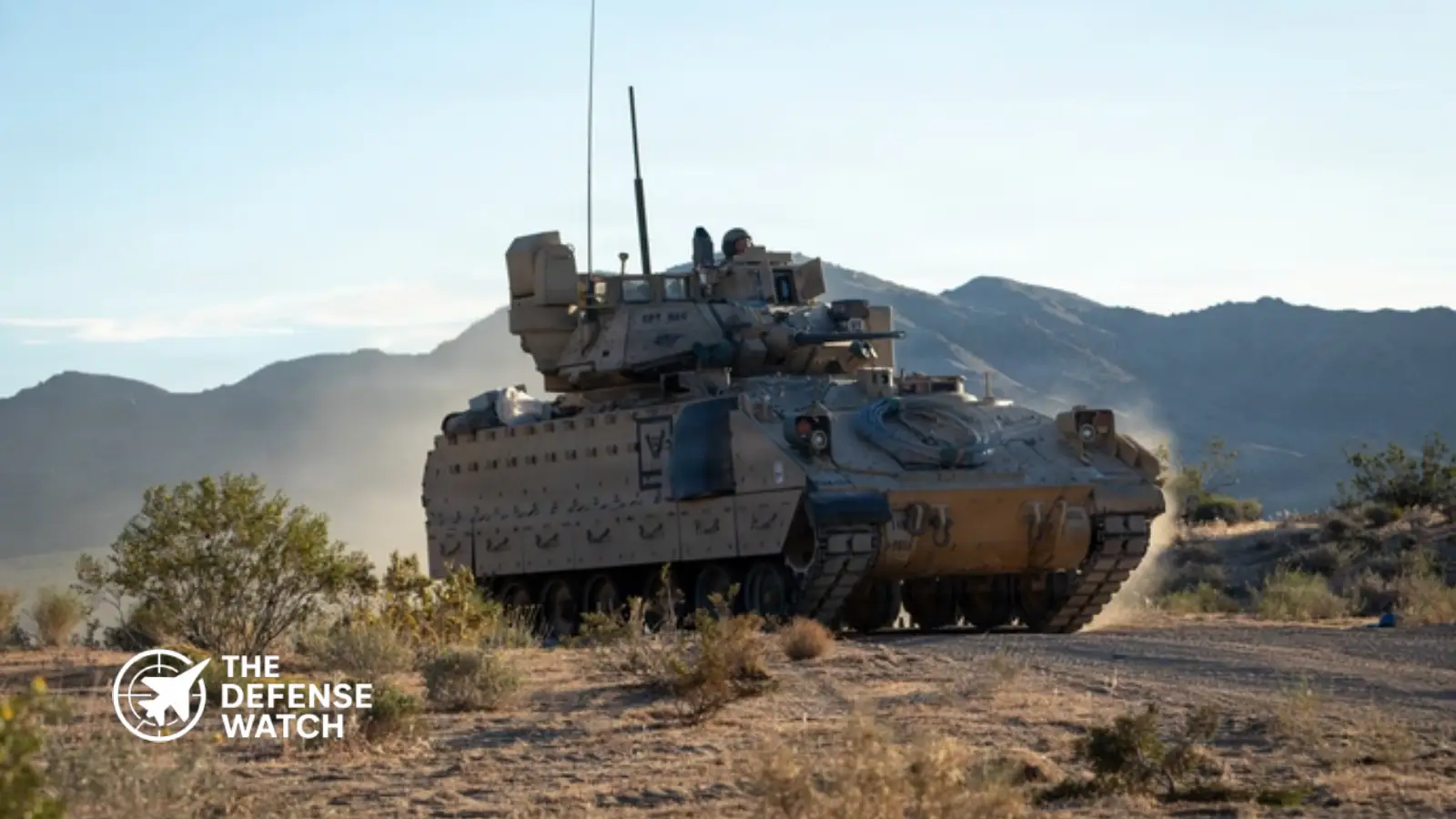
UK Ajax Armored Vehicle Program Survives Another Major Test
The Ajax armored vehicle program will continue after the British government decided to restart limited vehicle acceptance despite renewed safety concerns and years of delays. The move keeps one of the United Kingdom’s largest land modernization efforts alive at a time when European militaries are under pressure to rebuild combat readiness.
Britain’s Defence Readiness Minister Luke Pollard said acceptance of Ajax vehicles from General Dynamics would resume under strict controls aimed at improving conditions for soldiers using the platform.
- Britain will continue the Ajax armored vehicle program after a new safety review.
- Limited acceptance of Ajax vehicles will restart under tighter controls.
- Officials said noise and vibration were found within legal exposure limits.
- Upgrades will focus on air filtration, heating, and electrical power systems.
- The Ajax fleet remains central to British Army reconnaissance modernization.
That decision matters well beyond one vehicle program. It signals that London sees no easy replacement for Ajax in the near term.
Why Ajax Has Been So Controversial
The Ajax armored vehicle program has faced repeated criticism since the original order was placed in 2014. Technical faults, production delays, and crew safety concerns turned the fleet into one of Britain’s most troubled procurement efforts.
Trials were paused after soldiers reported vomiting, hearing loss, and shaking linked to noise and vibration during exercises. Those incidents intensified calls to cancel the project entirely.
For many defense planners, Ajax became a case study in how ambitious customization can create cost and schedule risk. Modern armored vehicles increasingly rely on advanced sensors, digital architecture, and power-hungry electronics. Integrating all three without compromising crew comfort and reliability is harder than many procurement programs initially assume.
What The New Safety Review Found
According to the British government, investigators found no evidence that current noise and vibration levels exceeded legal exposure limits. Officials instead pointed to a mix of factors that may have contributed to earlier incidents.
The Ministry of Defence said further improvements will now be made to:
- Air filtration systems
- Heating performance
- Electrical power generation
- Soldier operating conditions
Those upgrades are expected to be delivered within the existing program budget and scope, according to officials.
That budget discipline is notable. With defense spending under pressure across Europe, governments are increasingly choosing to repair troubled programs rather than start over with expensive replacements.
Why Britain Still Needs Ajax
The Ajax armored vehicle is intended to provide the British Army with a modern tracked reconnaissance platform equipped with sensors, protected mobility, and battlefield networking tools.
In practical terms, Ajax is meant to find threats before heavier formations engage them. That mission is becoming more important as European armies study lessons from the war in Ukraine, where rapid detection, targeting, and mobility often determine survival.
Canceling Ajax now would likely create a multi-year capability gap. Britain would need to either extend older fleets longer than planned or launch a costly new competition.
That strategic reality likely helped drive the decision to continue.
Industrial Impact And Jobs
Ajax vehicles are produced in South Wales, where General Dynamics facilities employ around 700 workers, according to Reuters.
Ending the program would not only affect military readiness, it would also hit the UK defense industrial base. Governments increasingly weigh sovereign manufacturing capacity alongside battlefield capability when making procurement choices.
What Comes Next
The next phase for the Ajax armored vehicle program will be closely watched. Restarting limited acceptance is not the same as full operational confidence.
British officials must now prove three things:
- Safety issues are fully controlled
- Vehicles can be delivered reliably
- Troops trust the platform in field conditions
If those goals are met, Ajax could still become the reconnaissance backbone Britain originally intended. If not, political pressure will return quickly.
Bottom Line
The UK decision to retain the Ajax armored vehicle program reflects a hard defense reality: replacing troubled systems is often slower and more expensive than fixing them. Britain is betting Ajax can still deliver operational value after years of setbacks.
Whether that gamble succeeds will depend on performance in the field, not statements in London.
