• Home
  • About
  • Defense Systems
  • Manufacturer
  • Comparisons
  • Compare 
  • Tools
TheDefenseWatch.com
  • Aerospace & Aviation
  • Military & Ordnance
  • Naval & Maritime
  • Cyber & Space Defense
  • Policy & Strategy
  • Global News
  • Tools Library
    • Smart Calculator
    • Drone Flight Time Calculator
    • Drone Range Calculator
    • Counter-Drone Jammer Effective Range Calculator
    • Counter-Battery Radar Detection Calculator
    • Artillery Fire Correction Calculator
    • Thermal Camera Detection Range Calculator
    • Missile Range & Time-of-Flight Calculator
    • Radar Detection Range Calculator
    • FPV Strike Drone Payload vs Range Calculator
    • Loitering Munition Endurance Calculator
    • Sniper Ballistic Drop & Windage Calculator
    • Bullet Drop Calculator
    • U.S. Army Combat Fitness Test (ACFT) Calculator
    • Military Pension Calculator
    • Military Retirement Calculator
    • Military Pension Calculator
    • Large Number Calculator
Font ResizerAa

TheDefenseWatch.com

The Defense Watch | U.S. & Global Defense News, Analysis & Military Updates

Search
  • Home
  • About
  • Defense Systems
  • Manufacturer
  • Comparisons
  • Compare 
  • Tools

Stay Updated

Get the latest update

Subscribe

Explore

  • Drone
  • Fighter Jets & Military Aircraft
  • Hypersonic Weapons
  • Aircraft Carriers
  • Strategic History & Missions
  • Tools Library
Home » U.S. Air Force Races To Acquire 100 New Fighters Annually Amid Growing Threats
Defense Budgets & PolicyPolicy & Strategy

U.S. Air Force Races To Acquire 100 New Fighters Annually Amid Growing Threats

Daniel Mercer / Defense & Aerospace Analyst
Last updated: April 16, 2026 7:23 am
Daniel Mercer / Defense & Aerospace Analyst
Share
6 Min Read
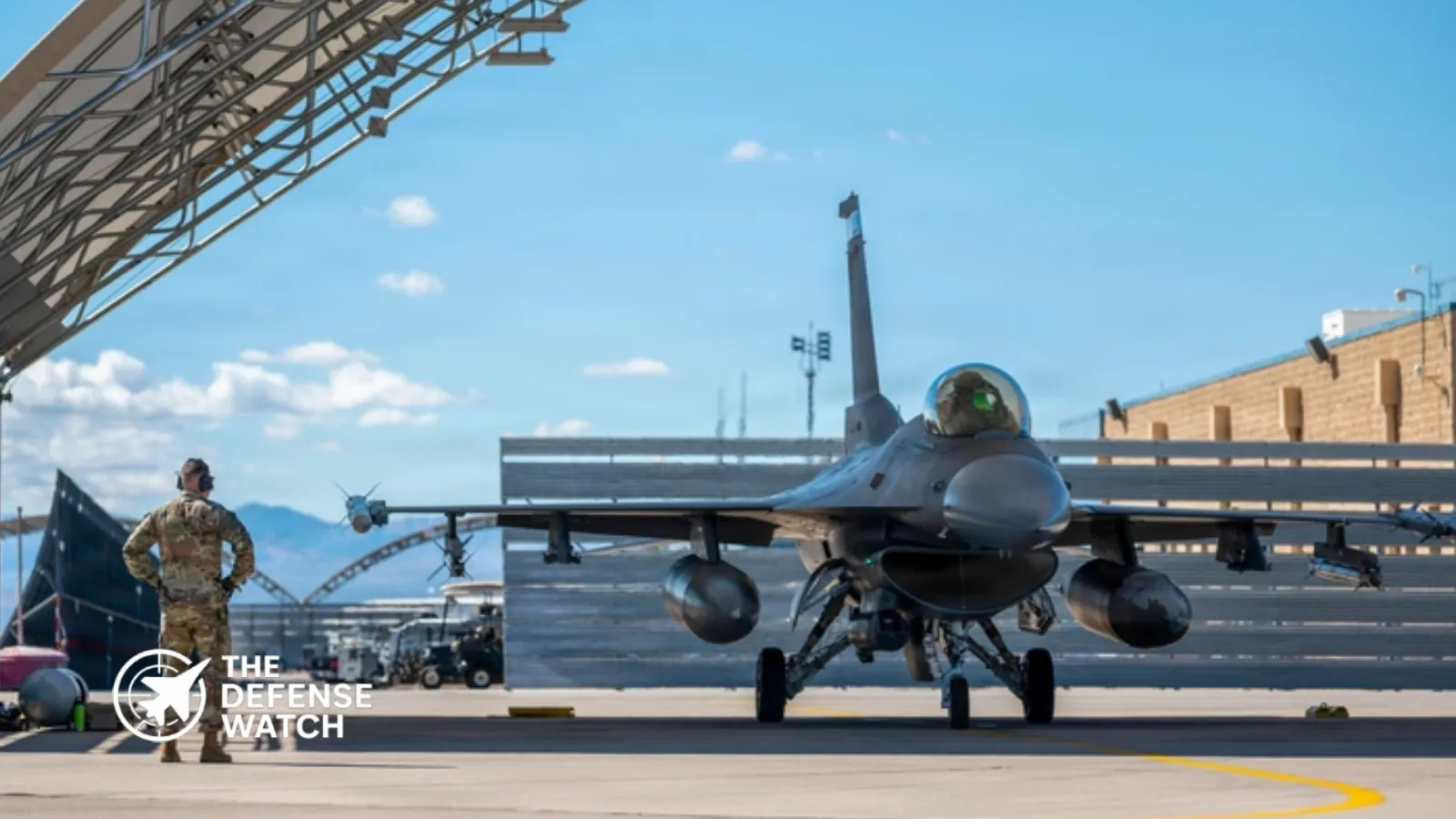
U.S. Air Force fighter shortage
Image : U.S. Air Force
SHARE

U.S. Air Force Fighter Procurement Gap Raises Alarm

The U.S. Air Force fighter procurement requirement has emerged as a critical concern, with senior Air National Guard leaders telling Congress that the service needs at least 100 new fighters annually to maintain readiness and global operational capacity.

Contents
  • U.S. Air Force Fighter Procurement Gap Raises Alarm
  • Aging Fleet Pressures Force Structure
  • Strategic Context: Rising Global Competition
  • Budget Constraints and Procurement Realities
  • Analysis: A Structural Readiness Challenge
  • Outlook

Testifying before lawmakers, Guard officials emphasized that current acquisition rates fall well below this benchmark, creating a widening gap between force structure requirements and available aircraft. According to reporting by Air & Space Forces Magazine, this shortfall risks undermining the Air Force’s ability to sustain combat operations across multiple theaters.

¦ KEY FACTS AT A GLANCE
  • U.S. Air Force leaders say 100 new fighter jets per year are needed to sustain force structure and readiness.
  • Current procurement rates fall significantly below this threshold, raising concerns over capability gaps.
  • Aging aircraft fleets, particularly in the Air National Guard, are becoming increasingly difficult to maintain.
  • Lawmakers were told that modernization delays could impact U.S. global deterrence posture.
  • The issue comes amid rising strategic competition with near-peer adversaries.

At the core of the issue is an aging fleet. Many aircraft in service today, particularly within the Air National Guard, are decades old and increasingly expensive to maintain. As maintenance costs rise and availability rates decline, the operational burden on newer platforms continues to grow.

Aging Fleet Pressures Force Structure

A significant portion of the Air National Guard’s inventory includes legacy fighters such as F-15s and F-16s that have exceeded their intended service lives. While upgrades have extended their usability, officials noted that these aircraft are approaching the limits of cost-effective sustainment.

- Advertisement -
  • F-16 Fighting Falcon

    F-16 Fighting Falcon

    • Generation: 4th
    • Maximum Speed: Mach 2.0 (1,500 mph)
    • No. of Engines: 1
    • Radar Range: ~160 km (AESA)
    • View Details →
    8.0

    This creates a dual challenge. On one hand, the Air Force must invest in maintaining legacy systems to ensure near-term readiness. On the other, it must accelerate procurement of next-generation fighters to remain competitive against advanced adversaries.

    Guard leaders highlighted that without consistent procurement of around 100 aircraft per year, the service risks a gradual erosion of its combat capacity. This is not just a numbers issue. It directly affects pilot training, sortie generation rates, and the ability to surge forces during crises.

    Strategic Context: Rising Global Competition

    The push for increased fighter procurement comes amid intensifying strategic competition, particularly with China and Russia. Both nations have invested heavily in modern air combat capabilities, including fifth-generation fighters, integrated air defense systems, and long-range strike assets.

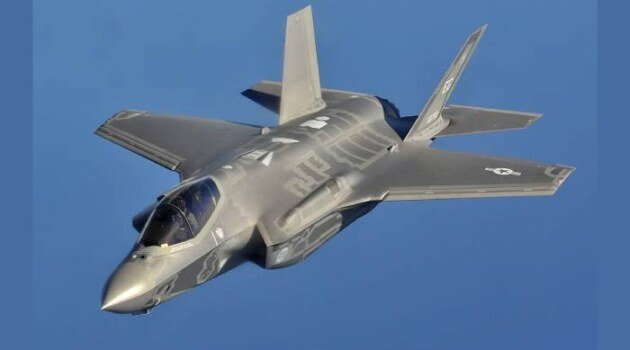
    • F-35 Lightning II Fighter Jet

      F-35 Lightning II Fighter Jet

      • Generation: 5th
      • Maximum Speed: Mach 1.6 (1,200 mph / 1,930 km/h)
      • No. of Engines: 1
      • Radar Range: ~150+ km (AN/APG-81 AESA)
      • View Details →
      8.8

      In this context, maintaining a robust and modern fighter fleet is central to U.S. deterrence strategy. Air superiority remains a foundational element of joint operations, enabling freedom of movement across land, sea, and air domains.

      Guard officials stressed that the Air National Guard plays a critical role in this mission. It provides a substantial portion of the Air Force’s combat-coded units while also supporting homeland defense missions. Any degradation in Guard capabilities would therefore have both domestic and global implications.

      Budget Constraints and Procurement Realities

      Despite the clear requirement, achieving a steady procurement rate of 100 fighters annually faces significant budgetary and industrial challenges. Defense budgets must balance competing priorities, including nuclear modernization, space capabilities, and emerging technologies.

      Additionally, production capacity within the defense industrial base is not easily scalable in the short term. Aircraft manufacturing involves complex supply chains and long lead times, limiting how quickly output can be increased.

      Recent procurement trends reflect these constraints. Annual fighter purchases have fluctuated, often falling short of the levels needed to offset retirements and maintain fleet size. This mismatch contributes to a gradual decline in overall fighter inventory.

      Analysis: A Structural Readiness Challenge

      The call for 100 fighters per year highlights a deeper structural issue within U.S. airpower planning. For years, the Air Force has operated below its desired force size, relying on aging platforms to fill capability gaps.

      This approach carries increasing risk. As aircraft age, maintenance demands rise exponentially, reducing availability and increasing costs. At the same time, adversaries are fielding more advanced systems, narrowing the qualitative edge historically held by the U.S.

      • F-35A Lightning II Fighter Jet

        F-35A Lightning II Fighter Jet

        • Generation: 5th
        • Maximum Speed: Mach 1.6 (1,200 mph)
        • No. of Engines: 1
        • Radar Range: 150+ miles
        • View Details →
        8.0

        Sustaining readiness under these conditions requires a consistent and predictable procurement strategy. Sporadic increases in funding or short-term programs are unlikely to address the underlying imbalance between force structure and acquisition rates.

        Moreover, the integration of next-generation platforms such as the F-35 must be aligned with retirements to avoid capability gaps during the transition period. This requires long-term planning and stable funding commitments.

        Outlook

        As Congress considers future defense budgets, the Air Force’s requirement for 100 new fighters annually is likely to remain a central issue. The debate will hinge on balancing fiscal constraints with the need to maintain credible airpower in an increasingly contested global environment.

        Failure to address this gap could have long-term consequences for U.S. military effectiveness, particularly in high-end conflicts where air superiority is contested.
TAGGED:Air National GuardDefense Policyfighter jetsMilitary ReadinessU.S. Air Force
Share This Article
Facebook Copy Link Print
ByDaniel Mercer / Defense & Aerospace Analyst
Follow:
Daniel Mercer is a defense and aerospace analyst at TheDefenseWatch.com covering military aviation, aerospace technology, unmanned systems, air warfare, and defense procurement. His reporting uses official documents, government and military statements, company announcements, and other public sources.
Leave a Comment

Leave a Reply Cancel reply

Your email address will not be published. Required fields are marked *

Latest Defense Systems

  • Spirit UAS Spirit UAS
  • GBU-43/B MOAB Bomb GBU-43/B MOAB Bomb
  • John F. Kennedy Aircraft Carrier John F. Kennedy Aircraft Carrier
  • Voyager Tanker Voyager Tanker
  • YU-20 Tanker YU-20 Tanker
  • China KJ-500 Aircraft China KJ-500 Aircraft
  • SPY-6 Radar SPY-6 Radar
  • Boeing VC-25B Presidential Aircraft Boeing VC-25B Presidential Aircraft
  • SM-3 Block IB Missile SM-3 Block IB Missile

Recent Compares

  • J-10C vs JF-17 Thunder: Which Fighter Is More Capable? J-10C vs JF-17 Thunder: Which Fighter Is More Capable? View Comparison →
  • Tejas vs Gripen: Key Differences and Capabilities Tejas vs Gripen: Key Differences and Capabilities View Comparison →
  • Tejas vs MiG-21 Bison: How India Replaced Its Iconic Supersonic Fighter Tejas vs MiG-21 Bison: How India Replaced Its Iconic Supersonic Fighter View Comparison →
  • F-35 vs F-16: Stealth, Sensors and Combat Roles F-35 vs F-16: Stealth, Sensors and Combat Roles View Comparison →
  • Tejas Fighter Jet vs F-16 Fighting Falcon: Capability Compared Tejas Fighter Jet vs F-16 Fighting Falcon: Capability Compared View Comparison →
  • Rafale Fighter Jet vs F-16 Fighting Falcon : Which Fighter Has the Edge? Rafale Fighter Jet vs F-16 Fighting Falcon : Which Fighter Has the Edge? View Comparison →
  • Su-57 Fighter Jet vs J-20 Fighter Jet: Stealth and Air Combat Compared Su-57 Fighter Jet vs J-20 Fighter Jet: Stealth and Air Combat Compared View Comparison →
  • Mirage 2000 vs Tejas Mk1A: Legacy Combat Power vs Indigenous Modernization Mirage 2000 vs Tejas Mk1A: Legacy Combat Power vs Indigenous Modernization View Comparison →
  • Rafale Fighter Jet vs F-22 Raptor: Which Air Dominance Fighter Has the Edge? Rafale Fighter Jet vs F-22 Raptor: Which Air Dominance Fighter Has the Edge? View Comparison →
  • Tejas Fighter Jet vs. Rafale Fighter Jet: India’s Indigenous Fighter Meets France’s Proven Multirole Combat Aircraft Tejas Fighter Jet vs. Rafale Fighter Jet: India’s Indigenous Fighter Meets France’s Proven Multirole Combat Aircraft View Comparison →

Recent Posts

  • AVIC Chengdu Cuts Aircraft Tooling Costs With Modular Manufacturing System
  • Saab, FMV Launch Large Uncrewed Underwater Vehicle Demonstrator
  • Hegseth Meets UK Defence Secretary as Ukraine Support Tops US-UK Talks
  • U.S. Navy Demonstrates GPS-Free Drone Landing on Ship
  • US Counter-Drone Task Force Marks First Year With Faster Procurement Push

You Might Also Like

Operation Mount Hope III
Policy & StrategyStrategic History & Missions

Operation Mount Hope III: How Two Night Stalker Chinooks Carried a Libyan Hind Out of Chad

October 3, 2026
Türkiye global defense bank
Alliances & DoctrinesPolicy & Strategy

Türkiye Moves To Join Global Defense Bank As Allies Expand Defense Industrial Financing

July 14, 2026
Concept model of the Global Combat Air Programme fighter displayed during an official event with UK, Italian, and Japanese flags.
Defense Budgets & PolicyPolicy & Strategy

UK Moves To Invest More Than $8 Billion In GCAP Fighter Program As Next Generation Air Combat Development Accelerates

September 7, 2026
Ukraine plan
Geopolitical & Strategic DoctrinesPolicy & Strategy

Russia Criticizes Trump’s New 19-Point Ukraine Plan as European Governments Signal Concern

November 26, 2025

Logo

Copyright © 2026 TheDefenseWatch.com

Helpful Links

  • Home
  • About Us
  • Privacy Policy
  • Terms of Use / Disclaimer
  • U.S. Privacy Notice – CCPA Compliance

Defense Systems

  • Defense Systems
  • Comparisons 
  • Manufacturer
  • Tactical Calculators

Popuplar

Which 5 Air Forces Possess the Costliest Fighter Jet Fleets in the World
Evolving Strategic Value: Carrier Strike Groups in the Indo-Pacific’s Future Security Architecture
Autonomous Weapon Systems Spark U.S. Ethics Debate Amid Rapid Military AI Integration

We report on developments involving military forces, governments, defense companies, research organizations, and security institutions around the world. 

Welcome Back!

Sign in to your account

Username or Email Address
Password

Lost your password?