

Operation Mount Hope III: A Cold War Helicopter Recovery Mission
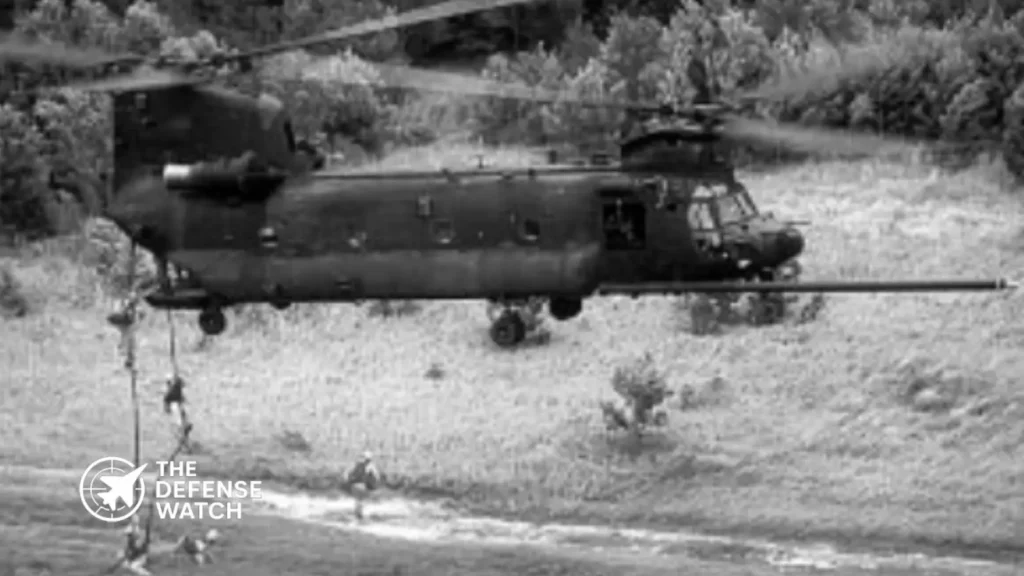
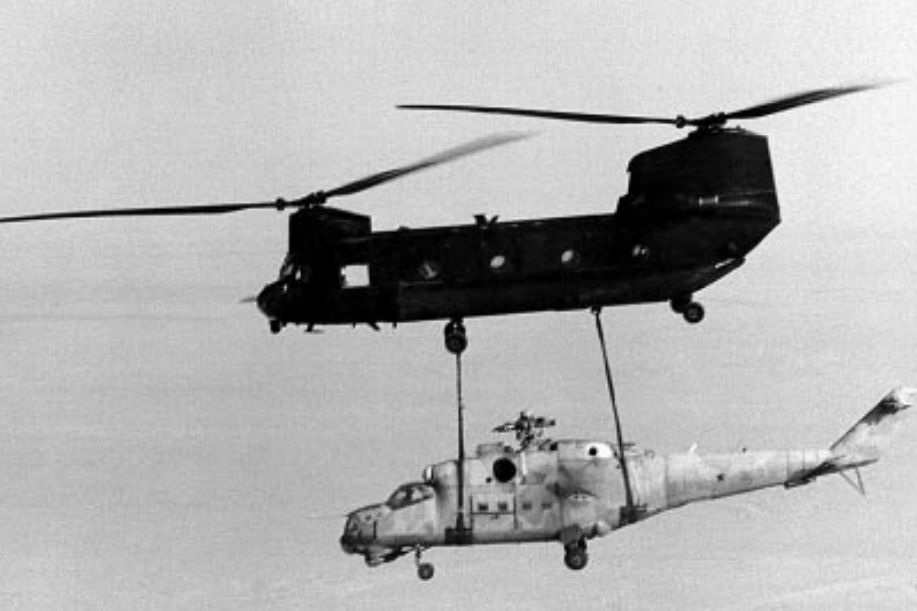
In June 1988, two U.S. Army MH-47D Chinook helicopters flew deep into northern Chad to recover an intact Soviet-designed attack helicopter that had been abandoned by Libya after its defeat in the Chad-Libya conflict.
The mission, designated Operation Mount Hope III, was conducted by Company E of the 160th Special Operations Aviation Regiment, the unit that later became part of the 160th Special Operations Aviation Regiment commonly known as the Night Stalkers. The objective was a Libyan Mi-25, the export version of the Mil Mi-24 Hind family. The U.S. Army historical account generally refers to the aircraft as an Mi-24 Hind.
The recovery was not simply an unusual heavy-lift exercise. The United States wanted an intact example of a major Soviet combat helicopter so that American personnel could study its design, capabilities, limitations, and operational characteristics.
The operation demonstrated something equally important: the ability of Army special operations aviation to move a large aircraft over hundreds of miles of desert at night, refuel in austere locations, recover a heavy external load, and return under difficult environmental conditions.
Why the United States Wanted a Hind
The Mi-24 represented an unusual Soviet approach to battlefield aviation.
Unlike American helicopter fleets that generally separated attack, transport, and utility missions among different platforms, the Soviet Mi-24 combined heavy armament, armored protection, and the ability to carry troops. Its NATO reporting name was Hind.
By the late 1980s, the aircraft had become an important Soviet export and combat platform. Libya operated Mi-24 family helicopters during its conflict with Chad, providing the United States with an opportunity to obtain an aircraft that had been used in a real operational environment.
The opportunity emerged after the fighting known as the Toyota War. Chadian forces defeated Libyan forces in northern Chad during 1987, leaving substantial quantities of Libyan military equipment behind. The abandoned equipment included Soviet-origin systems that were of interest to Western intelligence and military organizations. The U.S. Army historical account says the material offered an opportunity to examine Soviet battlefield technology, including the Hind.
The United States had previously attempted to obtain a Hind from Chad. That effort involved cutting another helicopter apart for ground transportation, leaving the resulting aircraft unsuitable as an intact operational example. For Mount Hope III, the priority was therefore to recover the helicopter without destroying its structural and mechanical integrity.
The Recovery Plan
The mission required much more preparation than simply sending a Chinook to pick up a helicopter.
In April 1988, Company E began rehearsing the operation in the United States. Two MH-47Ds were used for the training, and one aircraft carried six 500-gallon water blivets as a weight simulation for the Hind.
The crews also practiced long-range night flying and aerial refueling arrangements using C-130 aircraft positioned along the simulated route. The training was intended to reproduce the distance and conditions that the crews would encounter in Chad.
The Chinooks themselves presented another logistical challenge. They were transported to Chad aboard a U.S. Air Force C-5 Galaxy after being substantially disassembled. Rotor components, pylons, transmissions and other major parts had to be removed to fit the helicopters inside the strategic airlifter.
Once in N’Djamena, maintenance personnel rebuilt the MH-47Ds under difficult conditions. The Army history records that the maintenance teams worked in heat and poor facilities, eventually completing the reassembly and test flights needed to make the aircraft ready for the mission.
The operation also required careful weight management.
The MH-47Ds carried additional internal fuel for the long outbound flight. The Army history states that the improvised system added about 600 gallons of fuel and more than 5,000 pounds to the aircraft. That additional fuel would be essential for reaching the remote airfield, but it could not remain aboard when the Chinook lifted the Hind.
The Night Flight to Ouadi Doum
At midnight on June 11, 1988, the two MH-47Ds departed N’Djamena for Ouadi Doum in northern Chad.
The direct flight was approximately 550 miles. The crews flew at night across largely trackless desert and used the navigation equipment available to them at the time, including OMEGA and Doppler navigation. The U.S. Army historical account describes the navigation challenge as a demanding test of the crews’ skills.
The decision to operate at night was closely tied to the sensitive nature of the mission.
Libyan forces remained a concern in the region, and there was a risk that the abandoned equipment could be destroyed if Libya learned that the United States was attempting to recover it. The mission therefore depended on reaching the helicopter, preparing it quickly, and leaving before the operation could be disrupted.
The Chinooks reached Ouadi Doum as daylight approached.
The Hind had already been prepared for recovery. Its rotor blades were removed, and the helicopter had been rigged so that it could be carried beneath the MH-47. The extra fuel systems carried by the Chinooks were removed before the lift because the aircraft could not carry both the additional fuel weight and the external helicopter load. The discarded fuel equipment and the Hind’s rotor blades were transported separately by C-130.
Sling-Loading a Helicopter Beneath a Chinook
This was the central technical challenge of Mount Hope III.
The MH-47D was designed for heavy-lift special operations, but carrying another helicopter as an external load placed unusual demands on the aircraft. The crews had to maintain control of the Chinook while monitoring the suspended Hind, managing fuel consumption, and maintaining the planned route.
The Army historical account states that personnel had already rigged the Hind to withstand forward flight and that the sling configuration proved stable during the recovery. The helicopter was attached using the Chinook’s dual-hook arrangement, with the crew chief helping guide the pilots during the connection process.
The operation illustrates an important distinction between conventional helicopter transport and special operations heavy lift.
The Chinook did not merely carry equipment inside its cabin. It had to function as a long-range aircraft, an external-load platform, and part of a temporary logistics chain operating hundreds of miles from established support infrastructure.
Once the Hind was secured, the two MH-47Ds began the return journey to N’Djamena.
C-130 Refueling Points in the Desert
The return flight required two refueling stops.
The first was at Faya-Largeau, where a U.S. Air Force C-130 had established a forward arming and refueling point. The Chinooks had to put the Hind down, disconnect the load, refuel, and reconnect the aircraft before continuing. A problem with the C-130 refueling equipment caused a delay, but personnel were able to restore the system and continue the operation.
The second stop was at Moussoro, where French forces provided support.
The French military presence was important because France had been directly involved in the Chad conflict and maintained forces in the country. The Army history records that the Moussoro refueling point was operated by the French Foreign Legion.
The operation therefore depended on more than the two Chinooks.
C-130 aircraft provided the forward refueling capability, French forces supported the ground logistics, and the C-5 Galaxy provided the strategic airlift needed to move the special operations helicopters into and out of Chad.
That combination created a temporary long-range recovery system around two MH-47Ds.
The Sandstorm Near N’Djamena
The most difficult part of the flight came near the end.
As the Chinooks approached N’Djamena, a major sandstorm developed. The U.S. Army historical account describes a wall of sand that rose thousands of feet and rapidly reduced visibility.
The crews separated the aircraft while dealing with the storm. The lead Chinook managed to reach the airfield and put the Hind down before the storm overtook the aircraft. The second Chinook followed shortly afterward. Both aircraft then remained on the ground while the storm passed.
The event demonstrates the environmental risks that can accompany long-range rotary-wing operations in desert regions.
Heat, dust, fuel consumption and visibility can combine to reduce the margin available to helicopter crews. In this case, the recovery force had already completed the most difficult portion of the mission, but still had to survive the final approach to its base.
After the storm passed, maintenance personnel faced another problem: sand had entered the aircraft.
The MH-47Ds had to be cleaned and prepared for transport once again. The Chinooks were eventually dismantled and loaded onto a C-5 for the return journey to the United States.
What Happened to the Recovered Mi-25?
The Hind was transported to the United States for technical examination.
According to the U.S. Army Special Operations Forces history office, the helicopter was taken to Fort Rucker, Alabama, where it underwent maintenance and evaluation before being transferred to the Army’s Threat Systems Management Office. The aircraft was subsequently used in demonstrations and training involving U.S. forces.
Its value extended beyond simply examining Soviet engineering.
Having an actual Hind allowed U.S. personnel to become familiar with the aircraft’s behavior and characteristics. The Army historical account states that the helicopter was used to support training and threat-replication activities, including exercises involving ground troops and U.S. helicopters. It also allowed air defense personnel to examine the aircraft directly rather than relying solely on intelligence assessments or captured technical information.
The Southern Museum of Flight later received the aircraft. The museum identifies its helicopter as a Soviet Mi-24 and explains that the aircraft was actually the export Mi-25 variant operated by Libya during the Chad conflict.
Why Mount Hope III Still Matters
Mount Hope III was not a combat raid in the conventional sense. Its objective was the recovery of military technology.
That distinction matters.
The mission combined several capabilities that normally belong to different parts of the military system. Strategic airlift moved the MH-47Ds across continents. Special operations aviation conducted the long-range recovery. C-130s provided forward refueling. French forces supported the ground logistics. Maintenance personnel repeatedly disassembled and rebuilt the Chinooks under difficult conditions.
The operation also shows why access to foreign military equipment can be valuable during periods of technological competition.
The Mi-24 family was a major Soviet combat helicopter design with characteristics that were not fully understood by Western forces. Recovering an intact example offered an opportunity to examine the aircraft directly and incorporate knowledge of its capabilities into U.S. training and threat assessment.
The intelligence value was therefore tied to the condition of the aircraft. A helicopter cut apart and moved by truck could provide useful components, but an intact aircraft could be maintained, tested and flown.
That requirement shaped the entire Mount Hope III concept.
Tactical Resource: Analyzing heavy-lift mission parameters under extreme heat or extended standoffs? Model payload and range variables using our Drone Flight Time & Range Calculator.
A Demonstration of Special Operations Heavy Lift
The most enduring lesson from Operation Mount Hope III may be the integration of aviation, logistics and maintenance.
The 160th was still developing its identity and capabilities in 1988. The Army’s historical account describes Mount Hope III as an important early mission for the organization, demonstrating what special operations aviation could accomplish with the Chinook in an austere environment.
The operation lasted only 67 hours according to the post-mission account cited by the Army history, yet during that period the unit transported two MH-47Ds to Chad, rebuilt them, conducted a long-range night recovery, refueled in the desert, carried an intact attack helicopter beneath one Chinook, survived a major sandstorm, and prepared the aircraft for strategic air transport back to the United States.
That combination of capabilities became an important part of the value of special operations aviation.
Mount Hope III is consequently remembered not simply because a Soviet-designed helicopter was obtained, but because the mission demonstrated that a heavy-lift helicopter could be integrated into a covert recovery operation far beyond normal bases and support infrastructure.
Historical Significance
Operation Mount Hope III occupies a distinctive place in late Cold War military history.
The United States did not need to defeat the Hind in combat to learn from it. Instead, it sought to obtain an intact example and bring it home for examination and training.
The mission also reflected the wider competition surrounding Soviet military technology during the Cold War. Soviet-designed aircraft and weapons were being operated by countries across Africa, Asia and the Middle East, creating opportunities for the United States and its allies to study foreign systems under real operational conditions.
In Chad, that opportunity came in the form of an abandoned Libyan Hind.
The result was a carefully planned special operations aviation mission involving MH-47D Chinooks, C-130 support, C-5 strategic airlift and cooperation with French forces. The recovered aircraft subsequently became a training asset and, later, a museum artifact.
Mount Hope III therefore stands as an example of a Cold War intelligence mission in which the objective was not to destroy an enemy platform, but to preserve it, transport it thousands of miles, and extract as much technical and operational knowledge from it as possible.
