Executive Summary:
The 104th Fighter Wing has marked a major milestone in its F-35A transition by signing the fuselage bulkhead of one of its first aircraft at Lockheed Martin’s Fort Worth facility. The event highlights the Air National Guard unit’s shift from the F-15 Eagle to the fifth generation F-35A, securing its future mission and expanding operational capabilities.
104th Fighter Wing F-35A Transition Reaches Major Milestone
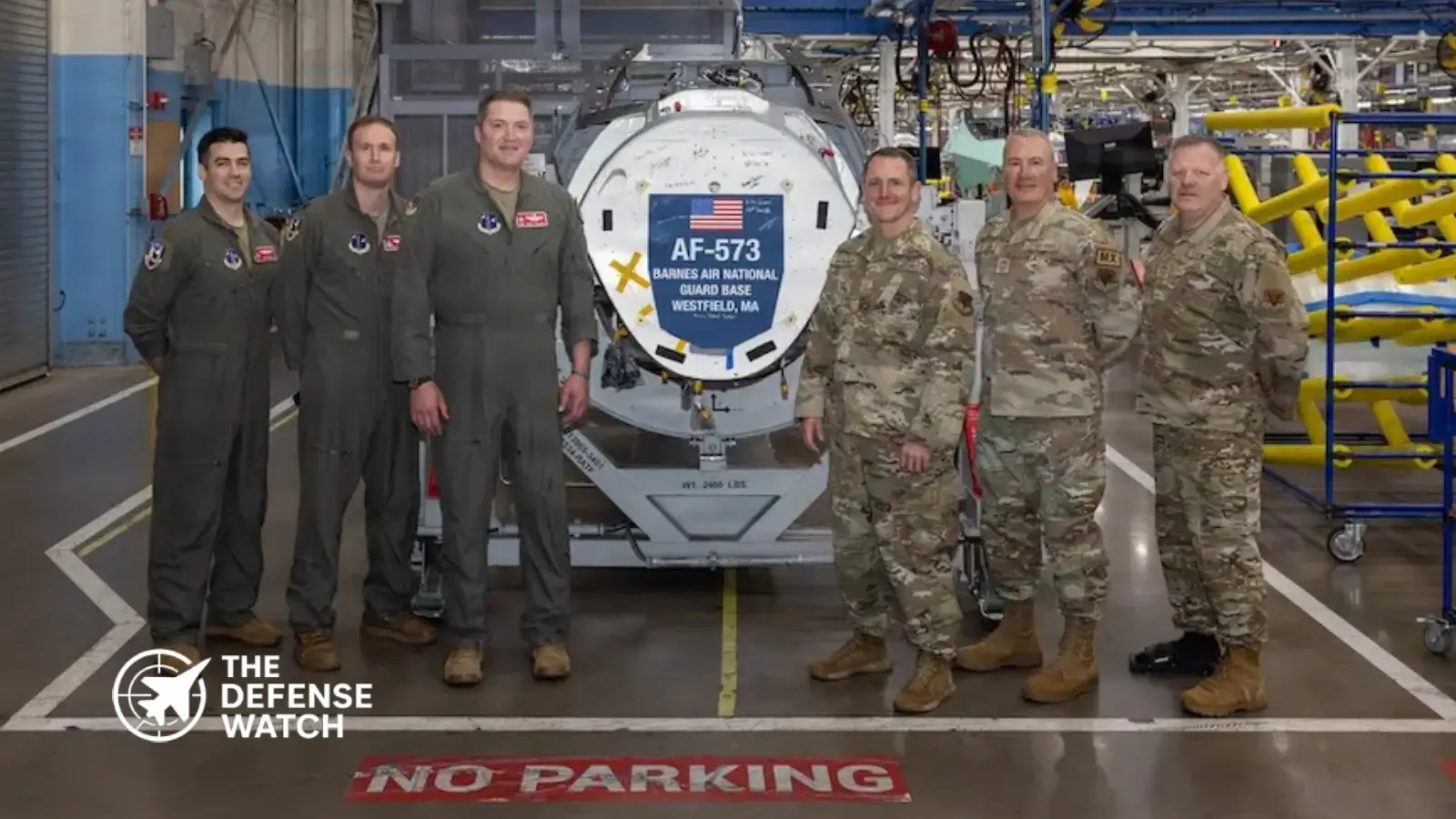
The 104th Fighter Wing F-35A transition moved one step closer to reality after senior leaders from the Massachusetts Air National Guard visited Lockheed Martin’s production facility in Fort Worth, Texas, to sign the fuselage bulkhead of one of the wing’s first F-35A Lightning II aircraft. The ceremony marked a symbolic and operational milestone as the unit prepares to receive its first fifth generation fighters.
According to the 104th Fighter Wing, the visit took place on May 27 and included wing leadership, pilots, and senior enlisted personnel. Signing a partially assembled aircraft is a long standing military aviation tradition that allows future operators to leave their mark on an aircraft while it remains on the production line.
For the Massachusetts-based unit, the moment represented far more than a ceremonial event.
Col. Michael Glass, commander of the 104th Fighter Wing, described the signing as a pivotal moment that reinforces the future of the wing and its readiness mission. Wing leaders emphasized that the arrival of the F-35A secures the unit’s long term role within the Air National Guard and the broader U.S. Air Force force structure.
From F-15 Eagles To Fifth Generation Fighters
The 104th Fighter Wing previously operated the F-15 Eagle for nearly two decades. The aircraft served at Barnes Air National Guard Base from 2007 until the fleet was retired from the unit in 2025 as part of a broader Air Force modernization effort.
The transition to the F-35A represents one of the most significant capability upgrades in the wing’s history.
Unlike the F-15C, the F-35A combines low observable characteristics, advanced sensors, electronic warfare systems, and data fusion capabilities into a single platform. The aircraft is designed to operate effectively in highly contested environments while sharing information across joint and allied networks.
This transition reflects a wider trend across the Air National Guard, where legacy fourth generation fighter fleets are increasingly being replaced by fifth generation aircraft capable of supporting modern air superiority and multi domain operations.
Production Progress Signals Growing Momentum
The Fort Worth facility remains the centerpiece of global F-35 production. According to the 104th Fighter Wing, the assembly complex can accommodate up to 155 aircraft simultaneously, while each F-35 requires roughly 18 months to move from initial assembly to final delivery.
The signing ceremony also gave wing personnel a firsthand look at aircraft already progressing through production.
The event follows another major milestone announced in May, when the 104th Fighter Wing received more than 1,000 pieces of support equipment valued at nearly $1 billion. Those deliveries included critical infrastructure and logistics systems required to sustain F-35 operations at Barnes Air National Guard Base.
Taken together, the equipment deliveries and aircraft production progress indicate that the wing’s conversion effort is entering a more advanced phase.
Why The F-35A Matters For The Air National Guard
The significance of the 104th Fighter Wing F-35A transition extends beyond Massachusetts.
Across the United States, Air National Guard units play a critical role in homeland defense, expeditionary operations, and contingency response. Equipping Guard units with the F-35 ensures that reserve component forces remain interoperable with active duty, allied, and coalition air forces operating the same platform.
The F-35’s sensor fusion capabilities allow pilots to detect, track, and share information across the battlefield more effectively than legacy fighters. As potential adversaries field increasingly sophisticated air defense systems and advanced combat aircraft, access to fifth generation capabilities becomes increasingly important for maintaining operational effectiveness.
The transition also preserves the strategic relevance of the 104th Fighter Wing within future force planning. Air National Guard units selected for F-35 operations are expected to remain integral contributors to U.S. airpower for decades.
Strategic Analysis
While the fuselage signing itself was ceremonial, the broader significance lies in what it represents.
The U.S. Air Force continues to balance modernization requirements against budget pressures, force structure changes, and evolving global threats. Selection for the F-35A demonstrates confidence in the 104th Fighter Wing’s operational record, infrastructure, and long term value to national defense.
The transition also underscores a larger shift within the Air National Guard toward maintaining frontline combat relevance. Rather than relegating Guard units to legacy platforms, the Air Force is increasingly integrating them into advanced combat aviation planning.
For Barnes Air National Guard Base, the arrival of the F-35A secures a future mission set that is expected to remain central to U.S. airpower well into the 2040s and beyond.
Conclusion
The 104th Fighter Wing F-35A transition reached a visible milestone with the signing of one of the unit’s first aircraft at Lockheed Martin’s Fort Worth production facility. As aircraft move through final assembly and support equipment continues arriving in Massachusetts, the wing is steadily progressing toward full fifth generation operations.
The event highlights not only the future of the 104th Fighter Wing but also the continuing modernization of the Air National Guard as it prepares for the demands of future air combat.
U.S. Air Force Fighter Procurement Gap Raises Alarm
The U.S. Air Force fighter procurement requirement has emerged as a critical concern, with senior Air National Guard leaders telling Congress that the service needs at least 100 new fighters annually to maintain readiness and global operational capacity.
Testifying before lawmakers, Guard officials emphasized that current acquisition rates fall well below this benchmark, creating a widening gap between force structure requirements and available aircraft. According to reporting by Air & Space Forces Magazine, this shortfall risks undermining the Air Force’s ability to sustain combat operations across multiple theaters.
- U.S. Air Force leaders say 100 new fighter jets per year are needed to sustain force structure and readiness.
- Current procurement rates fall significantly below this threshold, raising concerns over capability gaps.
- Aging aircraft fleets, particularly in the Air National Guard, are becoming increasingly difficult to maintain.
- Lawmakers were told that modernization delays could impact U.S. global deterrence posture.
- The issue comes amid rising strategic competition with near-peer adversaries.
At the core of the issue is an aging fleet. Many aircraft in service today, particularly within the Air National Guard, are decades old and increasingly expensive to maintain. As maintenance costs rise and availability rates decline, the operational burden on newer platforms continues to grow.
Aging Fleet Pressures Force Structure
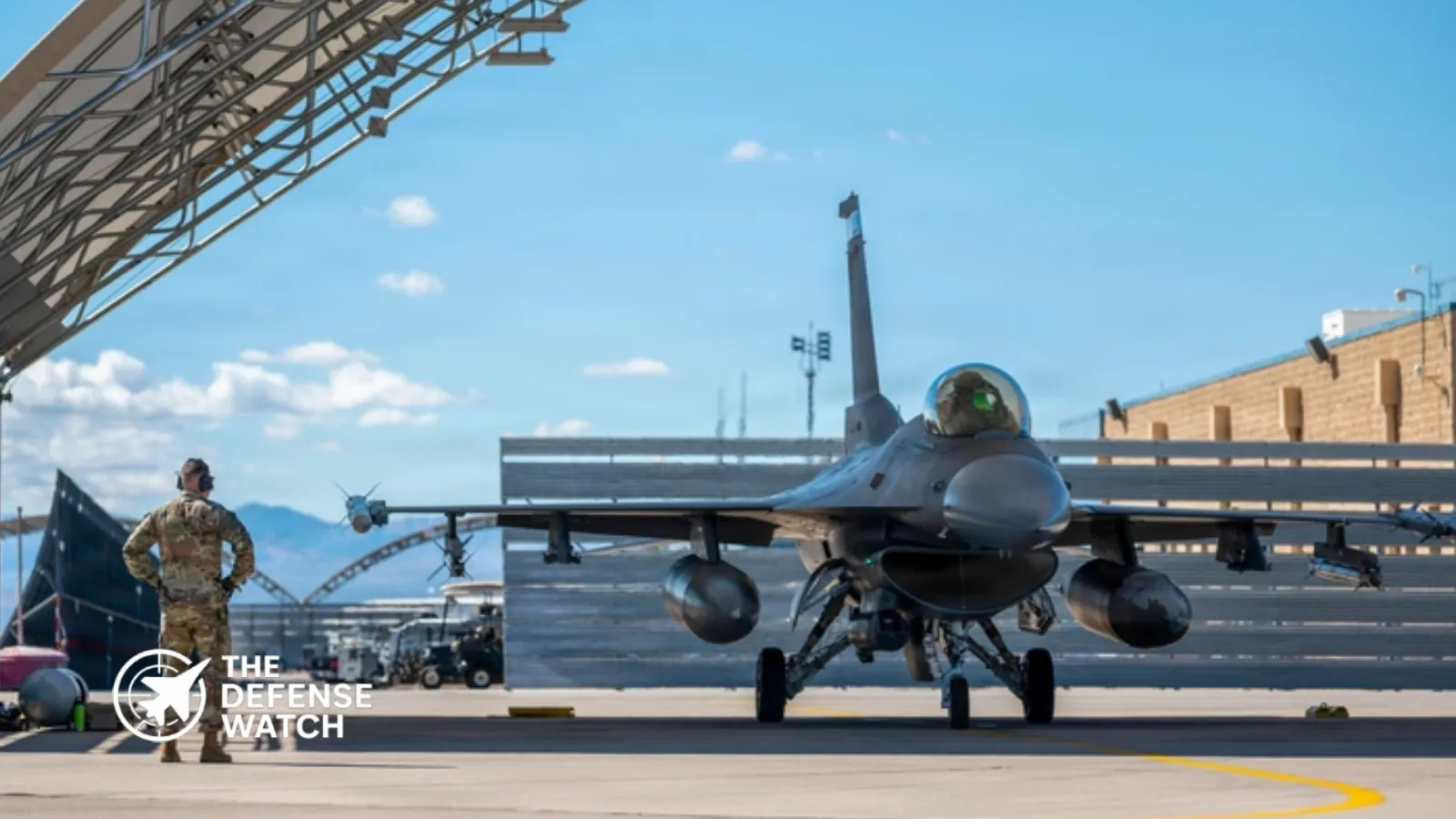
A significant portion of the Air National Guard’s inventory includes legacy fighters such as F-15s and F-16s that have exceeded their intended service lives. While upgrades have extended their usability, officials noted that these aircraft are approaching the limits of cost-effective sustainment.
This creates a dual challenge. On one hand, the Air Force must invest in maintaining legacy systems to ensure near-term readiness. On the other, it must accelerate procurement of next-generation fighters to remain competitive against advanced adversaries.
Guard leaders highlighted that without consistent procurement of around 100 aircraft per year, the service risks a gradual erosion of its combat capacity. This is not just a numbers issue. It directly affects pilot training, sortie generation rates, and the ability to surge forces during crises.
Strategic Context: Rising Global Competition
The push for increased fighter procurement comes amid intensifying strategic competition, particularly with China and Russia. Both nations have invested heavily in modern air combat capabilities, including fifth-generation fighters, integrated air defense systems, and long-range strike assets.
In this context, maintaining a robust and modern fighter fleet is central to U.S. deterrence strategy. Air superiority remains a foundational element of joint operations, enabling freedom of movement across land, sea, and air domains.
Guard officials stressed that the Air National Guard plays a critical role in this mission. It provides a substantial portion of the Air Force’s combat-coded units while also supporting homeland defense missions. Any degradation in Guard capabilities would therefore have both domestic and global implications.
Budget Constraints and Procurement Realities
Despite the clear requirement, achieving a steady procurement rate of 100 fighters annually faces significant budgetary and industrial challenges. Defense budgets must balance competing priorities, including nuclear modernization, space capabilities, and emerging technologies.
Additionally, production capacity within the defense industrial base is not easily scalable in the short term. Aircraft manufacturing involves complex supply chains and long lead times, limiting how quickly output can be increased.
Recent procurement trends reflect these constraints. Annual fighter purchases have fluctuated, often falling short of the levels needed to offset retirements and maintain fleet size. This mismatch contributes to a gradual decline in overall fighter inventory.
Analysis: A Structural Readiness Challenge
The call for 100 fighters per year highlights a deeper structural issue within U.S. airpower planning. For years, the Air Force has operated below its desired force size, relying on aging platforms to fill capability gaps.
This approach carries increasing risk. As aircraft age, maintenance demands rise exponentially, reducing availability and increasing costs. At the same time, adversaries are fielding more advanced systems, narrowing the qualitative edge historically held by the U.S.
Sustaining readiness under these conditions requires a consistent and predictable procurement strategy. Sporadic increases in funding or short-term programs are unlikely to address the underlying imbalance between force structure and acquisition rates.
Moreover, the integration of next-generation platforms such as the F-35 must be aligned with retirements to avoid capability gaps during the transition period. This requires long-term planning and stable funding commitments.
Outlook
As Congress considers future defense budgets, the Air Force’s requirement for 100 new fighters annually is likely to remain a central issue. The debate will hinge on balancing fiscal constraints with the need to maintain credible airpower in an increasingly contested global environment.
Failure to address this gap could have long-term consequences for U.S. military effectiveness, particularly in high-end conflicts where air superiority is contested.
KC 135 Refuels F 35A Over Rockies During Guard Training
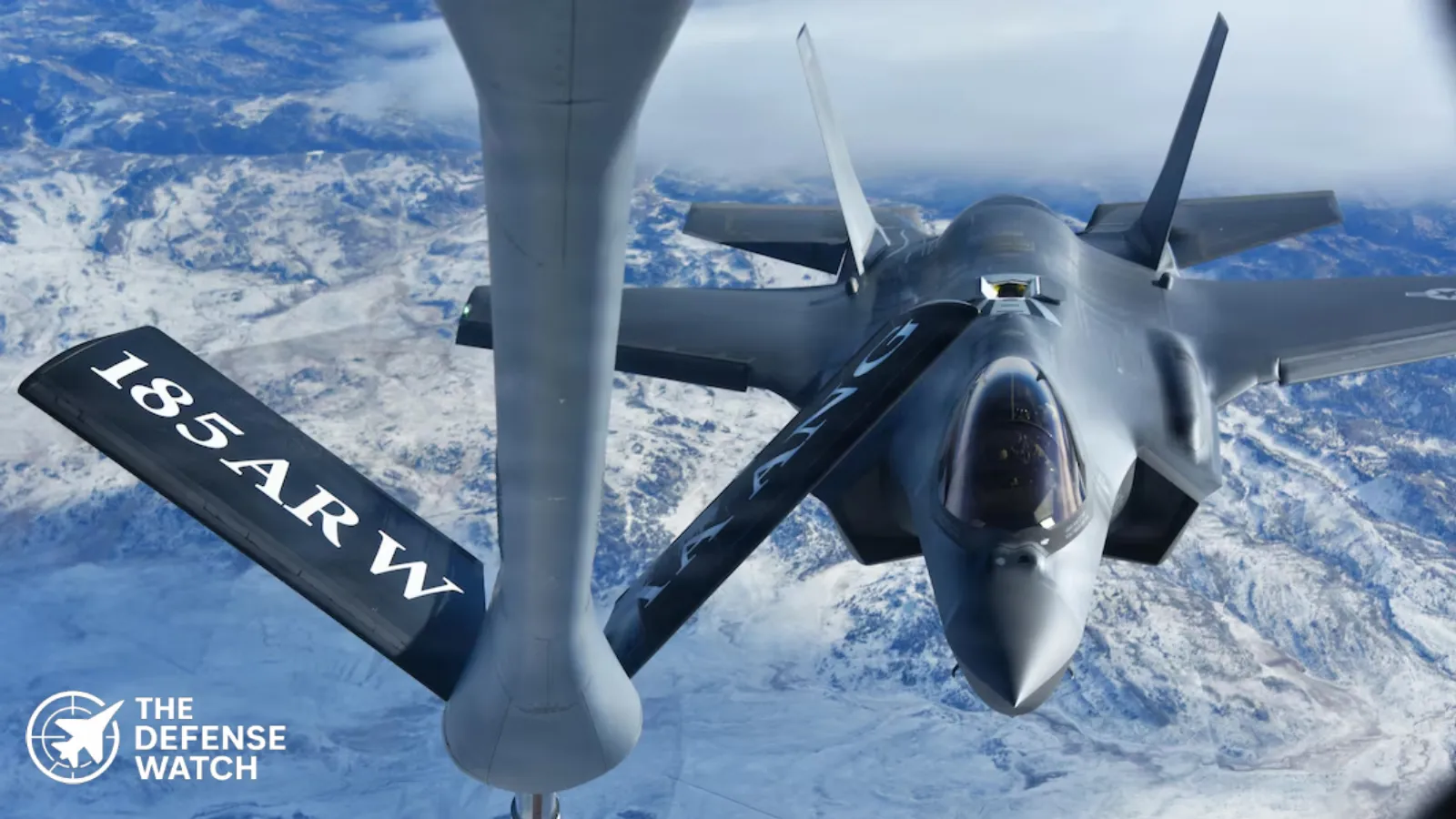
A KC 135 Stratotanker conducted an aerial refueling of an F 35A Lightning II over the Rocky Mountains on Jan. 10, 2026, highlighting the Air National Guard’s role in sustaining fifth generation fighter operations across the United States.
The tanker aircraft was assigned to the Iowa Air National Guard’s 185th Air Refueling Wing, while the receiving aircraft, an F 35A Lightning II, belonged to the Wisconsin Air National Guard’s 115th Fighter Wing. The operation took place during a routine training mission designed to maintain aircrew readiness and interoperability.
-
Aerial refueling remains a core enabler of U.S. airpower, extending the range and endurance of combat aircraft while reducing reliance on forward bases. For the F 35A, which is increasingly fielded across Guard units, reliable tanker support is critical for both homeland defense and overseas deployments.
The KC 135 Stratotanker, despite its age, continues to serve as the backbone of the U.S. Air Force’s refueling fleet. According to the U.S. Air Force, the aircraft provides fuel to a wide range of receivers, including fighters, bombers, and intelligence platforms, and is expected to remain in service alongside the newer KC 46 Pegasus for years to come.
-
Training missions over complex terrain such as the Rockies add realism, requiring precise formation flying and fuel transfer under challenging weather and altitude conditions. Air National Guard officials regularly note that these missions mirror the demands crews would face during real world operations.
The 115th Fighter Wing was among the first Guard units to transition to the F 35A, marking a major modernization step for state based air defense forces. The Iowa Air National Guard’s 185th Wing continues to support both domestic and global missions through its refueling role.
-