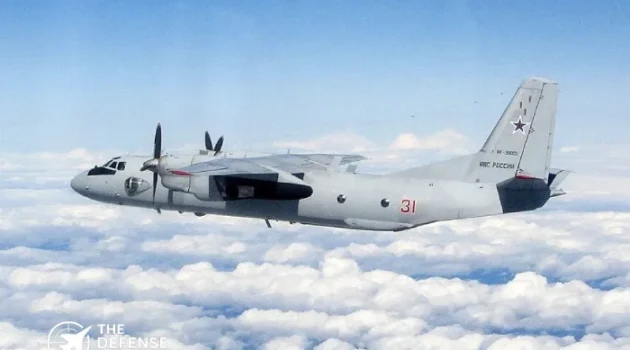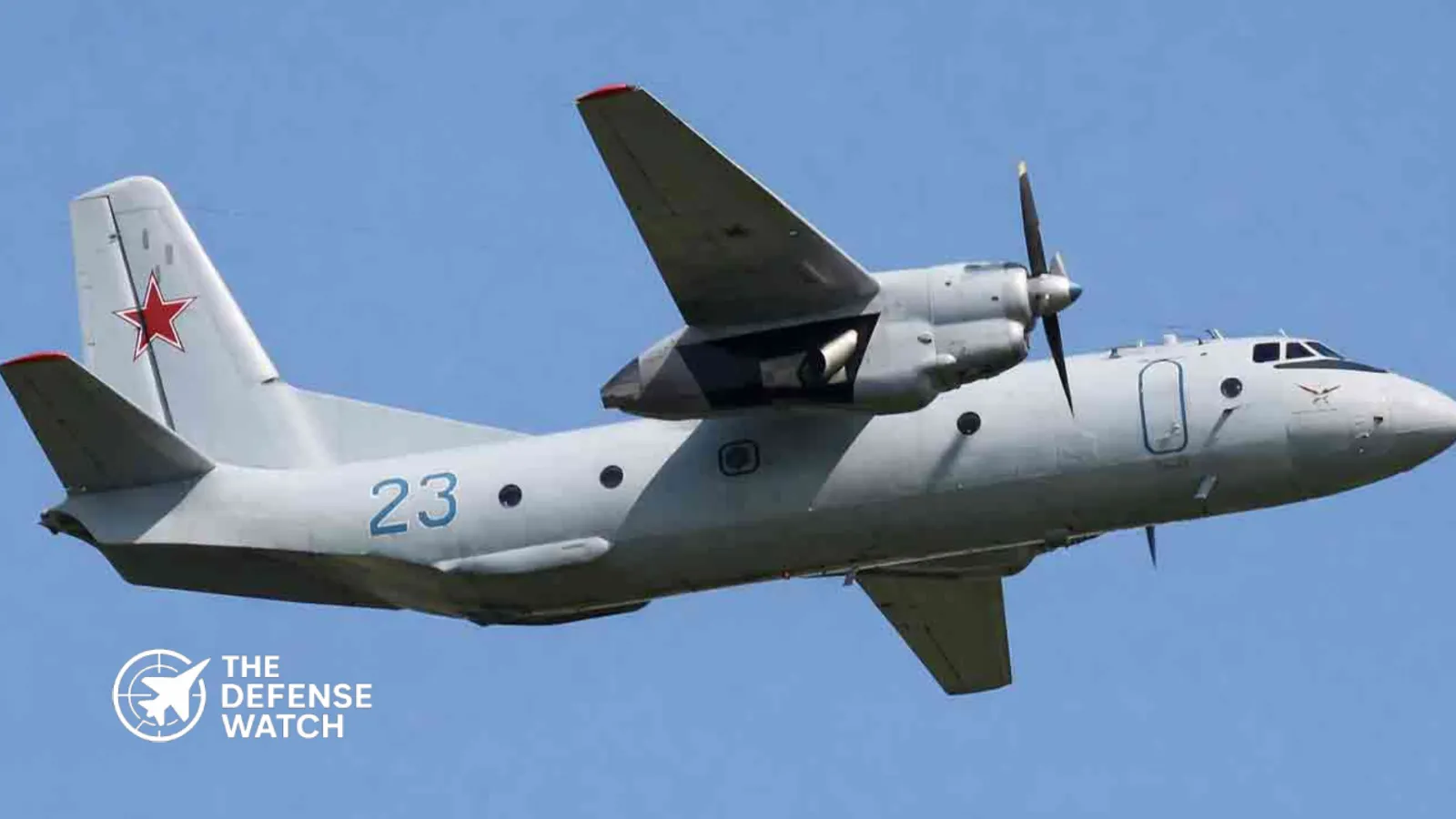
- A Russian Antonov AN-26 military transport aircraft crashed in Crimea on March 31, 2026, killing all 29 people aboard — 23 passengers and 6 crew members.
- Contact with the aircraft was lost at approximately 6:00 PM Moscow time during a scheduled flight over the Crimean Peninsula, according to Russia’s Defense Ministry via TASS.
- Rescue teams located the wreckage after the aircraft struck a cliff in Crimea’s mountainous terrain near the Black Sea coast.
- Russian officials stated there was no evidence of external damage — ruling out missile, drone, or bird strike — with technical malfunction cited as the preliminary cause.
- The Russian Air Force operates approximately 150 AN-26 aircraft. The type has been involved in multiple fatal crashes over the past decade due to age and maintenance concerns.
Russian AN-26 Military Transport Crashes In Crimea, Killing All 29 — No Signs Of External Attack
A Russian AN-26 military transport aircraft crashed in Crimea on March 31, 2026, killing all 29 people on board, in what Russian defense officials are calling a probable technical failure. The loss represents one of the deadliest single aviation accidents involving Russian military personnel in recent years, drawing renewed attention to the aging Soviet-era airframes still operating within the Russian Air Force.
Contact Lost, Cliff Strike Confirmed
Contact with the AN-26 was lost at approximately 6:00 PM Moscow time on March 31 while the aircraft was conducting a scheduled flight over the Crimean Peninsula, according to Russia’s Defense Ministry as quoted by TASS.
Search and rescue teams were dispatched and later located the crash site, confirming that none of the passengers or crew survived. A source at the scene reported that the aircraft struck a cliff.
The Russian Defense Ministry confirmed six crew members and 23 passengers perished in the crash, adding that preliminary information indicates a technical malfunction caused the accident, with no hostile fire targeting the aircraft.
The crash site is located in the mountainous interior of the Crimean Peninsula, a terrain that complicates both search operations and the recovery of flight data recorders. Russian authorities have indicated that investigators are working to recover the aircraft’s black box to determine the definitive cause of the disaster.
The AN-26: A Workhorse Well Past Its Prime
The AN-26 is an Antonov tactical transport that has served as a mainstay of the Russian Air Force for decades. According to Cirium, an aviation analytics firm, approximately 360 AN-26s remain in service globally with 105 in storage — the vast majority operated within Russia. The Russian Air Force alone holds roughly 150 of these aircraft in its inventory.
The AN-26 is a light tactical military transport capable of carrying cargo and up to 40 passengers over short and medium distances. First introduced in the late 1960s, the aircraft is now over five decades old in design and has accumulated a troubled safety record in recent years.
The type has been involved in a number of deadly crashes over the last decade. A Ukrainian AN-26 crashed during a technical flight in Zaporizhzhia in 2022. Another went down on a training flight in northeastern Ukraine in 2020, killing all but one of 27 people aboard. Eight individuals — including five Russians — were killed when an AN-26 crashed in South Sudan in 2020.
The recurring pattern of AN-26 losses raises important questions about the Russian Air Force’s fleet maintenance standards, parts availability under ongoing international sanctions, and the broader sustainability of operating Soviet-era platforms under wartime operational tempo.
Crimea: A Strategically Sensitive Crash Zone
Crimea was annexed by Russia from Ukraine in 2014. The peninsula is characterized by sweeping mountains leading down to the Black Sea coast — terrain that played a direct role in this accident, with the aircraft apparently colliding with elevated terrain after losing altitude or navigational control.
The crash comes in a broader context of ongoing conflict over the peninsula. Ukraine’s military intelligence directorate (HUR) previously destroyed two Russian AN-26 transport aircraft in a drone attack on occupied Crimea in September 2025 as part of ongoing efforts to eliminate high-value Russian assets on the peninsula.
As recently as March 24, Ukrainian forces destroyed a Zircon hypersonic missile launcher in occupied Crimea during an overnight strike, according to Ukraine’s military intelligence agency.
Despite the active threat environment, Russian officials were unambiguous in their preliminary assessment: the Russian state news agency TASS quoted the Defense Ministry as stating there was no impact on the aircraft, implying that objects such as missiles, drones, or birds were not involved. The conclusion — at least officially — is one of mechanical failure, not enemy action.
Analysis: Sanctions, Age, and Operational Stress
The loss of this AN-26 in Crimea cannot be viewed in isolation. Russia’s military aviation sector has faced compounding pressures since the February 2022 invasion of Ukraine: international sanctions have severely restricted access to Western avionics, spare parts, and maintenance technology. Russian operators have been forced to cannibalize aircraft, extend service intervals, and rely increasingly on domestic or limited third-party supply chains.
For a platform like the AN-26 — originally designed in the Soviet era and never intended for sustained high-tempo operations across a contested theater — these pressures are particularly acute. The aircraft type has no modern replacement currently in widespread Russian service for the tactical transport mission it fulfills. The Ilyushin Il-112V, intended as a successor, has faced years of development delays and its own crash during a test flight in 2021.
The operational context in Crimea further amplifies risk. The peninsula has been an active theater for Ukrainian strike operations, requiring Russian military air traffic to operate with increased urgency and reduced predictability in scheduling and routing. Whether such pressures contributed to maintenance shortcuts or crew fatigue in this specific incident remains to be established through the formal investigation.
What is clear is that the Russian Air Force’s continued reliance on aging Soviet-designed transports carries real and measurable human cost — and that each loss of an AN-26 further degrades Russia’s intra-theater logistics and troop movement capacity at a time when those capabilities are under significant strain.
Investigation Status
Russian authorities have launched a formal investigation into the crash. Recovery of the flight data recorder and cockpit voice recorder will be critical to establishing whether the loss was caused by mechanical failure, crew error, adverse weather, or some combination of factors. No timeline has been provided for the completion of the inquiry.