

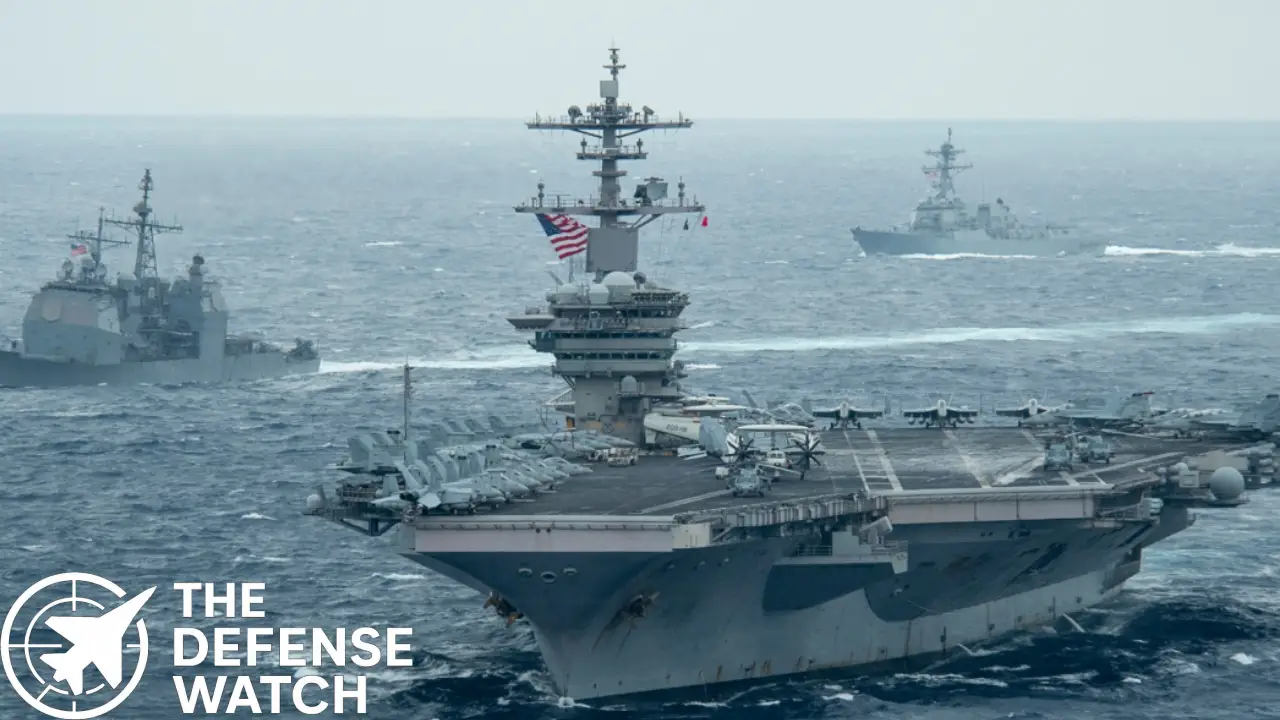
The term blue-water navy refers to a maritime force capable of operating across the deep waters of open oceans and projecting sea control at long range—a projection of power that underpins global naval operations. This is a hallmark of high-end naval competencies, particularly embodied by the U.S. Navy. The concept carries strategic weight, shaping how defense planners assess threats and deterrence.
Defining a Blue-Water Navy
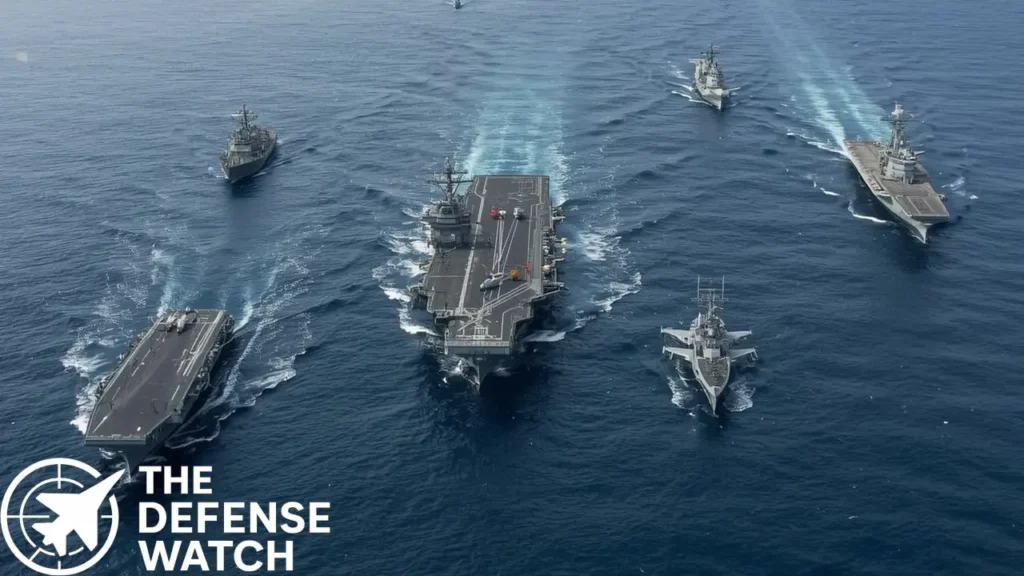
In U.S. defense parlance, a blue-water navy is defined as “a maritime force capable of sustained operation across the deep waters of open oceans,” enabling power projection far from home base—“usually including one or more aircraft carriers”.
This stands in contrast to:
- Green-water navy: operates in littoral zones and nearby seas.
- Brown-water navy: restricted to inland waterways and nearshore operations.
Key Capabilities Defining Blue-Water Status
Global Reach & Sea Control
The essence of a blue-water navy lies in its ability to project sea control at considerable distance—maintaining sustained operations in open ocean environments.
Logistics & Sustainment
A defining feature is robust logistics: replenishment at sea, auxiliary support vessels, and the infrastructure to resupply and repair forces across the globe.
Air & Subsurface Capabilities
Air assets—whether through carriers, light carriers, or fixed-wing support—are essential for ISR, fleet air defense, and ASW. Likewise, submarines offer protection, reconnaissance, and strike capability.
Strike Capabilities
Effective blue-water navies can conduct long-range strikes, typically with land-attack cruise missiles like the Tomahawk, or via carrier-borne aircraft.
Operational Experience
Operational experience in extended ocean deployments is critical—it’s not enough to possess the hardware; navies must have the endurance and expertise to maintain distant and prolonged operations.
The U.S. Navy—A Benchmark Blue-Water Force
The United States Navy exemplifies blue-water capability through its combination of carriers, submarine fleets, global basing, and enduring logistics networks. It consistently operates across multiple oceans with sustained presence.
Other navies such as France, China, India, and Japan also exhibit varying degrees of blue-water capacity—but the U.S. remains the gold standard.
Why It Matters: Strategic and Geopolitical Implications
A blue-water navy delivers strategic flexibility—deterring adversaries, safeguarding trade routes, and reinforcing alliances across theaters. It projects national influence and reassures regional partners.
Conversely, challenges persist: maintaining such a navy is expensive and logistically demanding, especially in contested environments where asymmetric threats (e.g., missile swarms, mines, drones) can degrade effectiveness.
Context & Analysis
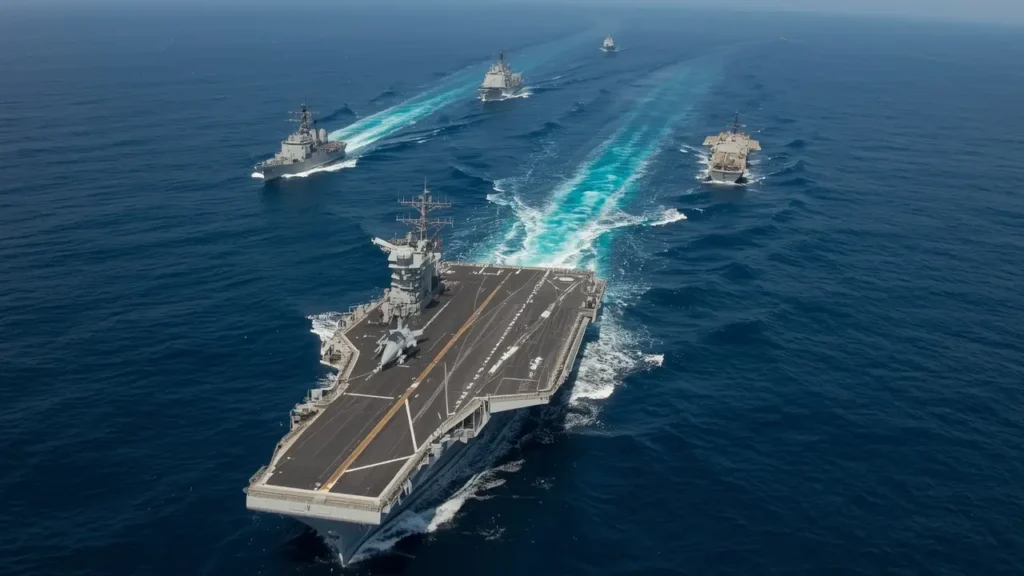
Today’s U.S. Navy modernization and force structure debates underscore how vital blue-water competency remains. Investments in replenishment vessels, unmanned systems, and forward basing aim to preserve long-range operational reach.
Meanwhile, rivals like China’s PLAN are rapidly expanding their blue-water footprint. With its second-largest navy by tonnage and aggressive patrolling near the first and second island chains, China is positioning itself as a regional blue-water actor—though tonnage and numbers don’t always equate to sustained global reach.
FAQs
A blue-water navy is capable of prolonged operations in deep, open ocean—far beyond littoral zones—while green-water navies are constrained by range and sustainment limitations near coasts.
Not strictly, but carriers significantly enhance power projection. Some navies reach blue-water status through combinations of subs, logistics support, and long-range surface vessels.
Effective logistics—including at-sea replenishment and overseas bases—enable sustained operations and global reach; without logistics, blue-water operations collapse.
China is pursuing blue-water capability and expanding its presence, but while it has zone control near key maritime areas, it still faces challenges in sustained operations far from home.
By investing in logistics, replenishment ships, long-range submarines, air support capabilities, and increasing operational tempo in distant waters—gradually closing capability gaps.

5 comments
[…] A green-water navy operates primarily within littoral zones and marginal seas, capable of limited open-ocean missions but reliant on support for extended operations Wikipedia+1Boot Camp Fitness Institute. Originally conceptualized by the U.S. Navy to denote coastal-focused offensive units, the term has since expanded. It now commonly refers to navies that project power near home shores — often equipped with amphibious ships, helicopters, and modest replenishment assets, but lacking full logistical autonomy WikipediaBoot Camp Fitness InstituteTheDefenseWatch.com. […]
[…] bid is more than a procurement exercise: it sits at the intersection of Asia-Pacific geopolitics, naval strategy and defense industrial competition. By attempting to sell the KSS-III to Canada, South Korea is […]
[…] careful coordination. The incident also underscores the growing prominence of Arctic/High-North maritime strategy, where navies, coast guards, civilian mariners and local stakeholders increasingly share […]
[…] each navy’s core assets, modernization efforts, and strategic posture, providing a snapshot of maritime power analysis […]
[…] France’s decision to invest in a next-generation nuclear carrier ensures it remains a credible blue-water navy capable of independent […]