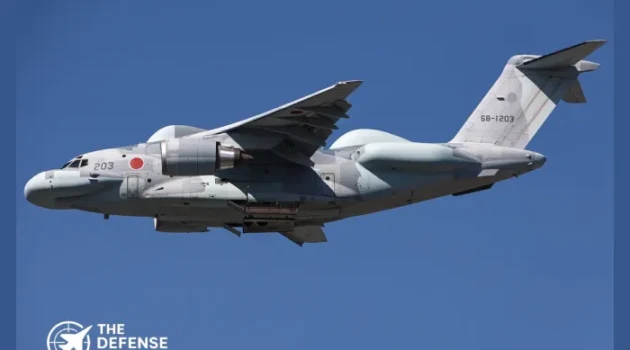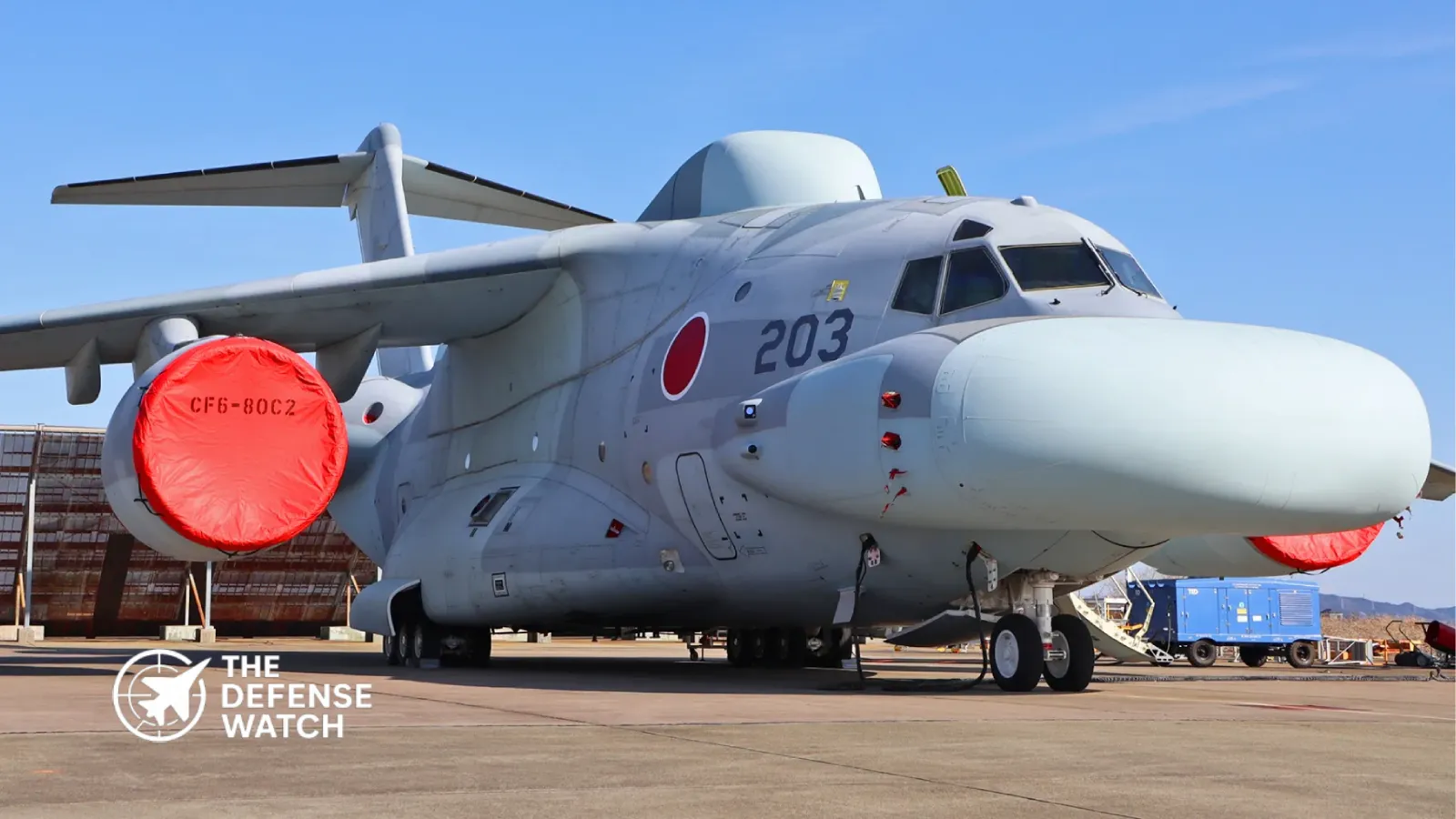
- Japan’s EC-2 electronic warfare jet has successfully completed its first flight.
- The aircraft is designed to jam enemy radar and communications from long range.
- EC-2 enables standoff electronic attack without entering contested airspace.
- The platform supports Japan’s expanding electronic warfare and network disruption capabilities.
- The development aligns with broader regional focus on electromagnetic spectrum dominance.
Japan EC-2 Electronic Warfare Jet Completes First Flight
The Japan EC-2 electronic warfare jet has completed its first flight, marking a significant step in strengthening Japan’s airborne electronic attack capabilities.
The aircraft is designed to conduct long-range jamming missions, targeting enemy radar systems and communications networks while remaining outside hostile airspace. This standoff capability reflects a growing emphasis on survivability and spectrum dominance in modern air operations.
According to defense reporting and aviation sources, the EC-2 represents a next-generation evolution in Japan’s electronic warfare fleet, supporting both defensive and offensive electromagnetic operations.
Standoff Jamming and Survivability at the Core
A key feature of the EC-2 is its ability to disrupt adversary systems without crossing into heavily defended zones. This reduces exposure to surface-to-air missile systems and advanced fighter threats.
Modern electronic warfare increasingly prioritizes range and precision. By operating at a distance, the EC-2 can degrade enemy situational awareness before kinetic operations begin.
This concept aligns with broader trends seen in U.S. and allied forces, where platforms such as the EA-18G Growler emphasize stand-in and stand-off jamming combinations. Japan’s EC-2 appears focused primarily on the latter, providing a safer and persistent electronic attack layer.
Role in Japan’s Expanding EW Doctrine
The introduction of the EC-2 comes as Japan continues to invest in electronic warfare as part of its evolving defense posture.
Over the past decade, the country has shifted toward integrated multi-domain operations, combining cyber, space, and electromagnetic spectrum capabilities. Electronic warfare aircraft like the EC-2 play a central role in this shift by:
- Disrupting enemy command and control networks
- Blinding radar systems during air operations
- Supporting joint force coordination
This reflects a broader recognition that future conflicts will depend heavily on control of the electromagnetic spectrum, not just air superiority in the traditional sense.
Regional Context and Strategic Implications
The EC-2’s first flight takes place amid rising competition in the Indo-Pacific region. Several regional powers are rapidly advancing their own electronic warfare and countermeasure systems.
Aircraft capable of long-range jamming provide a strategic advantage by shaping the battlefield before direct engagement. They can delay detection, confuse targeting systems, and reduce the effectiveness of integrated air defense networks.
For Japan, this capability strengthens deterrence by complicating adversary planning. It also enhances interoperability with allied forces, particularly the United States, which places significant emphasis on electronic attack in joint operations.
Technology and Platform Evolution
While detailed specifications remain limited, the EC-2 is expected to incorporate advanced electronic support and attack systems, including:
- Wideband jamming technologies
- Signals intelligence collection systems
- Networked electronic attack coordination
Such systems allow operators to detect, identify, and disrupt multiple threats simultaneously.
Compared to older platforms, newer electronic warfare aircraft are more software-driven, enabling faster updates and adaptability against evolving threats.
Analysis: Why the EC-2 Matters
The significance of the EC-2 goes beyond a single aircraft milestone.
First, it highlights a shift toward non-kinetic warfare capabilities. Modern militaries are investing heavily in tools that can disable or degrade enemy systems without firing a shot.
Second, it reflects changing risk calculations. Operating outside contested airspace reduces losses while still achieving operational effects.
Third, it underscores the growing importance of electronic warfare in the Indo-Pacific, where dense air defense environments make traditional penetration missions more challenging.
In this context, the EC-2 is not just a support platform. It is a frontline enabler of air and joint operations.