• Home
  • About
  • Defense Systems
  • Manufacturer
  • Comparisons
  • Compare 
  • Tools
TheDefenseWatch.com
  • Aerospace & Aviation
  • Military & Ordnance
  • Naval & Maritime
  • Cyber & Space Defense
  • Policy & Strategy
  • Global News
  • Tools Library
    • Smart Calculator
    • Drone Flight Time Calculator
    • Drone Range Calculator
    • Counter-Drone Jammer Effective Range Calculator
    • Counter-Battery Radar Detection Calculator
    • Artillery Fire Correction Calculator
    • Thermal Camera Detection Range Calculator
    • Missile Range & Time-of-Flight Calculator
    • Radar Detection Range Calculator
    • FPV Strike Drone Payload vs Range Calculator
    • Loitering Munition Endurance Calculator
    • Sniper Ballistic Drop & Windage Calculator
    • Bullet Drop Calculator
    • U.S. Army Combat Fitness Test (ACFT) Calculator
    • Military Pension Calculator
    • Military Retirement Calculator
    • Military Pension Calculator
    • Large Number Calculator
Font ResizerAa

TheDefenseWatch.com

The Defense Watch | U.S. & Global Defense News, Analysis & Military Updates

Search
  • Home
  • About
  • Defense Systems
  • Manufacturer
  • Comparisons
  • Compare 
  • Tools

Stay Updated

Get the latest update

Subscribe

Explore

  • Drone
  • Fighter Jets & Military Aircraft
  • Hypersonic Weapons
  • Aircraft Carriers
  • Strategic History & Missions
  • Tools Library
Home » UK Joins European Push For Low Cost Air Defence Weapons To Counter Drone Threats
Alliances & DoctrinesPolicy & Strategy

UK Joins European Push For Low Cost Air Defence Weapons To Counter Drone Threats

Daniel Mercer / Defense & Aerospace Analyst
Last updated: September 7, 2026 6:40 pm
Daniel Mercer / Defense & Aerospace Analyst
Share
3 Min Read
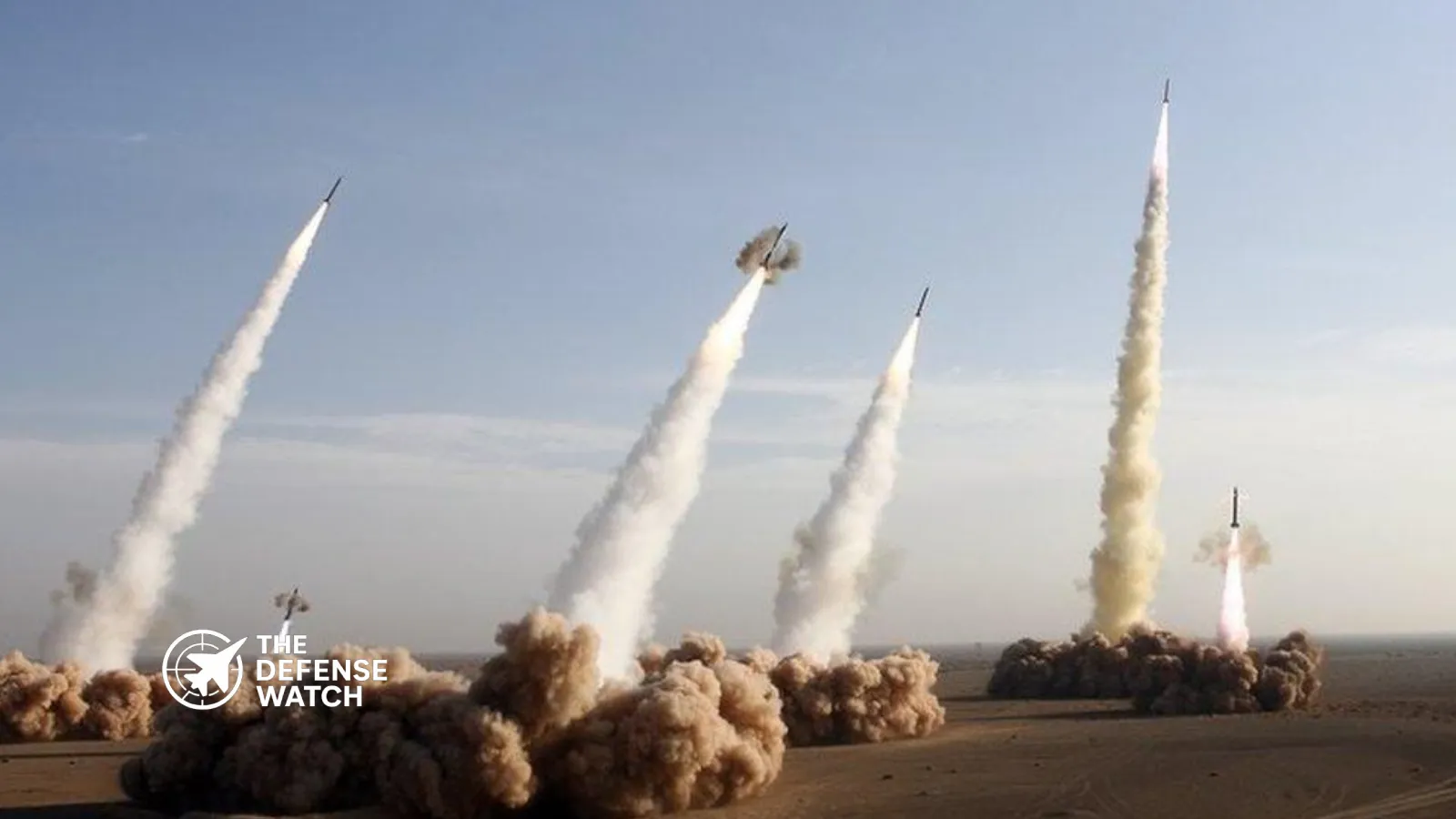
Israel Iran ballistic missile threat
SHARE
Follow The Defense Watch on Google:
■ KEY FACTS AT A GLANCE
  • ► United Kingdom joins European initiative focused on low cost air defence weapons.
  • ► Effort aims to counter mass drone attacks and cheaper cruise missile threats.
  • ► Focus on scalable, affordable interceptors rather than high cost missile systems.
  • ► Supports NATO wide efforts to strengthen layered air and missile defense.
  • ► Reflects lessons from Ukraine conflict on cost imbalance in modern air warfare.

UK Low Cost Air Defence Weapons Initiative Gains Momentum

The UK low cost air defence weapons initiative is moving forward as London joins a wider European effort to develop affordable interceptors against drones and missile threats.

Contents
UK Low Cost Air Defence Weapons Initiative Gains MomentumLessons From Ukraine Drive Policy ShiftStrengthening NATO’s Layered Air DefenseIndustrial And Strategic ImplicationsAddressing The Cost ImbalanceBroader European Security ContextOutlook
(adsbygoogle = window.adsbygoogle || []).push({});

The United Kingdom has aligned itself with a European push to accelerate development of lower cost air defense systems designed to counter mass drone swarms and saturation attacks. The move reflects growing concern across NATO about the rising use of inexpensive unmanned systems in modern conflicts.

European governments are increasingly focused on closing what defense planners describe as a cost imbalance. In recent conflicts, including the war in Ukraine, relatively cheap drones and loitering munitions have forced defenders to rely on high cost surface to air missiles to intercept them. That exchange ratio is not sustainable over time.

The UK decision signals recognition that future air defense architecture must include scalable and affordable options.

- Advertisement -

Lessons From Ukraine Drive Policy Shift

The conflict in Ukraine has reshaped air and missile defense thinking across Europe. Both Russia and Ukraine have used large numbers of drones and cruise missiles in repeated strikes against infrastructure and military targets.

Intercepting a low cost drone with a multi million dollar missile presents an obvious economic challenge. Senior NATO officials have repeatedly warned that allies need more cost effective intercept solutions to handle persistent drone campaigns.

(adsbygoogle = window.adsbygoogle || []).push({});

The UK low cost air defence weapons effort is directly tied to these lessons. Rather than relying solely on advanced systems such as long range missile batteries, the focus is on adding cheaper interceptors and complementary technologies that can engage slower, smaller aerial threats.

This does not replace high end systems. Instead, it reinforces a layered defense model.

Strengthening NATO’s Layered Air Defense

NATO’s integrated air and missile defense concept depends on multiple layers. High altitude ballistic missile defense, medium range systems, and short range air defense must work together.

The European initiative aims to strengthen the lower and middle tiers of that structure. These layers are critical for countering drones, loitering munitions, and certain cruise missiles.

The UK low cost air defence weapons participation suggests closer coordination with European partners on procurement and industrial development. Shared development could reduce unit costs, increase production capacity, and improve interoperability across allied forces.

(adsbygoogle = window.adsbygoogle || []).push({});

Interoperability remains central. NATO air defense systems rely on shared data links and integrated command and control networks. Any new system must plug into existing architecture.

- Advertisement -

Industrial And Strategic Implications

For the United Kingdom, joining this push carries both military and industrial significance.

The UK defense sector has deep experience in missile development and air defense technologies. Expanding into affordable intercept solutions offers opportunities for domestic industry while supporting broader alliance needs.

It also aligns with ongoing UK modernization plans. London has committed to strengthening homeland defense and supporting NATO’s eastern flank. Affordable air defense capabilities could be deployed to protect bases, critical infrastructure, and expeditionary forces.

(adsbygoogle = window.adsbygoogle || []).push({});

From a strategic standpoint, this move reflects a wider European reassessment of air defense priorities. For years, many European states reduced short range air defense inventories after the Cold War. The return of high intensity conflict in Europe has reversed that trend.

Addressing The Cost Imbalance

At its core, the UK low cost air defence weapons initiative seeks to solve a simple problem. Modern warfare has made it easier and cheaper to launch aerial attacks than to stop them.

Commercially derived drones can be adapted for military use at relatively low cost. State actors can also produce cruise missiles at scale. Defenders must respond without exhausting high value missile stocks.

Affordable interceptors, rapid production lines, and complementary systems such as electronic warfare and directed energy weapons are now central to air defense planning.

(adsbygoogle = window.adsbygoogle || []).push({});

The UK’s decision to join this European effort signals that London sees the issue as long term rather than temporary.

Broader European Security Context

The initiative comes amid heightened security concerns across Europe. NATO members have increased defense spending and accelerated procurement programs since 2022.

European Union efforts such as joint procurement frameworks and collaborative defense projects have aimed to streamline acquisitions and reduce duplication. Although the UK is no longer an EU member, it continues to cooperate closely with European partners on defense.

Participation in a shared low cost air defense initiative strengthens that cooperation. It also reinforces NATO’s collective deterrence posture.

Outlook

Details on specific systems, funding levels, or timelines remain limited in public reporting. However, the policy direction is clear.

(adsbygoogle = window.adsbygoogle || []).push({});

The UK low cost air defence weapons effort reflects a shift toward sustainable air defense models built around layered, affordable, and scalable capabilities.

If successfully implemented, it could help address one of the most pressing operational challenges facing NATO forces today: defending against large numbers of relatively cheap aerial threats without depleting strategic missile inventories.

Enjoying our coverage?

Make The Defense Watch a preferred source on Google to see more of our geopolitical and defense insights when relevant to you.


TAGGED:air defence systemsCounter drone warfareEuropean securityMissile DefenseUK defence
Share This Article
Facebook Copy Link Print
ByDaniel Mercer / Defense & Aerospace Analyst
Follow:
Daniel Mercer is a defense and aerospace analyst at TheDefenseWatch.com covering military aviation, aerospace technology, unmanned systems, air warfare, and defense procurement. His reporting uses official documents, government and military statements, company announcements, and other public sources.
Leave a Comment

Leave a Reply Cancel reply

Your email address will not be published. Required fields are marked *

Search Defense Systems

Latest Defense Systems

  • F-104 Starfighter F-104 Starfighter
  • F-15J Eagle Fighter Jet F-15J Eagle Fighter Jet
  • China’s GJ-21 Stealth Drone China’s GJ-21 Stealth Drone
  • China’s GJ-11 Stealth Drone China’s GJ-11 Stealth Drone
  • F-15EX Eagle Fighter Jet F-15EX Eagle Fighter Jet
  • TRML-4D Radar TRML-4D Radar
  • F-47A Fighter Jet F-47A Fighter Jet
  • China DF-61 Missile China DF-61 Missile
  • B61 Nuclear Bomb B61 Nuclear Bomb

Recent Compares

  • J-10C vs JF-17 Thunder: Which Fighter Is More Capable? J-10C vs JF-17 Thunder: Which Fighter Is More Capable? View Comparison →
  • Tejas vs Gripen: Key Differences and Capabilities Tejas vs Gripen: Key Differences and Capabilities View Comparison →
  • Tejas vs MiG-21 Bison: How India Replaced Its Iconic Supersonic Fighter Tejas vs MiG-21 Bison: How India Replaced Its Iconic Supersonic Fighter View Comparison →
  • F-35 vs F-16: Stealth, Sensors and Combat Roles F-35 vs F-16: Stealth, Sensors and Combat Roles View Comparison →
  • Tejas Fighter Jet vs F-16 Fighting Falcon: Capability Compared Tejas Fighter Jet vs F-16 Fighting Falcon: Capability Compared View Comparison →
  • Rafale Fighter Jet vs F-16 Fighting Falcon : Which Fighter Has the Edge? Rafale Fighter Jet vs F-16 Fighting Falcon : Which Fighter Has the Edge? View Comparison →
  • Su-57 Fighter Jet vs J-20 Fighter Jet: Stealth and Air Combat Compared Su-57 Fighter Jet vs J-20 Fighter Jet: Stealth and Air Combat Compared View Comparison →
  • Mirage 2000 vs Tejas Mk1A: Legacy Combat Power vs Indigenous Modernization Mirage 2000 vs Tejas Mk1A: Legacy Combat Power vs Indigenous Modernization View Comparison →
  • Rafale Fighter Jet vs F-22 Raptor: Which Air Dominance Fighter Has the Edge? Rafale Fighter Jet vs F-22 Raptor: Which Air Dominance Fighter Has the Edge? View Comparison →
  • Tejas Fighter Jet vs. Rafale Fighter Jet: India’s Indigenous Fighter Meets France’s Proven Multirole Combat Aircraft Tejas Fighter Jet vs. Rafale Fighter Jet: India’s Indigenous Fighter Meets France’s Proven Multirole Combat Aircraft View Comparison →

Recent Posts

  • NASA’s Voyager 1 Reaches One Light-Day From Earth After 49 Years in Space
  • Russian Missiles Enter Polish Airspace During European Military Exercises
  • L3Harris Wins $28 Million Australian Defence Contract for Advanced Capability System
  • F-35C Completes First Launch and Recovery Trials Aboard Ford-Class Carrier
  • Northrop Grumman Declares $2.47 Per-Share Dividend for Fourth Quarter 2026

You Might Also Like

Secretary of War Pete Hegseth testifies before Senate Appropriations Committee subcommittee on the FY27 defense budget, May 12, 2026, Washington D.C.
Defense Budgets & PolicyPolicy & Strategy

U.S. Army Moves To Fix Decades Of Accounting Failures As Pentagon Nears 2028 Audit Deadline

September 7, 2026
France armed drone squadrons
Alliances & DoctrinesPolicy & Strategy

France Moves To Expand Armed Drone Squadrons As Air Combat Strategy Shifts Toward Loyal Wingmen

April 16, 2026
U.S. Army precision strike missiles and long-range munitions displayed during a military modernization exercise
Defense Budgets & PolicyPolicy & Strategy

Pentagon Races To Rebuild US Missile Inventory Amid Rising Indo-Pacific Threats

September 8, 2026
U.S. Air Force E-4B Nightwatch aircraft parked at Offutt Air Force Base amid heightened security scrutiny.
Geopolitical & Strategic DoctrinesPolicy & Strategy

Chinese Student Admits Photographing U.S. Military Aircraft At Strategic Air Force Base

September 12, 2026

Logo

Copyright © 2026 TheDefenseWatch.com

Helpful Links

  • Home
  • About Us
  • Privacy Policy
  • Terms of Use / Disclaimer
  • U.S. Privacy Notice – CCPA Compliance

Defense Systems

  • Defense Systems
  • Comparisons 
  • Manufacturer
  • Tactical Calculators

Popuplar

Which 5 Air Forces Possess the Costliest Fighter Jet Fleets in the World
Evolving Strategic Value: Carrier Strike Groups in the Indo-Pacific’s Future Security Architecture
Autonomous Weapon Systems Spark U.S. Ethics Debate Amid Rapid Military AI Integration

We report on developments involving military forces, governments, defense companies, research organizations, and security institutions around the world. 

Welcome Back!

Sign in to your account

Username or Email Address
Password

Lost your password?

Enjoying our coverage?

Make The Defense Watch a preferred source on Google to see more insights.