Germany Deploys Eurofighter Typhoons To Iceland For NATO Arctic Sentry Air Policing
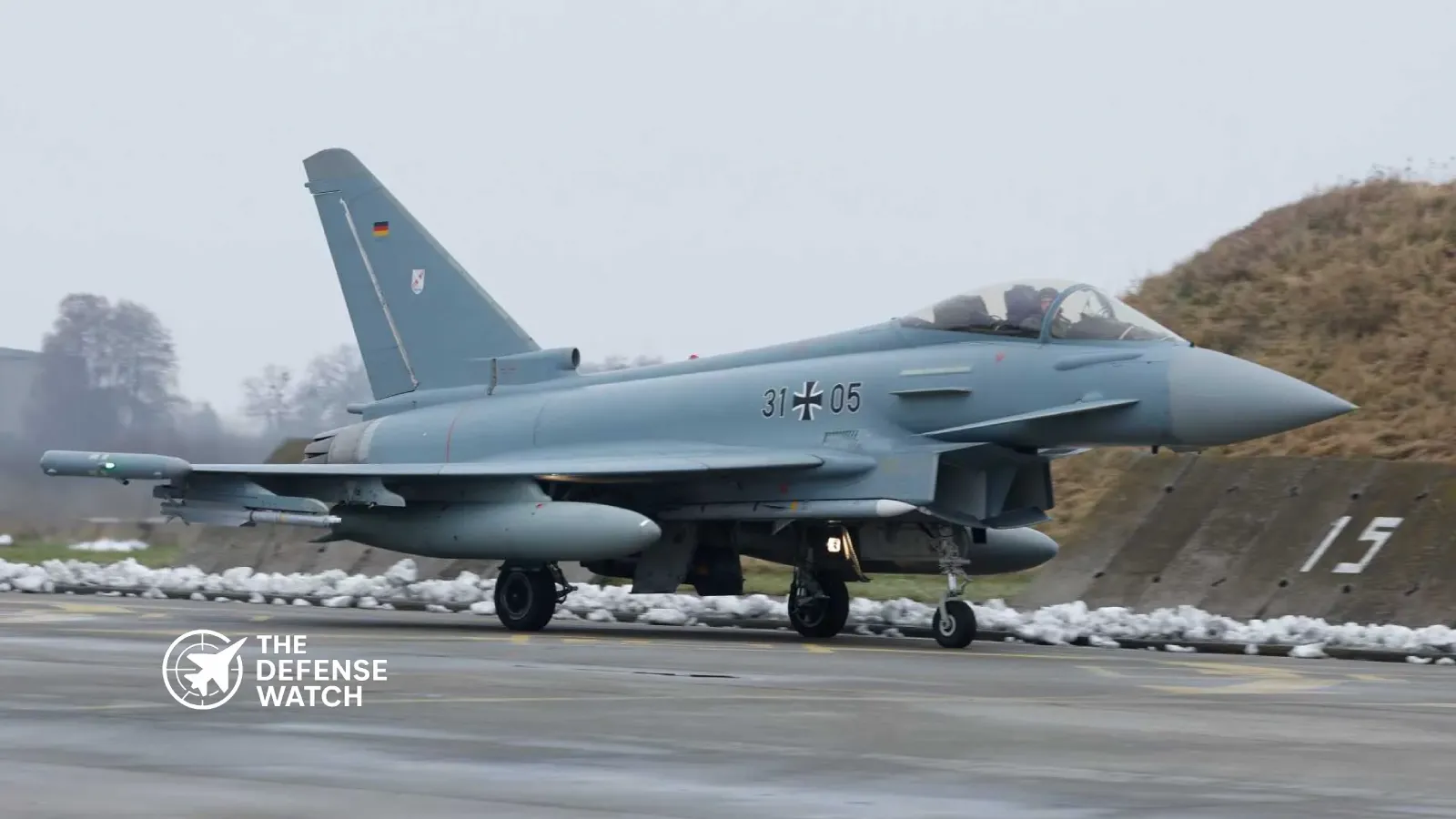
Germany has deployed its first Eurofighter Typhoon fighters to Iceland as part of NATO’s newly launched Arctic Sentry air policing mission. The German contribution places four Typhoons at Keflavík Air Base in the North Atlantic, where they are standing quick reaction alert to monitor and intercept aircraft in the alliance’s northern airspace.
Strategic Context For Arctic Sentry
Launched in February 2026, Arctic Sentry is a NATO initiative to unify and expand allied military activities in the Arctic and High North under a coordinated operational framework. The mission aims to enhance collective situational awareness and deterrence across the region, where changing climate conditions and great power competition have raised security concerns.
NATO’s Arctic Sentry effort builds on long-established air policing operations over Iceland, where allied fighter detachments have rotated since 2008 to safeguard sovereign airspace for a member state that has no national air force.
Details Of The German Deployment
Germany’s contribution consists of four Eurofighter Typhoons configured into two quick reaction alert pairs. The fighters are tasked with identifying and, if required, intercepting aircraft operating without flight plans or without proper identification in and around NATO airspace. According to German defense sources, this marks the first time Berlin has sent Typhoon fighters to support Arctic Sentry.
(adsbygoogle = window.adsbygoogle || []).push({});German Defense Minister Boris Pistorius confirmed the deployment ahead of a meeting of NATO defense ministers in Brussels, noting that the Typhoons may operate from Iceland and then reposition further north as mission needs evolve.
The Typhoon is a twin-engine, supersonic multirole fighter jointly developed by Airbus, BAE Systems, and Leonardo. It carries modern air-to-air missiles and advanced sensors suitable for air superiority, interception, and identification duties.
NATO’s Air Policing And High North Focus
Air policing operations over Iceland form part of NATO’s broader deterrence and defense posture. Under this arrangement, alliance members rotate fighter units through Keflavík Air Base to ensure continuous quick reaction alert coverage.
Arctic Sentry reflects NATO’s intent to strengthen collective defense in the High North, coordinating air, maritime, land, and enabling capabilities across the region. The mission is led by Joint Force Command Norfolk with oversight from Allied Command Operations.
(adsbygoogle = window.adsbygoogle || []).push({});The High North’s strategic value stems from its role as a gateway between the Arctic and the North Atlantic. Sea lanes, undersea communication cables, and reinforcement routes between North America and Europe pass through or near this area, making persistent allied presence a priority for transatlantic security planners.
Allied Contributions In The Arctic
Germany’s Eurofighter deployment comes amid similar commitments by other NATO members under Arctic Sentry. Denmark has announced plans to send F-35 fighter jets for the mission, underscoring broader alliance engagement in the region.
(adsbygoogle = window.adsbygoogle || []).push({});Sweden is also deepening its role in NATO air policing over Iceland with its own fighter deployment, highlighting contributions from across Europe to allied air defense in the North Atlantic and Arctic areas.
What Comes Next
As Arctic Sentry operations expand, NATO member states are preparing for a series of coordinated exercises and patrols across the High North. These will include air surveillance, maritime activity, and interoperability drills designed to improve readiness in extreme weather environments.
Germany’s initial Typhoon detachment is expected to integrate with existing air policing structures at Keflavík and contribute to a continuous allied presence across the GIUK gap, a key corridor between Greenland, Iceland, and the United Kingdom.