Germany Deploys Eurofighter Typhoons To Iceland For NATO Arctic Sentry Air Policing
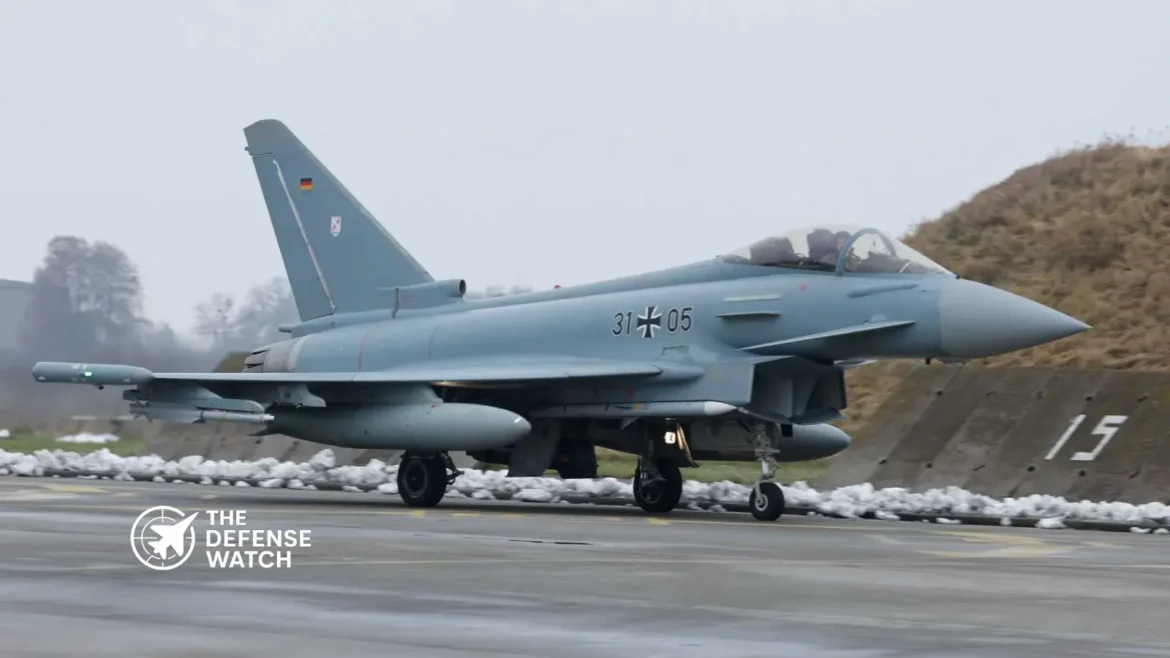
Germany has deployed its first Eurofighter Typhoon fighters to Iceland as part of NATO’s newly launched Arctic Sentry air policing mission. The German contribution places four Typhoons at Keflavík Air Base in the North Atlantic, where they are standing quick reaction alert to monitor and intercept aircraft in the alliance’s northern airspace.
(adsbygoogle = window.adsbygoogle || []).push({});Strategic Context For Arctic Sentry
Launched in February 2026, Arctic Sentry is a NATO initiative to unify and expand allied military activities in the Arctic and High North under a coordinated operational framework. The mission aims to enhance collective situational awareness and deterrence across the region, where changing climate conditions and great power competition have raised security concerns.
NATO’s Arctic Sentry effort builds on long-established air policing operations over Iceland, where allied fighter detachments have rotated since 2008 to safeguard sovereign airspace for a member state that has no national air force.
Details Of The German Deployment
Germany’s contribution consists of four Eurofighter Typhoons configured into two quick reaction alert pairs. The fighters are tasked with identifying and, if required, intercepting aircraft operating without flight plans or without proper identification in and around NATO airspace. According to German defense sources, this marks the first time Berlin has sent Typhoon fighters to support Arctic Sentry.
(adsbygoogle = window.adsbygoogle || []).push({});German Defense Minister Boris Pistorius confirmed the deployment ahead of a meeting of NATO defense ministers in Brussels, noting that the Typhoons may operate from Iceland and then reposition further north as mission needs evolve.
The Typhoon is a twin-engine, supersonic multirole fighter jointly developed by Airbus, BAE Systems, and Leonardo. It carries modern air-to-air missiles and advanced sensors suitable for air superiority, interception, and identification duties.
NATO’s Air Policing And High North Focus
Air policing operations over Iceland form part of NATO’s broader deterrence and defense posture. Under this arrangement, alliance members rotate fighter units through Keflavík Air Base to ensure continuous quick reaction alert coverage.
Arctic Sentry reflects NATO’s intent to strengthen collective defense in the High North, coordinating air, maritime, land, and enabling capabilities across the region. The mission is led by Joint Force Command Norfolk with oversight from Allied Command Operations.
(adsbygoogle = window.adsbygoogle || []).push({});The High North’s strategic value stems from its role as a gateway between the Arctic and the North Atlantic. Sea lanes, undersea communication cables, and reinforcement routes between North America and Europe pass through or near this area, making persistent allied presence a priority for transatlantic security planners.
Allied Contributions In The Arctic
Germany’s Eurofighter deployment comes amid similar commitments by other NATO members under Arctic Sentry. Denmark has announced plans to send F-35 fighter jets for the mission, underscoring broader alliance engagement in the region.
(adsbygoogle = window.adsbygoogle || []).push({});Sweden is also deepening its role in NATO air policing over Iceland with its own fighter deployment, highlighting contributions from across Europe to allied air defense in the North Atlantic and Arctic areas.
What Comes Next
As Arctic Sentry operations expand, NATO member states are preparing for a series of coordinated exercises and patrols across the High North. These will include air surveillance, maritime activity, and interoperability drills designed to improve readiness in extreme weather environments.
Germany’s initial Typhoon detachment is expected to integrate with existing air policing structures at Keflavík and contribute to a continuous allied presence across the GIUK gap, a key corridor between Greenland, Iceland, and the United Kingdom.

Sweden Assumes First NATO Air Policing Leadership Role in Iceland
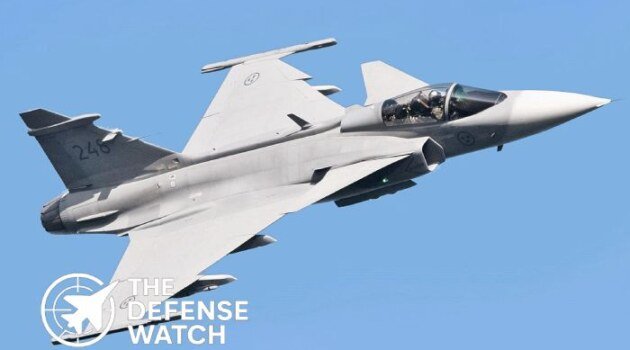
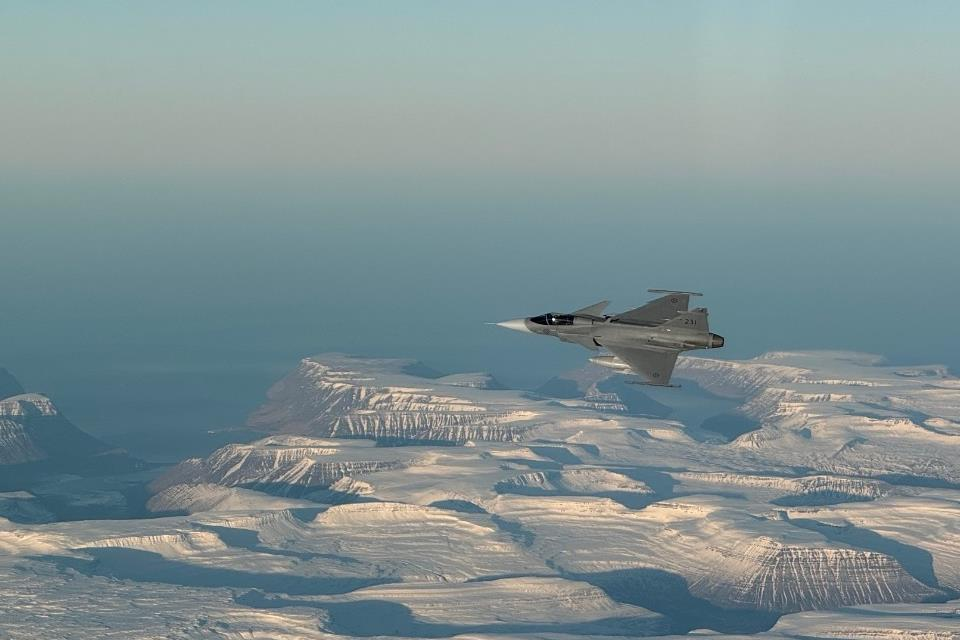
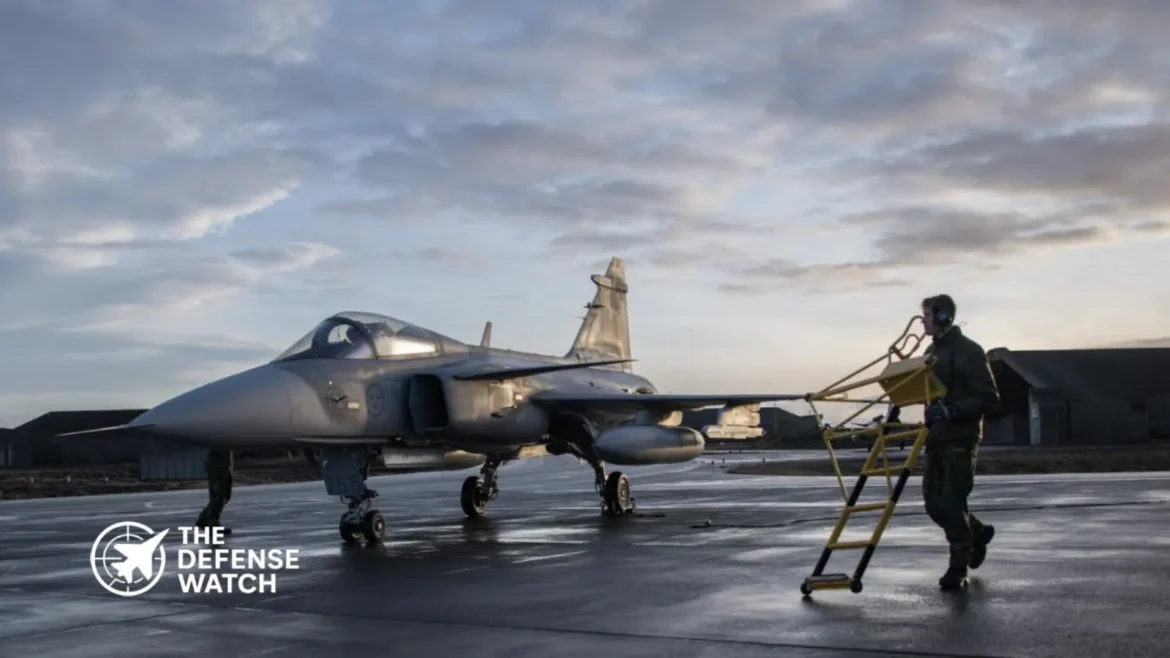
Six Swedish JAS 39 Gripen fighters arrived at Keflavik Air Base, Iceland, on February 4, 2026, marking Sweden’s first leadership of a NATO air policing rotation since joining the Alliance in March 2024. The deployment represents a significant milestone in Sweden’s operational integration within NATO and reinforces Allied air defense over the strategically vital Greenland-Iceland-United Kingdom (GIUK) gap.
The Swedish contingent, comprising more than 110 personnel from Skaraborg Air Wing F 7, replaced Belgium’s 350th Fighter Squadron and its F-16AM Fighting Falcons, assuming responsibility for the 55th rotation of Iceland’s air policing mission. Lieutenant Colonel Johan Legardt, the contingent commander, emphasized the operation’s strategic importance given current international security conditions.
The mission will continue until mid-March 2026, with Swedish forces operating under NATO’s Combined Air Operations Centre at Uedem, Germany. French aerial refueling support was provided during the deployment, with a French A330 MRTT tanker conducting joint operations with four Swedish Gripens between the Norwegian coast and Iceland to ensure the fighters reached their operational base.
Strategic Significance of Swedish Participation
Iceland’s location between Greenland and the United Kingdom positions it at a critical chokepoint where the Arctic Ocean and Norwegian Sea feed into the Atlantic Ocean. During the Cold War, this passage served as the primary route for Soviet submarines accessing the Atlantic from northern bases. Today, the GIUK gap remains essential for monitoring Russian naval and aerial movements in the region.
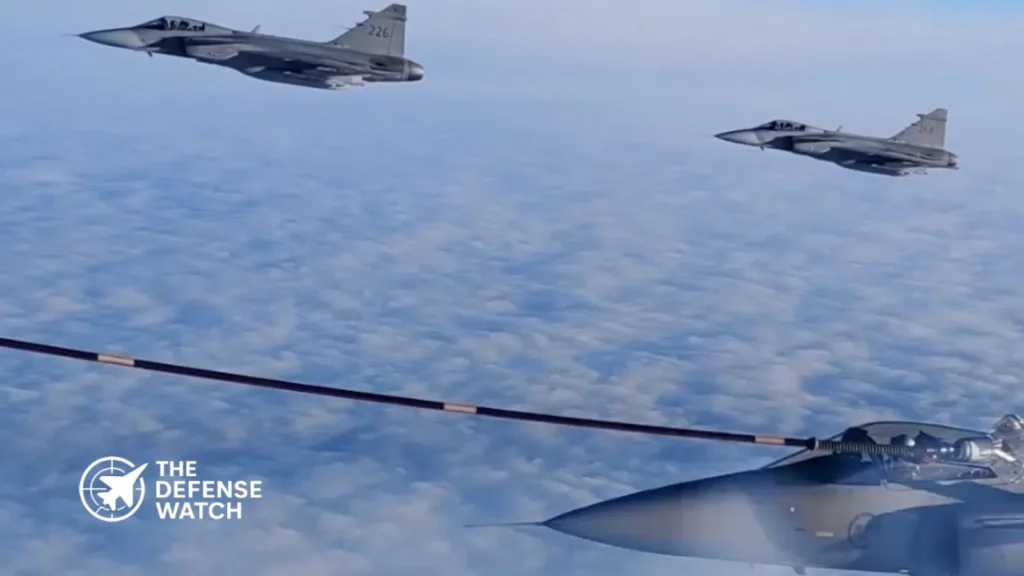
Sweden’s deployment builds on experience gained during its participation in NATO air operations in Poland in 2025, which served as an initial test of interoperability, command integration, and procedural alignment with Allied air forces. Major General Jonas Wikman, Chief of the Swedish Air Force, previously noted that the Poland deployment demonstrated Sweden’s capability to operate effectively under NATO leadership.
Since accession in March 2024, Stockholm has committed to meeting the Alliance’s 2% of GDP defense investment guideline by 2026, announced fighter deployments to Poland for enhanced air policing, and pledged naval and airborne surveillance assets to reinforce maritime security in the Baltic Sea.
JAS 39 Gripen Capabilities for Arctic Operations
The Saab JAS 39 Gripen is a single-engine, multirole fighter optimized for northern European conditions, combining a delta-canard airframe with a modern radar and mission system. The Gripen C/D variant in Swedish service can carry approximately 6.5 tonnes of external stores across multiple hardpoints, in addition to an internal 27mm Mauser BK-27 cannon used for visual-range engagements and warning shots during air policing scenarios.
For the Icelandic mission, the aircraft are expected to carry beyond-visual-range air-to-air missiles such as the AIM-120 AMRAAM or the ramjet-powered MBDA Meteor, paired with short-range infrared-guided missiles for close-quarters intercepts. The Gripen’s advanced sensors, data links, and ability to operate in austere environments make it particularly suited for extended patrols over remote oceanic expanses.
More than 70 Gripens are in service or on order with the Swedish Air Force, and the type has proved to be both capable and cost-effective. The aircraft’s short takeoff capabilities and agility are particularly valuable for operations from Keflavik Air Base.
NATO Iceland Air Policing Mission Framework
Iceland, as a founding NATO member without armed forces, has relied on Alliance air policing support since 2008. When Iceland signed the Treaty in 1949, it did not have and still does not have armed forces, though it maintains a Coast Guard, national police forces, an air defense system and a voluntary expeditionary peacekeeping force.
The air policing mission typically rotates Allied aircraft three to four times annually for several-week deployments. Participating nations provide airborne surveillance, identification of unknown tracks, and rapid interception of aircraft that fail to file flight plans, lose radio contact, or approach Alliance airspace in non-compliant manner.

Image Source : NATO Integrated into NATO’s Air Policing system, the Swedish detachment will contribute to continuous radar coverage, operating under control of the Combined Air Operations Centre in Uedem and supported when required by NATO E-3 AWACS. The mission forms part of a layered detection and interception chain proven effective against various military and civilian incidents over the North Atlantic.
Rapid NATO Integration Following Accession
Sweden’s participation in the Iceland air policing mission demonstrates the rapid pace of its NATO integration. Sweden flew its first NATO-controlled air defense mission in October 2024, with JAS 39 Gripen C combat aircraft tasked to defend allied airspace as part of the NATO Joint Incident Response Force.
The deployment creates an operational link between the Baltic-Nordic region, where Sweden and Finland bring substantial capabilities, and transatlantic reinforcement routes vital in any major crisis. Iceland’s Foreign Minister Þorgerður Katrín Gunnarsdóttir stated that Sweden’s participation demonstrates how NATO membership strengthens defense cooperation and security.
Weather permitting, Swedish forces are expected to conduct training flights to alternate airports in Akureyri and Egilsstaðir in early February, ensuring familiarity with Iceland’s airfield infrastructure and operational procedures across the island nation.
Broader Nordic Defense Cooperation
The Swedish deployment aligns with enhanced Nordic defense cooperation initiatives. The Nordic countries entered into cooperation to promote access to Denmark, Finland, Iceland, Norway and Sweden’s airspace for NATO’s air operations, with Swedish Defense Minister Pål Jonson noting that deepening airspace cooperation strengthens military integration while giving NATO access to larger contiguous areas for deterrence, exercises and training.
This coordination is particularly significant given the Arctic’s growing geopolitical importance. Rising global temperatures have increased commercial opportunities in the region, including the Northern Sea Route connecting Europe and Asia, while Russia maintains its Northern Fleet and the majority of its nuclear missile-carrying strategic submarines in Arctic waters.
The Swedish Air Force’s assumption of leadership responsibility in one of NATO’s most strategically sensitive regions demonstrates the Alliance’s confidence in Sweden’s operational capabilities and commitment to collective defense. As the newest NATO member on the northern flank, Sweden’s active participation in air policing missions reinforces Allied deterrence and interoperability during a period of heightened geopolitical tensions.