France Initiates Historic Military Readiness Exercise
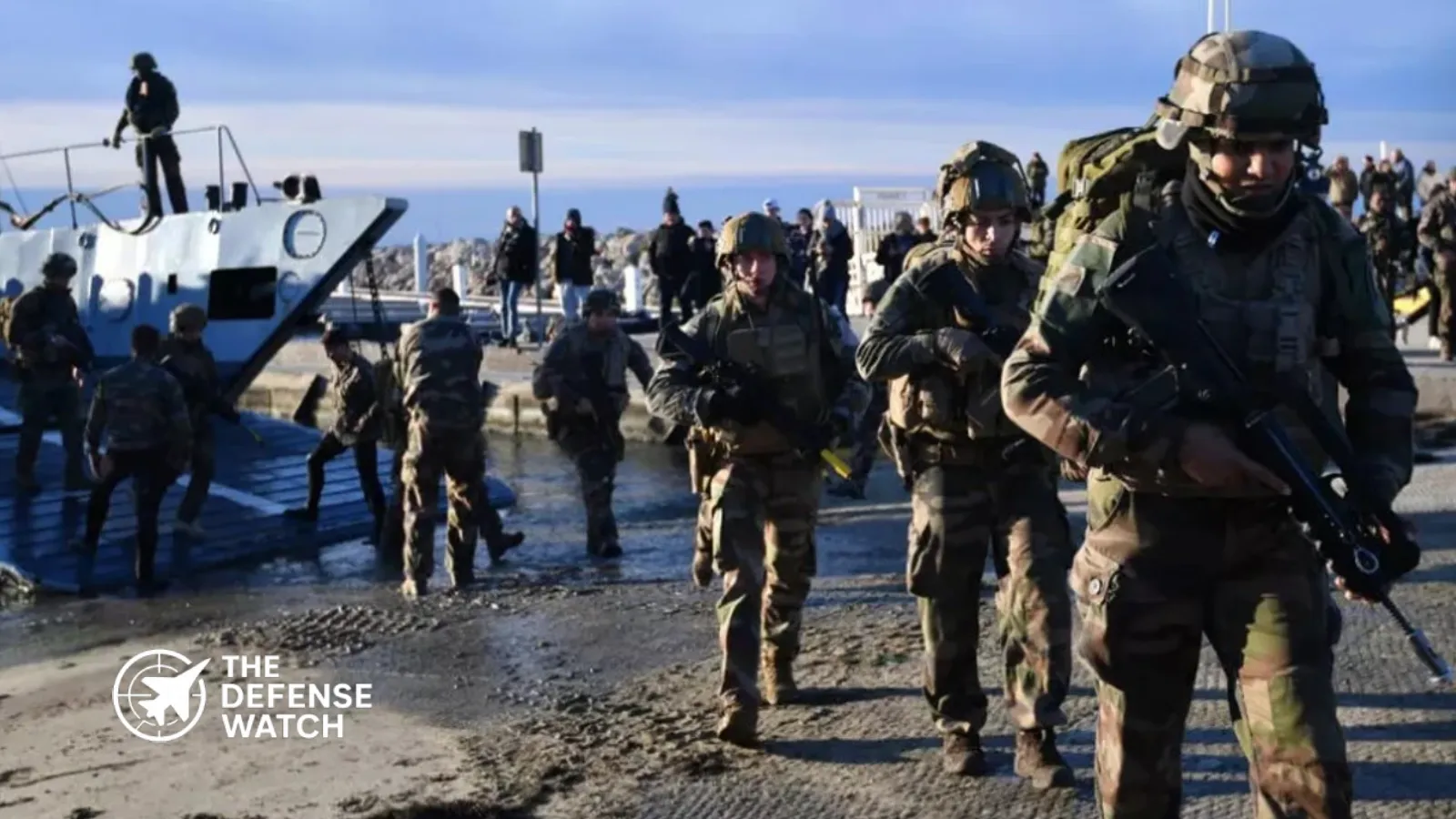
France launched its largest military exercise since the Cold War on February 8, 2026, deploying 12,500 troops in a three-month drill designed to prepare for high-intensity warfare scenarios in Europe. The Orion 26 exercise, running through April 30, represents a significant demonstration of French military capability and European defense coordination amid heightened security concerns on the continent.
The massive military drill involves 25 ships, including the nuclear-powered aircraft carrier Charles de Gaulle, 140 aircraft and helicopters, 1,200 drones, and forces from 24 allied nations. According to the French Ministry of the Armed Forces, Orion 26 constitutes a major event in French operational preparation for high-intensity scenarios aimed at preparing forces for complex situations in multiple, varied, and contested environments.
Fictional Scenario Based On Russian Threat
The Orion 26 exercise employs a fictional but credible scenario involving two countries called Arnland and Mercury, directly inspired by the Russian threat to Europe. In the scenario, Mercury represents an expansionist state opposing its neighbor Arnland, which Mercury seeks to destabilize to prevent its accession to the European Union.
France leads an international coalition to defend Arnland against increasing hybrid actions and support from Mercury-backed militias. The French Ministry of the Armed Forces stated the scenario aims to recreate all forms of modern combat, from hybrid threats to high-intensity warfare, testing forces under realistic combat conditions.
Three-Phase Exercise Structure
Orion 26 unfolds in three distinct operational phases. The first phase, launched in early January 2026, focused on strategic planning and drafting operational orders using shared processes with allied partners. This preparatory stage established the groundwork for a coalition operation under realistic political and military constraints.
(adsbygoogle = window.adsbygoogle || []).push({});The second phase, running from February 8 to March 1, represents the operational core of Orion 26. The exercise will begin with a simulated amphibious and airborne landing in Brittany, with approximately 700 soldiers and 100 vehicles deployed near Quiberon in the Morbihan region on February 20 and 21.
The third phase, scheduled between April 7 and April 30, will place the exercise under NATO command to test the ability of European armies to work together effectively within Allied command structures. This phase is particularly significant for assessing interoperability at scale beyond national or bilateral formats.
Multinational Coalition And NATO Integration
The exercise fields three brigades, 2,150 tactical vehicles, and 40 helicopters, alongside cyber and space warfare components. French and NATO forces will simulate deployments in open terrain, launch counterattacks, and cross natural obstacles including the Seine and Aube rivers using live fire exercises.
Forces from 24 countries are participating in Orion 26, including major European allies such as the United Kingdom, Germany, Spain, Italy, Belgium, Netherlands, Poland, Norway, Greece, and Estonia. Non-European participants include the United States, Canada, Japan, Morocco, Brazil, Switzerland, Qatar, Singapore, South Korea, and the United Arab Emirates.
The Italian Navy deployed the destroyer ITS Andrea Doria as part of the Charles de Gaulle carrier strike group, which departed Toulon on January 27, 2026. Spain has deployed the amphibious landing platform dock ESPS Castilla and frigates ESPS Cristóbal Colón and ESPS Almirante Juan de Borbón for the exercise.
Charles De Gaulle Carrier Strike Group Deployment
The French carrier strike group built around the nuclear-powered aircraft carrier Charles de Gaulle forms the centerpiece of Orion 26’s naval component. The escort includes the air-defense destroyer Chevalier Paul, the FREMM air-defense frigate Alsace, the Italian destroyer Andrea Doria, the fleet replenishment ship Jacques Chevallier, and likely a nuclear-powered attack submarine.
This composition highlights both France’s high-end naval capabilities and the multinational dimension of the exercise. The carrier strike group departed Toulon on January 27 for operations in the Atlantic, marking the naval opening of France’s largest integrated military exercise.
According to USNI News, the carrier group’s escort composition focuses heavily on air defense, featuring three dedicated air defender vessels, which is somewhat unusual and noteworthy for standard carrier operations.
Testing Advanced Military Technologies
Orion 26 provides a platform to test modern military technologies and capabilities essential for contemporary warfare. The exercise incorporates testing of 1,200 combat and specialized drones, artificial intelligence applications, electronic warfare capabilities, advanced simulation systems, satellite interference techniques, and spectral meteorology.
The drill also includes comprehensive cyber warfare exercises conducted on virtual networks, alongside space domain operations designed to prepare forces for multi-domain conflict scenarios. Reserve forces from all armed services are fully integrated into Orion 26, adding operational depth and specialized skills to the exercise.
Interministerial Crisis Management Component
Parallel to military maneuvers, Orion 26 includes a continuous interministerial crisis management exercise on French territory. The exercise involves twelve ministries and numerous institutional and civilian actors to manage anticipated consequences on French national territory from military engagement abroad.
This civil-military coordination component will culminate on March 30 and 31 with a large-scale war game involving territorial commands in mainland France and French Guiana, along with representatives from ministries and prefectures. The objective is to test coordination mechanisms and national resilience in the face of diverse and simultaneous threats.
According to the French Ministry of the Armed Forces, this unprecedented civil-military coordination aims to strengthen the collective capacity to act, command, and cooperate in the face of major crises affecting national territory.
Strategic Context And Security Environment
The French Ministry of the Armed Forces emphasized that the exercise is particularly important in a context where involvement in a high-intensity conflict could become a reality. The drill demonstrates France’s determination to protect its territory, citizens, and interests by preparing for the most demanding military challenges.
The exercise takes place as NATO Secretary General Mark Rutte warned that Russia could attack the alliance within five years. Rutte stated that Europe represents Russia’s next target, as hybrid warfare operations attributed to Russia multiply across Europe while Russia’s full-scale invasion of Ukraine enters its fourth year.
According to Naval News, Vice-Admiral Xavier Royer de Véricour noted that Europe and NATO’s strategic competitors are increasingly employing hybrid actions aimed at undermining cohesion and weakening the Western societal model, constituting a major threat to European interests.
French Military Modernization And Budget
The Orion 26 exercise occurs within the broader context of French military modernization efforts. After several decades of budget constraints, France has been rebuilding its military capabilities since 2017. The 2024-2030 military programming law provides for a budget exceeding €400 billion, representing an increase of one-third compared to the previous period.
This budget increase is intended not only to modernize equipment but also to replenish ammunition stocks considered inadequate for prolonged conflict scenarios. France is simultaneously supplying military equipment to Ukraine, including 30 Caesar self-propelled howitzers valued at €7.5 million per unit, while training 2,000 Ukrainian soldiers on French territory.
(adsbygoogle = window.adsbygoogle || []).push({});While the 2023 edition of the Orion exercise cost €35 million, the budget for the 2026 iteration has not been publicly disclosed. An exercise on this scale requires significant investment in flight hours, fuel, maintenance cycles, spare parts, and training days.
NATO Allied Reaction Force Preparation
Starting in summer 2026, France will assume command of NATO’s Allied Reaction Force, a 300,000-strong projection force. The Orion 26 exercise serves as preparation for this leadership role, testing France’s ability to act as a framework nation within NATO structures.
The exercise aims to demonstrate France’s capacity to be first to enter a theater of operations and to command a multinational coalition within a NATO framework facing large-scale threats. This capability is critical for European defense as NATO seeks to increase its military presence in response to tensions on Europe’s eastern flank.
According to Euronews, the drill sends a strategic signal to potential adversaries, proving the readiness of the French Armed Forces and their legitimacy to assume a central role in European defense architecture.
Logistics And Sustainment Focus
Military officials emphasized that modern warfare success depends on logistics and sustainment capabilities. A French logistics support officer stated that maneuver operations depend on fundamental components like pumps, seals, and trucks, which become the operational backbone during extended exercises.
Support elements working around combat units include military medical services, commissariat services, and operational energy services. These elements do not directly conduct maneuvers but make sustained operations possible by treating casualties, resupplying forces, powering systems, accounting for shortages, and anticipating equipment failures.
The exercise tests France’s ability to absorb damage, conduct repairs, and restore systems to operational status. Orion 26 confronts support chains with realistic challenges, checks stock resilience, and evaluates reaction times under combat conditions.
Brazilian And Additional International Participation
Brazil deployed sixteen personnel to Orion 26, including three officers and thirteen non-commissioned officers. The Brazilian contingent will embark aboard the amphibious helicopter carrier PHA Mistral for joint exercises and tactical rehearsals, followed by ground operations on French territory.
(adsbygoogle = window.adsbygoogle || []).push({});Brazilian forces underwent specific training processes and adapted equipment to European climatic conditions, with temperatures ranging between 3°C and 9°C during the exercise period. This participation demonstrates France’s security partnerships extending beyond traditional European and NATO allies.
Turkey is expected to participate with the Anadolu Turkish Maritime Task Group, including amphibious assault ship TCG Anadolu, frigates TCG Istanbul and TCG Kınalıada, and fast combat support ship TCG Derya. The Turkish Navy holds the NATO Commander Amphibious Task Force and Commander Landing Force duties within the NATO Allied Reaction Force framework.
Interoperability Challenges And Solutions
At the scale of Orion 26, interoperability extends beyond administrative coordination to become concrete material challenges involving procedures that don’t match and terminologies that differ between allied forces. Decision-making rhythms also clash in this complex multinational context.
Effective interoperation requires translating maps, harmonizing operational rules, sharing communication links, and accepting that participating forces don’t operate to identical standards. Coalition warfare demands learning to command and obey within multinational frameworks where each nation maintains specific red lines and operational constraints.
However, common effectiveness requires concessions and compromises to reach shared objectives. The NATO-integrated phase from April 7 to April 30 specifically tests France’s ability to fit into Allied structures and adopt NATO standards while maintaining national operational identity.
Historical Significance And Future Implications
Orion 26 represents France’s largest military deployment since the Cold War era, reflecting the changed European security environment following Russia’s invasion of Ukraine in February 2022. The exercise demonstrates European recognition that preparation for high-intensity conventional warfare has become necessary after decades focused primarily on counterinsurgency and peacekeeping operations.
(adsbygoogle = window.adsbygoogle || []).push({});The drill serves multiple strategic purposes beyond training value. It demonstrates French military capability to potential adversaries, reassures European allies of France’s commitment to collective defense, validates France’s role as a leading European military power, and tests systems and procedures that would be essential in actual conflict scenarios.
According to defense analysts, exercises of this magnitude provide invaluable experience that cannot be replicated through smaller-scale training or simulation alone. The coordination challenges, logistics demands, and decision-making complexities encountered during Orion 26 will inform French and Allied military planning for years to come.
The exercise also reflects broader European defense trends, including increased military spending, renewed focus on territorial defense, emphasis on multi-domain operations, and strengthened NATO integration. These developments mark a fundamental shift in European security posture driven by the recognition that conventional military threats have returned to the continent.
Regional And Global Defense Implications
The Orion 26 exercise carries implications beyond France and Europe. The participation of nations from Asia, the Middle East, Africa, and the Americas demonstrates the global nature of contemporary security partnerships and the interconnected character of modern defense challenges.
For the United States, French-led exercises like Orion 26 support burden-sharing goals within NATO by demonstrating European capability to lead major coalition operations. This becomes particularly relevant as U.S. defense strategy increasingly focuses on challenges in the Indo-Pacific region while maintaining commitments to European security.
The exercise provides participating nations with opportunities to observe and learn from French military systems, operational concepts, and command structures. This exposure facilitates future coalition operations and enhances overall alliance readiness for contingencies requiring rapid multinational response.
The scale and ambition of Orion 26 may influence other European nations to conduct similar large-scale exercises, potentially leading to a new generation of major multinational drills that better prepare Allied forces for high-intensity warfare scenarios in contested European territory.