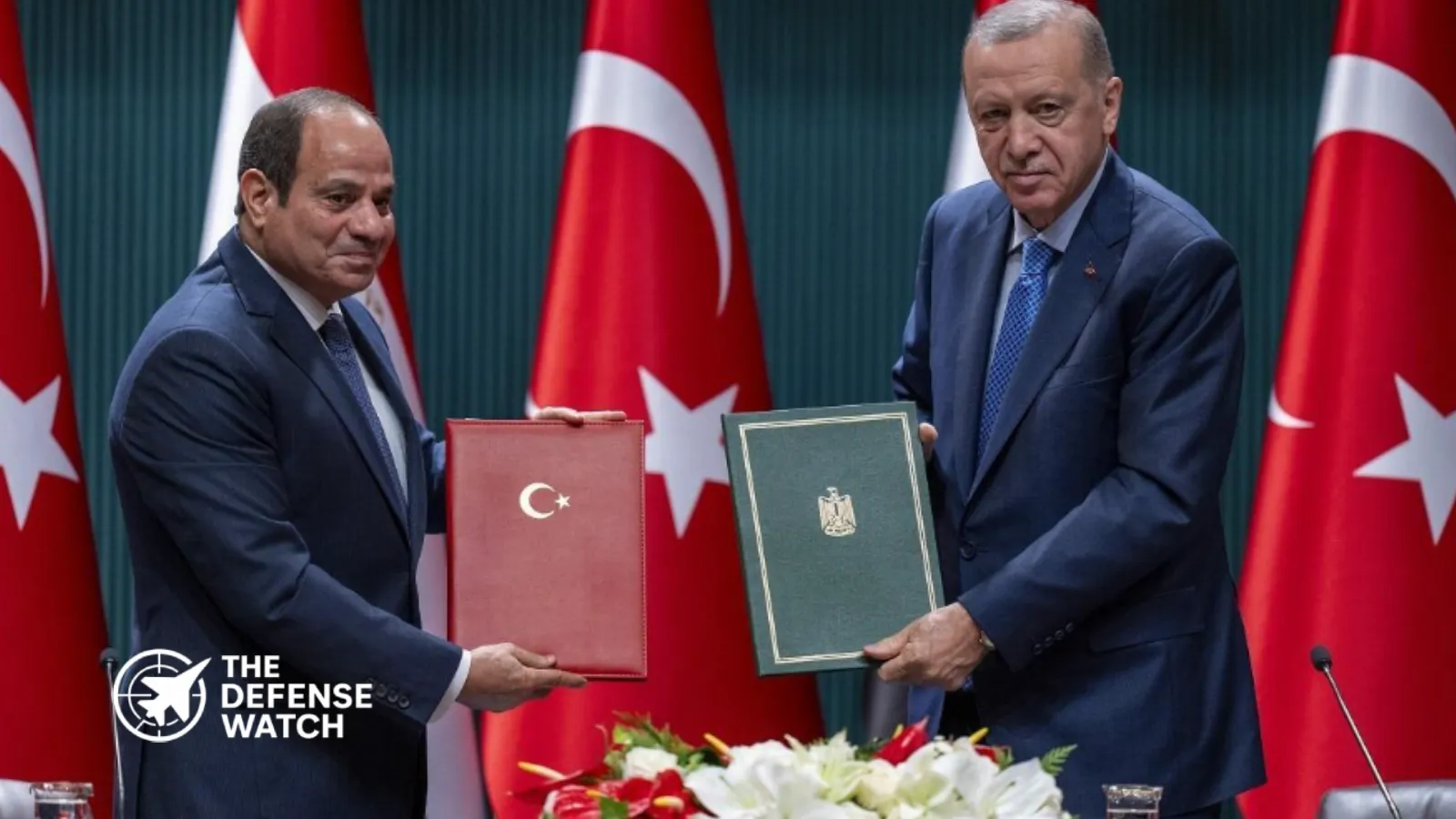
Egypt Turkey Defense Deal Signals Strategic Reset
Egypt and Turkey have signed a $350 million defense deal covering drones, air defense systems, and ammunition production, marking a major step in restoring military ties between the two regional powers.
The agreement was signed Wednesday in Cairo by Egyptian President Abdel Fattah al Sisi and Turkish President Recep Tayyip Erdogan following the second meeting of the Egypt Turkey High Level Strategic Cooperation Council at Al Ittihadiya Palace. The framework military cooperation agreement caps a rapid normalization process after more than a decade of strained relations.
According to official statements released after the talks, the defense package includes direct procurement contracts as well as joint manufacturing ventures, signaling a shift from transactional arms sales toward longer term industrial cooperation.
Scope of the $350 Million Defense Agreement
The defense deal is valued at approximately $350 million and spans multiple capability areas central to both countries modernization priorities.
Key elements of the agreement include:
- Joint production of unmanned aerial systems, including surveillance and armed drones
- Cooperation on short and medium range air defense systems
- Establishment of ammunition manufacturing and assembly facilities in Egypt
- Technology transfer and industrial participation clauses for Egyptian defense firms
Turkish defense companies are expected to play a central role, leveraging Ankara’s mature drone and precision weapons sector. Turkey has emerged as a leading exporter of unmanned systems over the past decade, with combat tested platforms deployed across the Middle East, North Africa, Eastern Europe, and the Caucasus.
Egypt, meanwhile, has sought to expand domestic defense manufacturing capacity to reduce reliance on imports and support its large standing military.
(adsbygoogle = window.adsbygoogle || []).push({});Drone Cooperation at the Center of the Deal
Drones are a cornerstone of the Egypt Turkey defense deal, reflecting the growing operational role of unmanned systems across the Middle East.
Turkey’s defense industry has built a strong export portfolio in medium altitude long endurance UAVs, loitering munitions, and tactical reconnaissance platforms. These systems have reshaped battlefield dynamics by offering persistent surveillance, precision strike capability, and lower operating costs compared to manned aircraft.
For Egypt, drone cooperation offers both near term capability gains and longer term industrial benefits. Joint manufacturing and local assembly would allow Cairo to integrate unmanned systems into border security, counterterrorism, and maritime surveillance missions while building technical expertise at home.
Officials from both sides emphasized that the agreement focuses on licensed production and co development rather than simple off the shelf purchases.
Air Defense and Ammunition Production
Beyond drones, the agreement includes cooperation on air defense systems, an area of increasing importance as regional militaries confront missile, rocket, and UAV threats.
While specific systems were not disclosed, the framework agreement allows for joint work on sensors, command and control elements, and interceptor production. Turkey has invested heavily in layered air defense programs over the past several years, while Egypt operates a diverse mix of Western, Russian, and locally produced systems.
Ammunition production is another pillar of the deal. New manufacturing facilities are expected to support small arms ammunition and potentially selected precision guided munitions. For Egypt, this aligns with broader efforts to localize consumables and sustainment items for its armed forces.
Strategic and Geopolitical Context
The defense agreement reflects a broader strategic realignment between Cairo and Ankara after years of political tension following the 2013 change of government in Egypt.
Relations began improving in 2023, with high level diplomatic exchanges and economic cooperation paving the way for security dialogue. The creation of the High Level Strategic Cooperation Council institutionalizes this reset and provides a platform for sustained defense engagement.
From a regional perspective, closer Egypt Turkey defense ties could influence security dynamics in the Eastern Mediterranean, Red Sea, and North Africa. Both countries maintain large militaries, growing defense industries, and overlapping interests in maritime security and counterterrorism.
Analysts note that the deal also fits within Turkey’s wider strategy of expanding defense exports through joint production and localization, particularly with partners that have significant industrial bases and regional influence.
Defense Industry Implications
For Turkey’s defense sector, the Egypt agreement represents a high value industrial partnership rather than a one time export sale. Joint manufacturing facilities can anchor long term supply chains and support follow on exports to third markets, subject to national approvals.
For Egypt, the deal complements existing defense relationships with the United States, Europe, Russia, and China, while emphasizing industrial autonomy. Cairo has steadily increased its focus on licensed production, assembly, and co development across land, air, and naval systems.
Both governments framed the agreement as mutually beneficial and consistent with international defense trade norms.
Outlook
Implementation timelines and specific system selections are expected to be defined through follow on contracts and technical working groups established under the framework agreement.
Defense cooperation is likely to expand incrementally as trust deepens and early projects move into production. Officials from both sides indicated that the $350 million figure reflects initial contracts, with potential for additional agreements as joint programs mature.