• Home
  • About
  • Defense Systems
  • Manufacturer
  • Comparisons
  • Compare 
  • Tools
TheDefenseWatch.com
  • Aerospace & Aviation
  • Military & Ordnance
  • Naval & Maritime
  • Cyber & Space Defense
  • Policy & Strategy
  • Global News
  • Tools Library
    • Smart Calculator
    • Drone Flight Time Calculator
    • Drone Range Calculator
    • Counter-Drone Jammer Effective Range Calculator
    • Counter-Battery Radar Detection Calculator
    • Artillery Fire Correction Calculator
    • Thermal Camera Detection Range Calculator
    • Missile Range & Time-of-Flight Calculator
    • Radar Detection Range Calculator
    • FPV Strike Drone Payload vs Range Calculator
    • Loitering Munition Endurance Calculator
    • Sniper Ballistic Drop & Windage Calculator
    • Bullet Drop Calculator
    • U.S. Army Combat Fitness Test (ACFT) Calculator
    • Military Pension Calculator
    • Military Retirement Calculator
    • Military Pension Calculator
    • Large Number Calculator
Font ResizerAa

TheDefenseWatch.com

The Defense Watch | U.S. & Global Defense News, Analysis & Military Updates

Search
  • Home
  • About
  • Defense Systems
  • Manufacturer
  • Comparisons
  • Compare 
  • Tools

Stay Updated

Get the latest update

Subscribe

Explore

  • Drone
  • Fighter Jets & Military Aircraft
  • Hypersonic Weapons
  • Aircraft Carriers
  • Strategic History & Missions
  • Tools Library
Home » France Unveils ASMPA‑R Nuclear Cruise Missile for the First Time
Artillery & Missile SystemsMilitary & Ordnance

France Unveils ASMPA‑R Nuclear Cruise Missile for the First Time

TeamDefenseWatch
Last updated: September 8, 2026 4:20 am
TeamDefenseWatch
Share
2 Min Read
ASMPA‑R
SHARE

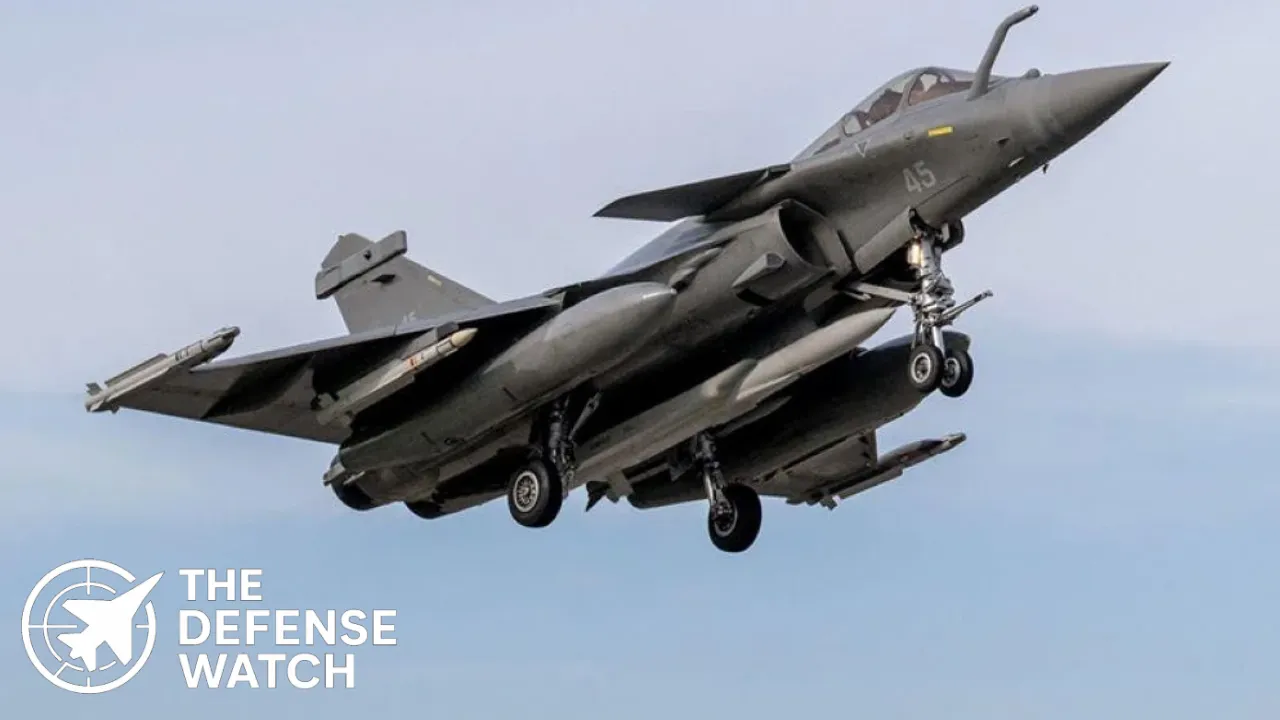
France has for the first time publicly released detailed images of its upgraded nuclear‐armed air‑launched cruise missile, the ASMPA‑R, confirming both its operational status and its deployment on carrier‑capable aircraft. The images were published by the Ministry of the Armed Forces on 13 November 2025, following what was described as the second evaluation firing of the weapon.

Contents
  • Background
  • Details of the Display and Entry into Service
  • Strategic and Doctrinal Implications
  • Expert or Policy Perspective
  • What’s Next
  • Closing

Background

The ASMPA‑R (Air‑Sol Moyenne Portée Amélioré Rénové) is the newest version of the ASMP family of medium‐range, supersonic, nuclear‐capable cruise missiles developed by France for its airborne strike leg of deterrence. The original ASMP entered service in the mid‑1980s; the ASMP‑A upgrade entered service in 2009‑10. The ASMPA‑R program was launched around 2016 to replace obsolescent components, extend range, improve penetration and ensure continuity of France’s airborne nuclear strike capability to beyond 2030.

Details of the Display and Entry into Service

According to the Aviation Week coverage, France published the first full image of the ASMPA‑R on 13 November 2025, with the weapon visible on the centerline hardpoint of a naval variant of the Dassault Rafale M. The missile is described as having undergone a “successful” second firing, following its entry into service with the French Naval Nuclear Aviation Force (FANu) on 10 November 2025.

Public reporting indicates that the ASMPA‑R retains a ramjet architecture, with dual air‑intakes along the body, enabling sustained supersonic flight at speeds around Mach 3. The upgraded missile reportedly has a range of roughly 600 kilometres (about 372 miles), compared to approximately 500 km for the ASMP‑A. The warhead is understood to be the Tête Nucléaire Aéroportée (TNA) design, with variable yield settings between 100 and 300 kilotons. While France has not officially confirmed warhead specifics for the R variant, open‑source reports treat the warhead as unchanged but modernized.

- Advertisement -

Officials described the evaluation firing as part of a sortie that “represented a nuclear raid”, and images released show the Rafale M carrying the missile, external fuel tanks and air‑to‑air self-defense missiles (Mica RF/EM, Mica IR, Meteor) alongside the nuclear weapon mount.

Strategic and Doctrinal Implications

The airborne leg of France’s nuclear deterrent has for decades been based on the ASMP family, carried by air‑launched platforms such as the Rafale. The ASMPA‑R strengthens that leg by extending the range, improving penetration capability and expanding deployment to naval‑aviation platforms, thereby increasing flexibility and survivability of the strike option.

By equipping the fan of platforms including the Rafale M (navy) and Rafale (air force), France avoids sole reliance on land‑based missiles for deterrence, thereby enhancing redundancy and lessening vulnerability to pre‑emptive attack. The introduction of ASMPA‑R also aligns with France’s 2024‑2030 Military Programming Law (LPM), which emphasizes modernizing the airborne component.

Expert or Policy Perspective

While no direct quotes from named analysts were available in the sources, commentary from specialist outlets observes that the ASMPA‑R offers a moderate but meaningful upgrade rather than a radical leap. Its supersonic speed distinguishes it from many sub‑sonic Western cruise missiles, but its range remains shorter than emerging hypersonic or long‑range systems. From a policy perspective, the move underscores France’s commitment to strategic autonomy and to maintaining credible deterrence through diversified launch platforms — including from sea by carrier‑borne aircraft.

What’s Next

With the ASMPA‑R now public and fielded with the French Navy’s FANu and already in service with the French Air and Space Force (FAS) since 2023, the next step in French airborne nuclear deterrence is the development of the fourth‑generation air‑launched nuclear cruise missile, the ASN4G, expected to enter service around 2035 and to employ scramjet propulsion for hypersonic speeds. The publication of ASMPA‑R imagery may also signal that France is prepared to push further transparency in its deterrence posture.

Closing

The unveiling of the ASMPA‑R marks a notable step in France’s nuclear modernization — revealing for the first time the missile’s full outward appearance and confirming its deployment on naval strike aircraft. In extending range, improving mobility and expanding platform reach, the ASMPA‑R serves to bolster the airborne leg of France’s deterrent. As France moves toward its next‑generation system, the publication of this upgrade underscores that the country intends to maintain credible, flexible nuclear strike options well into the coming decades.


TAGGED:ASMPA‑RCruise MissileFrance DefenceNuclear Deterrence
Share This Article
Facebook Copy Link Print
ByTeamDefenseWatch
TeamDefenseWatch is the official editorial byline of TheDefenseWatch.com. Working under one umbrella, TheDefenseWatch.com, the team delivers verified, factual reporting on global defense, military technology, aerospace systems, and security developments. Articles are sourced from official statements, defense industry releases, and trusted media, with editorial review to ensure accuracy and clarity.Contact: info@TheDefenseWtach.com

F-22 Reptor

Latest Defense Systems

  • B61 Nuclear Bomb B61 Nuclear Bomb
  • Japan E-767 Airborne Japan E-767 Airborne
  • Remington 870 Shotgun Remington 870 Shotgun
  • RUTA B1 Cruise Missile RUTA B1 Cruise Missile
  • XQ-67A Drone XQ-67A Drone
  • B-25 Mitchell Bomber B-25 Mitchell Bomber
  • F-100 Super Sabre F-100 Super Sabre
  • North American F-86 Sabre North American F-86 Sabre
  • North American XB-70 Valkyrie North American XB-70 Valkyrie

Recent Compares

  • J-10C vs JF-17 Thunder: Which Fighter Is More Capable? J-10C vs JF-17 Thunder: Which Fighter Is More Capable? View Comparison →
  • Tejas vs Gripen: Key Differences and Capabilities Tejas vs Gripen: Key Differences and Capabilities View Comparison →
  • Tejas vs MiG-21 Bison: How India Replaced Its Iconic Supersonic Fighter Tejas vs MiG-21 Bison: How India Replaced Its Iconic Supersonic Fighter View Comparison →
  • F-35 vs F-16: Stealth, Sensors and Combat Roles F-35 vs F-16: Stealth, Sensors and Combat Roles View Comparison →
  • Tejas Fighter Jet vs F-16 Fighting Falcon: Capability Compared Tejas Fighter Jet vs F-16 Fighting Falcon: Capability Compared View Comparison →
  • Rafale Fighter Jet vs F-16 Fighting Falcon : Which Fighter Has the Edge? Rafale Fighter Jet vs F-16 Fighting Falcon : Which Fighter Has the Edge? View Comparison →
  • Su-57 Fighter Jet vs J-20 Fighter Jet: Stealth and Air Combat Compared Su-57 Fighter Jet vs J-20 Fighter Jet: Stealth and Air Combat Compared View Comparison →
  • Mirage 2000 vs Tejas Mk1A: Legacy Combat Power vs Indigenous Modernization Mirage 2000 vs Tejas Mk1A: Legacy Combat Power vs Indigenous Modernization View Comparison →
  • Rafale Fighter Jet vs F-22 Raptor: Which Air Dominance Fighter Has the Edge? Rafale Fighter Jet vs F-22 Raptor: Which Air Dominance Fighter Has the Edge? View Comparison →
  • Tejas Fighter Jet vs. Rafale Fighter Jet: India’s Indigenous Fighter Meets France’s Proven Multirole Combat Aircraft Tejas Fighter Jet vs. Rafale Fighter Jet: India’s Indigenous Fighter Meets France’s Proven Multirole Combat Aircraft View Comparison →

Recent Posts

  • Remington 870 in Military Service: Mark 1 to MCS
  • Boeing Receives $16.9 Million Contract Modification for Japan’s E-767 AWACS Support
  • Lockheed Martin Wins $80 Million Air Force Mission Planning Software Contract
  • Pakistan Tests Indigenous Fa’az Air-to-Air Missile for First Time
  • Operation Unified Resolve Reports 70% Drop in Rio Grande Valley Border Crossings

You Might Also Like

Lockheed Martin GMLRS in-flight retargeting
Conventional Weapons & ModernizationMilitary & Ordnance

Lockheed Martin Tests In-Flight Retargeting of GMLRS Rocket

October 28, 2026
SAMP/T NG air defense
Military & OrdnanceMissile Defense Systems

Denmark Orders French SAMP/T NG Air Defense Systems to Counter Ballistic Missile Threats

September 8, 2026
Australian-built Boxer vehicles
Military & OrdnanceTanks & Armored Vehicles

Australian-Built Boxer Combat Reconnaissance Vehicles Roll Off Production Line, Boosting Land 400 Program

March 27, 2026
Australia GMLRS missile production
Artillery & Missile SystemsMilitary & Ordnance

Australia Launches Domestic GMLRS Production With Goal Of Building 4,000 Missiles Annually By 2029

September 12, 2026

Logo

Copyright © 2026 TheDefenseWatch.com

Helpful Links

  • Home
  • About Us
  • Privacy Policy
  • Terms of Use / Disclaimer
  • U.S. Privacy Notice – CCPA Compliance

Defense Systems

  • Defense Systems
  • Comparisons 
  • Manufacturer
  • Tactical Calculators

Popuplar

Which 5 Air Forces Possess the Costliest Fighter Jet Fleets in the World
Evolving Strategic Value: Carrier Strike Groups in the Indo-Pacific’s Future Security Architecture
Autonomous Weapon Systems Spark U.S. Ethics Debate Amid Rapid Military AI Integration

We report on developments involving military forces, governments, defense companies, research organizations, and security institutions around the world. 

Welcome Back!

Sign in to your account

Username or Email Address
Password

Lost your password?