
- ► Trump was briefed on multiple U.S. military options in Iran, according to The Wall Street Journal.
- ► One option reportedly targets senior political and military leaders in an effort to destabilize the regime.
- ► A limited strike alternative focuses on Iran’s nuclear and ballistic missile programs.
- ► The U.S. is assembling its largest regional force posture since the 2003 Iraq invasion.
- ► The buildup signals heightened deterrence and contingency planning across the Middle East.
Trump Briefed On U.S. Military Options In Iran, WSJ Reports
U.S. military options in Iran were presented to former President Donald Trump in a detailed briefing outlining potential operations designed to inflict maximum damage on Tehran’s leadership and regional network, according to a report by The Wall Street Journal.
The report states that the proposed courses of action range from a broad campaign aimed at eliminating key political and military leaders to a more limited strike package focused on Iran’s nuclear and ballistic missile infrastructure.
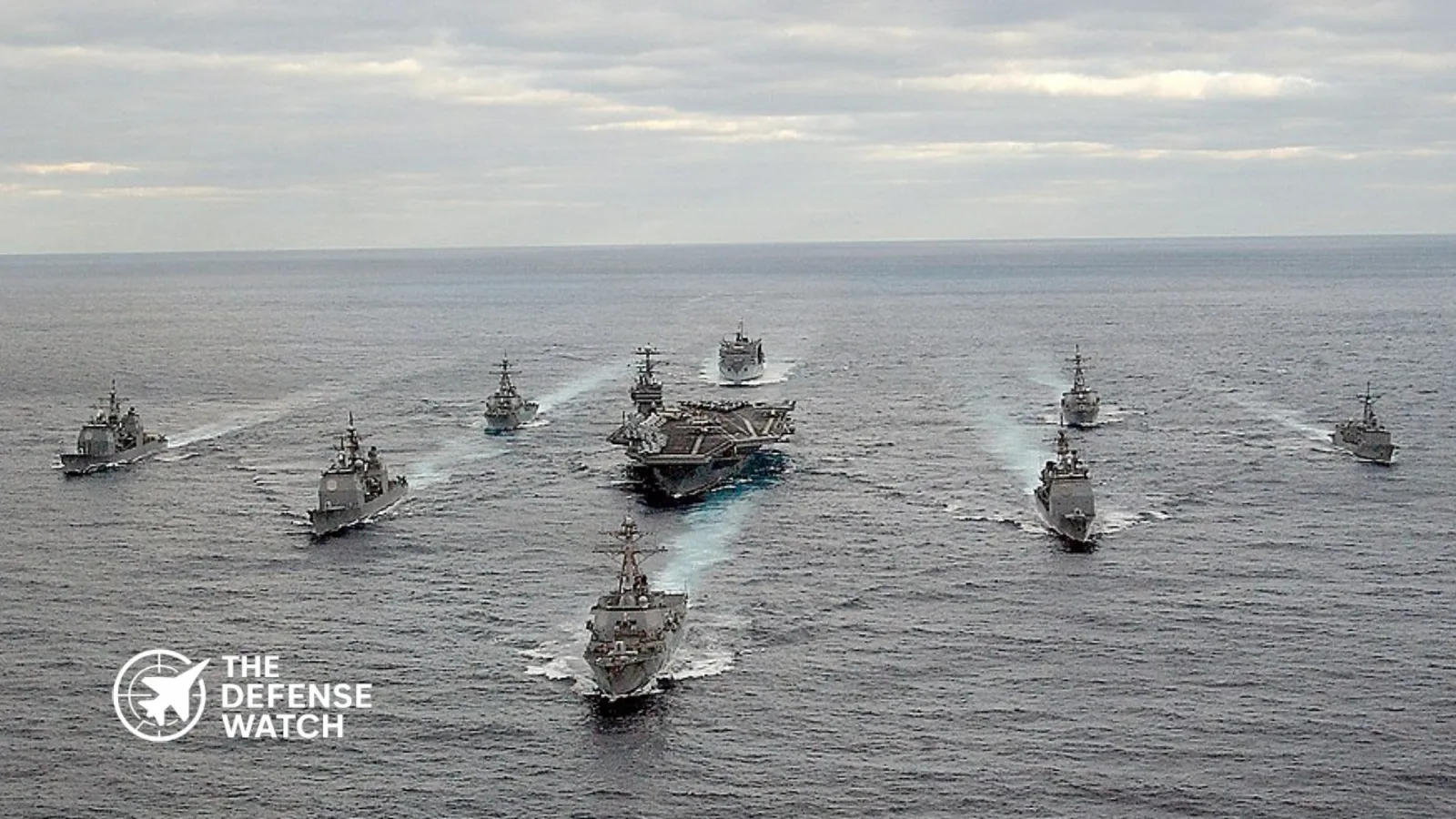
At the same time, the United States is concentrating what the Journal describes as its largest military force in the Middle East since the 2003 invasion of Iraq, signaling a significant shift in regional posture.
A Spectrum Of Strike Options
According to the Journal, the most expansive proposal involves a coordinated campaign to eliminate numerous Iranian political and military leaders. Such a course of action would likely resemble a decapitation strategy designed to disrupt command and control structures.
Historically, similar approaches have been used in counterterrorism campaigns against non state actors. Applying that model to a sovereign state such as Iran would represent a far more complex and escalatory step.
A more limited option focuses on infrastructure linked to Iran’s nuclear enrichment and ballistic missile programs. That could include strikes on hardened facilities, missile production sites, and command nodes tied to the Islamic Revolutionary Guard Corps.
The distinction between the two paths is significant. One is regime focused. The other is capability focused. Each carries different operational demands and escalation risks.
Largest U.S. Force Concentration Since 2003
The reported buildup marks the largest U.S. military concentration in the Middle East since the Iraq invasion in 2003, a campaign launched under President George W. Bush.
While specific force elements were not detailed in the report, such deployments typically involve carrier strike groups, long range bomber task forces, air defense assets, and additional ground based support units.
In recent years, U.S. Central Command has maintained a rotational presence across Gulf states, along with air and naval patrols intended to deter Iranian activity. Expanding that posture to 2003 levels suggests a contingency planning environment rather than routine deterrence.
From a strategic standpoint, force concentration serves two purposes. It enhances operational readiness. It also sends a political signal to both adversaries and regional partners.
Strategic And Regional Implications
Any execution of the outlined U.S. military options in Iran would have immediate regional consequences.
Iran maintains a network of allied groups and proxy forces across Iraq, Syria, Lebanon, and Yemen. A broad strike campaign could trigger retaliatory actions against U.S. forces or partner nations.
A limited strike on nuclear and missile facilities might aim to constrain escalation. However, even a targeted operation could prompt asymmetric responses, including cyber operations or missile launches.
For Gulf allies, the expanded U.S. presence may provide reassurance. At the same time, regional capitals are likely assessing the risk of becoming staging grounds or potential targets.
Energy markets would also be sensitive to any disruption in the Strait of Hormuz, a critical maritime chokepoint for global oil shipments.
Military Planning Versus Political Decision
It is important to distinguish between military planning and policy execution.
The Pentagon routinely develops a range of contingency options for potential crises. Briefing national leadership on those options does not equate to a decision to act.
The Journal report indicates that the courses of action are designed to maximize pressure on the Iranian regime. Whether such plans move beyond the planning stage depends on political direction, alliance coordination, and evolving regional dynamics.
In the current environment, the scale of U.S. deployments suggests that deterrence and preparedness are central objectives. Still, the presence of detailed strike options underscores how rapidly tensions could escalate if diplomatic channels fail.
Get real time update about this post category directly on your device, subscribe now.
