
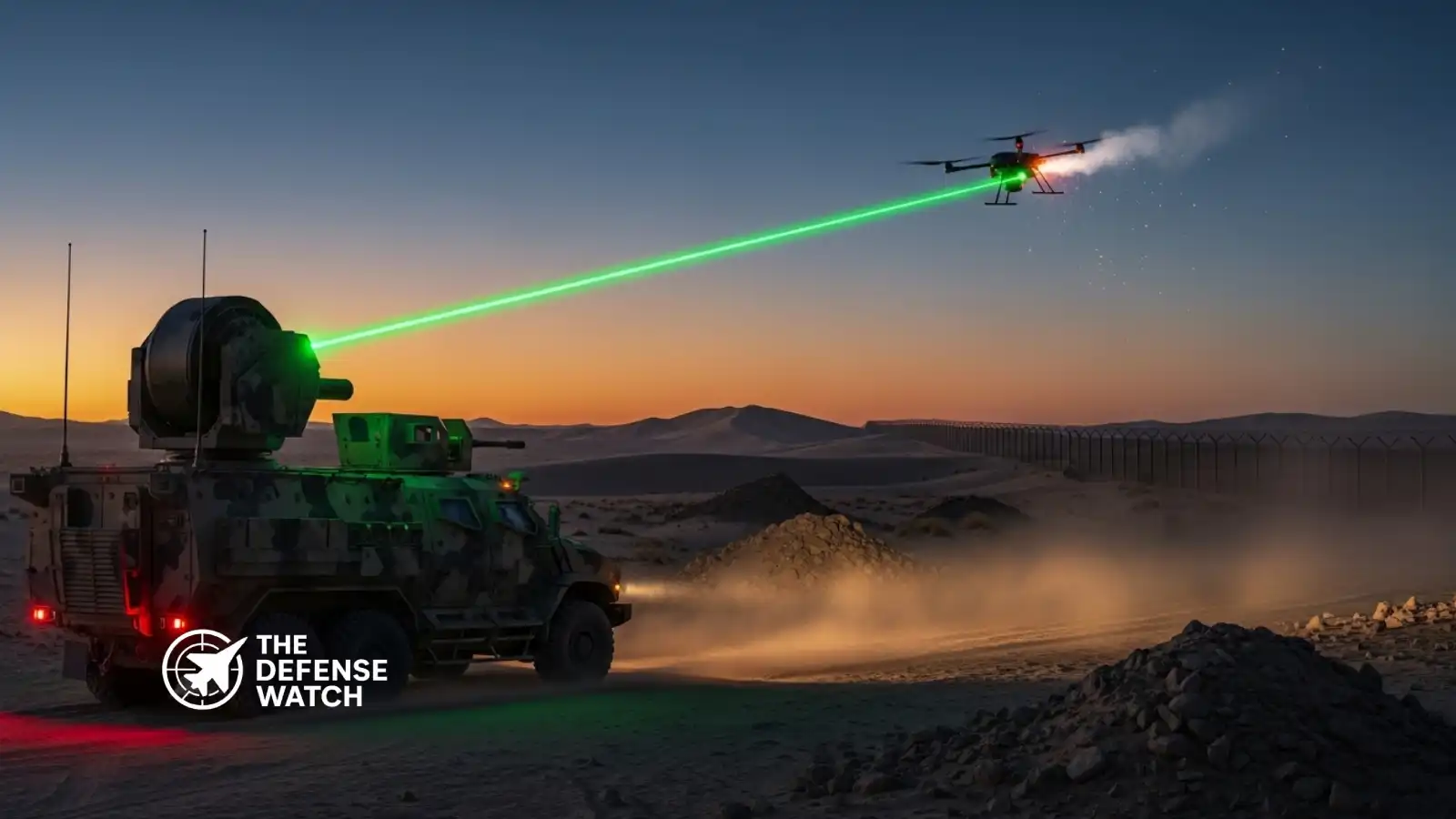
FAA And Pentagon Advance Anti-Drone Laser System Deployment Near U.S. Border
The anti-drone laser system deployment led by the Federal Aviation Administration and the U.S. Department of Defense marks a significant shift in how the United States is addressing rising drone threats near sensitive airspace.
The agreement allows for the integration of military-grade counter-unmanned aerial systems, including directed-energy weapons, into areas traditionally governed by civilian aviation authorities. The focus is on regions near the U.S.–Mexico border, where unauthorized drone activity has increased in recent years.
Unlike conventional counter-drone systems that rely on missiles or electronic jamming, laser-based solutions offer a precise and scalable way to neutralize aerial threats with minimal collateral risk.
- The FAA and Pentagon signed an agreement to deploy anti-drone laser systems.
- Systems will be positioned near the U.S.–Mexico border to counter unauthorized drone activity in sensitive airspace.
- The effort focuses on directed-energy solutions capable of disabling drones without traditional kinetic interceptors.
- The deployment reflects growing concern over drones interfering with civilian aviation and national security operations.
- The agreement establishes coordination between civil aviation authorities and military counter-UAS capabilities.
Why The Anti-Drone Laser System Matters Now
The anti-drone laser system initiative reflects a broader trend. Small, commercially available drones are increasingly being used for surveillance, smuggling, and potential disruption of aviation operations.
U.S. officials have raised concerns about drones operating near airports, border infrastructure, and military installations. Traditional countermeasures, such as signal jamming, often face legal and technical limits, especially in civilian airspace managed by the FAA.
This is where directed-energy systems change the equation.
Laser weapons provide a line-of-sight solution that can disable or destroy drones almost instantly, without generating debris that could endanger aircraft. Their low cost per shot also makes them more sustainable for persistent defense compared to missile-based systems.
Bridging Civil-Military Gaps In Airspace Security
A key aspect of the agreement is coordination. Historically, the FAA has maintained strict control over U.S. airspace, while the military operates under separate authorities.
The new framework allows both sides to work together more closely. It enables the Pentagon to deploy counter-drone capabilities in areas where civilian aviation safety is at risk, while ensuring compliance with regulatory requirements.
This is not just a technical upgrade. It is a policy shift.
The integration suggests that drone threats have reached a level where civil and military domains can no longer operate independently when it comes to airspace security.
Directed Energy Systems Gain Operational Momentum
The anti-drone laser system deployment aligns with the Pentagon’s broader push toward directed-energy weapons.
Over the past decade, the U.S. military has invested heavily in high-energy laser systems for air defense, naval protection, and base security. These systems are now moving from testing into operational use.
Laser-based counter-UAS systems offer several advantages:
- Near-instant engagement speed
- High precision targeting
- Reduced logistical footprint
- Lower long-term operating costs
For border regions, where drone incursions may be frequent but low-cost, these attributes are especially important.
Operational And Strategic Implications
From an operational standpoint, deploying anti-drone laser systems near the border could significantly improve response times to unauthorized UAV activity.
It also reduces reliance on law enforcement or manual interception methods, which are often slow and resource-intensive.
Strategically, the move signals that the U.S. is preparing for a future where drone threats are persistent, decentralized, and difficult to track using traditional methods.
There is also a deterrence element. The presence of advanced counter-drone systems may discourage illicit drone use by raising the likelihood of immediate neutralization.
Challenges And Considerations
Despite its advantages, the anti-drone laser system deployment is not without challenges.
Legal and regulatory concerns remain a key issue. The use of military-grade systems in civilian airspace raises questions about oversight, rules of engagement, and safety protocols.
Weather conditions can also affect laser performance. Dust, fog, and atmospheric interference may reduce effectiveness in certain environments.
Additionally, adversaries may adapt. As counter-drone systems improve, drone operators may shift tactics, including swarm operations or hardened UAV designs.
Outlook: A New Layer Of Airspace Defense
The FAA-Pentagon agreement suggests that counter-drone operations are entering a new phase, one where advanced technologies are deployed closer to civilian environments.
The anti-drone laser system is likely to become a core component of layered air defense, complementing radar, electronic warfare, and kinetic interceptors.
As drone usage continues to expand across both civilian and illicit domains, the demand for rapid, precise, and scalable countermeasures will only grow.
This deployment may serve as a model for future integration of military capabilities into domestic security frameworks.
Get real time update about this post category directly on your device, subscribe now.
